Results by title

8 books match the query 'Suppes, Patrick'
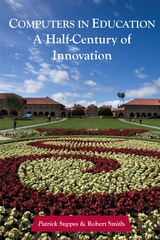
cover of Computers in Education: A Half-Century of Innovation

Computers in Education

A Half-Century of Innovation

Robert Smith

CSLI, 2015

Described by the New York Times as a visionary “pioneer in computerized learning,” Patrick Suppes (1922-2014) and his many collaborators at Stanford University conducted research on the development, commercialization, and use of computers in education from 1963 to 2013. Computers in Education synthesizes this wealth of scholarship into a single succinct volume that highlights the profound interconnections of technology in education. By capturing the great breadth and depth of this research, this book offers an accessible introduction to Suppes’s striking work.
[more]
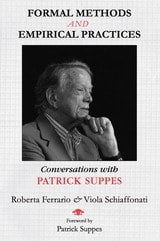
cover of Formal Methods and Empirical Practices: Conversations with Patrick Suppes

Formal Methods and Empirical Practices

Conversations with Patrick Suppes

Roberta Ferrario and Viola Schiaffonati

CSLI, 2012
The philosopher Patrick Suppes has developed a unique and influential approach to studying the foundations of science—he combines an understanding of the main principles of scientific theories in axiomatic terms and formal models with a hands-on approach. While moving the study of the philosophy of science out of the parlor and into the lab, he often comes up with original results from the psychology of learning to the theory of measurement and quantum mechanics. This book searches for a common thread in Suppes’s multifaceted work through a series of conversations with the man himself and illuminates many of the more challenging aspects of his philosophy.
[more]
cover of Foundations and Methods from Mathematics to Neuroscience: Essays Inspired by Patrick Suppes

Foundations and Methods from Mathematics to Neuroscience

Essays Inspired by Patrick Suppes

Edited by Colleen E Crangle, Adolfo García de la Sienra, and Helen E. Longino

CSLI, 2014
During his long and continuing scholarly career, Patrick Suppes has contributed significantly both to the sciences and to scientific philosophies. In this volume, an international group of Suppes’s colleagues, collaborators, and students seeks to build upon Suppes’s insights. Each of their essays is accompanied by a response from Suppes himself, which together create a uniquely engaging dialogue. Suppes and his peers explore a diverse array of topics including the relationship between science and philosophy; the philosophy of physics; problems in the foundations of mathematics; theory of measurement, decision theory, and probability; the foundations of economics and political theory; psychology, language, and the philosophy of language; Suppes’s most recent research in neurobiology; and the alignment (or misalignment) of method and policy.
[more]
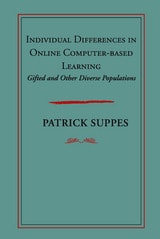
cover of Individual Differences in Online Computer-based Learning: Gifted and Other Diverse Populations

Individual Differences in Online Computer-based Learning

Gifted and Other Diverse Populations

Patrick Suppes

CSLI, 2013

In 1894 John Dewey established his experimental laboratory school at the University of Chicago, with a focus on teaching each student according to their individual differences. This concept indicated a shift away from the emphasis on communal, classroom teaching, which marked educational practices in the nineteenth century during the advent of widely available public education.
            With the introduction of computer-based online instruction in schools, curricula are able to be fully informed by individual difference, subtly and quickly tracking students’ progress. In these courses, teachers play the role of troubleshooters instead of lecturers. Individual Differences examines a large number of studies on computer-based and online instruction, with special attention paid to gifted students in the fields of mathematics, science, technology, and engineering. Other chapters also focus on a wide variety of student populations: deaf students, American Indian rural students, and underachieving, impoverished students.  
[more]
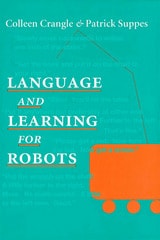
cover of Language and Learning for Robots

Language and Learning for Robots

Colleen Crangle and Patrick Suppes

CSLI, 1994

Robot technology will find wide-scale use only when a robotic device can be given commands and taught new tasks in a natural language. How could a robot understand instructions expressed in English? How could a robot learn from instructions? Crangle and Suppes begin to answer these questions through a theoretical approach to language and learning for robots and by experimental work with robots.

The authors develop the notion of an instructable robot—one which derives its intelligence in part from interaction with humans. Since verbal interaction with a robot requires a natural language semantics, the authors propose a natural-model semantics which they then apply to the interpretation of robot commands. Two experimental projects are described which provide natural-language interfaces to robotic aids for the physically disabled. The authors discuss the specific challenges posed by the interpretation of "stop" commands and the interpretation of spatial prepositions.

The authors also examine the use of explicit verbal instruction to teach a robot new procedures, propose ways a robot can learn from corrective commands containing qualitative spatial expressions, and discuss the machine-learning of a natural language use to instruct a robot in the performance of simple physical tasks. Two chapters focus on probabilistic techniques in learning.
[more]
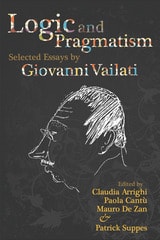
cover of Logic and Pragmatism: Selected Essays by Giovanni Vailati

Logic and Pragmatism

Selected Essays by Giovanni Vailati

Claudia Arrighi, Paola Cantu, Mauro de Zan, and Patrick Suppes

CSLI, 2009

Logic and Pragmatism features a number of the key writings of Giovanni Vailati (1863–1909), the Italian mathematician and philosopher renowned for his work in mechanics, geometry, logic, and epistemology. The selections in this book—many of which are available here for the first time in English—focus on Vailati’s significant contributions to the field of pragmatism. Accompanying these pieces are introductory essays by the volume’s editors that outline the traits of Vailati’s pragmatism and provide insights into the scholar’s life.
[more]
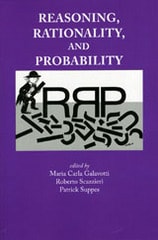
cover of Reasoning, Rationality and Probability

Reasoning, Rationality and Probability

Edited by Maria Carla Galavotti, Roberto Scazzieri, and Patrick Suppes

CSLI, 2008

This volume broadens our concept of reasoning and rationality to allow for a more pluralistic and situational view of human thinking as a practical activity. Drawing on contributors across disciplines including philosophy, economics, psychology, statistics, computer science, engineering, and physics, Reasoning, Rationality, and Probability argues that the search for strong theories should leave room for the construction of context-sensitive conceptual tools. Both science and everyday life, the authors argue, are too complex and multifaceted to be forced into ready-made schemata.
[more]
cover of The Structure of Scientific Theories

The Structure of Scientific Theories

Edited by Frederick Suppe

University of Illinois Press, 1977

[more]