Results by title
15 books match the query 'Surgeons'
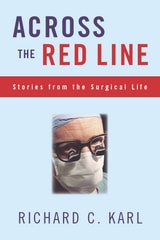
Across The Red Line
Stories From The Surgical LifeRichard C. Karl
Temple University Press, 2003
Autobiography of Silas Thompson Trowbridge M.D.
Silas Thompson Trowbridge. Introduction by John S. Haller Jr. and Barbara Mason
Southern Illinois University Press, 2004
Autobiography of Silas Thompson Trowbridge M.D. is a remarkable account of nineteenth-century medicine, politics, and personal life that recovers the captivating experiences of a Civil War–era regimental surgeon who was also a president of the Illinois State Medical Society and a United States consul in Mexico. First published in 1872 by Trowbridge’s family and even printed on a family-owned press, only a handful of copies of the initial publication survive. In this first paperback edition, Trowbridge’s memoirs are reprinted as they originally appeared.
Indiana-born Trowbridge moved to Illinois in his early twenties. A teacher by trade, he continued that career while he began the study of medicine, eventually starting a medical practice near New Castle, which he later moved to Decatur. Though respected by the community, Trowbridge lacked an authentic medical degree, so he enrolled in a four-month course of medical lectures at Rush Medical College in Chicago. Autobiography describes the atmosphere of the medical school and delineates Trowbridge’s opinions on the lack of quality control in medical colleges of the day.
Although three years of study and two annual terms of sixteen weeks were the actual requirements for the degree, Trowbridge was allowed to graduate after a single course of lectures and completion of a twenty-page thesis due to his previous experience. He then married a young widow and returned to Decatur, where he began a partnership with two local physicians and inaugurated a county medical society. In addition to practicing medicine, he was known and respected for regulating it, too, having supported legislation that would legalize dissection and prohibit incompetent persons from practicing medicine.
In 1861, Trowbridge began service as a surgeon of the 8th Illinois Volunteer Infantry commanded by Colonel Richard J. Oglesby. Autobiography describes his experiences beginning in Cairo, Illinois, where the infantry was involved in several expeditions and where Trowbridge made his “debut at the operating table.” Revealing a litany of surgical duties, replete with gruesome details, these war-time recollections provide a unique perspective on medical practices of the day. Likewise, his commentaries on political issues and his descriptions of combat serve to correct some of the early written histories of the war’s great battles.
After receiving an honorable discharge in 1864, Trowbridge returned to Decatur to resume his partnership with Dr. W. J. Chenoweth and devote himself to surgery. His reminiscences recount several difficult surgeries, his efforts to reorganize the county medical society (which had collapsed during the war), and his communications to the Illinois legislature to set higher qualifications for practicing physicians. He was later elected president of the Illinois State Medical Society and appointed by President Grant United States Consul to Vera Cruz on the eastern coast of Mexico, where he studied and challenged the treatment of yellow fever. The autobiography ends in 1874 with a six-day family vacation and the marriage of his daughter to a merchant of Vera Cruz.
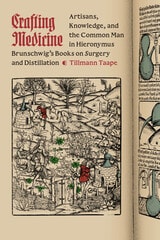
Crafting Medicine
Artisans, Knowledge, and the Common Man in Hieronymus Brunschwig's Books on Surgery and DistillationTillmann Taape
University of Chicago Press, 2025
Between 1497 and 1512, Hieronymus Brunschwig (ca. 1450–ca. 1530), an obscure craftsman from Strasbourg, wrote books on surgery and pharmacy that transformed medical expertise, how it was codified in print, and how it was communicated to new audiences. Brunschwig was an unlikely author. He apprenticed as a surgeon in the local guild and dispensed medicines from his own shop. But he was remarkably well-read in surgery, alchemy, and medical theory, even if he lacked a university education. His unique authorial voice spoke to the healing practices of craftsmen and common people in a down-to-earth German dialect.
Crafting Medicine, by Tillmann Taape, is the first in-depth study of Brunschwig and his works. In it, Taape argues that Brunschwig’s writings shaped a nascent tradition of vernacular medicine. Brunschwig’s books represent a key moment in the history of medical print, for they conveyed medical expertise to a new readership of nonacademic practitioners, who became a key audience for a flood of vernacular medical publications during the sixteenth century. Using Brunschwig’s books as a unique window into the past, Crafting Medicine beautifully reconstructs the world of science inhabited by Brunschwig, his fellow craftsmen, his translators, and his readers.
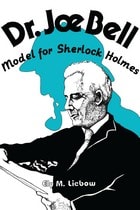
Dr. Joe Bell
Model for Sherlock HolmesEly M. Liebow
University of Wisconsin Press, 1982
A distinguished physician and professor of medicine at Edinburgh University, and a forensic expert for the British Crown, Joseph Bell was well known for his remarkable powers of observation and deduction. In what would become true Sherlockian fashion, he had the ability to deduce facts about his patients from otherwise unremarkable details. In one instance recounted by Arthur Conan Doyle himself—and similar to Sherlock Holmes's own observations in "The Greek Interpreter"—Bell took little time to determine that one of his patients had recently served in the army, a non-commissioned officer discharged from his Highland regiment stationed in Barbados:
“The man was a respectful man, but did not remove his hat. They do not in the army, but he would have learned civilian ways had he been long discharged. He has an air of authority and he is obviously Scottish. As to Barbados, his complaint is elephantitis, which is West Indian and not British.”
Based on extensive research into the life of Bell and including tantalizing accounts of the connections between Bell and Conan Doyle, this biography is required reading for anyone interested in Victorian medicine, in the history of detective fiction, and in Sherlock Holmes and Dr. Watson.
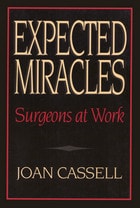
Expected Miracles
Surgeons at WorkJoan Cassell
Temple University Press, 1991
Expected Miracles explores the world of surgeons from their own perspective—how they perceive themselves, their work, colleagues, and communities. Recognizing that surgery is an art, a craft, a science, and a business, Joan Cassell offers, through poignant, painful, and thrilling descriptions, a vivid portrayal of the culture of surgery.
Cassell has entered a realm where laypersons are usually horizontal, naked, and anesthetized. Using the central metaphor of the surgical "miracle," she illuminates the drama of the operating room, where surgeons and patients alike expect heroic performance. She takes us backstage to overhear conversations about patients, families, and colleagues, observe operations, eavesdrop on gossip about surgeons’ performances, and examine the values, behavior, and misbehavior of surgeons at work.
Said one Chief of Surgery, "You couldn’t have a good surgeon who didn’t believe in the concept of the Hero." Following this lead, Cassell explores the heroic temperament of those who perform surgical "miracles" and finds that the demands and pressures of surgical practice require traits that in other fields, or in personal interactions, are often regarded as undesirable. She observes, "surgeons must tread a fine line between courage and recklessness, confidence and hubris, a positive attitude and a magical one." This delicate balance and frequent imbalance is portrayed through several character sketches. She contrasts the caring attention and technical mastery of The Exemplary Surgeon with the theatrical posturing of The Prima Donna and the slick showiness and questionable morals of The Sleazy Surgeon.
She also identifies the attributes that surgeons admire in each other. They believe that only peers can really evaluate each other, and, while doctors might not speak negatively about colleagues in public, the community of surgeons exerts considerable pressure on its members to perform competently.
Unlike "doctor-bashing" chronicles, Expected Miracles seeks to understand the charismatic authority of surgeons, its instability, and its price-to surgeons and to patients.
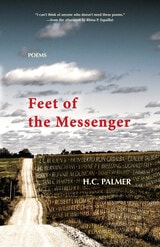
Feet of the Messenger
poemsH. C. Palmer
BkMk Press, 2017
Winner, Kansas Notable Book
Balcones Poetry Prize Finalist
Feet of the Messenger explores H.C. Palmer’s experiences as a medical doctor, especially as an army surgeon in the Vietnam War, and his feelings for and memories of his native Kansas, especially the Flint Hills. Although he has only been writing poetry for ten years, Palmer’s work reflects decades of discovering how the war kept coming back to him, even on the prairie.
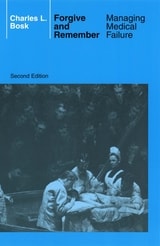
Forgive and Remember
Managing Medical Failure, 2nd EditionCharles L. Bosk
University of Chicago Press, 2003
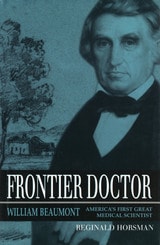
Frontier Doctor
William Beaumont, America's First Great Medical ScientistReginald Horsman
University of Missouri Press, 1996
In Frontier Doctor, Reginald Horsman provides the first modern, scholarly biography of a colorful backwoods doctor whose pioneering research on human digestion gained him international renown as a physiologist. Before William Beaumont's work, there was still considerable controversy as to the nature of human digestion; his research established beyond a doubt that digestion is a chemical process.
Beaumont received his medical training as an apprentice in a small town in Vermont and served as a surgeon's mate in the War of 1812. After the war, he practiced in Plattsburgh, New York, before making his career as an army surgeon. His chance for fame came in 1822, when he was serving at the lonely post of Fort Mackinac in Michigan Territory. A Canadian voyageur--Alexis St. Martin--was accidentally shot in the stomach at close range, and his wound healed in such a way as to leave a permanent opening. This enabled Beaumont to insert food directly into the stomach, to siphon gastric juice, and to experiment on the process of digestion both inside and outside the stomach.
Because Beaumont had considerable difficulty in persuading St. Martin to stay with him so he could continue his research, his study was carried out sporadically over a number of years. In the early 1830s, with the support of Joseph Lovell, the surgeon general of the army, Beaumont and St. Martin went to the East Coast, where additional experiments were carried out. In 1833, Beaumont published Experiments and Observations on the Gastric Juice and the Physiology of Digestion, a book based upon his research on St. Martin and the work upon which his reputation primarily rests. His observations revealed more about digestion in the human stomach than had ever before been known, and his work was immediately praised in both the United States and Europe.
After he left the army, Beaumont established a successful private practice in St. Louis, Missouri, where he spent the latter part of his life. Beaumont, a fascinating, argumentative character, was often engaged in public controversy. He was also good friends with several notable men, including the young Robert E. Lee.
Frontier Doctor sheds welcome new light on the state of medicine both inside and outside the army in the early nineteenth century and provides absorbing information on the early experi-ments that set the research into human digestion irrevocably on the right course.
I Acted from Principle
The Civil War Diary of Dr. William M. McPheeters, Confederate Surgeon in the Trans-MississippiCynthia DeHaven Pitcock
University of Arkansas Press, 2000
Improve, Perfect, & Perpetuate
Oliver S. Hayward
Dartmouth College Press, 1998
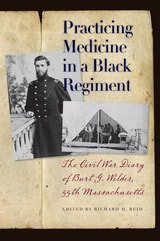
Practicing Medicine in a Black Regiment
The Civil War Diary of Burt G. Wilder, 55th MassachusettsRichard M. Reid
University of Massachusetts Press, 2010
Burt Green Wilder, a Boston-born, Harvard-educated doctor-in-training, was among the first white officers commissioned to staff the 55th Massachusetts. Like other officers serving in the state's African American units, Wilder was selected for his military experience, his "firm Anti-Slavery principles," and his faith in the value of black troops. From the time he joined the 55th in May 1863 until the regiment was discharged in September 1865, Wilder recorded his experiences and observations. He described the day-to-day activities of a Civil War surgeon, the indignities suffered by black enlisted men at the hands of a War Department that denied them the same treatment offered to white troops, and the role of the regiment in the campaign around Charleston and in Florida.
Service in the southern states also allowed Wilder to indulge a passion for natural science and comparative anatomy, including the collection of unusual species, one of which—the spider known as Nephila wilderi—still bears his name. After the war he completed his medical studies at Harvard and joined the faculty of Cornell University, where he became a distinguished professor of zoology as well as an outspoken advocate of racial equality.
In his introduction to the volume, Richard M. Reid analyzes Burt Wilder's diary and places it within the context of the war, the experience of African American troops, and Wilder's life and career.
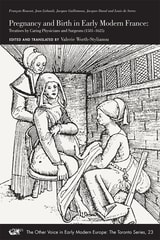
Pregnancy and Birth in Early Modern France
Treatises by Caring Physicians and Surgeons (1581–1625)François Rousset, Jean Liebault, Jacques Guillemeau, Jacques Duval, and Louis de Serres
Iter Press, 2013
—Gianna Pomata
Professor of the History of Medicine, Johns Hopkins University
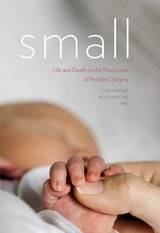
Small
Life and Death on the Front Lines of Pediatric SurgeryCatherine Musemeche
Dartmouth College Press, 2014
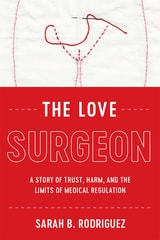
The Love Surgeon
A Story of Trust, Harm, and the Limits of Medical RegulationSarah B. Rodriguez
Rutgers University Press, 2020
It would be easy to dismiss Dr. Burt as a monstrous aberration, a modern-day Dr. Frankenstein. Yet as medical historian Sarah Rodriguez reveals, that’s not the whole story. The Love Surgeon asks tough questions about Burt’s heinous acts and what they reveal about the failures of the medical establishment: How was he able to perform an untested surgical procedure? Why wasn’t he obliged to get informed consent from his patients? And why did it take his peers so long to take action?
The Love Surgeon is both a medical horror story and a cautionary tale about the limits of professional self-regulation.
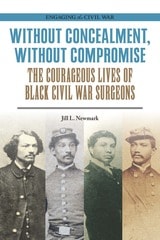
Without Concealment, Without Compromise
The Courageous Lives of Black Civil War SurgeonsJill L. Newmark
Southern Illinois University Press, 2023
Of some twelve thousand Union Civil War surgeons, only fourteen were Black men. This book is the first-ever comprehensive exploration of their lives and service. Jill L. Newmark’s outstanding research uncovers stories hidden for more than 150 years, illuminating the unique experiences of proud, patriotic men who fought racism and discrimination to attend medical school and serve with the U.S. military. Their efforts and actions influenced societal change and forged new pathways for African Americans.
Individual biographies bring to light Alexander T. Augusta, who challenged discriminatory laws; William P. Powell Jr., who pursued a military pension for twenty-five years; Anderson R. Abbott, a friend of Elizabeth Keckley’s; John van Surly DeGrasse, the only Black surgeon to serve on the battlefield; John H. Rapier Jr., an international traveler; Richard H. Greene, the only Black surgeon known to have served in the Navy; Willis R. Revels, a preacher; Benjamin A. Boseman, a politician and postmaster; and Charles B. Purvis, who taught at Howard University. Information was limited for five other men, all of whom broke educational barriers by attending medical schools in the United States: Cortlandt Van Rensselaer Creed, William B. Ellis, Alpheus W. Tucker, Joseph Dennis Harris, and Charles H. Taylor.
Newmark presents all available information about the surgeons’ early lives, influences, education, Civil War service, and post-war experiences. Many of the stories overlap, as did the lives of the men. Each man, through his service as a surgeon during the war and his lifelong activism for freedom, justice, and equality, became a catalyst of change and a symbol of an emancipated future.