Results by title
35 books match the query 'Surgery'

A User’s Guide to Bypass Surgery
Ted Klein
Ohio University Press, 1996
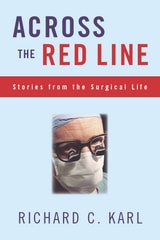
Across The Red Line
Stories From The Surgical LifeRichard C. Karl
Temple University Press, 2003
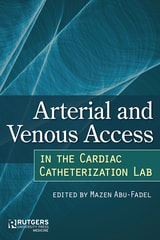
Arterial and Venous Access in the Cardiac Catheterization Lab
Arterial and Venous Access in the Cardiac Catheterization LabAbu-Fadel, Mazen
Rutgers University Press, 2016
Percutaneous cardiac and endovascular procedures are performed by a variety of interventional physicians and continue to evolve and expand. One of the most important steps in performing these procedures is vascular access and their Achilles heel is vascular access site complications. This volume is intended to help the clinician by providing a practical overview of the techniques and technologies used in top catheterization laboratories to access the arterial and venous beds.
Dr. Mazen Abu-Fadel and his contributors, part of the renowned cardiovascular team at the University of Oklahoma Health Sciences Center, carefully walk the reader through the various techniques used to obtain vascular access into most arterial and venous sites. They thoroughly describe current data, techniques, advantages, risks, and benefits of each vascular access site. Covering everything from anatomic landmarks to closures devices, Arterial and Venous Access in the Cardiac Catheterization Lab offers a complete overview of each procedure. In addition, it provides an up-to-date guide to the best medical technologies and equipment used when performing these procedures.
Arterial and Venous Access in the Cardiac Catheterization Lab is an invaluable resource for a wide range of clinical personnel, from attending physicians and trainees to nursing staff and vascular technicians. Written by experienced leaders in the field, it demonstrates how to perform complex, risky procedures while providing patients with expert care.
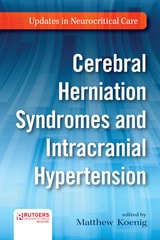
Cerebral Herniation Syndromes and Intracranial Hypertension
Koenig, Matthew
Rutgers University Press, 2016
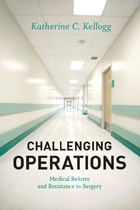
Challenging Operations
Medical Reform and Resistance in SurgeryKatherine C. Kellogg
University of Chicago Press, 2011
In 2003, in the face of errors and accidents caused by medical and surgical trainees, the American Council of Graduate Medical Education mandated a reduction in resident work hours to eighty per week. Over the course of two and a half years spent observing residents and staff surgeons trying to implement this new regulation, Katherine C. Kellogg discovered that resistance to it was both strong and successful—in fact, two of the three hospitals she studied failed to make the change. Challenging Operations takes up the apparent paradox of medical professionals resisting reforms designed to help them and their patients. Through vivid anecdotes, interviews, and incisive observation and analysis, Kellogg shows the complex ways that institutional reforms spark resistance when they challenge long-standing beliefs, roles, and systems of authority.
At a time when numerous policies have been enacted to address the nation’s soaring medical costs, uneven access to care, and shortage of primary-care physicians, Challenging Operations sheds new light on the difficulty of implementing reforms and offers concrete recommendations for effectively meeting that challenge.
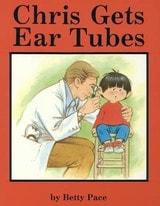
Chris Gets Ear Tubes
Betty Pace
Gallaudet University Press, 1987
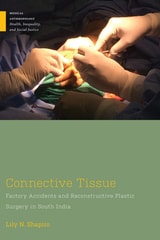
Connective Tissue
Factory Accidents and Reconstructive Plastic Surgery in South IndiaLily N. Shapiro
Rutgers University Press, 2025
Connective Tissue revisits scholarship on factory labor by analyzing the accident as constitutive of the experience of work itself, and it refines existing conversations about the body, trauma, and care by introducing an analysis informed by theories of labor and production. Author Lily N. Shapiro argues that care does not happen in spite of or on the margins of capitalism, but rather that capitalism happens in and through care and caring relations. These experiences are intersected by identities of caste, class, and gender, and entangled in state discourse about labor rights, welfare, and industrial law.

Crafting Medicine
Artisans, Knowledge, and the Common Man in Hieronymus Brunschwig's Books on Surgery and DistillationTillmann Taape
University of Chicago Press, 2025
Between 1497 and 1512, Hieronymus Brunschwig (ca. 1450–ca. 1530), an obscure craftsman from Strasbourg, wrote books on surgery and pharmacy that transformed medical expertise, how it was codified in print, and how it was communicated to new audiences. Brunschwig was an unlikely author. He apprenticed as a surgeon in the local guild and dispensed medicines from his own shop. But he was remarkably well-read in surgery, alchemy, and medical theory, even if he lacked a university education. His unique authorial voice spoke to the healing practices of craftsmen and common people in a down-to-earth German dialect.
Crafting Medicine, by Tillmann Taape, is the first in-depth study of Brunschwig and his works. In it, Taape argues that Brunschwig’s writings shaped a nascent tradition of vernacular medicine. Brunschwig’s books represent a key moment in the history of medical print, for they conveyed medical expertise to a new readership of nonacademic practitioners, who became a key audience for a flood of vernacular medical publications during the sixteenth century. Using Brunschwig’s books as a unique window into the past, Crafting Medicine beautifully reconstructs the world of science inhabited by Brunschwig, his fellow craftsmen, his translators, and his readers.
Do You Really Need Surgery?
A Sensible Guide to Hysterectomy and Other Procedures for WomenMichele C. Moore, M.D., FAAFP and Caroline M. de Costa
Rutgers University Press, 2004
At last, here is a user-friendly guide to gynecologic surgery. The authors' guiding principle is that each woman for whom any kind of surgery is recommended should be well informed about the indications, the risks, and the expected results.
Using anecdotes drawn from a combined fifty years of experience, doctors Moore and de Costa provide clear and accurate information about women's anatomy, physiology, common gynecological ailments, diagnosis, alternative treatments, and, finally, full details about surgery itself. Among the surgeries discussed are removal of the uterus (hysterectomy), removal of the ovaries (oophorectomy), and removal of fibroids. The various ways of performing these procedures are examined, including minimally invasive surgery done through the laparoscope.
The authors also help the patient through the post-operative phase, revealing what to expect, how to make the recovery easier, and how to take care of yourself after the surgery. The result is a book that empowers women as they weigh their options with regard to gynecologic surgery.
Essential Facts in Cardiovascular Medicine
Board Review and Clinical PearlsYeghiazarians, Yerem
Rutgers University Press, 2018
Essential Facts in Cardiovascular Medicine covers numerous important topics from the basics of Statistics, to factoids in General Cardiology, Physical Exam, EKG, Congenital Heart Disease, Valvular Heart Disease, Heart Failure/Transplant, Acute Coronary Syndromes, Pericardial Diseases, Electrophysiology, Pharmacology, Pregnancy, Pulmonary Hypertension, Peripheral Vascular Disease, Echocardiography, Formulas, Interventional Cardiology and Cardiac Tumors.
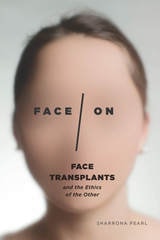
Face/On
Face Transplants and the Ethics of the OtherSharrona Pearl
University of Chicago Press, 2017
The first comprehensive cultural study of face transplant surgery, Face/On reveals our true relationships to faces and facelessness, explains the significance we place on facial manipulation, and decodes how we understand loss, reconstruction, and transplantation of the face. To achieve this, Pearl draws on a vast array of sources: bioethical and medical reports, newspaper and television coverage, performances by pop culture icons, hospital records, personal interviews, films, and military files. She argues that we are on the cusp of a new ethics, in an opportune moment for reframing essentialist ideas about appearance in favor of a more expansive form of interpersonal interaction. Accessibly written and respectfully illustrated, Face/On offers a new perspective on face transplant surgery as a way to consider the self and its representation as constantly present and evolving. Highly interdisciplinary, this study will appeal to anyone wishing to know more about critical interventions into recent medicine, makeover culture, and the beauty industry.
Forgive and Remember
Managing Medical Failure, 2nd EditionCharles L. Bosk
University of Chicago Press, 2003
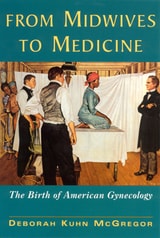
From Midwives to Medicine
The Birth of American GynecologyMcGregor, Deborah K
Rutgers University Press, 1998
Using patient records and archival material from the female governors and administrators at the hospital, From Midwives to Medicine shows how a new medical practice developed out of the changing patterns and historical experiences of childbirth, as well as out of the context of the social relations f the sexes. Sim's patients were slave women in the antebellum South, poor Irish immigrants in the industrial North, and upper-class white. Protestant, Manhattan socialites who sought help for their "hysterical" symptoms. During his career, which began in the South and flourished at the Women's Hospital in New York. Sims performed and perfected his technique to "cure" vesico-vaginal fistulas, the tears of childbirth, from which so many women suffered. But Sims achieved these successes on the operating table only after years of practicing his "silver suture" technique on unanesthetized slave women, who he believed "by the nature of their race... had a specific physiological tolerance for pain unknown to whites."
House of Pain
New and Selected EssaysLaurence Gonzales
University of Arkansas Press, 2013
Laurence Gonzales began his successful publishing career in 1989 with the publication of The Still Point and later The Hero’s Apprentice (1994), both with the University of Arkansas Press. From these collections of essays he went on to write for renowned magazines in addition to publishing several books, including the best selling Deep Survival. His journalism garnered two National Magazine Awards, and his latest nonfiction book, Surviving Survival, was named by Kirkus as one of the best books of 2012.
This new collection of essays shows us the sometimes hair-raising, sometimes heart-wrenching writing that Gonzales has become known for. This “compelling and trustworthy guide” (Booklist) takes us from a maximum-security prison to a cancer ward, from a mental institution to the World Trade Center. Among the essays included is “Marion Prison,” a National Magazine Award finalist, with its intimate view inside the most maximum security prison in America. “House of Pain” takes the reader into the life of a brain surgeon at Chicago’s Cook County Hospital, a grim world that few ever see. “Rites of Spring,” another National Magazine Award finalist, follows Gonzales and his wife on their journey through cancer, not once, but twice.
Other stories venture above the Arctic Circle, flying deep into the Alaskan wilderness among grizzly bears and trumpeter swans; explore aerobatics in high-performance aircraft; and eulogize Memphis and Miami as American cities that mourn their fates in uniquely different ways.
Ischemic Stroke
Diagnosis and TreatmentMartin-Schild, Sheryl
Rutgers University Press, 2018
Key topics explored cover all elements of stroke care, including examinations of: emergent evaluation of the suspected stroke patient, clinical signs and symptoms of stroke, mechanisms of ischemic stroke, neuroimaging, cardiac-based evaluation, thrombolytic therapy, endovascular therapy, critical care management, rehabilitation, cardiac arrhythmias, and structural heart disease.
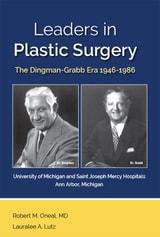
Leaders in Plastic Surgery
The Dingman-Grabb Era 1946-1986Robert M. Oneal, MD, and Lauralee A. Lutz
Michigan Publishing Services, 2017

Obesity Surgery
Stories Of Altered LivesMarta Meana
University of Nevada Press, 2008
Obesity Surgery
Stories Of Altered LivesMarta Meana
University of Nevada Press, 2008
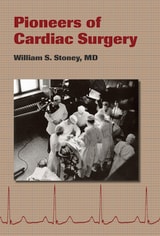
Pioneers of Cardiac Surgery
William S. Stoney
Vanderbilt University Press, 2008
The profiles are edited transcripts of interviews videotaped between 1996 and 2004. They tell of the development of new techniques such as the "blue baby operation," the first heart-lung machine, the first artificial heart valve, and the first coronary bypass operation. They also tell the unusual life stories of the surgeons and allude to professional and institutional rivalries. A particularly valuable part of the book is the author's brief history of cardiac surgery, designed to orient the reader for reading the profiles that follow.

Probably Someday Cancer
Genetic Risk and Preventative MastectomyKim Horner
University of North Texas Press, 2019

Richard Selzer and the Rhetoric of Surgery
Charles M. Anderson
Southern Illinois University Press, 1989
Anderson provides the context from which Selzer’s writing grows and a concept of language adequate to his purposes and accomplishments. He takes a careful look at Selzer’s writing to demonstrate that these abstract considerations do tell us why a surgeon would write. The works Anderson examines are "Jonah and the Whale" (an important early short story) and the first three essays in Mortal Lessons. These examples show the reader exactly how the symbols of literature interact directly with the world and the everyday communications of both writer and reader. According to Anderson, Mortal Lessons is also Selzer’s most artistic statement of his own sense of why and how he became a writer.
Selzer’s books include Rituals of Surgery, Mortal Lessons, Confessions of a Knife, Letters to a Young Doctor, and Taking the World in for Repairs.
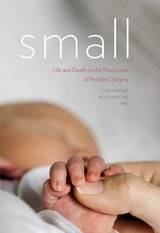
Small
Life and Death on the Front Lines of Pediatric SurgeryCatherine Musemeche
Dartmouth College Press, 2014
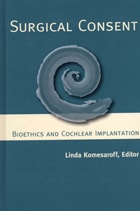
Surgical Consent
Bioethics and Cochlear ImplantationLinda Komesaroff
Gallaudet University Press, 2007
Drawing on current research, this volume presents the varying reactions around the globe to the high rate of implantation. These views contrast sharply with the medical perspective of deafness overwhelmingly promoted through the media and by the cochlear implantation industry. At the same time, the contributors aim to disrupt the binaries that have long dominated the field of deafness — speech versus sign, instruction through speech and sign systems versus bilingual education, and medical intervention versus cultural membership in the Deaf community.
Surgical Consent begins and ends with the voices of Deaf people. Their articulate and, at times, raw insights clearly delineate the issues of power, positioning, and minority-majority group relations that are inherent in the dominant hearing culture’s understanding of diversity and globalization.
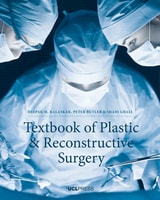
Textbook of Plastic and Reconstructive Surgery
Edited by Deepak K. Kalaskar, Peter E. Butler, and Shadi Ghali
University College London, 2016
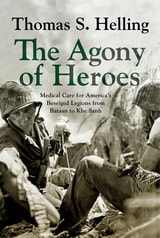
The Agony of Heroes
Medical Care for America's Besieged Legions from Bataan to Khe SanhThomas S. Helling
Westholme Publishing, 2024
Bataan, Anzio, Bastogne, Chosin, Khe Sanh: names that define the American spirit. They are synonymous with courage, resilience, and determination against great odds. At each of these battles American soldiers and Marines weathered desperation and fear to survive, advance, and triumph. Along with these heroes of the battlefield were no less determined and courageous providers of medical care. From the heat and disease-ridden jungles of Bataan, the precarious beachhead of Anzio, the encircled town of Bastogne, the frozen fields of Chosin, and the forsaken plateau of Khe Sanh, doctors and nurses worked under intense conditions with whatever means at hand, to staunch bleeding, repair damage, and resurrect the dying. In so doing they gave a glimmer of hope for the warriors facing possible death or capitulation. Often completely cut off from vital supplies and modern technology, and under the threat of enemy fire, these medical professionals—men and women—never lost sight of their passionate commitment to the sick and wounded. As noncombatants, this took extraordinary resolve to ignore the mortal threats of explosions and gunfire to focus on the mission of relieving pain, dragging from the brink of death damaged soldiers completely dependent on their resourcefulness. Some of these brave men and women would suffer the same fate as their fighting comrades, cut down by enemy fire in the prime of life, many times in the very task of rendering the bottomless compassion that was their hallmark and sometimes their only tonic.
In The Agony of Heroes: Medical Care for America’s Besieged Legions from Bataan to Khe Sanh, distinguished surgeon Thomas S. Helling relates the inspirational and compelling stories of the doctors, nurses, corpsmen, aides, and others who braved the most frightening conditions in order to save lives. Their experiences testify to the indomitable human grit that, when asked, transforms ordinary behavior into extraordinary achievements.
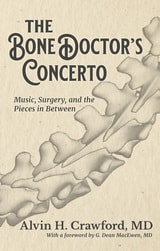
The Bone Doctor's Concerto
Music, Surgery, and the Pieces in BetweenAlvin H. Crawford, MD
Ohio University Press, 2023
Published by the University of Cincinnati Press
Born in Memphis, Tennessee in 1939, Dr. Alvin Crawford grew up and attended medical school in a segregated world. Beginning with his early life in Orange Mound—a self-contained community for freed slaves established in the 1890s—Crawford’s autobiography describes his flirtation with a music degree and time spent playing in jazz bands through the segregated South. In 1960, Crawford began his ground-breaking medical career with his entrance into the University of Tennessee College of Medicine, becoming the school’s first African American student. After completing his medical training and traveling the world as a surgeon for the Navy, Crawford found himself in Cincinnati, where he established the Comprehensive Pediatric Orthopedic Clinic at Cincinnati Children’s Hospital, the first in the region.
Underlying this story are the systemic and very personal incidents of racism Crawford experienced throughout his career. His autobiography is a personal account of segregation, integration, ambition, hard work, and taking risks.

The Look of a Woman
Facial Feminization Surgery and the Aims of Trans- MedicineEric Plemons
Duke University Press, 2017
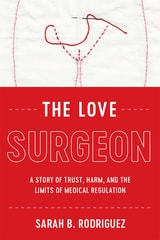
The Love Surgeon
A Story of Trust, Harm, and the Limits of Medical RegulationSarah B. Rodriguez
Rutgers University Press, 2020
It would be easy to dismiss Dr. Burt as a monstrous aberration, a modern-day Dr. Frankenstein. Yet as medical historian Sarah Rodriguez reveals, that’s not the whole story. The Love Surgeon asks tough questions about Burt’s heinous acts and what they reveal about the failures of the medical establishment: How was he able to perform an untested surgical procedure? Why wasn’t he obliged to get informed consent from his patients? And why did it take his peers so long to take action?
The Love Surgeon is both a medical horror story and a cautionary tale about the limits of professional self-regulation.
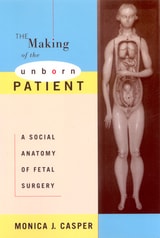
The Making of the Unborn Patient
A Social Anatomy of Fetal SurgeryCasper, Monica J
Rutgers University Press, 1998
It is now possible for physicians to recognize that a pregnant woman's fetus is facing life-threatening problems, perform surgery on the fetus, and if it survives, return it to the woman's uterus to finish gestation. Although fetal surgery has existed in various forms for three decades, it is only just beginning to capture the public's imagination. These still largely experimental procedures raise all types of medical, political and ethical questions. Who is the patient? What are the technical difficulties involved in fetal surgery? How do reproductive politics seep into the operating room, and how do medical definitions and meanings flow out of medicine and into other social spheres? How are ethical issues defined in this practice and who defines them? Is fetal surgery the kind of medicine we want? What is involved in reframing fetal surgery as a women's health issue, rather than simply a pediatric concern? In this ethnographic study of the social, cultural and historical aspects of fetal surgery, Monica Casper addresses these questions. The Making of the Unborn Patient examines two important and connected events of the second half of the 20th century: the emergence of fetal surgery as a new medical specialty and the debut of the unborn patient.
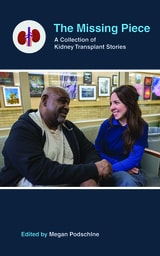
The Missing Piece
A Collection of Kidney Transplant StoriesEdited by Megan Podschlne
Michigan Publishing Services, 2018
This uplifting book contains practical advice and a helpful list of resources for patients and family members. It is a must-read for those who are facing dialysis and/or kidney transplant and for those considering becoming a living donor.
The book’s editor has dedicated this book to new patients, understanding that patient-to-patient communication is a unique and effective way to improve patient and family education. Proceeds from this book will be used to improve the patient experience at Michigan Medicine.
Transplanting Care
Shifting Commitments in Health and Care in the United StatesHeinemann, Laura L.
Rutgers University Press, 2016
Under the Knife
Cosmetic Surgery, Boundary Work, and the Pursuit of the Natural FakeSamantha Kwan and Jennifer Graves
Temple University Press, 2020
Samantha Kwan and Jennifer Graves reveal how women negotiate their “unnatural”—but hopefully (in their view) natural-looking—surgically-altered bodies. Based on in-depth interviews with forty-six women who underwent cosmetic surgery to enhance their appearance, the authors investigate motivations for surgery as well as women’s thoughts about looking natural after the procedures. Under the Knife dissects the psychological and physical strategies these women use to manage the expectations, challenges, and disappointments of cosmetic surgery while also addressing issues of agency and empowerment. It shows how different cultural intersections can produce varied goals and values around body improvement.
Under the Knife highlights the role of deep-seated yet contradictory gendered meanings about women’s bodies, passing, and boundary work. The authors also consider traditional notions of femininity and normalcy that trouble women’s struggle to preserve an authentic moral self.
Vital Conflicts in Medical Ethics
A Virtue Approach to Craniotomy and Tubal PregnanciesMartin Rhonheimer
Catholic University of America Press, 2009
Why Surgeons Struggle with Work-Hour Reforms
James E. Coverdill
Vanderbilt University Press, 2021
Why Surgeons Struggle with Work-Hour Reforms focuses on general surgeons, a historically long-hour specialty, who fiercely opposed the reforms and are among the least compliant. Why do surgeons struggle with the reforms? Why do they continue to work long hours and view the act of doing so as reasonable if not quintessentially professional? Although the analysis is situated in the growing scientific literature on the consequences of fatigue, the authors do not adjudicate between the claims of surgeons and reform advocates about the effects of long work hours on patient or provider safety. Rather, the aim is to explore and explain how aspects of the occupational culture of surgeons and the social organization of surgical training and practice interlock to impede the reforms.

Your Transplant Adventure
A Kids Guide to Organ TransplantTanya Smith
Michigan Publishing Services, 2018
The bright and colorful illustrations appeal to a child’s eye. Simple text accompanies each illustration. A direct question (e.g. “Will I have stitches or a scar?”) on one page is answered on the facing page, beneath an original illustration (e.g. “Your doctor will use stitches or a special kind of glue to help your body heal from the surgery. After the stitches come out, you will have a scar. This will always remind you of how brave you were!”).
This book is the perfect accompaniment for young children who may need a transplant, as well as for siblings and other family members who have questions and would appreciate some assistance on how to talk about the transplant process.