Results by title
45 books match the query 'Sustainability'
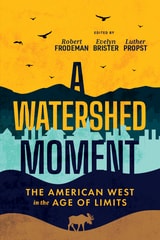
A Watershed Moment
The American West in the Age of LimitsEdited by Robert Frodeman, Evelyn Brister, and Luther Propst
University of Utah Press, 2024
The volume presents practical approaches to land use, land management, and community planning that are motivated by philosophical views on justice, quality of life, and sustainability in the American West. The contributors are policymakers, government employees, land and water managers, urban planners, biologists, tribal members, writers, and academics from a variety of backgrounds and perspectives. The result is a compelling vision of place-based, policy-oriented sustainability across the West.

Art, Sustainability and Learning Communities
Call to ActionEdited by Raphael Vella and Victoria Pavlou
Intellect Books, 2024
The main aim of Art, Sustainability and Learning Communities is to show how shared spaces for exchange in the fields of art education and continuous professional development can reflect, inspire, and integrate sustainability principles that are becoming crucial in today’s world. The authors propose the idea that coordinated action can lead to a more sustainable future by promoting a sense of community, lifelong learning, and confidence in the possibility of changing current conditions.
Its three parts combine expertise in visual arts education, education for sustainable development, contemporary art practice, and sustainability activism. While Part I focuses on literature in the field and the interrelation of different disciplines, Part II provides concrete examples of professional learning communities and pedagogies that can be used to enrich the field of art education. Finally, Part III presents brief case studies illustrating international projects by contemporary artists, curators, environmentalists, and others, providing educators with several inspirational models of concrete and creative action.
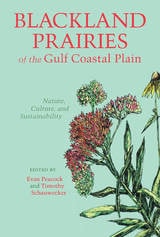
Blackland Prairies of the Gulf Coastal Plain
Nature, Culture, and SustainabilityEdited by Evan Peacock and Timothy Schauwecker
University of Alabama Press, 2003
Underscores the relevance of archaeological research in understanding long-term cultural change
Taking a holistic approach, this compilation gathers ecological, historical, and archaeological research written on the distinctive region of the Southeast called the Gulf coast blackland prairie. Ranging from the last glacial period to the present day, the case studies provide a broad picture of how the area has changed through time and been modified by humans, first with nomadic bands of Indians trailing the grazing animals and then by Euro-American settlers who farmed the rich agricultural area. Contemporary impacts include industrialization, aquaculture, population growth, land reclamation, and wildlife management.
It is believed that the Black Belt and the Great Plains were contiguous in the past and shared the same prairie vegetation, insects, and large fauna, such as bison. Swaths and patches of limestone-based soils still weave a biological corridor through what is now Alabama, Mississippi, Arkansas, Louisiana, and Texas. In analyzing this distinct grassland ecosystem, the essays compare both the mega and minute flora and fauna sustained by the land in the past and present; reveal what foods were harvested by early inhabitants, their gathering techniques, and diet changes over the 10,000-year period of native occupancy; survey the documents of early explorers for descriptions of the landform, its use, and the lives of inhabitants at the time of contact; and look at contemporary efforts to halt abuse and reverse damage to this unique and shrinking biome.
This book demonstrates that the blackland prairie has always been an important refuge for a teeming array of biological species, including humans. It will have wide scholarly appeal as well as general interest and will be welcomed by archaeologists, biologists, botanists, ecologists, historians, librarians, politicians, land managers, and national, state, and local administrators.
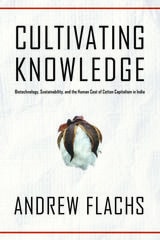
Cultivating Knowledge
Biotechnology, Sustainability, and the Human Cost of Cotton Capitalism in IndiaAndrew Flachs
University of Arizona Press, 2019
In Cultivating Knowledge anthropologist Andrew Flachs shows how rural farmers come to plant genetically modified or certified organic cotton, sometimes during moments of agrarian crisis. Interweaving ethnographic detail, discussions of ecological knowledge, and deep history, Flachs uncovers the unintended consequences of new technologies, which offer great benefits to some—but at others’ expense. Flachs shows that farmers do not make simple cost-benefit analyses when evaluating new technologies and options. Their evaluation of development is a complex and shifting calculation of social meaning, performance, economics, and personal aspiration. Only by understanding this complicated nexus can we begin to understand sustainable agriculture.
By comparing the experiences of farmers engaged with these mutually exclusive visions for the future of agriculture, Cultivating Knowledge investigates the human responses to global agrarian change. It illuminates the local impact of global changes: the slow, persistent dangers of pesticides, inequalities in rural life, the aspirations of people who grow fibers sent around the world, the place of ecological knowledge in modern agriculture, and even the complex threat of suicide. It all begins with a seed.
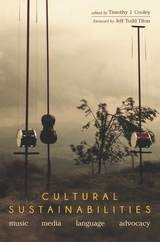
Cultural Sustainabilities
Music, Media, Language, AdvocacyEdited by Timothy J. Cooley
University of Illinois Press, 2019
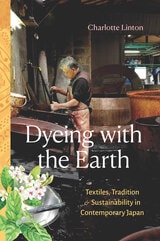
Dyeing with the Earth
Textiles, Tradition, and Sustainability in Contemporary JapanCharlotte Linton
Duke University Press, 2025

Dying Green
A Journey through End-of-Life Medicine in Search of Sustainable Health CareChristine Vatovec
Rutgers University Press, 2023
In Dying Green, award-winning educator Christine Vatovec offers an engaging study that asks us to consider the broader environmental sustainability of health care. Through a comparative analysis of the care provided to terminally ill patients in a conventional cancer ward, a palliative care unit, and an acute-care hospice facility, she shows how decisions made at a patient’s bedside govern the environmental footprint of the healthcare industry. Likewise, Dying Green offers insights on the many opportunities that exist for reducing the ecological impacts of medical practices in general, while also enhancing care for the dying in particular. By envisioning a more sustainable approach to care, this book offers a way forward that is better for both patients and the planet.
Earth in Our Care
Ecology, Economy, and SustainabilityMaser, Chris
Rutgers University Press, 2009
So writes Chris Maser in this compelling study of three interactive spheres of the ecosystem: atmosphere (air), litho-hydrosphere (rock that comprises the restless continents and the water that surrounds them), and biosphere (all life sandwiched in between).
Rich in detail and insightful analogies, Earth in Our Care addresses key issues including land-use policies, ecological restoration, forest management, local living, and sustainability thinking. Exploring our interconnectedness with the Earth, Maser examines today's problems and, more importantly, provides solutions for the future.
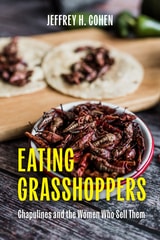
Eating Grasshoppers
Chapulines and the Women Who Sell ThemJeffrey H. Cohen
University of Texas Press, 2025
An approachable ethnography of how grasshoppers are harvested, sold, and consumed in Oaxaca.
Chapulines (toasted grasshoppers) are not a delicacy in Oaxaca. They are just food—good food—and a protein-rich seasonal snack that is the product of a long-standing industry based overwhelmingly on the labor of women. Jeffrey Cohen has interviewed dozens of these chapulineras, who harvest insects from corn and alfalfa fields, prepare them, and sell them in urban and rural marketplaces. An accessible ethnography, Eating Grasshoppers tells their story alongside the broader history of chapulines.
For tourists, chapulines are an experience—a gateway to the “real” Oaxaca. For locals, they are ordinary fare, but also a reminder of Indigenous stability and rural survival. In a sense, eating chapulines is a declaration of independence from a government that has condemned eating insects as backward. Yet, while chapulines are a generations-old favorite, eating them is not an act of preservation. Cohen shows that the business of this traditional food is thoroughly modern and ever evolving, with entrepreneurial chapulineras responding nimbly to complex and dynamic markets. From alfalfa fields to online markets, Eating Grasshoppers takes readers inside one of the world’s most fascinating food cultures.

Exploring Digital Cultural Heritage
Access, Use, Value and SustainabilityEdited by Eirini Goudarouli, Anna-Maria Sichani, and Jane Winters
University of London Press, 2026
An accessible starting point for those interested in the past, present, and future of digital cultural heritage.
The digitization of cultural heritage has reshaped humanities research and professional practice, though its full impact is still emerging. As more cultural heritage becomes born-digital, new archives and collections introduce complexity, challenges, and shared methods across sectors. Exploring Digital Cultural Heritage examines interpretations, contexts, and uses across four themes—access, use and reuse, value(s), and sustainability—spanning digitized and born-digital materials. Drawing on case studies and practical examples, it provides an overview of the concepts, processes, and technologies shaping digital cultural heritage, as well as its future challenges and directions.
Fashion Media and Sustainability
Encouraging Ethical Consumption via Journalism and InfluencersAnastasia Denisova
University of Westminster Press, 2021
Fashion is among the biggest polluters, yet the media still promote throwaway fast fashion. The growing fashion public relations industry encourages and enables this media coverage. This policy brief identifies patterns in the way journalists and influencers cover fashion which contribute to unsustainable buying behaviours.
Recent research recommends practical steps to improve media coverage to make consumption sustainable, by changing consumers’ understanding and reducing the pressure on them to buy ‘fast’ satisfaction. Policy recommendations here suggested are based on original analysis of 1,000+ media artefacts in the UK – from magazines to newspapers, gossip weeklies to Instagram influencers.
Researcher Anastasia Denisova proposes regulation of vocabulary and of affiliated links in journalism and social media, greater discussion of the psychology of buying and a ‘paid advertisement label’. Also recommended is a more proactive approach to be taken by magazines and other media with the aim of promoting restyling advice and more sustainable coverage for readers of differing financial means.

Formal Objects
On Beauty and SustainabilityRobert Hariman
University of Chicago Press, 2027
A bold invitation to learn sustainability from the aesthetic forms that pattern our world.
If we are to survive the ecological crisis, we must develop a new orientation to the world that draws us into better relationships with nature and one another. Robert Hariman believes that, as a first step, we must cultivate a renewed appreciation for the beauty at the center of reality. We must learn again, he argues, to see forms: the rhythms, shapes, and textures that evoke connection and pleasure. To that end, Formal Objects applies literary, philosophical, and art historical concepts to reimagine an often-ignored theory called formalism. This perspective is developed through visual motifs that are found in nature and the decorative arts, and it invites us to become attuned to rich patterns of reciprocity. Once we recognize the beauty in the world, we can move in step with its abundance to design more just and sustainable communities.
Free Markets with Solidarity and Sustainability
Martin Schlag
Catholic University of America Press, 2016
G7 Current Account Imbalances
Sustainability and AdjustmentEdited by Richard H. Clarida
University of Chicago Press, 2007
The current account deficit of the United States is more than six percent of its gross domestic product—an all-time high. And the rest of the world, including other G7 countries such as Japan and Germany, must collectively run current account surpluses to finance this deficit. How long can such unevenness between imports and exports be sustained, and what form might their eventual reconciliation take? Putting forth scenarios ranging from a gradual correction to a crash landing for the dollar, G7 Current Account Imbalances brings together economists from around the globe to consider the origins, status, and future of those disparities.
An esteemed group of collaborators here examines the role of the bursting of the dot-com bubble, the history of previous episodes of current account adjustments, and the possibility of the Euro surpassing the dollar as the leading international reserve currency. Though there are areas of broad agreement—that the imbalances will ultimately decline and that currency revaluations will be part of the solution—many areas of contention remain regarding both the dangers of imbalances and the possible forms of adjustment.
This volume will be of tremendous value to economists, politicians, and business leaders alike as they look to the future of the G7 economies.
Gender and Sustainability
Lessons from Asia and Latin AmericaEdited by María Luz Cruz-Torres and Pamela McElwee
University of Arizona Press, 2012
Bringing together case studies from Asia and Latin America, this valuable collection adds new knowledge to our understanding of the interplay between local and global processes. Organized broadly by three major issues—forests, water, and fisheries—the scholarship ranges widely: the gender dimensions of the illegal trade in wildlife in Vietnam; women and development issues along the Ganges River; the role of gender in sustainable fishing in the Philippines; women’s inclusion in community forestry in India; gender-based confrontations and resistance in Mexican fisheries; environmentalism and gender in Ecuador; and women’s roles in managing water scarcity in Bolivia and addressing sustainability in shrimp farming in the Mekong Delta.
Together these chapters show why gender issues are important for understanding how communities and populations deal daily with the challenges of globalization and environmental change. Through their rich ethnographic research, the contributors demonstrate that gender analysis offers useful insights into how a more sustainable world can be negotiated—one household and one community at a time.
Contributors
Stephanie Buechler
María Luz Cruz-Torres
Linda D’Amico
Georgina Drew
James Eder
Lisa L. Gezon
Pamela McElwee
Neera Singh
Hong Anh Vu
Amber Wutich
Implementing City Sustainability
Overcoming Administrative Silos to Achieve Functional Collective ActionRachel M. Krause and Christopher V. Hawkins
Temple University Press, 2021
Implementing City Sustainability examines the structures and processes that city governments employ to pursue environmental, social, and economic well-being within their communities. As American cities adopt sustainability objectives, they are faced with the need to overcome fuzzy-boundary, coordination, and collective action challenges to achieve successful implementation.
Sustainability goals often do not fit neatly into traditional city government structures, which tend to be organized around specific functional responsibilities, such as planning, public works, parks and recreation, and community development. The authors advance a theory of Functional Collective Action and apply it to local sustainability to explain how cities can—and in some cases do—organize to successfully administer changes to achieve complex objectives that transcend these organizational separations. Implementing City Sustainability uses a mixed-method research design and original data to provide a national overview of cities’ sustainability arrangements, as well as eight city case studies highlighting different means of organizing to achieve functional collective action.
By focusing not just on what cities are doing to further sustainability, but also on how they are doing it, the authors show how administrative structure enables—or inhibits—cities to overcome functional divides and achieve successful outcomes.
Indigenous Economics
Sustaining Peoples and Their LandsRonald L. Trosper
University of Arizona Press, 2022
What does “development” mean for Indigenous peoples? Indigenous Economics lays out an alternative path showing that conscious attention to relationships among humans and the natural world creates flourishing social-ecological economies.
Economist Ronald L. Trosper draws on examples from North and South America, Aotearoa/New Zealand, and Australia to argue that Indigenous worldviews centering care and good relationships provide critical and sustainable economic models in a world under increasing pressure from biodiversity loss and climate change. He explains the structure of relational Indigenous economic theory, providing principles based on his own and others’ work with tribal nations and Indigenous communities. Trosper explains how sustainability is created at every level when relational Indigenous economic theory is applied—micro, meso, and macro.
Good relationships support personal and community autonomy, replacing the individualism/collectivism dichotomy with relational leadership and entrepreneurship. Basing economies on relationships requires changing governance from the top-down approaches of nation-states and international corporations; instead, each community creates its own territorial relationships, creating plurinational relational states. This book offers an important alternative to classic economic theory. In Indigenous Economics, support for Indigenous communities’ development and Indigenous peoples’ well-being go hand-in-hand.
Publication of this book is made possible in part by the Alfred P. Sloan Foundation Program in Public Understanding of Science.
Libraries and Sustainability
Programs and Practices for Community ImpactRené Tanner, Adrian K. Ho, Monika Antonelli, and Rebekkah Smith Aldrich
American Library Association, 2021
As a core value of librarianship, sustainability is not an end point but a mindset, a lens through which operational and outreach decisions can be made. And it extends beyond an awareness of the roles that libraries can play in educating and advocating for a sustainable future. As the programs and practices in this resource demonstrate, sustainability can also encompass engaging with communities in discussions about resilience, regeneration, and social justice. Inspiring yet assuredly pragmatic, the many topics explored in this book edited by members of ALA's Sustainability Round Table and ALA’s Special Task Force on Sustainability include
- a discussion of why sustainability matters to libraries and their user communities;
- real-life examples of sustainability programming, transformative community partnerships, collective responses for climate resilience, and green building practices;
- lessons learned and recommendations from library workers who have been active in putting sustainability into practice;
- the intersection of sustainability with the work of equity, diversity, and inclusion;
- suggestions regarding the revision of library and information science curriculum in light of the practical need to build community resilience;
- an examination of how libraries’ efforts to support Doughnut Economics can bolster the United Nations' work on the Sustainable Development Goals, which seek to address the global impacts of climate change; and
- potential collaborators for future sustainability-related initiatives.

Library Consortia
Models for Collaboration and SustainabilityValerie Horton
American Library Association, 2014

Mennonite Farmers
A Global History of Place and SustainabilityRoyden Loewen
University of Manitoba Press, 2021
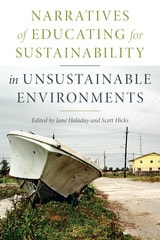
Narratives of Educating for Sustainability in Unsustainable Environments
Jane Haladay
Michigan State University Press, 2017
Pathways to Sustainability
Collaborative Solutions for a Resilient FutureEdited by Timothy L. Killeen, Donald J. Wuebbles, and Jason E. Lane
University of Illinois Press, 2025
Principles of Green Bioethics
Sustainability in Health CareCristina Richie
Michigan State University Press, 2019
Resilience
Rebekkah Smith Aldrich
American Library Association, 2018
Seventh Generation Earth Ethics
Native Voices of WisconsinPatty Loew
Wisconsin Historical Society Press, 2025
Indigenous perspectives on sustainability, culture, and community
In this collection of twelve biographies, one from each of the Native nations in Wisconsin, author Patty Loew (Bad River Ojibwe) introduces readers to prominent figures in Native sustainability—people whose life’s work reflects the traditional ecological knowledge and cultural values of their people.
Born out of Loew’s thirty years as a journalist and historian, Seventh Generation Earth Ethics highlights individuals who helped to sustain and nurture their nations.
Walter Bresette, Red Cliff Ojibwe, community activist
Hilary Waukau, Menominee, environmental warrior
Frances Van Zile, Mole Lake (Sokaogon) Ojibwe, keeper of the water
James Schlender, Lac Courte Oreilles Ojibwe, treaty rights guardian
Jose Rose, Bad River Ojibwe, elder, environmentalist, and scholar
Dorothy Davids, Stockbridge-Munsee Community Band of Mohican Indians, educator
William Gollnick, Oneida, culture keeper
Thomas St. Germaine, Lac du Flambeau Ojibwe, attorney
Truman Lowe, Ho-Chunk, organic sculpture artist
Jenny and Mary Thunder, Forest County Potawatomi, medicine women
Wanda McFaggen, St. Croix Ojibwe, Tribal Historic Preservationist
Caroline Andler, Brothertown Indian Nation, genealogist
The indigenous people whose lives are depicted in Seventh Generation Earth Ethics understood the cultural gravity that kept their people rooted to their ancestral lands and acted in ways that ensured the growth and success of future generations.
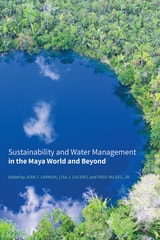
Sustainability and Water Management in the Maya World and Beyond
Jean T. Larmon
University Press of Colorado, 2021
The volume focuses primarily on the Precolumbian Maya but offers several analogous case studies outside the ancient Maya world that illustrate the pervasiveness of water’s role in sustainability, including an ethnographic study of the sustainability of small-scale, farmer-managed irrigation systems in contemporary New Mexico and the environmental consequences of Angkor’s growth into the world’s most extensive preindustrial settlement. The archaeological record offers rich data on past politics of climate change, while epigraphic and ethnographic data show how integrated the ideological, political, and environmental worlds of the Maya were.
While Sustainability and Water Management in the Maya World and Beyond stresses how lessons from the past offer invaluable insight into current approaches of adaptation, it also advances our understanding of those adaptations by making the inevitable discrepancies between past and present climate change less daunting and emphasizing the sustainable negotiations between humans and their surroundings that have been mediated by the changing climate for millennia. It will appeal to students and scholars interested in climate change, sustainability, and water management in the archaeological record.
Contributors: Mary Jane Acuña, Wendy Ashmore, Timothy Beach, Jeffrey Brewer, Christopher Carr, Adrian S. Z. Chase, Arlen F. Chase, Diane Z. Chase, Carlos R. Chiriboga, Jennifer Chmilar, Nicholas Dunning, Maurits W. Ertsen, Roland Fletcher, David Friedel, Robert Griffin, Joel D. Gunn, Armando Anaya Hernández, Christian Isendahl, David Lentz, Sheryl Luzzadder-Beach, Dan Penny, Kathryn Reese-Taylor, Michelle Rich, Cynthia Robin, Sylvia Rodríguez, William Saturno, Vernon Scarborough, Payson Sheets, Liwy Grazioso Sierra, Michael Smyth, Sander van der Leeuw, Andrew Wyatt
Sustainability for the Forgotten
Gary E. Machlis
University of Utah Press, 2024
Sustainability for the Forgotten is an incendiary book that confronts the history, policies, and practices of sustainability. It interrogates the usefulness of current sustainability approaches for the poorest of the poor, the chronic underclass, victims of natural disasters, refugees, the oppressed, and asks, how can we do better? With examples that range from the coffeelands of El Salvador to the coal country of American Appalachia, from the streets of Detroit to refugee camps in Greece and the upscale metro centers of the affluent, sustainability is examined with a critical eye and with an emphasis on insuring that the forgotten are heard.
At once well-researched and passionate, wide-ranging and sharply focused, Sustainability for the Forgotten is unlike any other book on the sustainability movement. Written with a distinctive voice that is reasoned, unflinching, and often poetic, the book challenges the sustainability movement to follow "a just and necessary path." The result is a provocative statement on the future of sustainability and a call to action that is ultimately hopeful.
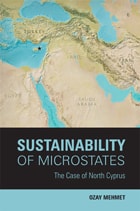
Sustainability of Microstates
The Case of North CyprusOzay Mehmet
University of Utah Press, 2009
Utah Series in Middle East Studies
This interdisciplinary study discusses the development, economics, and politics of North Cyprus, a divided state since 1960 when sovereignty was surrendered by the British to both Greek and Turkish Cypriots. Mehmet works to demonstrate that, as a microstate with an area of just 3,442 square kilometers, North Cyprus possesses certain inherent comparative economic advantages in the service sectors that enable it to be sustainable in today's rapidly globalizing and competitive economic world.
Mehmet bases his arguments for the potential sustainability of North Cyprus on the concept of economic rationalism, in which participating parties work to optimize their own self-interest. In an ethnic conflict like that of North Cyprus, the logic of optimization demands a rational, free, and objective balancing of competing interests to reach an agreed solution. The economic rationalist approach sharply contrasts with the highly emotional political, historical, cultural, and legal approaches that have thus far dominated the study and discussion of the Cyprus problem, approaches that have largely resulted in a protracted conflict.
While recognizing the negative forces of ethnic tension and the very real possibility of a continued divided Cyprus state, Sustainability of Microstates nevertheless remains hopeful, designed to unleash the forces of convergence that may be deduced from economic rationalism, and unwavering in its conviction of the ultimate sustainability of North Cyprus.
Sustainability, Participation and Culture in Communication
Edited by Jan Servaes
Intellect Books, 2013
Sustainability
A Love StoryNicole Walker
The Ohio State University Press, 2018
This book is for the burnt-out environmentalist, the lazy environmentalist, the would-be environmentalist. It’s for those who believe the planet is dying. For those who believe they are dying. And for those who question what it means to live and love sustainably, and maybe even with hope.
Sustainability
A Philosophy of Adaptive Ecosystem ManagementBryan G. Norton
University of Chicago Press, 2005
Emphasizing cooperation and adaptation through social learning, Norton provides a practical framework that encourages an experimental approach to language clarification and problem formulation, as well as an interdisciplinary approach to creating solutions. By moving beyond the scientific arena to acknowledge the importance of public discourse, Sustainability offers an entirely novel approach to environmentalism.
Sustainable Capitalism
Essential Work for the AnthropoceneEdited by Inara Scott
University of Utah Press, 2024
Sustainable Capitalism takes on the challenge of sustainability from a uniquely interdisciplinary and diverse perspective, offering both theory and tools for action. Topics range from an analysis of the foundations and definition of capitalism to the specific regulatory mechanisms that may be necessary to rein in its current, unsustainable trajectory. Readers will find nuanced and important analyses of options and potential outcomes that are not available in any other work. This book is essential reading for anyone concerned about the path we are on and how we might improve the lives of people around the globe.
https://www.sustainablecapitalismbook.com/

Sustainable Thinking
Ensuring Your Library's Future in an Uncertain WorldRebekkah Smith Aldrich
American Library Association, 2018
Sustainable Values, Sustainable Change
A Guide to Environmental Decision MakingBryan G. Norton
University of Chicago Press, 2015
While economists, philosophers, and ecologists argue about what in nature is valuable, and why, Norton here offers an action-oriented, pragmatic response to the disconnect between public and academic discourse around sustainability. Looking to the arenas in which decisions are made—and the problems that are driving these decisions—Norton reveals that the path to sustainability cannot be guided by fixed, utopian objectives projected into the future; sustainability will instead be achieved through experimentation, incremental learning, and adaptive management. Drawing inspiration from Aldo Leopold’s famed metaphor of “thinking like a mountain” for a spatially explicit, pluralistic approach to evaluating environmental change, Norton replaces theory-dependent definitions with a new decision-making process guided by deliberation and negotiation across science and philosophy, encompassing all stakeholders and activists and seeking to protect as many values as possible. Looking across scales to today’s global problems, Norton urges us to learn to think like a planet.
The Gospel of Sustainability
Media, Market and LOHASMonica M. Emerich
University of Illinois Press, 2014
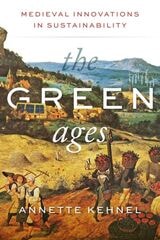
The Green Ages
Medieval Innovations in SustainabilityAnnette Kehnel
Brandeis University Press, 2024
In The Green Ages, historian Annette Kehnel explores sustainability initiatives from the Middle Ages, highlighting communities that operated a barter trade system on the Monte Subiaco in Italy, sustainable fishing at Lake Constance, common lands in the United Kingdom, transient grazing among Alpine shepherds in the south of France, and bridges built by crowdfunding in Avignon. Kehnel takes these medieval examples and applies their practical lessons to the modern world to prove that we can live sustainably—we’ve done it before!
From the garden economy in the mythical-sounding City of Ladies to early microcredit banks, Kehnel uncovers a world at odds with our understanding of the typical medieval existence. Premodern history is full of inspiring examples and concepts ripe for rediscovery, and we urgently need them as today’s challenges—finite resources, the twilight of consumerism, and growing inequality—threaten what we have come to think of as a modern way of living sustainably. This is a stimulating and revelatory look at a past that has the power to change our future.
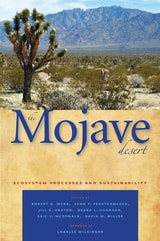
The Mojave Desert
Ecosystem Processes and SustainabilityRobert Webb
University of Nevada Press, 2009
In The Mojave Desert, thirty-eight scientists who are all specialists in desert ecology address the threats to the Mojave, as well as the potential for natural recovery and active restoration. The contributing authors discuss the desert from several perspectives: regional threats such as expanding human populations, climate change, atmospheric nitrogen deposition, and invasive plants; the impact of roads in a desert ecosystem; soils and plant communities; shrinking aquifers; and the monitoring and sustainability of this fragile ecosystem. Finally, they discuss the importance of long-term data and the ways scientists and resource managers can interact to enhance understanding of the processes of change in the Mojave Desert and to advance the preservation and restoration of its precious resources.The Mojave Desert offers the fruits of extensive research in a number of disciplines and a sound assessment of the current state and possible future of one of the world's major deserts. As human intrusion and climate change increasingly threaten the Mojave's ecosystem, studies like this are essential in helping scientists, land managers, and the general public understand what is at risk and what can be done to preserve this austere and hauntingly beautiful region.
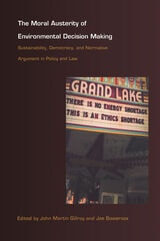
The Moral Austerity of Environmental Decision Making
Sustainability, Democracy, and Normative Argument in Policy and LawJohn Martin Gillroy and Joe Bowersox, eds.
Duke University Press, 2002
The contributors search for these assumptions and principles in short arguments and debates over the role of science, social justice, instrumental value, and intrinsic value in contemporary environmental policy. In their discussion of moral alternatives to enrich environmental decision making and in their search for a less austere and more robust role for normative discourse in practical policy making, they analyze a series of original case studies that deal with environmental sustainability and natural resources policy including pollution, land use, environmental law, globalism, and public lands. The unique structure of the book—which features the core contributors responding in a discourse format to the central chapters’ essays and debates—helps to highlight the role personal and public values play in democratic decision making generally and in the field of environmental politics specifically.
Contributors. Joe Bowersox, David Brower, Susan Buck, Celia Campbell-Mohn, John Martin Gillroy, Joel Kassiola, Jan Laitos, William Lowry, Bryan Norton, Robert Paehlke, Barry G. Rabe, Mark Sagoff, Anna K. Schwab, Bob Pepperman Taylor, Jonathan Wiener
The Politics of Permaculture
Terry Leahy
Pluto Press, 2021
Permaculture is an environmental movement that makes us revaluate what it means to be sustainable. Through innovative agriculture and settlement design, the movement creates new communities that are harmonious with nature. It has grown from humble origins on a farm in 1970s Australia and flourished into a worldwide movement that confronts industrial capitalism.
The Politics of Permaculture is one of the first books to unpack the theory and practice of this social movement that looks to challenge the status quo. Drawing upon the rich seam of publications and online communities from the movement as well as extensive interviews with permaculture practitioners and organizations from around the world, Leahy explains the ways permaculture is understood and practiced in different contexts.
In the face of extreme environmental degradation and catastrophic climate change, we urgently need a new way of living.

The Sustainable Library's Cookbook
Raymond Pun
Assoc of College & Research Libraries, 2019
Toward More Sustainable Metaphors of Writing Program Administration
edited by Lydia Wilkes, Lilian W. Mina, and Patti Poblete afterword by Douglas Hesse
Utah State University Press, 2022
This volume presents twelve chapters that reclaim and revise established metaphors; offer new metaphors based on sustainable, relational, or emotional labor practices and phenomena; and reveal the improvisational, artisanal nature of WPA work. Chapters resonate across three sections. The first section focuses on organic relationships captured in phrases like “putting out fires” and "seeing forests for the trees” alongside unexpected comparisons to ground and light. The second describes institutional landscapes featuring generative juxtapositions such as the WPA as a labor activist or a mapper of emotional geography. And the third discusses performance crafts like improv comedy and artisanal making.
Toward More Sustainable Metaphors of Writing Program Administration offers new and revised ways of thinking and acting for WPAs, who are constantly negotiating the paradoxical demands of their work and continually striving to act ethically in conflicted, and even fraught, situations. It will inspire practicing, aspiring, and former WPAs working in a time of transformation by highlighting more sustainable ways of enacting WPA identity.
Contributors: Jacob Babb, John Belk, Katherine Daily O'Meara, Ryan J. Dippre, Douglas Hesse, Andrew Hollinger, Rona Kaufman, Cynthia D. Mwenja, Manny Piña, Scott Rogers, Robyn Tasaka, Alexis Teagarden, Christy I. Wenger, Lydia Wilkes
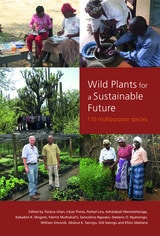
Wild Plants for a Sustainable Future
Edited by Tiziana Ulian, César Flores, Rafael Lira, Avhatakali Mamatsharaga, Kebadire K. Mogotsi, Patrick Muthoka, Samodimo Ngwako, Desterio O. Nyamongo, William Omondi, Abdoul K. Sanogo, Sidi Sanogo, and Efisio Mattana
Royal Botanic Gardens, Kew, 2018
The publication forms one of the main dissemination achievements of The MGU–Useful Plants Project, developed under Kew’s Millennium Seed Bank partnership, to conserve and use sustainably wild plants important for rural communities in Botswana, Kenya, Mali, South Africa, and Mexico. Institutional partners led the project in each country, involving rural communities, local authorities, and schools. A scientific approach was applied throughout.
The core of this book presents detailed species profiles of 110 plants selected for their importance to communities and livelihoods. The profiles are structured in a clear and consistent format, providing information on taxonomy and nomenclature, plant descriptions, fruit and seed structures, distribution, habitat, uses, known hazards and safety, conservation status, seed conservation, propagation, and trading, along with key references from the literature.
Wildly Successful Farming
Sustainability and the New Agricultural Land EthicBrian DeVore
University of Wisconsin Press, 2020
Written by agricultural journalist Brian DeVore, the book is based on interviews he has conducted at farms, wildlife refuges, laboratories, test plots, and gardens over the past twenty-five years. He documents innovations in cover cropping, managed rotational grazing, perennial polyculture, and integrated pest management. His accounts provide insight into the impacts regenerative farming methods can have on wildlife, water, landscape, soils, and rural communities and suggest ways all of us can support wildly successful farmers.
Women’s Perspectives on Human Security
Violence, Environment, and SustainabilityRichard Matthew; Patricia A. Weitsman; Gunhild Hoogensen Gjørv; Nora Davis; Tera Dornfeld
Ohio University Press, 2020
Violent conflict, climate change, and poverty present distinct threats to women worldwide. Importantly, women are leading the way creating and sharing sustainable solutions.
Women’s security is a valuable analytical tool as well as a political agenda insofar as it addresses the specific problems affecting women’s ability to live dignified, free, and secure lives. First, this collection focuses on how conflict impacts women’s lives and well-being, including rape and gendered constructions of ethnicity, race, and religion. The book’s second section looks beyond the scope of large-scale violence to examine human security in terms of environmental policy, food, water, health, and economics.
Multidisciplinary in scope, these essays from new and established contributors draw from gender studies, international relations, criminology, political science, economics, sociology, biological and ecological sciences, and planning.