Results by title
18 books match the query 'Sustainable living'
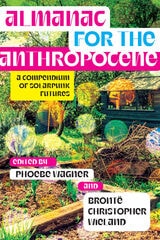
Almanac for the Anthropocene
A Compendium of Solarpunk FuturesPhoebe Wagner
West Virginia University Press, 2022
Original voices from across the solarpunk movement, which positions ingenuity, generativity, and community as ways to resist hopelessness in response to the climate crisis.
Almanac for the Anthropocene collects original voices from across the solarpunk movement, which positions ingenuity, generativity, and community as beacons of resistance to the hopelessness often inspired by the climate crisis. To point toward practical implementation of the movement’s ideas, it gathers usable blueprints that bring together theory and practice. The result is a collection of interviews, recipes, exercises, DIY instructions, and more—all of it amounting to a call to create hope through action.
Inspired by a commitment to the idea that there can be no environmental justice without decolonial and racial justice, Almanac for the Anthropocene unites in a single volume both academic and practical responses to environmental crisis.
Between Two Pines
Ushering in a Sustainable Future Through an Art-Science PracticeEdgar Cardenas
Michigan Publishing Services, 2019
“I am truly thankful that Dr. Edgar Cardenas’s thoughtful research is now available in this beautiful book. I have recommended his work to more people, both in my personal and professional spheres of my life, than I can count, and I’m glad to have this provocative and elegant publication to put into people’s hands. Cardenas shows us how each of us really can make a difference.”
“Between Two Pines anticipates and leads the discussion of scholarship around questions of land and landscape. This work brilliantly and ethically refocuses our vision, from distanced scrutiny to connection and proximity, rooted in daily care-taking and ecological efforts. Thoughtfully imaged, the photographs offer an aesthetic that is based in balanced, enduring reflection, rather than on the grand view. These beautiful images reveal discoveries that bridge the arts, ecology, and sociology, and will serve to reconnect every reader with the world in their backyard and beyond.”
“Drawing from a long photographic tradition of examining the relationship between humans and their environment, Edgar Cardenas has found a voice that is as compassionate as it is poignant. Yet he is not content for his photographs to be mere observations, recording the relationship. Between Two Pines is a call to action – a platform by which we might imagine together, with all of the tools in our tool kit, a sustainable future.”
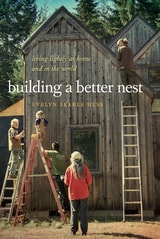
Building a Better Nest
Living Lightly at Home and in the WorldEvelyn Searle Hess
Oregon State University Press, 2015
What does it mean to build a better nest? Better for whom? Is it better for the individual or family? The planet? Green building and sustainable design are popular buzzwords, but to Hess, sustainable building is not a simple matter of buying and installing the latest recycled flooring products. It is also about cooperative work: working together in employment, in research, in activism, and in life. Hess is concerned with her local watershed, but also with the widening income gap, disappearing species, and peak resources. She actively works to reduce overconsumption and waste. For Hess, these problems are both philosophical and practical.
As Hess and her husband age, the questions of how to live responsibly arise with greater frequency and urgency. With unfailing wit and humor, she looks for answers in such places as neuroscience, Buddhism, and her ancestral legacy. Building a Better Nest will appeal to anyone with an interest in sustainable building, off-grid living, or alternative communities. The questions it asks about the way we live are earnest and important, from an author whose voice is steeped in wisdom and gratitude.
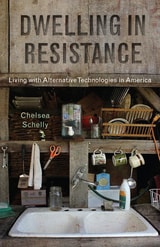
Dwelling in Resistance
Living with Alternative Technologies in AmericaSchelly, Chelsea
Rutgers University Press, 2017
Schelly portrays a wide range of residential living alternatives utilizing renewable, small-scale, de-centralized technologies. These technologies considerably change how individuals and communities interact with the material world, their natural environment, and one another. Using in depth interviews and compelling ethnographic observations, the book offers an insightful look at different communities’ practices and principles and their successful endeavors in sustainability and self-sufficiency.

Exploring Degrowth
A Critical GuideVincent Liegey
Pluto Press, 2020
As politicians and corporations obsess over growth objectives, the degrowth movement demands that we must slow down the economy by transforming our economies, our politics and our cultures to live within the Earth's limits.
This book navigates the practice and strategies of the movement, looking at its strengths and weaknesses. Covering horizontal democracy, local economies and the reduction of work, it shows us why degrowth is a compelling and realistic project.
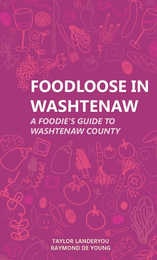
Foodloose in Washtenaw
A Foodie's Guide to Washtenaw CountyTaylor Landeryou and Raymond De Young
Michigan Publishing Services, 2018
Inspired by a classic walking guidebook of the area, Foodloose in Washtenaw County takes readers on tours to discover food-related treasures throughout the county. What better way to get to know this place—or experience something new—than to bike, bus, carpool, walk, even kayak your way through food-filled Washtenaw County?
From centennial farms to trendy upscale restaurants, the self-guided tours of Foodloose offer an opportunity to explore where our food is grown, produced, distributed, and enjoyed in Washtenaw County. Within these pages lies a chance to celebrate the local food community, learn more about our unique food system, and maybe even find a new favorite place to dine.
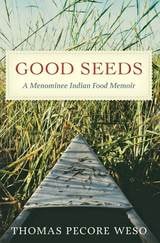
Good Seeds
A Menominee Indian Food MemoirThomas Pecore Weso
Wisconsin Historical Society Press, 2027
To the Menominee people, the "good seeds” of life are the manomin, or wild rice, that also gives the tribe its name. In this unique food memoir, Tribal member Thomas Pecore Weso takes readers on a cook’s journey through Wisconsin’s North Woods tribal lands, connecting Menominee food—beaver, trout, blackberry, wild rice, maple sugar, partridge—to the colorful individuals who taught him Indigenous values and traditions. Featuring more than forty recipes, Good Seeds keeps those traditions alive for future generations.
With a rare perspective as a Native American anthropologist and artist, Weso mixes a poignant personal story with the seeds of Menominee cooking traditions. He tells of the foods and the people who helped shape the person he became. His grandfather Moon was a medicine man, whose morning prayers formed the foundation for all the day’s meals. His grandmother Jennie “made fire” each morning in a wood-burning stove and oversaw huge breakfasts of wild game, fish, and fruit pies. His uncles taught him to hunt bear, deer, squirrels, raccoons, and skunks for the daily larder. Along with authentic family recipes, Weso recalls favorite foods served at the Menominee fair and at local diners.
In Good Seeds, adventurous cooks will gain insight and inspiration from Weso’s recipes, and readers of all stripes will appreciate the often-humorous stories about reservation life during the mid-twentieth century.
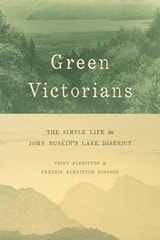
Green Victorians
The Simple Life in John Ruskin's Lake DistrictVicky Albritton and Fredrik Albritton Jonsson
University of Chicago Press, 2016
At the center of their social experiment was the charismatic art critic and political economist John Ruskin. Albritton and Albritton Jonsson show how Ruskin’s followers turned his theory into practice in a series of ambitious local projects ranging from hand spinning and woodworking to gardening, archaeology, and pedagogy. This is a lively yet unsettling story, for there was a dark side to Ruskin’s community as well—racist thinking, paternalism, and technophobia. Richly illustrated, Green Victorians breaks new ground, connecting the ideas and practices of Ruskin’s utopian community with the problems of ethical consumption then and now.
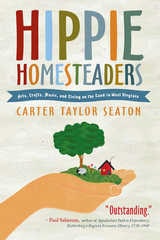
Hippie Homesteaders
Arts, Crafts, Music and Living on the Land in West VirginiaCarter Taylor Seaton
West Virginia University Press, 2014
It’s the 1960s. The Vietnam War is raging and protests are erupting across the United States. In many quarters, young people are dropping out of society, leaving their urban homes behind in an attempt to find a safe place to live on their own terms, to grow their own food, and to avoid a war they passionately decry. During this time, West Virginia becomes a haven for thousands of these homesteaders—or back-to-the-landers, as they are termed by some. Others call them hippies.
When the going got rough, many left. But a significant number remain to this day. Some were artisans when they arrived, while others adopted a craft that provided them with the cash necessary to survive. Hippie Homesteaders tells the story of this movement from the viewpoint of forty artisans and musicians who came to the state, lived on the land, and created successful careers with their craft. There’s the couple that made baskets coveted by the Smithsonian Institution’s Renwick Gallery. There’s the draft-dodger that fled to Canada and then became a premier furniture maker. There’s the Boston-born VISTA worker who started a quilting cooperative. And, there’s the immigrant Chinese potter who lived on a commune.
Along with these stories, Hippie Homesteaders examines the serendipitous timing of this influx and the community and economic support these crafters received from residents and state agencies in West Virginia. Without these young transplants, it’s possible there would be no Tamarack: The Best of West Virginia, the first statewide collection of fine arts and handcrafts in the nation, and no Mountain Stage, the weekly live musical program broadcast worldwide on National Public Radio since 1983. Forget what you know about West Virginia.
Hippie Homesteaders isn’t about coal or hillbillies or moonshine or poverty. It is the story of why West Virginia was—and still is—a kind of heaven to so many.
Keeping Oregon Green
Livability, Stewardship, and the Challenges of Growth, 1960–1980Derek R. Larson
Oregon State University Press, 2016
Keeping Oregon Green is a new history of the signature accomplishments of Oregon’s environmental era: the revitalization of the polluted Willamette River, the Beach Bill that preserved public access to the entire coastline, the Bottle Bill that set the national standard for reducing roadside litter, and the nation’s first comprehensive land use zoning law, colloquially known as LDCD. To these case studies is added the largely forgotten tale of what would have been Oregon’s second National Park, intended to preserve the Oregon Dunes as one of the country’s first National Seashores.
Through the detailed study of the historical, political, and cultural contexts of these environmental conflicts the author uncovers new dimensions in familiar stories linked to the concepts of “livability” and environmental stewardship. Linking events in Oregon to the national environmental awakening of the 1960s-1970s, the innovative environmental policies that carried Oregon to a position of national leadership are shown to be products of place and culture as much as politics. While political leaders played critical roles in framing new laws, the advocacy of ordinary citizens-- farmers, students, business leaders, and factory workers --drove a movement that crossed partisan, geographic, and class lines to make Oregon the nation’s environmental showplace of the 1970s.
Drawing on extensive archival research, source materials ranging from poetry to congressional hearings, and firmly rooted in the cultural, economic, and political history of the Pacific Northwest, Keeping Oregon Green argues that the state’s environmental legacy is not just the product of visionary leadership, but rather a complex confluence of events, trends, and personalities that could only have happened when and where it did. The linked concepts of livability and stewardship behind Oregon’s success were not transferrable to other places or times, dooming efforts to repeat the state’s signature achievements elsewhere to failure.
Plant Kin
A Multispecies Ethnography in Indigenous BrazilBy Theresa L. Miller
University of Texas Press, 2019
The Indigenous Canela inhabit a vibrant multispecies community of nearly 3,000 people and over 300 types of cultivated and wild plants living together in Maranhão State in the Brazilian Cerrado (savannah), a biome threatened with deforestation and climate change. In the face of these environmental threats, Canela women and men work to maintain riverbank and forest gardens and care for their growing crops, whom they consider to be, literally, children. This nurturing, loving relationship between people and plants—which offers a thought-provoking model for supporting multispecies survival and well-being throughout the world—is the focus of Plant Kin.
Theresa L. Miller shows how kinship develops between Canela people and plants through intimate, multi-sensory, and embodied relationships. Using an approach she calls “sensory ethnobotany,” Miller explores the Canela bio-sociocultural life-world, including Canela landscape aesthetics, ethnobotanical classification, mythical storytelling, historical and modern-day gardening practices, transmission of ecological knowledge through an education of affection for plant kin, shamanic engagements with plant friends and lovers, and myriad other human-nonhuman experiences. This multispecies ethnography reveals the transformations of Canela human-environment and human-plant engagements over the past two centuries and envisions possible futures for this Indigenous multispecies community as it reckons with the rapid environmental and climatic changes facing the Brazilian Cerrado as the Anthropocene epoch unfolds.
Regional Planning for a Sustainable America
How Creative Programs Are Promoting Prosperity and Saving the EnvironmentMontgomery, Carleton K
Rutgers University Press, 2012
Regional Planning for a Sustainable America is the first book to represent the great variety of today’s effective regional planning programs, analyzing dozens of regional initiatives across North America.
The American landscape is being transformed by poorly designed, sprawling development. This sprawl—and its wasteful resource use, traffic, and pollution—does not respect arbitrary political boundaries like city limits and state borders. Yet for most of the nation, the patterns of development and conservation are shaped by fragmented, parochial local governments and property developers focused on short-term economic gain. Regional planning provides a solution, a means to manage human impacts on a large geographic scale that better matches the natural and economic forces at work. By bringing together the expertise of forty-two practitioners and academics, this book provides a practical guide to the key strategies that regional planners are using to achieve truly sustainable growth.
Shelter and Storm
At Home in the Driftlessdean
University of Minnesota Press, 2025
Living mindfully with nature during a time of uncertainty
In the midst of the environmental crises of the early twenty-first century, Tamara Dean sought a way to live lightly on the planet. Her quest drew her to a landscape unlike any other: the Driftless area of Wisconsin, a region untouched by glaciers, marked by steep hills and deeply carved valleys, capped with forests and laced with cold, spring-fed streams. There, she confronted, in ways large and small, the challenges of meeting basic needs while facing the ravages of climate change—an experience at once soul-stirring and practical that she recounts in Shelter and Storm.
Dean’s boundless curiosity and gift for storytelling imbue these essays with urgency and a sense of adventure. She invites readers to share in her discoveries while hunting for water, learning that a persistent weed could be food, or burning a hayfield to recreate a prairie. Contending with the fallout of fires, floods, and tornadoes, she offers responses to natural disasters that reflect the importance of community, now and for generations to come. Whether tracking down a rare, blue-glowing firefly, engineering a beaver-friendly waterway to appease a dying neighbor, or building a house of earthen blocks, Dean unites personal experience with science and history, presenting a perspective as informative as it is compelling.
Keenly attentive to the stakes for our planet’s future—and the implications of extreme weather, shifting agricultural practices, and political divides—Shelter and Storm illuminates a thoughtful way forward for anyone concerned about climate change and its far-reaching consequences or for anyone searching, as Dean has, for a more sustainable way to live.
Retail e-book files for this title are screen-reader friendly.
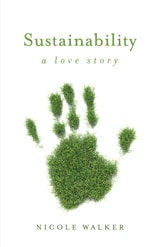
Sustainability
A Love StoryNicole Walker
The Ohio State University Press, 2018
This book is for the burnt-out environmentalist, the lazy environmentalist, the would-be environmentalist. It’s for those who believe the planet is dying. For those who believe they are dying. And for those who question what it means to live and love sustainably, and maybe even with hope.
The Earth
Natural Resources and Human InterventionFriedrich Schmidt-Bleek
Haus Publishing, 2009
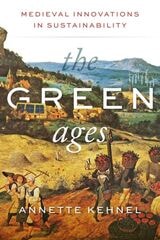
The Green Ages
Medieval Innovations in SustainabilityAnnette Kehnel
Brandeis University Press, 2024
In The Green Ages, historian Annette Kehnel explores sustainability initiatives from the Middle Ages, highlighting communities that operated a barter trade system on the Monte Subiaco in Italy, sustainable fishing at Lake Constance, common lands in the United Kingdom, transient grazing among Alpine shepherds in the south of France, and bridges built by crowdfunding in Avignon. Kehnel takes these medieval examples and applies their practical lessons to the modern world to prove that we can live sustainably—we’ve done it before!
From the garden economy in the mythical-sounding City of Ladies to early microcredit banks, Kehnel uncovers a world at odds with our understanding of the typical medieval existence. Premodern history is full of inspiring examples and concepts ripe for rediscovery, and we urgently need them as today’s challenges—finite resources, the twilight of consumerism, and growing inequality—threaten what we have come to think of as a modern way of living sustainably. This is a stimulating and revelatory look at a past that has the power to change our future.
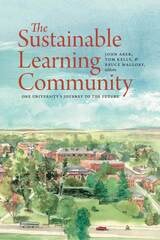
The Sustainable Learning Community
One University’s Journey to the FutureJohn Aber
University of New Hampshire Press, 2009
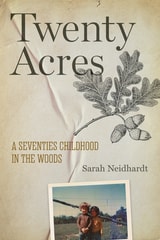
Twenty Acres
A Seventies Childhood in the WoodsSarah Neidhardt
University of Arkansas Press, 2023
"A memoir infused with both empathy and inquiry."
—Wendy J. Fox, Electric Literature
“Twenty Acres is an engaging, thoughtful memoir of growing up in an off-the-grid cabin as part of the 1970s back-to-the-land movement. Sarah Neidhardt captures her subject beautifully and offers a compelling portrait of a highly specific, historically significant time and place.”
—Kate Daloz, author of We Are As Gods: Back to the Land in the 1970s on the Quest for a New America
Sarah Neidhardt grew up in the woods. When she was an infant, her parents left behind comfortable, urbane lives to take part in the back-to-the-land movement. They moved their young family to an isolated piece of land deep in the Arkansas Ozarks where they built a cabin, grew crops, and strove for eight years to live self-sufficiently.
In this vivid memoir Neidhardt explores her childhood in wider familial and social contexts. Drawing upon a trove of family letters and other archival material, she follows her parents’ journey from privilege to food stamps—from their formative youths, to their embrace of pioneer homemaking and rural poverty, to their sudden and wrenching return to conventional society—and explores the back-to-the-land movement of the 1970s as it was, and as she lived it.
A story of strangers in a strange land, of class, marriage, and family in a changing world, Twenty Acres: A Seventies Childhood in the Woods is part childhood idyll, part cautionary tale. Sarah Neidhardt reveals the treasures and tolls of unconventional, pastoral lives, and her insightful reflections offer a fresh perspective on what it means to aspire to pre-industrial lifestyles in a modern world.