Results by title
11 books match the query 'Symbol'
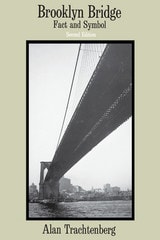
Brooklyn Bridge
Fact and SymbolAlan Trachtenberg
University of Chicago Press, 1979
"[Brooklyn Bridge] is familiar in so many movies, in so many stage sets and, as Mr. Trachtenberg shows in this brilliant . . . book, it is at least as much a symbol as a reality. . . . Mr. Trachtenberg is always exciting and illuminating."—Times Literary Supplement
"The book is a skillful and insightful synthesis of materials about Brooklyn Bridge from such diverse fields as history, engineering, literature and art. Essentially it asks the question of why Brooklyn Bridge achieved such great impact on the nineteenth century American imagination and why it has continued to have a significant impact on twentieth century art and literature. In addition to its exploration of the bridge's symbolic significance, which includes perceptive analyses of such particular works as Hart Crane's great poem cycle and the paintings of artists like Joseph Stella, the book also includes a solidly researched account of the conception, planning and construction of the bridge. Trachtenberg's account of the intellectual and cultural sources of the bridge is particularly fascinating in its demonstration of the convergence of many different philosophical and ideological currents of the time around this great engineering enterprise, illustrating as effectively as any discussion I know the complex interplay of ideas and material culture."—John G. Cawelti, University of Chicago
"Alan Trachtenberg's Brooklyn Bridge is a fascinating story, the philosophic genesis of the idea in Europe, John Roebling's heroic effort to translate it into masonry and steel, and the meanings that Americans attached to the physical object as an emblem of their aspirations."—Leo Marx, Amherst College, author of The Machine in the Garden
Psyche and Symbol in the Theater of Federico Garcia Lorca
Perlimplin, Yerma, Blood WeddingBy Rupert C. Allen
University of Texas Press, 1974
Symbol and psyche are twin concepts in contemporary symbological studies, where the symbol is considered to be a "statement" by the psyche. The psyche is a manifold of conscious and unconscious contents, and the symbol is their mediator. Because Lorca's dramatic characters are psychic entities made up of both conscious and unconscious elements, they unfold, grow, and meet their fate in a dense realm of shifting symbols.
In Psyche and Symbol in the Theater of Federico García Lorca, Rupert Allen analyzes symbologically three dramatic works of Lorca. He has found Perlimplín to be a good deal more complex in both psyche and symbol than it has been admitted to be. Yerma involves psychological complications that have not been considered in the light of modern critical analysis, and the symbolic reaches ofBlood Wedding have until this book remained largely unexplored.
Lorca was no stranger to the "agony of creation," and this struggle sometimes appears symbolically in the form of his dramatic characters. Both Yerma and Blood Wedding reflect specific problems underlying the creative act, for they are "translations" into the realm of sexuality of the creative turmoil experienced by Lorca the poet. Perlimplín portrays the paradoxical suicide as a self-murder born out of the futile attempt to create not a poem, but a self.
Previous criticism of these three plays has been dominated by critical assumptions that are transcended by Lorca's own twentieth-century mentality. Allen's analysis provides a new view of Lorca as a dramatist and presents new material to students of symbology.
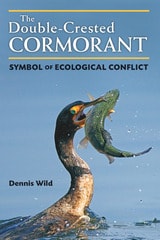
The Double-Crested Cormorant
Symbol of Ecological ConflictDennis Wild
University of Michigan Press, 2012
This is the story of the survival, recovery, astonishing success, and controversial status of the double-crested cormorant. After surviving near extinction driven by DDT and other contaminants from the 1940s through the early 1970s, the cormorant has made an unprecedented comeback from mere dozens to a population in the millions, bringing the bird again into direct conflict with humans. Hated for its colonial nesting behavior; the changes it brings to landscapes; and especially its competition with commercial and sports fishers, fisheries, and fish farmers throughout the Great Lakes and Mississippi Delta regions, the cormorant continues to be persecuted by various means, including the shotgun.
In The Double-Crested Cormorant, Dennis Wild brings together the biological, social, legal, and international aspects of the cormorant's world to give a complete and balanced view of one of the Great Lakes' and perhaps North America's most misunderstood species. In addition to taking a detailed look at the complex natural history of the cormorant, the book explores the implications of congressional acts and international treaties, the workings and philosophies of state and federal wildlife agencies, the unrelenting efforts of aquaculture and fishing interests to "cull" cormorant numbers to "acceptable" levels, and the reactions and visions of conservation groups. Wild examines both popular preconceptions about cormorants (what kinds of fish they eat and how much) and the effectiveness of ongoing efforts to control the cormorant population. Finally, the book delves into the question of climate and terrain changes, their consequences for cormorants, the new territories to which the birds must adapt, and the conflicts this species is likely to face going forward.
The Gateway Arch
Fact & SymbolW. Arthur Mehrhoff
University of Wisconsin Press, 1992
The Mythmaker
A Study of Motif and Symbol in the Short Stories of Jorge Luis BorgesBy Carter Wheelock
University of Texas Press, 1969
Readers who are intrigued, though often mystified, by the intellectual fantasies of Jorge Luis Borges will find this book a revelation, a skeleton key to one of the most fundamental and baffling aspects of Borges’s fictions: the pattern of symbolism with an inner meaning. Carter Wheelock’s study reduces a number of literary and intellectual abstractions to concrete terms, enabling the reader to understand Borges’s fantasies in ways that show them to be not so fantastic after all. Indeed, they are amazingly consistent and minutely accurate in their symbolic depiction of the magic universe of the mind.
Wheelock also discusses the affinity between Borges’s philosophical idealism and his “esthetic of the intelligence,” the relationship between these and the esthetic ideas of French Symbolism, and the influence on his fictions of the Rubáiyát of Omar Khayyám.
Why is it that this “writer’s writer” from the Argentine—erudite, allusive, elusive—has attracted such international attention? In Wheelock’s opinion, it is because he has symbolized in his short stories the fundamental form of the human consciousness, the functioning of the imaginative (world-creating) mechanism, and the eternal battle between form and chaos. The Mythmaker is concerned with elucidating the particulars of Borges’s fictional works, but even as it does so it also reveals their universality.
The New Gods
Psyche and Symbol in Popular ArtHarold Schechter
University of Wisconsin Press, 1980
Harold Schechter looks at the impossible tales and images of popular art--the space odysseys and extraterrestrial civilizations, the caped crusaders and men of steel, and monsters from the ocean floor--and finds close connections between religious myth and popular entertainment.

Vengeance of the Victim
History and Symbol in Giorgio Bassani’s FictionMarilyn Schneider
University of Minnesota Press, 1986
Vengeance of the Victim was first published in 1986. Minnesota Archive Editions uses digital technology to make long-unavailable books once again accessible, and are published unaltered from the original University of Minnesota Press editions.
More profoundly than any documentary record, the collected fiction of Giorgio Bassani—Il Romanzo di Ferrara — captures a very particular and powerful historical reality: Italian Jewish life under Fascism, especially between the passage of the so-called racial laws in 1938 and the end of World War II. Set primarily in the provincial city of Ferrara, Bassani's narratives interweave themes of death, victimization, betrayal, survival, and artistic production. His best-known novel, The Garden of the Finzi-Continis — and other works that concentrate on the crucial years of 1938-1945—stand at the center of the Romanzo.They are preceded by texts that look back on Jewish life in the liberal era of the Risorgimento, and followed by texts set in the liberated, democratic society of the postwar years. These framing narratives provide a space for remembrance and reflection.
Marilyn Schneider's aim, in Vengeance of the Victim, is to uncover the symbolic layers — historical, spatial, topographical, mythopoeic, allegorical, and sexual — that five Bassani's texts their richness and ambiguity, and in so doing to achieve a full understanding of his work and its representation of the Italian Jewish experience. Death and victimization, which pervade these texts, set in motion a process of artistic renewal that is most fully embodied in the vibrant young Micol Finzi-Contini, Bassani's textual icon and a victim of the Holocaust. Schneider also finds that the narratives, especially the late ones, pay self-reflexive attention to the creation of the text, constructing an authorial persona engaged in an existential, moral, and artistic journey from symbolic death to rebirth. It is the writing subject's successful completion of the journey that constitutes the vengeance of the victim.
Warfare, Ritual, and Symbol in Biblical and Modern Contexts
Brad E. Kelle
SBL Press, 2014
New perspectives on Israelite warfare for biblical studies, military studies, and social theory
Contributors investigate what constituted a symbol in war, what rituals were performed and their purpose, how symbols and rituals functioned in and between wars and battles, what effects symbols and rituals had on insiders and outsiders, what ways symbols and rituals functioned as instruments of war, and what roles rituals and symbols played in the production and use of texts.
Features:
- Thirteen essays examine war in textual, historical, and social contexts
- Texts from the Hebrew Bible are read in light of ancient Near Eastern texts and archaeology
- Interdisciplinary studies make use of contemporary ritual and social theory

West Virginia University
Symbol of Unity in a Secitonalized StateWILLIAM T. "DOHERTY, JR.
West Virginia University Press, 1982
First published in 1982, West Virginia University: Symbol of Unity in a Sectionalize State details the history of WVU from its inception as the Agricultural College of West Virginia in 1867 to its expansion and development in the 1980s. This comprehensive history includes an index of people, places and events; photographs and illustrations; and in-depth descriptions of campuses, buildings, colleges, and academic and sports programs. As a joint effort between William T Doherty, Jr., a Professor Emeritus History at WVU, and Festus P. Summers, the first University Historian who passed away before this project was complete, this new edition once again grants access to the diverse and complex elements which shaped the institution.
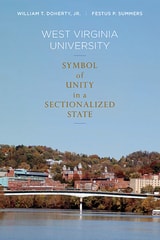
West Virginia University
Symbol of Unity in a Sectionalized StateWilliam T. Doherty, Jr
West Virginia University Press, 2013
When Writing Met Art
From Symbol to StoryBy Denise Schmandt-Besserat
University of Texas Press, 2007
Denise Schmandt-Besserat opened a major new chapter in the history of literacy when she demonstrated that the cuneiform script invented in the ancient Near East in the late fourth millennium BC—the world's oldest known system of writing—derived from an archaic counting device. Her discovery, which she published in Before Writing: From Counting to Cuneiform and How Writing Came About, was widely reported in professional journals and the popular press. In 1999, American Scientist chose How Writing Came About as one of the "100 or so Books that shaped a Century of Science."
In When Writing Met Art, Schmandt-Besserat expands her history of writing into the visual realm of communication. Using examples of ancient Near Eastern writing and masterpieces of art, she shows that between 3500 and 3000 BC the conventions of writing—everything from its linear organization to its semantic use of the form, size, order, and placement of signs—spread to the making of art, resulting in artworks that presented complex visual narratives in place of the repetitive motifs found on preliterate art objects. Schmandt-Besserat then demonstrates art's reciprocal impact on the development of writing. She shows how, beginning in 2700-2600 BC, the inclusion of inscriptions on funerary and votive art objects emancipated writing from its original accounting function. To fulfill its new role, writing evolved to replicate speech; this in turn made it possible to compile, organize, and synthesize unlimited amounts of information; and to preserve and disseminate information across time and space.
Schmandt-Besserat's pioneering investigation of the interface between writing and art documents a key turning point in human history, when two of our most fundamental information media reciprocally multiplied their capacities to communicate. When writing met art, literate civilization was born.