Results by title
33 books match the query 'Taiwan'
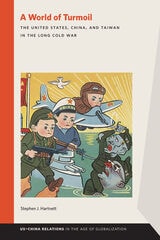
A World of Turmoil
The United States, China, and Taiwan in the Long Cold Warstephen hartnett
Michigan State University Press, 2021
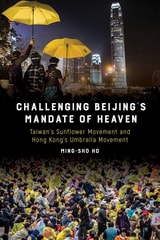
Challenging Beijing's Mandate of Heaven
Taiwan's Sunflower Movement and Hong Kong's Umbrella MovementMing-sho Ho
Temple University Press, 2019
In 2014, the Sunflower Movement in Taiwan grabbed international attention as citizen protesters demanded the Taiwan government withdraw its free-trade agreement with China. In that same year, in Hong Kong, the Umbrella Movement sustained 79 days of demonstrations, protests that demanded genuine universal suffrage in electing Hong Kong’s chief executive. It too, became an international incident before it collapsed. Both of these student-led movements featured large-scale and intense participation and had deep and far-reaching consequences. But how did two massive and disruptive protests take place in culturally conservative societies? And how did the two “occupy”-style protests against Chinese influences on local politics arrive at such strikingly divergent results?
Challenging Beijing’s Mandate of Heaven aims to make sense of the origins, processes, and outcomes of these eventful protests in Taiwan and Hong Kong. Ming-sho Ho compares the dynamics of the two movements, from the existing networks of activists that preceded protest, to the perceived threats that ignited the movements, to the government strategies with which they contended, and to the nature of their coordination. Moreover, he contextualizes these protests in a period of global prominence for student, occupy, and anti-globalization protests and situates them within social movement studies.
Chinese Communist Materials at the Bureau of Investigation Archives, Taiwan
Peter Donovan, Carl E. Dorris, and Lawrence R. Sullivan
University of Michigan Press, 1976
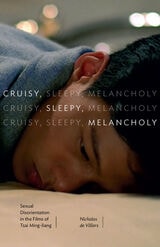
Cruisy, Sleepy, Melancholy
Sexual Disorientation in the Films of Tsai Ming-liangNicholas de Villiers
University of Minnesota Press, 2022
A brilliant approach to the queerness of one of Taiwan’s greatest auteurs
A critical figure in queer Sinophone cinema—and the first director ever commissioned to create a film for the permanent collection of the Louvre—Tsai Ming-liang is a major force in Taiwan cinema and global moving image art. Cruisy, Sleepy, Melancholy offers a fascinating, systematic method for analyzing the queerness of Tsai’s films.
Nicholas de Villiers argues that Tsai expands and revises the notion of queerness by engaging with the sexuality of characters who are migrants, tourists, diasporic, or otherwise displaced. Through their lack of fixed identities, these characters offer a clear challenge to the binary division between heterosexuality and homosexuality, as well as the Orientalist binary division of Asia versus the West. Ultimately, de Villiers explores how Tsai’s films help us understand queerness in terms of spatial, temporal, and sexual disorientation.
Conceiving of Tsai’s cinema as an intertextual network, Cruisy, Sleepy, Melancholy makes an important addition to scholarly work on Tsai in English. It draws on extensive interviews with the director, while also offering a complete reappraisal of Tsai’s body of work. Contributing to queer film theory and the aesthetics of displacement, Cruisy, Sleepy, Melancholy reveals striking connections between sexuality, space, and cinema.
Early Film Culture in Hong Kong, Taiwan, and Republican China
Kaleidoscopic HistoriesEmilie Yueh-yu Yeh, Editor
University of Michigan Press, 2018
Elections in Japan, Korea, and Taiwan under the Single Non-Transferable Vote
The Comparative Study of an Embedded InstitutionBernard Grofman, Sung-Chull Lee, Edwin A. Winckler, and Brian Woodall, Editors
University of Michigan Press, 1999
Envisioning Taiwan
Fiction, Cinema, and the Nation in the Cultural ImaginaryJune Yip
Duke University Press, 2004
Yip traces a distinctly Taiwanese sense of self vis-à-vis China, Japan, and the West through two of the island’s most important cultural movements: the hsiang-t’u (or “nativist”) literature of the 1960s and 1970s, and the Taiwanese New Cinema of the 1980s and 1990s. At the heart of the book are close readings of the work of the hsiang-t’u writer Hwang Chun-ming and the New Cinema filmmaker Hou Hsiao-hsien. Key figures in Taiwan’s assertion of a national identity separate and distinct from China, both artists portray in vibrant detail daily life on the island. Through Hwang’s and Hou’s work and their respective artistic movements, Yip explores “the imagining of a nation” on the local, national, and global levels. In the process, she exposes a perceptible shift away from traditional models of cultural authenticity toward a more fluid, postmodern hybridity—an evolution that reflects both Taiwan’s peculiar multicultural reality and broader trends in global culture.
Global Cinderellas
Migrant Domestics and Newly Rich Employers in TaiwanPei-Chia Lan
Duke University Press, 2006
Lan demonstrates how economic disparities, immigration policies, race, ethnicity, and gender intersect in the relationship between the migrant workers and their Taiwanese employers. The employers are eager to flex their recently acquired financial muscle; many are first-generation career women as well as first-generation employers. The domestics are recruited from abroad as contract and “guest” workers; restrictive immigration policies prohibit them from seeking permanent residence or transferring from one employer to another. They care for Taiwanese families’ children, often having left their own behind. Throughout Global Cinderellas, Lan pays particular attention to how the women she studied identify themselves in relation to “others”—whether they be of different classes, nationalities, ethnicities, or education levels. In so doing, she offers a framework for thinking about how migrant workers and their employers understand themselves in the midst of dynamic transnational labor flows.
Governance and Foreign Investment in China, India, and Taiwan
Credibility, Flexibility, and International BusinessYu Zheng
University of Michigan Press, 2014
Yu Zheng challenges the idea that democracy is the prerequisite for developing countries to attract foreign direct investment (FDI) and promote economic growth. He examines the relationship between political institutions and FDI through the use of cross-national analysis and case studies of three rapidly growing Asian economies with a focus on the role of microinstitutional “special economic zones” (SEZ).
China’s authoritarian system allows for bold, radical economic reform, but China has attracted FDI largely because of its increasingly credible investment environment as well as its central and local governments’ efforts to overcome constraints on investment. India’s democratic institutions provide more political assurance to foreign investors, but its market became conducive to FDI only when the government adopted more flexible investment policies. Taiwan’s democratic transition shifted its balance of policy credibility and flexibility, which was essential for the nation’s economic takeoff and sustained growth.
Zheng concludes that a more accurate understanding of the relationship between political institutions and FDI comes from careful analysis of institutional arrangements that entail a trade-off between credibility and flexibility of governance.
Health and Hygiene in Chinese East Asia
Policies and Publics in the Long Twentieth CenturyAngela Ki Che Leung and Charlotte Furth, eds.
Duke University Press, 2010
Contributors. Warwick Anderson, Charlotte Furth, Marta E. Hanson, Sean Hsiang-lin Lei, Angela Ki Che Leung, Shang-Jen Li, Yushang Li, Yi-Ping Lin, Shiyung Liu, Ruth Rogaski, Yen-Fen Tseng, Chia-ling Wu, Xinzhong Yu
Interventions into Modernist Cultures
Poetry from Beyond the Empty ScreenAmie Elizabeth Parry
Duke University Press, 2007
Reading various works by US expatriates Ezra Pound and Gertrude Stein, Parry compares the cultural politics of U.S. canonical modernism with alternative representations of temporality, hybridity, erasure, and sexuality in the work of the Taiwanese writers Yü Kwang-chung and Hsia Yü and the Asian American immigrant author Theresa Hak Kyung Cha. Juxtaposing poems by Pound and Yü Kwang-chung, Parry shows how Yü’s fragmented, ambivalent modernist form reveals the effects of neocolonialism while Pound denies and obscures U.S. imperialism in Asia, asserting a form of nondevelopmental universalism through both form and theme. Stein appropriates discourses of American modernity and identity to represent nonnormative desire and sexuality, and Parry contrasts this tendency with representations of sexuality in the contemporary experimental poetry of Hsia Yü. Finally, Parry highlights the different uses of modernist forms by Pound in his Cantos—which incorporate a multiplicity of decontextualized and ahistorical voices—and by Cha in her 1982 novel Dictee, a historicized, multilingual work. Parry’s sophisticated readings provide a useful critical framework for apprehending how “minor modernisms” illuminate the histories erased by certain canonical modernist texts.
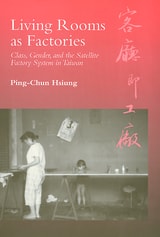
Living Rooms as Factories
Class, Gender, and the Satelite Factory System in TaiwanPing-Chun Hsiung
Temple University Press, 1996
In Taiwan, small-scale subcontracting factories of thirty employees or less make items for export, like the wooden jewelry boxes that Ping-Chun Hsiung made when she worked in six such factories. These factories are found in rice fields and urban areas, front yards and living rooms, mostly employing married women in line with the government slogan that promotes work in the home—"Living Rooms as Factories."
Hsiung studies the experiences of the married women who work in this satellite system of factories, and how their work and family lives have contributed to Taiwan's 9.1 percent GNP growth over the last three decades, the "economic miracle." This vivid portrayal of the dual lives of these women as wives, mothers, daughters-in-law and as manufacturing workers also provides sophisticated analyses of the links between class and gender stratification, family dynamics, state policy, and global restructuring within the process of industrialization.
Hsiung uses ethnographic data to illustrate how, in this system of intersecting capitalist logic and patriarchal practices, some Taiwanese women experience upward mobility by marrying into the owners' family, while others remain home and wage workers. Although women in both groups acknowledge gender inequality, this commonality does not bridge divergent class affiliations. Along with a detailed account of the oppressive labor practices, this book reveals how workers employ clandestine tactics to defy the owners' claims on their labor.
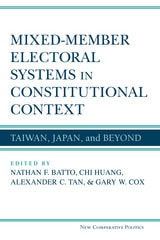
Mixed-Member Electoral Systems in Constitutional Context
Taiwan, Japan, and BeyondEdited by Nathan F. Batto, Chi Huang, Alexander C. Tan, and Gary W. Cox
University of Michigan Press, 2016
The findings presented here demonstrate that the success of electoral reform depends not only on the specification of new electoral rules per se but also on the political context—and especially the constitutional framework—within which such rules are embedded.
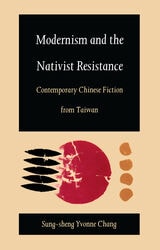
Modernism and the Nativist Resistance
Contemporary Chinese Fiction from TaiwanSung-sheng Yvonne Chang
Duke University Press, 1993
Situating her subject in its historical context, Sung-sheng Yvonne Chang traces the connection between Taiwan's Modernists and the liberal scholars of pre-Communist China. She discusses the Modernists' ambivalent relationship with contemporary Taiwan's conservative culture, and provides a detailed critical survey of the strife between the Modernists and the socialistically inclined, anti-Western Nativists. Chang's approach is comprehensive, combining Chinese and comparative perspectives. Employing the critical insights of Raymond Williams, Peter Burger, M. M. Bahktin, and Fredric Jameson, she investigates the complex issues involved in Chinese writers' appropriation of avant-gardism, aestheticism, and various other Western literary concepts and techniques. Within this framework, Chang offers original, challenging interpretations of major works by the best-known Chinese Modernists from Taiwan.
As an intensive introduction to a literature of considerable quality and impact, and as a case study of the global spread of Western literary Modernism, this book will be of great interest to students of Chinese and comparative literature, and to those who wish to understand the broad patterns of twentieth-century literary history.
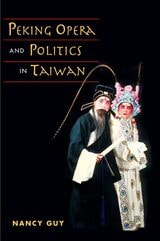
Peking Opera and Politics in Taiwan
Nancy Guy
University of Illinois Press, 2005
When Chiang Kai-shek's Nationalist government and military retreated to Taiwan in 1949, they brought along numerous Peking opera performers. Expecting that this symbolically important art would strengthen regime legitimacy and authority, they generously supported Peking opera's perpetuation in exile. Valuing mainland Chinese culture above Taiwanese culture, the Nationalists generously supported Peking opera to the virtual exclusion of local performing traditions, despite their wider popularity. Later, as Taiwan turned toward democracy, the island's own "indigenous" products became more highly valued and Peking opera found itself on a tenuous footing. Finally, in 1995, all of its opera troupes and schools (formerly supported by the Ministry of Defense) were dismantled.
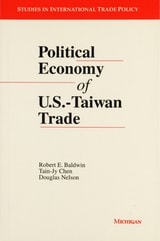
Political Economy of U.S. - Taiwan Trade
Robert Baldwin, Tain-Jy Chen, and Douglas Nelson, Editors
University of Michigan Press, 1995
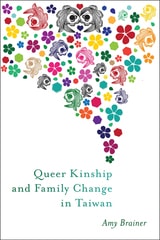
Queer Kinship and Family Change in Taiwan
Brainer, Amy
Rutgers University Press, 2019
Interweaving the narratives of multiple family members, including parents and siblings of her queer and trans informants, Amy Brainer analyzes the strategies that families use to navigate their internal differences. In Queer Kinship and Family Change in Taiwan, Brainer looks across generational cohorts for clues about how larger social, cultural, and political shifts have materialized in people’s everyday lives. Her findings bring light to new parenting and family discourses and enduring inequalities that shape the experiences of queer and heterosexual kin alike.
Brainer’s research takes her from political marches and support group meetings to family dinner tables in cities and small towns across Taiwan. She speaks with parents and siblings who vary in whether and to what extent they have made peace with having a queer or transgender family member, and queer and trans people who vary in what they hope for and expect from their families of origin. Across these diverse life stories, Brainer uses a feminist materialist framework to illuminate struggles for personal and sexual autonomy in the intimate context of family and home.
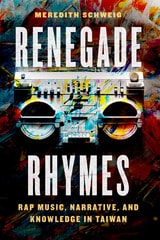
Renegade Rhymes
Rap Music, Narrative, and Knowledge in TaiwanMeredith Schweig
University of Chicago Press, 2022
Like many states emerging from oppressive political rule, Taiwan saw a cultural explosion in the late 1980s, when nearly four decades of martial law under the Chinese Nationalist Party ended. As members of a multicultural, multilingual society with a complex history of migration and colonization, Taiwanese people entered this moment of political transformation eager to tell their stories and grapple with their identities. In Renegade Rhymes, ethnomusicologist Meredith Schweig shows how rap music has become a powerful tool in the post-authoritarian period for both exploring and producing new knowledge about the ethnic, cultural, and political history of Taiwan.
Schweig draws on extensive ethnographic fieldwork, taking readers to concert venues, music video sets, scenes of protest, and more to show how early MCs from marginalized ethnic groups infused rap with important aspects of their own local languages, music, and narrative traditions. Aiming their critiques at the educational system and a neoliberal economy, new generations of rappers have used the art form to nurture associational bonds and rehearse rituals of democratic citizenship, making a new kind of sense out of their complicated present.
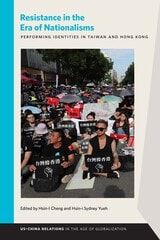
Resistance in the Era of Nationalisms
Performing Identities in Taiwan and Hong KongHsin-I Cheng
Michigan State University Press, 2023
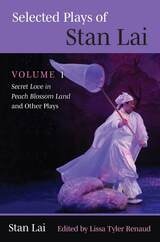
Selected Plays of Stan Lai
Volume 1: Secret Love in Peach Blossom Land and Other PlaysStan Lai, edited by Lissa Tyler Renaud
University of Michigan Press, 2021
Volume One contains:
Secret Love in Peach Blossom Land
Look Who's Crosstalking Tonight
The Island and the Other Shore
I Me She Him
Ménage à 13
Selected Plays of Stan Lai
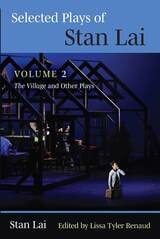
Volume 2: The Village and Other PlaysStan Lai, edited by Lissa Tyler Renaud
University of Michigan Press, 2021
Volume Two contains:
Millennium Teahouse
Sand on a Distant Star
Like Shadows
The Village
Writing in Water
Selected Plays of Stan Lai
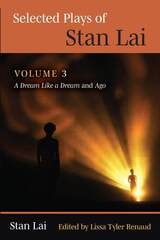
Volume 3: A Dream Like a Dream and AgoStan Lai, edited by Lissa Tyler Renaud
University of Michigan Press, 2021
Volume Three contains:
A Dream Like a Dream
Ago

Social Change and the Family in Taiwan
Arland Thornton and Hui-Sheng Lin
University of Chicago Press, 1994
This interdisciplinary study explores the patterns and causes of change in education, work, income, leisure time, marriage, living arrangements, and interactions among extended kin. Theoretical chapters enunciate a theory of family and social change centered on the life course and modes of social organization. Other chapters look at the shift from arranged marriages toward love matches, as well as changes in dating practices, premarital sex, fertility, and divorce.
Contributions to the book are made by Jui-Shan Chang, Ming-Cheng Chang, Deborah S. Freedman, Ronald Freedman, Thomas E. Fricke, Albert Hermalin, Mei-Lin Lee, Paul K. C. Liu, Hui-Sheng Lin, Te-Hsiung Sun, Arland Thornton, Maxine Weinstein, and Li-Shou Yang.
Staging Memories
Hou Hsiao-hsien's A City of SadnessAbé Mark Nornes and Emilie Yueh-yu Yeh
Michigan Publishing Services, 2015

Taiwan
The Land Colonialisms MadeArik Dirlik, Ping-Hui Liao, and Ya-Chung Chang, special issue editors
Duke University Press, 2018
Contributors: Shu-jung Chen, Leo T. S. Ching, Ya-Chung Chuang, Arif Dirlik, P. Kerim Friedman, Ping-hui Liao, Nikky Lin, Jing Tsu, Yin Wang, Fang-chih Irene Yang
Telemodernities
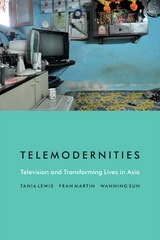
Television and Transforming Lives in AsiaTania Lewis, Fran Martin, and Wanning Sun
Duke University Press, 2016
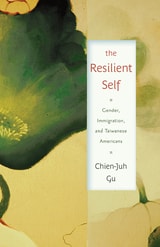
The Resilient Self
Gender, Immigration, and Taiwanese AmericansGu, Chien-Juh
Rutgers University Press, 2017
Most of the women immigrated as dependents when their U.S.-educated husbands found professional jobs upon graduation. Constrained by their dependent visas, these women could not work outside of the home during the initial phase of their settlement. The significant contrast of their lives before and after immigration—changing from successful professionals to foreign housewives—generated feelings of boredom, loneliness, and depression. Mourning their lost careers and lacking fulfillment in homemaking, these highly educated immigrant women were forced to redefine the meaning of work and housework, which in time shaped their perceptions of themselves and others in the family, at work, and in the larger community.
The Taiwan Voter
Christopher H. Achen and T. Y. Wang, Editors
University of Michigan Press, 2017
Taiwan’s electoral politics draws international scholarly interest because of the prominent role of ethnic and national identification. While in most countries the many tangled strands of competing identities are daunting for scholarly analysis, in Taiwan the cleavages are powerful and limited in number, so the logic of interrelationships among issues, partisanship, and identity are particularly clear. The Taiwan Voter unites experts to investigate the ways in which social identities, policy views, and partisan preferences intersect and influence each other. These novel findings have wide applicability to other countries, and will be of interest to a broad range of social scientists interested in identity politics.
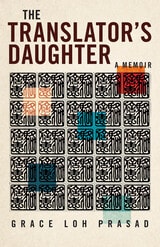
The Translator's Daughter
A MemoirGrace Loh Prasad
The Ohio State University Press, 2024
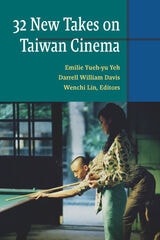
Thirty-two New Takes on Taiwan Cinema
Emilie Yueh-yu Yeh, Darrell William Davis, Wenchi Lin, Editors
University of Michigan Press, 2022
A film-by-film introduction to Taiwan cinema and cultures
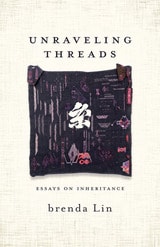
Unraveling Threads
Essays on Inheritancebrenda Lin
The Ohio State University Press, 2026
“Tactile memory feels like it is the easiest to lose,” brenda Lin writes in Unraveling Threads. But in these exquisite essays, she demonstrates just how the tactile bolsters personal, familial, and cultural memory. From the remnant of a baby’s umbilical cord to the antique hand-embroidered baby carriers her mother collects, Lin shows us how the tactile and handmade connect parents and children, homeland and diaspora, and give texture to caregiving’s many forms. As Lin writes, the radical for thread forms the basis of Chinese characters for women’s work, for practice through repetition, for inheritance. Threads form the mesh in the stent that keeps her father’s heart working. And yuan, the red thread of fate, is the first word she translated for her future husband. When Lin returns to Taiwan after decades away, this time with her young family, the threads of creativity and caretaking become the warp and weft of the continual process of homecoming. These essays on motherhood, language, art, and diaspora will resonate with anyone who has experienced the process of returning to, or building, a home.
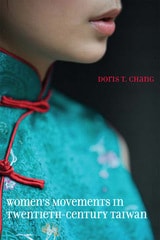
Women's Movements in Twentieth-Century Taiwan
Doris Chang
University of Illinois Press, 2008
This book is the first in English to consider women's movements and feminist discourses in twentieth-century Taiwan. Doris T. Chang examines the way in which Taiwanese women in the twentieth century selectively appropriated Western feminist theories to meet their needs in a modernizing Confucian culture. She illustrates the rise and fall of women's movements against the historical backdrop of the island's contested national identities, first vis-à-vis imperial Japan (1895-1945) and later with postwar China (1945-2000).
In particular, during periods of soft authoritarianism in the Japanese colonial era and late twentieth century, autonomous women's movements emerged and operated within the political perimeters set by the authoritarian regimes. Women strove to replace the "Good Wife, Wise Mother" ideal with an individualist feminism that meshed social, political, and economic gender equity with the prevailing Confucian family ideology. However, during periods of hard authoritarianism from the 1930s to the 1960s, the autonomous movements collapsed.
The particular brand of Taiwanese feminism developed from numerous outside influences, including interactions among an East Asian sociopolitical milieu, various strands of Western feminism, and even Marxist-Leninist women's liberation programs in Soviet Russia. Chinese communism appears not to have played a significant role, due to the Chinese Nationalists' restriction of communication with the mainland during their rule on post-World War II Taiwan.
Notably, this study compares the perspectives of Madame Chiang Kai-shek, whose husband led as the president of the Republic of China on Taiwan from 1949 to 1975, and Hsiu-lien Annette Lu, Taiwan's vice president from 2000 to 2008. Delving into period sources such as the highly influential feminist monthly magazine Awakening as well as interviews with feminist leaders, Chang provides a comprehensive historical and cross-cultural analysis of the struggle for gender equality in Taiwan.
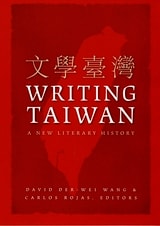
Writing Taiwan
A New Literary HistoryDavid Der-wei Wang and Carlos Rojas, eds.
Duke University Press, 2007
Because the island of Taiwan spent the first half of the century as a colony of Japan and the second half in an umbilical relationship to China, its literature challenges basic assumptions about what constitutes a “national literature.” Several contributors directly address the methodological and epistemological issues involved in writing about “Taiwan literature.” Other contributors investigate the cultural and political grounds from which specific genres and literary movements emerged. Still others explore themes of history and memory in Taiwan literature and tropes of space and geography, looking at representations of boundaries as well as the boundary-crossing global flows of commodities and capital. Like Taiwan’s history, modern Taiwan literature is rife with conflicting legacies and impulses. Writing Taiwan reveals a sense of its richness and diversity to English-language readers.
Contributors. Yomi Braester, Sung-sheng Yvonne Chang, Fangming Chen, Lingchei Letty Chen, Chaoyang Liao, Ping-hui Liao, Joyce C. H. Liu, Kim-chu Ng, Carlos Rojas, Xiaobing Tang, Ban Wang, David Der-wei Wang, Gang Gary Xu, Michelle Yeh, Fenghuang Ying