Results by title
9 books match the query 'Teachers' unions'
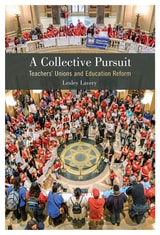
A Collective Pursuit
Teachers' Unions and Education ReformLesley Lavery
Temple University Press, 2020
Teachers’ unions are the organizations responsible for safeguarding the conditions of teachers’ employment. Union supporters claim strong synergies between teachers’ interests and students’ interests, but critics of unions insist that the stance of teachers in collective bargaining may disadvantage students as unions reduce the power of administrators to manage, remove, reward or retain excellent teachers.
In A Collective Pursuit, Lesley Laveryunpacks how teachers’ unions today are fighting for contracts that allow them to earn a decent living and build “schools all students deserve.” She explains the form and function of the nation’s largest teachers’ unions. Lavery then explores unionization campaigns in the Twin Cities charter schools. A Collective Pursuit also examines teacher strikes and contract negotiations, school finance and finance reform, and district and union attempts to address racial achievement gaps, to provide a context for understanding the economic, political, and demographic forces that inspire teachers to improve conditions for students.
A Collective Pursuit emphasizes that while teachers’ unions serve a traditional, economic role, they also provide a vast array of valuable services to students, educators, parents, and community members.
How Policies Make Interest Groups
Governments, Unions, and American EducationMichael T. Hartney
University of Chicago Press, 2022
As most American labor organizations struggle for survival and relevance in the twenty-first century, teachers unions appear to be an exception. Despite being all but nonexistent until the 1960s, these unions are maintaining members, assets—and political influence. As the COVID-19 epidemic has illustrated, today’s teachers unions are something greater than mere labor organizations: they are primary influencers of American education policy. How Policies Make Interest Groups examines the rise of these unions to their current place of influence in American politics.
Michael Hartney details how state and local governments adopted a new system of labor relations that subsidized—and in turn, strengthened—the power of teachers unions as interest groups in American politics. In doing so, governments created a force in American politics: an entrenched, subsidized machine for membership recruitment, political fundraising, and electoral mobilization efforts that have informed elections and policymaking ever since. Backed by original quantitative research from across the American educational landscape, Hartney shows how American education policymaking and labor relations have combined to create some of the very voter blocs to which it currently answers. How Policies Make Interest Groups is trenchant, essential reading for anyone seeking to understand why some voices in American politics mean more than others.
Not Alone
LGB Teachers Organizations from 1970 to 1985Jason Mayernick
Rutgers University Press, 2024
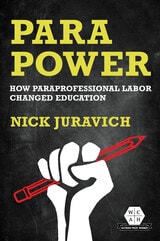
Para Power
How Paraprofessional Labor Changed EducationNick Juravich
University of Illinois Press, 2024
Understanding paras as key players in Black and Latino struggles for jobs and freedom, Nick Juravich details how the first generation of paras in New York City transformed work in public schools and the relationships between schools and the communities they served. Paraprofessional programs created hundreds of thousands of jobs in working-class Black and Latino neighborhoods. These programs became an important pipeline for the training of Black and Latino teachers in the1970s and early 1980s while paras’ organizing helped drive the expansion and integration of public sector unions.
An engaging portrait of an invisible profession, Para Power examines the lives and practices of the first generation of paraprofessional educators against the backdrop of struggles for justice, equality, and self-determination.
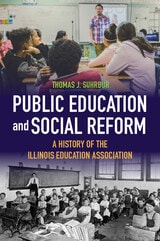
Public Education and Social Reform
A History of the Illinois Education AssociationThomas J. Suhrbur
University of Illinois Press, 2025
Suhrbur pays particular attention to the impact of race, gender, religion, and tax policy on the IEA and public schools. He also examines the IEA’s evolution from a professional organization controlled by administrations and officials through its radical transformation into a teacher-led independent labor union. As a workers’ organization, the IEA successfully fought for collective bargaining and organized K–12 and higher education while continually standing against right-wing efforts to privatize education and undermine public schools with vouchers, for-profit institutions, and tax credits.
Multifaceted and up to date, Public Education and Social Reform tells the story of the organization and figures dedicated to sustaining and advancing Illinois public education.

Rank-and-File Rebels
Theories of Power and Change in the 2018 Education StrikesErin Dyke
University Press of Colorado, 2024
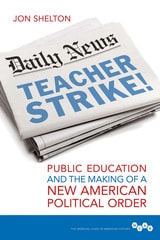
Teacher Strike!
Public Education and the Making of a New American Political OrderJon Shelton
University of Illinois Press, 2017
As Shelton shows, many working- and middle-class whites sided with corporate interests in seeing themselves as society's only legitimate, productive members. This alliance increasingly argued that public employees and the urban poor took but did not give. Drawing on a wealth of research ranging from school board meetings to TV news reports, Shelton puts readers in the middle of fraught, intense strikes in Newark, St. Louis, and three other cities where these debates and shifting attitudes played out. He also demonstrates how the labor actions contributed to the growing public perception of unions as irrelevant or even detrimental to American prosperity. Foes of the labor movement, meanwhile, tapped into cultural and economic fears to undermine not just teacher unionism but the whole of liberalism.
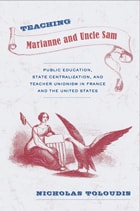
Teaching Marianne and Uncle Sam
Public Education, State Centralization, and Teacher Unionism in France and the United StatesNicholas Toloudis
Temple University Press, 2012
Offering the first systematic, comparative examination of the origins of teachers’ unions in two countries—France and the United States—Teaching Marianne and Uncle Sam shows how teachers’ unions came into existence not because of the willful efforts of particular actors, but over the course of decades of conflict over the proper role of professional educators in public politics.
Nicholas Toloudis traces teacher unionism back to the first efforts of governments to centralize public education. He carefully documents how centralization created new understandings of the role of teachers in their societies and generated new sources of conflict within teachers’ corps. Using rare archival source materials, Toloudis illustrates how these internal conflicts became salient in teachers’ battles with governments over their legitimate right to exist as collective claim-makers within the polity.
In the series Politics, History, and Social Change, edited by John C. Torpey
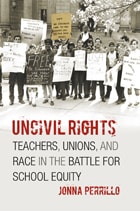
Uncivil Rights
Teachers, Unions, and Race in the Battle for School EquityJonna Perrillo
University of Chicago Press, 2012