Results by title
1927 books match the query 'Technology & Engineering' and 176 start with a
A Guide to MATLAB® Object-Oriented Programming
Andy H. Register
The Institution of Engineering and Technology, 2007
A Handbook for EMC Testing and Measurement
David Morgan
The Institution of Engineering and Technology, 1994

A Historical Atlas of Tibet
Karl E. Ryavec
University of Chicago Press, 2015
Cradled among the world’s highest mountains—and sheltering one of its most devout religious communities—Tibet is, for many of us, an ultimate destination, a place that touches the heavens, a place only barely in our world, at its very end. In recent decades Western fascination with Tibet has soared, from the rise of Tibetan studies in academia to the rock concerts aimed at supporting its independence to the simple fact that most of us—far from any base camp—know exactly what a sherpa is. And yet any sustained look into Tibet as a place, any attempt to find one’s way around its high plateaus and through its deep history, will yield this surprising fact: we have barely mapped it. With this atlas, Karl E. Ryavec rights that wrong, sweeping aside the image of Tibet as Shangri-La and putting in its place a comprehensive vision of the region as it really is, a civilization in its own right. And the results are absolutely stunning.
The product of twelve years of research and eight more of mapmaking, A Historical Atlas of Tibet documents cultural and religious sites across the Tibetan Plateau and its bordering regions from the Paleolithic and Neolithic times all the way up to today. It ranges through the five main periods in Tibetan history, offering introductory maps of each followed by details of western, central, and eastern regions. It beautifully visualizes the history of Tibetan Buddhism, tracing its spread throughout Asia, with thousands of temples mapped, both within Tibet and across North China and Mongolia, all the way to Beijing. There are maps of major polities and their territorial administrations, as well as of the kingdoms of Guge and Purang in western Tibet, and of Derge and Nangchen in Kham. There are town plans of Lhasa and maps that focus on history and language, on population, natural resources, and contemporary politics.
Extraordinarily comprehensive and absolutely gorgeous, this overdue volume will be a cornerstone in cartography, Asian studies, Buddhist studies, and in the libraries or on the coffee tables of anyone who has ever felt the draw of the landscapes, people, and cultures of the highest place on Earth.
A History of America in 100 Maps
Susan Schulten
University of Chicago Press, 2018
In this book Susan Schulten uses maps to explore five centuries of American history, from the voyages of European discovery to the digital age. With stunning visual clarity, A History of America in 100 Maps showcases the power of cartography to illuminate and complicate our understanding of the past.
Gathered primarily from the British Library’s incomparable archives and compiled into nine chronological chapters, these one hundred full-color maps range from the iconic to the unfamiliar. Each is discussed in terms of its specific features as well as its larger historical significance in a way that conveys a fresh perspective on the past. Some of these maps were made by established cartographers, while others were made by unknown individuals such as Cherokee tribal leaders, soldiers on the front, and the first generation of girls to be formally educated. Some were tools of statecraft and diplomacy, and others were instruments of social reform or even advertising and entertainment. But when considered together, they demonstrate the many ways that maps both reflect and influence historical change.
Audacious in scope and charming in execution, this collection of one hundred full-color maps offers an imaginative and visually engaging tour of American history that will show readers a new way of navigating their own worlds.

A History of Control Engineering 1800-1930
S. Bennett
The Institution of Engineering and Technology, 1979
A History of Control Engineering 1930-1955
Stuart Bennett
The Institution of Engineering and Technology, 1993
A History of Occupational Health and Safety
From 1905 to the PresentMichelle Follette Turk
University of Nevada Press, 2018
A History of Occupational Health and Safety examines the work, hazards, and health and safety programs from the early building of the railroad through the construction of the Hoover Dam, chemical manufacturing during World War II, nuclear testing, and dense megaresort construction on the Las Vegas Strip. In doing so, this comprehensive chronicle reveals the long and unfortunate history of exposing workers, residents, tourists, and the environment to dangerous work—all while exposing the present and future to crises in the region. Complex interactions and beliefs among the actors involved are emphasized, as well as how the medical community interpreted and responded to the risks posed.
Few places in the United States contain this mixture of industrial and postindustrial sites, the Las Vegas area offers unique opportunities to evaluate American occupational health during the twentieth century, and reminds us all about the relevancy of protecting our workers.
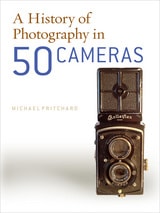
A History of Photography in Fifty Cameras
Michael Pritchard
University of Chicago Press, 2014
Through brief, illustrated chapters on fifty landmark cameras and the photographers who used them, Michael Pritchard offers an entertaining look at photography as practiced by professionals, artists, and amateurs. A History of Photography in Fifty Cameras is organized chronologically, beginning with William Henry Fox Talbot’s wooden “Mousetrap” camera of 1835. Other entries include the Brownie (1900), the Coronet Midget (1935), the Kodak Instamatic 100 (1963), and, of course, the Polaroid SX-70 (1972). Photographs within each chapter show not only the cameras themselves but also samples of the images made with them. Pritchard uses each camera as a point of entry for talking about the people who used them and the kind of photos they produced, from Weegee and his Speed Graphic to Cartier-Bresson and the Leica’s role in the invention of photojournalism. In the hands of individual photographers, he reveals, cameras came to represent unique styles of depiction.
Together, the stories of the fifty cameras gathered here present an approachable and informative take on a medium that continues to fire the imagination, whether we’re perfecting the selfie or longing for the days of Fotomat.
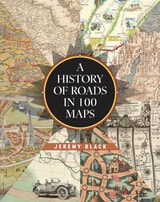
A History of Roads in 100 Maps
Jeremy Black
University of Chicago Press, 2026
A beautifully illustrated, first-of-its-kind chronicle of road maps through the ages.
Road maps are the most common form of map that most of us regularly interact with while we all seek to find our way from here to there. Today, the digital maps on our devices are just the latest in a series of cartographic innovations designed to make transportation of people and goods easier and more predictable. Whether traveling on foot, in a vehicle, or by animal, people have long created and relied on roads, and efforts to map these overland routes predate the invention of the printing press. Yet the vast majority of road maps have been produced only within the last five hundred years—and even more specifically within the last century.
Historian Jeremy Black is the first to chart the tale of road maps, beginning with the "Peutinger Map," which illustrated the roads famously connecting the Roman Empire. From the time of antiquity, Black guides the reader through the centuries all the way to the modern age, when the invention of the automobile spurred the creation of roads and road maps like nothing before. Over the course of this journey, Black illuminates the integral role maps played in the development of government infrastructures through time and across all the inhabited continents. And, arriving in the present day, Black shows how technology may soon make the paper road map obsolete even as it builds on the conventions of the preceding centuries.
Featuring a series of full-color maps from the British Library's collection and beyond, A History of Roads in 100 Maps is an eye-opening visual story of how modern civilizations traversed, constructed, and connected their worlds.
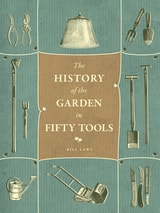
A History of the Garden in Fifty Tools
Bill Laws
University of Chicago Press, 2014
As Laws reveals, gardening tools have coevolved with human society, and the story of these fifty individual tools presents an innovative history of humans and the garden over time. Laws takes us back to the Neolithic age, when the microlith, the first “all-in-one” tool was invented. Consisting of a small sharp stone blade that was set into a handle made of wood, bone, or antler, it was a small spade that could be used to dig, clip, and cut plant material. We find out that wheelbarrows originated in China in the second century BC, and their basic form has not changed much since. He also describes how early images of a pruning knife appear in Roman art, in the form of a scythe that could cut through herbs, vegetables, fruits, and nuts and was believed to be able to tell the gardener when and what to harvest.
Organized into five thematic chapters relating to different types of gardens: the flower garden, the kitchen garden, the orchard, the lawn, and ornamental gardens, the book includes a mix of horticulture and history, in addition to stories featuring well-known characters—we learn about Henry David Thoreau’s favorite hoe, for example. A History of the Garden in Fifty Tools will be a beautiful gift for any home gardener and a reassuring reminder that gardeners have always struggled with the same quandaries.
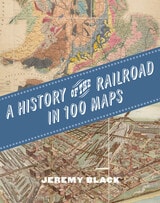
A History of the Railroad in 100 Maps
Jeremy Black
University of Chicago Press, 2024
The first international history of railroads and railroad infrastructure told through stunningly reproduced maps.
Since their origins in eighteenth-century England, railroads have spread across the globe, changing everything in their path, from where and how people grew and made things to where and how they lived and moved. Railroads rewrote not only world geography but also the history of maps and mapping. Today, the needs of train companies and their users continue to shape the maps we consume and consult.
Featuring full-color maps primarily from the British Library's distinguished collection—many of them never before published—A History of the Railroad in 100 Maps is the first international history of railroads and railroad infrastructure told through maps. Jeremy Black includes examples from six continents, spanning a variety of uses from railroad planning and operations to guides for passengers, shippers, and tourists.
Arranged chronologically, the maps are accompanied by explanatory text that sheds light on the political, military, and urban development histories associated with the spread of railroads. A final chapter considers railroad maps from games, books, and other cultural artifacts. For anyone interested in the history of railroads or maps, A History of the Railroad in 100 Maps will offer new and unexpected insights into their intertwined global history.
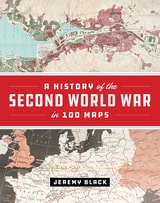
A History of the Second World War in 100 Maps
Jeremy Black
University of Chicago Press, 2020
The First World War was marked by an exceptional expansion in the use and production of military cartography. But World War II took things even further, employing maps, charts, reconnaissance, and the systematic recording and processing of geographical and topographical information on an unprecedented scale. As Jeremy Black—one of the world’s leading military and cartographic historians—convincingly shows in this lavish full-color book, it is impossible to understand the events and outcomes of the Second World War without deep reference to mapping at all levels. In World War II, maps themselves became the weapons.
A History of the Second World War in 100 Maps traces how military cartography developed from simply recording and reflecting history to having a decisive impact on events of a global scale. Drawing on one hundred key maps from the unparalleled collections of the British Library and other sources—many of which have never been published in book form before--Jeremy Black takes us from the prewar mapping programs undertaken by both Germany and the United Kingdom in the mid-1930s through the conflict’s end a decade later. Black shows how the development of maps led directly to the planning of the complex and fluid maneuvers that defined the European theater in World War II: for example, aerial reconnaissance photography allowed for the charting of beach gradients and ocean depths in the runup to the D-Day landings, and the subsequent troop movements at Normandy would have been impossible without the help of situation maps and photos. In the course of the conflict, both in Europe and the Pacific, the realities of climate, terrain, and logistics—recorded on maps—overcame the Axis powers. Maps also became propaganda tools as the pages of Time outlined the directions of the campaigns and the Allies dropped maps from their aircraft.
In this thrilling and unique book, Jeremy Black blends his singular cartographic and military expertise into a captivating overview of World War II from the air, sea, and sky, making clear how fundamental maps were to every aspect of this unforgettable global conflict.
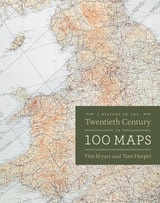
A History of the Twentieth Century in 100 Maps
Tim Bryars and Tom Harper
University of Chicago Press, 2014
As Bryars and Harper reveal, maps make ideal narrators, and the maps in this book tell the story of the 1900s—which saw two world wars, the Great Depression, the Swinging Sixties, the Cold War, feminism, leisure, and the Internet. Several of the maps have already gained recognition for their historical significance—for example, Harry Beck’s iconic London Underground map—but the majority of maps on these pages have rarely, if ever, been seen in print since they first appeared. There are maps that were printed on handkerchiefs and on the endpapers of books; maps that were used in advertising or propaganda; maps that were strictly official and those that were entirely commercial; maps that were printed by the thousand, and highly specialist maps issued in editions of just a few dozen; maps that were envisaged as permanent keepsakes of major events, and maps that were relevant for a matter of hours or days.
As much a pleasure to view as it is to read, A History of the Twentieth Century in 100 Maps celebrates the visual variety of twentieth century maps and the hilarious, shocking, or poignant narratives of the individuals and institutions caught up in their production and use.
A History of the World Semiconductor Industry
P.R. Morris
The Institution of Engineering and Technology, 1990
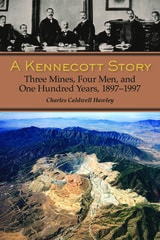
A Kennecott Story
Three Mines, Four Men, and One Hundred Years, 1887-1997Charles Caldwell Hawley
University of Utah Press, 2014
As it traces the story of the three mines, the narrative follows four mining engineers—Stephen Birch, Daniel Cowan Jackling, William Burford Braden, and E. Toppan Stannard—self-made men whose technological ingenuity was responsible for much of Kennecott’s success. While Jackling developed economies of scale for massive open-pit mining in Utah, Braden went underground in Chile for a caving operation of unprecedented scale for copper. Meanwhile, Birch and Stannard overcame the extreme challenges of mining rich ore in the difficult climate of Alaska and transporting it to market. The Guggenheims, who brought these three operations together provided the funding without which the infrastructure necessary for the mining operations might not have been built. The railroad required for the Alaska mine alone cost more than three times what the United States had paid to buy all of Alaska only forty-five years earlier.
As a geologist with first-hand knowledge of mining, author Charles Hawley aptly describes the technology behind the Kennecott story in a way that both specialists and the general reader will appreciate. Through engaging stories and pertinent details, he places Kennecott and the copper industry within their historical context and also allows the reader to consider the controversial aspects of mineral discovery and sustainability in a crowded world where resources are limited.

A Little Bit of Land
Jessica Gigot
Oregon State University Press, 2022
From midwifing new lambs to harvesting basil, Jessica Gigot invites the reader into her life on a small farm and the uncommon road that led her there. Fascinated by farming and the burgeoning local food movement, she spent her twenties wandering the Pacific Northwest, interning at small farms and doing graduate work in horticulture, always with an eye towards learning as much as she could about how and why people farm. Despite numerous setbacks and the many challenges of farming, she created a family and farm life defined by resilience and a genuine love of the land.
In A Little Bit of Land, Gigot explores the intricacies of small-scale agriculture in the Pacific Northwest and the changing role of women in this male-dominated industry. Gigot alternates between chapters describing joys, routines, and challenges of farm life and chapters reflecting on her formative experiences in agriculture, on farms and in classrooms from Ashland to the Skagit Valley. Throughout, she explores questions of sustainability, economics, health, and food systems.
A Management Guide to Logistics Engineering
K. Beal
The Institution of Engineering and Technology, 1989
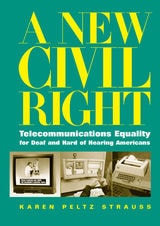
A New Civil Right
Telecommunications Equality for Deaf and Hard of Hearing AmericansKaren Peltz Strauss
Gallaudet University Press, 2006
When three deaf men in the 1960s invented and sold TTYs, the first teletypewriting devices that allowed deaf people to communicate by telephone, they started a telecommunications revolution for deaf people throughout America. A New Civil Right: Telecommunications Equality for Deaf and Hard of Hearing Americans chronicles the history of this movement, which lagged behind new technical developments decades after the advent of TTYs.
In this highly original work, Author Karen Peltz Strauss reveals how the paternalism of the hearing-oriented telecommunications industries slowed support for technology for deaf users. Throughout this comprehensive account, she emphasizes the grassroots efforts behind all of the eventual successes. A New Civil Right recounts each advance in turn, such as the pursuit of special customer premises equipment (SCPE) from telephone companies; the Telecommunications Act of 1982 and the Telecommunications Accessibility Enhancement Act of 1988 and the 1990 Americans with Disabilities Act, which required nationwide relay telephone services for deaf and hard of hearing users.
Strauss painstakingly details how all of these advances occurred incrementally, first on local and state levels, and later through federal law. It took exhaustive campaigning to establish 711 for nationwide relay dialing, while universal access to television captioning required diligent legal and legislative work to pass the Decoder Circuitry Act in 1990. The same persistence resulted in the enactment of the Telecommunications Act of 1996, which required all off-the-shelf communications equipment, including new wireless technology, to be readily accessible to deaf users.
A Passion For Gold
An AutobiographyRalph J. Roberts
University of Nevada Press, 2002
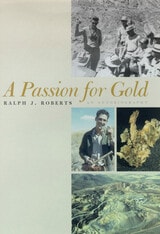
Ralph J. Roberts is not a household name in Nevada, but it should be—it was he who discovered the Carlin Belt gold deposits that created a major mining boom in the state in the last four decades of the twentieth century. But this discovery was only one episode of his remarkably eventful life. This colorful and personal account of the author's search for his passion—gold—is a story as adventurous as that of any fictional character.

A People’s Green New Deal
Max Ajl
Pluto Press, 2021
'Hands-down the best book yet on the Green New Deal' - Jason Hickel
The idea of a Green New Deal was launched into popular consciousness by US Congressperson Alexandria Ocasio-Cortez in 2018. It has become a watchword in the current era of global climate crisis. But what - and for whom - is the Green New Deal?
In this concise and urgent book, Max Ajl provides an overview of the various mainstream Green New Deals. Critically engaging with their proponents, ideological underpinnings and limitations, he goes on to sketch out a radical alternative: a 'People's Green New Deal' committed to decommodification, working-class power, anti-imperialism and agro-ecology.
Ajl diagnoses the roots of the current socio-ecological crisis as emerging from a world-system dominated by the logics of capitalism and imperialism. Resolving this crisis, he argues, requires nothing less than an infrastructural and agricultural transformation in the Global North, and the industrial convergence between North and South. As the climate crisis deepens and the literature on the subject grows, A People's Green New Deal contributes a distinctive perspective to the debate.
A Phone of Our Own
The Deaf Insurrection Against Ma BellHarry G. Lang
Gallaudet University Press, 2000
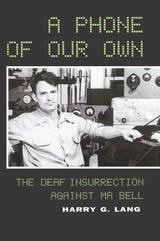
In 1964, of the more than 85 million telephones in the United States and Canada, less than one percent were used regularly by deaf people. If they didn’t ask their hearing neighbors for help, they depended upon their hearing children, some as young as three years old, to act as intermediaries for business calls or medical consultations. In that same year, three enterprising deaf men, Robert H. Weitbrecht, James C. Marsters, and Andrew Saks, started the process that led to deaf people around the world having an affordable phone system that they could use.
Weitbrecht, a successful physicist with the Stanford Research Institute, had been experimenting with a teletypewriter (TTY) used with shortwave radios. When Marsters, a prominent deaf orthodontist, met Weitbrecht and saw his TTY, he immediately suggested the possibility of resolving deaf people’s decades-long struggle to have access to telecommunications without relying totally upon hearing people as go-betweens. Andrew Saks brought his business acumen to the group, which soon set to work overcoming the daunting problems they faced.
Harry G. Lang’s A Phone of Our Own: The Deaf Insurrection Against Ma Bell tells how these three men collaborated to solve the technical difficulties of developing a coupling device for TTYs that would translate sounds into discernible letters. More remarkably, and with the help of an expanding corps of Deaf advocates, they successfully assaulted the American Telephone and Telegraph Company (AT&T), which in its efforts to protect its monopoly, smashed old TTYs to keep them from being used for potentially competitive purposes. The Federal Communications Commission (FCC) also resisted efforts to build a telephone system for deaf people that was available, affordable, portable, and fully accessible. Lang recounts in vivid terms how many other Deaf individuals and groups from all walks of life joined Weitbrecht, Marsters, and Saks against these forces. A Phone of Our Own is an entertaining and engrossing story of how they fought and won, and changed the world for the better for deaf people everywhere.

A Prussian Observes the American Civil War
The Military Studies of Justus ScheibertEdited & Translated by Frederic Trautmann
University of Missouri Press, 2001
Prussia, like much of nineteenth-century Germany, was governed by the belief that knowledge, and thus understanding, was best derived from direct observation and communicated through documentation. Justus Scheibert, an officer in the Royal Prussian Engineers, was therefore sent to the United States for seven months to observe the Civil War and report the effects of artillery on fortifications. His interests, however, surpassed that limited assignment, and his observations, as well as the writings translated in this work, went on to include tactics, strategy, logistics, intelligence, combined operations, and the medical service.
Scheibert, an expert on warfare, had access to the Confederate high command, including such luminaries as Robert E. Lee, J. E. B. Stuart, and Stonewall Jackson. He brought to the war not only the fresh perspective of a foreigner, but also the insightful eye of a career military officer and a skillful author and correspondent. Although he was personally sympathetic to the South, Scheibert researched both sides of the conflict in order to write unbiased, informed commentary for his fellow Prussian officers. His firsthand account of many aspects of the Civil War included a theoretical discussion of every branch of service and the Confederate high command, illustrated with his personal observations.
Sheibert's narrative portrays soldiers, weaponry, and battles, including the first, and one of the few, studies of combined operations in the Civil War. Trautmann combines two of Scheibert's publications, The Civil War in the North American States: A Military Study for the German Officer (1874) and Combined Operations by Army and Navy: A Study Illustrated by the War on the Mississippi, 1861-1863 (ca. 1887), which for decades influenced German military writing. Trautmann's translations evince the grace and achieve the readability of Scheibert's intricate and complex works.
A Prussian Observes the American Civil War makes an important addition to Civil War studies and will appeal greatly to professional historians and those interested in, and dedicated to, Civil War and military studies.

A Rainbow Palate
How Chemical Dyes Changed the West’s Relationship with FoodCarolyn Cobbold
University of Chicago Press, 2020
We live in a world saturated by chemicals—our food, our clothes, and even our bodies play host to hundreds of synthetic chemicals that did not exist before the nineteenth century. By the 1900s, a wave of bright coal tar dyes had begun to transform the Western world. Originally intended for textiles, the new dyes soon permeated daily life in unexpected ways, and by the time the risks and uncertainties surrounding the synthesized chemicals began to surface, they were being used in everything from clothes and home furnishings to cookware and food.
In A Rainbow Palate, Carolyn Cobbold explores how the widespread use of new chemical substances influenced perceptions and understanding of food, science, and technology, as well as trust in science and scientists. Because the new dyes were among the earliest contested chemical additives in food, the battles over their use offer striking insights and parallels into today’s international struggles surrounding chemical, food, and trade regulation.
A Scientist's War
The war diary of Sir Clifford Paterson, 1939-45Robert Clayton
The Institution of Engineering and Technology, 1991
A Tenth of a Second
A HistoryJimena Canales
University of Chicago Press, 2009
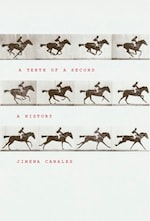
In the late fifteenth century, clocks acquired minute hands. A century later, second hands appeared. But it wasn’t until the 1850s that instruments could recognize a tenth of a second, and, once they did, the impact on modern science and society was profound. Revealing the history behind this infinitesimal interval, A Tenth of a Second sheds new light on modernity and illuminates the work of important thinkers of the last two centuries.
Tracing debates about the nature of time, causality, and free will, as well as the introduction of modern technologies—telegraphy, photography, cinematography—Jimena Canales locates the reverberations of this “perceptual moment” throughout culture. Once scientists associated the tenth of a second with the speed of thought, they developed reaction time experiments with lasting implications for experimental psychology, physiology, and optics. Astronomers and physicists struggled to control the profound consequences of results that were a tenth of a second off. And references to the interval were part of a general inquiry into time, consciousness, and sensory experience that involved rethinking the contributions of Descartes and Kant.
Considering its impact on much longer time periods and featuring appearances by Henri Bergson, Walter Benjamin, and Albert Einstein, among others, A Tenth of a Second is ultimately an important contribution to history and a novel perspective on modernity.
A Thousand Cuts
Digital Repression and Pro-Democracy Movements in ThailandJanjira Sombatpoonsiri
University of Wisconsin Press, 2027
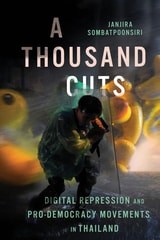
In response to the 2020–21 youth-led protests throughout Thailand, which were largely fueled by discourse on digital platforms, the government launched a sweeping program of technological suppression. Smear campaigns were orchestrated to discredit young activists, laws were weaponized to criminalize their activities, and surveillance technologies were deployed to keep tabs on them.
In A Thousand Cuts, Janjira Sombatpoonsiri traces the historical development of repression in Thailand, detailing how “traditional” methods of repression have been merged with digital tools to maintain the status quo since 2005, when mass mobilization started to move online. By examining the adverse effects of digital repression on individual activists—their mental health, private lives, and socioeconomic resources—Sombatpoonsiri also offers one of the first systematic analyses of the “reception” side of repression, shedding light on its detrimental consequences for activists and mass movements as a whole.
A User's Guide to the Age of Tech
Grant Wythoff
University of Minnesota Press, 2025
How users experience and influence technological change—when so much of that change feels out of our control
Every day, we casually employ one of the most complex tools ever created, using it to read the news, plan our day, and connect with friends. In A User’s Guide to the Age of Tech, Grant Wythoff investigates the process by which now-ubiquitous technologies like our phones become integrated into our lives, showing how the “gadget” stage—before devices are widely adopted—opens the door for users to co-create these technologies and adapt them toward unexpected ends.
In this elegant, approachable work, Wythoff offers a view of how users make new technology their own, subverting dominant power structures and imagining uses never intended by their creators. Rooted in a detailed look into the history of technique (focusing on how we do things with tools rather than the tools themselves), A User’s Guide to the Age of Tech proceeds to complicate, and influence, discussion of subjects like the digital divide and AI.
Drawing on a range of sources, including novels, patents, and newspapers, Wythoff explores the vernacular philosophies that have emerged from users and their diverse, everyday practices, bringing down to earth the conversation about digital titans, away from the abstracted domains of server farms and algorithms. Lodging a passionate argument that we know ourselves better than the data brokers who appear to wield influence over our psyches, Wythoff invites readers (and tech users) to imagine their own digital technique, acknowledge their vast expertise, and see its immense value.
Retail e-book files for this title are screen-reader friendly with images accompanied by short alt text and/or extended descriptions.
AC-DC Power System Analysis
Jos Arrillaga
The Institution of Engineering and Technology, 1998
AI Explainability and Governance in Smart Energy Systems
Pushpalatha Naveenkumar
The Institution of Engineering and Technology, 2026

AI Techniques in EV Motor and Inverter Fault Detection and Diagnosis
Yihua Hu
The Institution of Engineering and Technology, 2024

AI and Digitalization in Energy Management
Antonio Sanfilippo
The Institution of Engineering and Technology, 2025

AI for Power Electronics and Renewable Energy Systems
Weihao Hu
The Institution of Engineering and Technology, 2024
AI for Status Monitoring of Utility Scale Batteries
Shunli Wang
The Institution of Engineering and Technology, 2022

AI for Wind Turbine Performance and Condition Monitoring
Davide Astolfi
The Institution of Engineering and Technology, 2026
AI, Numerical Optimization, IoT and Blockchain for Healthcare 4.0
Saurav Mallik
The Institution of Engineering and Technology, 2025
AI-Based Forecasting of Solar Photovoltaics Power Generation
Elham Shirazi
The Institution of Engineering and Technology, 2026
AIoT for Smart Transportation
Transforming the future of mobilityMeenu Gupta
The Institution of Engineering and Technology, 2025
ATM
The broadband telecommunications solutionL.G. Cuthbert
The Institution of Engineering and Technology, 1993
Access, Fronthaul and Backhaul Networks for 5G & Beyond
Muhammad Ali Imran
The Institution of Engineering and Technology, 2017
Accident Prone
A History of Technology, Psychology, and Misfits of the Machine AgeJohn C. Burnham
University of Chicago Press, 2009
Technology demands uniformity from human beings who encounter it. People encountering technology, however, differ from one another. Thinkers in the early twentieth century, observing the awful consequences of interactions between humans and machines—death by automobiles or dismemberment by factory machinery, for example—developed the idea of accident proneness: the tendency of a particular person to have more accidents than most people. In tracing this concept from its birth to its disappearance at the end of the twentieth century, Accident Prone offers a unique history of technology focused not on innovations but on their unintended consequences.
Here, John C. Burnham shows that as the machine era progressed, the physical and economic impact of accidents coevolved with the rise of the insurance industry and trends in twentieth-century psychology. After World War I, psychologists determined that some people are more accident prone than others. This designation signaled a shift in social strategy toward minimizing accidents by diverting particular people away from dangerous environments. By the 1960s and 1970s, however, the idea of accident proneness gradually declined, and engineers developed new technologies to protect all people, thereby introducing a hidden, but radical, egalitarianism.
Lying at the intersection of the history of technology, the history of medicine and psychology, and environmental history, Accident Prone is an ambitious intellectual analysis of the birth, growth, and decline of an idea that will interest anyone who wishes to understand how Western societies have grappled with the human costs of modern life.
Achille Lauro
Arne Zuidhoek
Amsterdam University Press, 2024
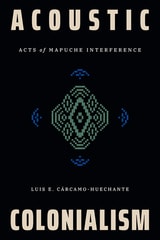
Acoustic Colonialism
Acts of Mapuche InterferenceLuis E. Cárcamo-Huechante
Duke University Press, 2025
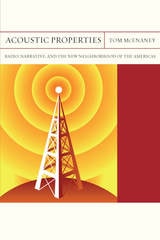
Acoustic Properties
Radio, Narrative, and the New Neighborhood of the AmericasTom McEnaney
Northwestern University Press, 2017
Based on original archival research in Buenos Aires, Havana, Paris, and the United States, the book develops a literary media theory that understands sound as a transmedial phenomenon and radio as a transnational medium. Analyzing the construction of new social and political relations in the wake of the United States’ 1930s Good Neighbor Policy, Acoustic Properties challenges standard narratives of hemispheric influence through new readings of Richard Wright’s cinematic work in Argentina, Severo Sarduy’s radio plays in France, and novels by John Dos Passos, Manuel Puig, Raymond Chandler, and Carson McCullers. Alongside these writers, the book also explores Che Guevara and Fidel Castro’s Radio Rebelde, FDR’s fireside chats, Félix Caignet’s invention of the radionovela in Cuba, Evita Perón’s populist melodramas in Argentina, Orson Welles’s experimental New Deal radio, Cuban and U.S. “radio wars,” and the 1960s African American activist Robert F. Williams’s proto–black power Radio Free Dixie.
From the doldrums of the Great Depression to the tumult of the Cuban Revolution, Acoustic Properties illuminates how novelists in the radio age converted writing into a practice of listening, transforming realism as they struggled to channel and shape popular power.
Active Sound and Vibration Control
Theory and applicationsOsman Tokhi
The Institution of Engineering and Technology, 2002

Active and Assisted Living
Technologies and applicationsFrancisco Florez-Revuelta
The Institution of Engineering and Technology, 2016
Active and Passive Protection from Space Radiation
A systems engineering approachCharles J. Baker
The Institution of Engineering and Technology, 2026

Adapting to the Land
A History of Agriculture in ColoradoJohn F. Freeman
University Press of Colorado, 2021
Ancestral Puebloans farmed and grazed within the limits of nature. Early settlers adjusted their cultivation methods through trial and error, while later agriculturists relied on research and technical advice from the Colorado Agricultural College. As part of wartime mobilization, the federal government prompted farmers to efficiently increase yields. To meet the demand for food and fiber scientific and technical innovations led to the development of new plant cultivars and livestock breeds, advances in mechanization, and widespread use of synthetic amendments. Increasing concern over soil fertility and the loss of irrigation water to urbanization contributed to more changes. Despite, or perhaps because of, what we see today along the Front Range, Colorado may still have a chance to slow or even reverse its seemingly unrestrained growth, creating a more vibrant, earth-friendly society in which agriculture plays an increasingly significant part. Scientific discoveries and innovations in regenerative cultivation are clearing the path to a more sustainable future.
Adapting to the Land adds an ecological and horticultural perspective to historical interpretations of recurring agricultural issues in the state and tracks the concept of stewardship, suggesting that spiritual beliefs continue to contribute to debates over acceptable agricultural practices and the effects of urbanization upon the land. This book will be a key resource for students, scholars, and general readers interested in agricultural and Colorado history, sustainability, and rural sociology.
Adaptive Array Principles
J.E. Hudson
The Institution of Engineering and Technology, 1981
Adaptive Manufacturing for SMEs
Digital retrofitting, predictive maintenance, and servitisation strategiesJelena Milisavljevic-Syed
The Institution of Engineering and Technology, 2026
Adaptive Prediction and Predictive Control
Partha Pratim Kanjilal
The Institution of Engineering and Technology, 1995