Results by title
20 books match the query 'Technology and civilization'
André Leroi-Gourhan on Technology
A Selection of Writings from the 1930s to the 1960sAndré Leroi-Gourhan
Bard Graduate Center, 2023
André Leroi-Gourhan is undoubtedly one of the most acclaimed figures of twentieth-century anthropology and archaeology. In France, his intellectual importance rivals that of the Claude Lévi-Strauss, yet Leroi-Gourhan’s major contributions are almost entirely unknown in the Anglophone world. This collection seeks to change that. This selection highlights some of his chief influences, such as elaborating a theory of technology, which argues that material culture focuses on the object in use and how use is a dynamic feature that has specific consequences for human evolution and human society. With serious ramifications for our understanding of material culture, putting Leroi-Gourhan’s thinking about technology into English will have an immediate and transformative impact on material culture studies.
Code
From Information Theory to French TheoryBernard Dionysius Geoghegan
Duke University Press, 2022

Crash Cultures
Modernity, Mediation and the MaterialEdited by Jane Arthurs and Iain Grant
Intellect Books, 1995
In trying to give meaning to one celebrity crash, the more general significance of the car crash, its challenge to rational control or explanation, its disregard for the subject and its will, became the focus for attention. Coincidentally, the two most newsworthy films of 1997 were David Cronenberg's Crash and James Cameron's Titanic, both of which generated intense popular interest.
The principal purpose of this collection of essays is to subject texts, within which crashes figure, to well-defined cultural study. The themes that emerge from this collection, which is truly experimental in attempting to draw together the resources for a cultural study of events, are many and varied. Moreover, they vary in format, in order to bring as many modes of address as possible to bear on the crashes that catastrophically and fantastically punctuate the fabric of everyday life.

Crossing the Postmodern Divide
Albert Borgmann
University of Chicago Press, 1993
"[This] thoughtful book is the first remotely realistic map out of the post modern labyrinth."—Joseph Coates, The Chicago Tribune
"Rather astoundingly large-minded vision of the nature of humanity, civilization and science."—Kirkus Reviews

Electronic Media and Technoculture
Caldwell, John T
Rutgers University Press, 2000
Electronic Media and Technoculture anchors contemporary discussion of the digital future within a critical tradition about the media arts, society, and culture. The collection examines a range of phenomena, from boutique cyber-practices to the growing ubiquity of e-commerce and the internet. The essays chart a critical field in media studies, providing a historical perspective on theories of new media. The contributors place discussions of producing technologies in dialogue with consuming technologies, new media in relation to old media, and argue that digital media should not be restricted to the constraining public discourses of either the computer, broadcast, motion-picture, or internet industries. The collection charts a range of theoretical positions to assist readers interested in new media and to enable them to weather the cycles of hardware obsolescence and theoretical volatility that characterize the present rush toward digital technologies.
Contributors include Ien Ang, John Caldwell, Cynthia Cockburn, Helen Cunningham, Hans Magnus Enzensberger, Guillermo Gómez-Peña, Arthur Kroker, Bill Nichols, Andrew Ross, Ellen Seiter, Vivian Sobchack, Allucquère Rosanne Stone, Ravi Sundaram, Michael A. Weinstein, Raymond Williams, and Brian Winston.
John Thornton Caldwell is chair of the film and television department at the University of California at Los Angeles. He is a filmmaker and media artist and author of Televisuality: Style, Crisis, and Authority in American Television (also from Rutgers University Press).
Elements for an Anthropology of Technology
Pierre Lemonnier
University of Michigan Press, 1992
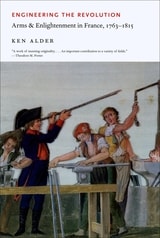
Engineering the Revolution
Arms and Enlightenment in France, 1763-1815Ken Alder
University of Chicago Press, 2010
Engineering the Revolution documents the forging of a new relationship between technology and politics in Revolutionary France, and the inauguration of a distinctively modern form of the “technological life.” Here, Ken Alder rewrites the history of the eighteenth century as the total history of one particular artifact—the gun—by offering a novel and historical account of how material artifacts emerge as the outcome of political struggle. By expanding the “political” to include conflict over material objects, this volume rethinks the nature of engineering rationality, the origins of mass production, the rise of meritocracy, and our interpretation of the Enlightenment and the French Revolution.
Feminist Technology
Edited by Linda L. Layne, Sharra L. Vostral, and Kate Boyer
University of Illinois Press, 2010
Is there such a thing as a "feminist technology"? If so, what makes a technology feminist? Is it in the design process, in the thing itself, in the way it is marketed, or in the way it is used by women (or by men)?
In this collection, feminist scholars trained in diverse fields consider these questions by examining a range of products, tools, and technologies that were specifically designed for and marketed to women. Evaluating the claims that such products are liberating for women, the contributors focus on case studies of menstrual-suppressing birth control pills, home pregnancy tests, tampons, breast pumps, Norplant, anti-fertility vaccines, and microbicides. In examining these various products, this volume explores ways of actively intervening to develop better tools for designing, promoting, and evaluating feminist technologies. Recognizing the different needs and desires of women and acknowledging the multiplicity of feminist approaches, Feminist Technology offers a sustained debate on existing and emergent technologies that share the goal of improving women's lives.
Contributors are Jennifer Aengst, Maia Boswell-Penc, Kate Boyer, Frances Bronet, Shirley Gorenstein, Anita Hardon, Deborah G. Johnson, Linda L. Layne, Deana McDonagh, and Sharra L. Vostral.
Indigenous Science and Technology
Nahuas and the World Around ThemKelly S. McDonough
University of Arizona Press, 2024
Winner 2025 Bryce Wood Book Award
This is a book about how Nahuas—native speakers of Nahuatl, the common language of the Aztec Empire and of more than 2.5 million Indigenous people today—have explored, understood, and explained the world around them in pre-invasion, colonial, and contemporary time periods. It is a deep dive into Nahua theoretical and practical inquiry related to the environment, as well as the dynamic networks in which Nahuas create, build upon, and share knowledges, practices, tools, and objects to meet social, political, and economic needs.
In this work, author Kelly S. McDonough addresses Nahua understanding of plants and animals, medicine and ways of healing, water and water control, alphabetic writing, and cartography. Interludes between the chapters offer short biographical sketches and interviews with contemporary Nahua scientists, artists, historians, and writers, accompanied by their photos. The book also includes more than twenty full-color images from sources including the Florentine Codex, a sixteenth-century collaboration between Indigenous and Spanish scholars considered the most comprehensive extant source on the pre-Hispanic and early colonial Aztec (Mexica) world.
In Mexico today, the terms “Indigenous” and “science and technology” are rarely paired together. When they are, the latter tend to be framed as unrecoverable or irreparably damaged pre-Hispanic traditions, relics confined to a static past. In Indigenous Science and Technology, McDonough works against such erroneous and racialized discourses with a focus on Nahua environmental engagements and relationalities, systems of communication, and cultural preservation and revitalization. Attention to these overlooked or obscured knowledges provides a better understanding of Nahua culture, past and present, as well as the entangled local and global histories in which they were—and are—vital actors.
Predator Empire
Drone Warfare and Full Spectrum DominanceIan G. R. Shaw
University of Minnesota Press, 2016
What does it mean for human beings to exist in an era of dronified state violence? How can we understand the rise of robotic systems of power and domination? Focusing on U.S. drone warfare and its broader implications as no other book has to date, Predator Empire argues that we are witnessing a transition from a labor-intensive “American empire” to a machine-intensive “Predator Empire.”
Moving from the Vietnam War to the War on Terror and beyond, Ian G. R. Shaw reveals how changes in military strategy, domestic policing, and state surveillance have come together to enclose our planet in a robotic system of control. The rise of drones presents a series of “existential crises,” he suggests, that are reengineering not only spaces of violence but also the character of the modern state. Positioning drone warfare as part of a much longer project to watch and enclose the human species, he shows that for decades—centuries even—human existence has slowly but surely been brought within the artificial worlds of “technological civilization.” Instead of incarcerating us in prisons or colonizing territory directly, the Predator Empire locks us inside a worldwide system of electromagnetic enclosure—in which democratic ideals give way to a system of totalitarian control, a machinic “rule by Nobody.”
As accessibly written as it is theoretically ambitious, Predator Empire provides up-to-date information about U.S. drone warfare, as well as an in-depth history of the rise of drones.
Prosthetic Immortalities
Biology, Transhumanism, and the Search for Indefinite LifeAdam R Rosenthal
University of Minnesota Press, 2024
Examining the links between today’s ideas of radical life extension and age-old notions of immortality
From Plato’s notion of generation to Derrida’s concept of survival to such modern phenomena as anti-aging treatments, cryogenics, cloning, and whole-brain uploads, Adam Rosenthal’s Prosthetic Immortalities shows how the dream of indefinite life has always been a technological one: a matter of prosthesis. He argues that every biological instance of perpetual life, from one-celled organisms to rejuvenating jellyfish to Henrietta Lacks’s “immortal” cancer cells, always results in the transformation of the original being. There can, therefore, be no certainty of immortality. Yet, because finite mortal life is already marked by difference, division, and change, as Rosenthal concludes: “the problem of immortality will not cease to haunt us.”
Prosthetic Immortalities examines the persistence of humans’ aspirations of deathlessness, showing that the link between immortalization and prostheticization is not unique to a single period but is, rather, a ubiquitous element of the discourse of immortality, encompassing both modern technoscientific efforts and religious discourses of an afterlife. Rosenthal asks to what extent the emergence of a virtual, posited, immortal presence follows from the tenets of empirical science—and not simply from the discourse of biology but also, and more radically still, from biological organization itself.
Rosenthal ultimately argues that the discovery of biological immortals—lifeforms that naturally have indefinitely long lifespans, such as cancer cells and bacteria—present novel conceptual difficulties for traditional philosophical approaches to mortality and selfhood, asking whether it is life itself that first births immortalizing prostheses.
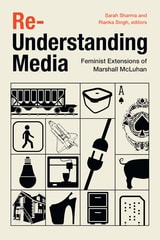
Re-Understanding Media
Feminist Extensions of Marshall McLuhanSarah Sharma and Rianka Singha, editors
Duke University Press, 2022
Contributors. Nasma Ahmed, Morehshin Allahyari, Sarah Banet-Weiser, Wendy Hui Kyong Chun, Brooke Erin Duffy, Ganaele Langlois, Sara Martel, Shannon Mattern, Cait McKinney, Jeremy Packer, Craig Robertson, Sarah Sharma, Ladan Siad, Rianka Singh, Nicholas Taylor, Armond R. Towns, and Jennifer Wemigwans
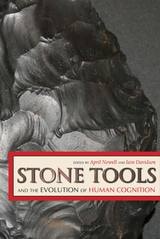
Stone Tools and the Evolution of Human Cognition
April Nowell
University Press of Colorado, 2010
Dating as far back as 2.5-2.7 million years ago, stone tools were used in cutting up animals, woodworking, and preparing vegetable matter. Today, lithic remains give archaeologists insight into the forethought, planning, and enhanced working memory of our early ancestors. Contributors focus on multiple ways in which archaeologists can investigate the relationship between tools and the evolving human mind-including joint attention, pattern recognition, memory usage, and the emergence of language.
Offering a wide range of approaches and diversity of place and time, the chapters address issues such as skill, social learning, technique, language, and cognition based on lithic technology. Stone Tools and the Evolution of Human Cognition will be of interest to Paleolithic archaeologists and paleoanthropologists interested in stone tool technology and cognitive evolution.
Summa Technologiae
Stanislaw Lem
University of Minnesota Press, 2014
The Polish writer Stanislaw Lem is best known to English-speaking readers as the author of the 1961 science fiction novel Solaris, adapted into a meditative film by Andrei Tarkovsky in 1972 and remade in 2002 by Steven Soderbergh. Throughout his writings, comprising dozens of science fiction novels and short stories, Lem offered deeply philosophical and bitingly satirical reflections on the limitations of both science and humanity.
In Summa Technologiae—his major work of nonfiction, first published in 1964 and now available in English for the first time—Lem produced an engaging and caustically logical philosophical treatise about human and nonhuman life in its past, present, and future forms. After five decades Summa Technologiae has lost none of its intellectual or critical significance. Indeed, many of Lem’s conjectures about future technologies have now come true: from artificial intelligence, bionics, and nanotechnology to the dangers of information overload, the concept underlying Internet search engines, and the idea of virtual reality. More important for its continued relevance, however, is Lem’s rigorous investigation into the parallel development of biological and technical evolution and his conclusion that technology will outlive humanity.
Preceding Richard Dawkins’s understanding of evolution as a blind watchmaker by more than two decades, Lem posits evolution as opportunistic, shortsighted, extravagant, and illogical. Strikingly original and still timely, Summa Technologiae resonates with a wide range of contemporary debates about information and new media, the life sciences, and the emerging relationship between technology and humanity.
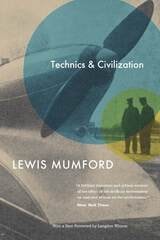
Technics and Civilization
Lewis Mumford
University of Chicago Press, 2010
Technics and Civilization first presented its compelling history of the machine and critical study of its effects on civilization in 1934—before television, the personal computer, and the Internet even appeared on our periphery.
Drawing upon art, science, philosophy, and the history of culture, Lewis Mumford explained the origin of the machine age and traced its social results, asserting that the development of modern technology had its roots in the Middle Ages rather than the Industrial Revolution. Mumford sagely argued that it was the moral, economic, and political choices we made, not the machines that we used, that determined our then industrially driven economy. Equal parts powerful history and polemic criticism, Technics and Civilization was the first comprehensive attempt in English to portray the development of the machine age over the last thousand years—and to predict the pull the technological still holds over us today.
Technocreep and the Politics of Things Not Seen
Neda Atanasoski and Nassim Parvin, editors
Duke University Press, 2025
Contributors. Neda Atanasoski, Katherine Bennett, Iván Chaar López, Sushmita Chatterjee, Hayri Dortdivanlioglu, Sanaz Haghani, Jacob Hagelberg, Jennifer Hamilton, Antonia Hernández, Marjan Khatibi, Tamara Kneese, Erin McElroy, Vernelle A. A. Noel, Jessica Olivares, Nassim Parvin, Beth Semel, Renee Shelby, Tanja Wiehn
Technological Visions
Hopes And Fears That Shape New TechnologiesMarita Sturken
Temple University Press, 2004
The Condition of Digitality
A Post-Modern Marxism for the Practice of Digital LifeRobert Hassan
University of Westminster Press, 2020
David Harvey’s The Condition of Postmodernity rationalised capitalism’s transformation during an extraordinary year: 1989. It gave theoretical expression to a material and cultural reality that was just then getting properly started – globalisation and postmodernity – whilst highlighting the geo-spatial limits to accumulation imposed by our planet.
However this landmark publication, author Robert Hassan argues, did not address the arrival of digital technology, the quantum leap represented by the move from an analogue world to a digital economy and the rapid creation of a global networked society. Considering first the contexts of 1989 and Harvey’s work, then the idea of humans as analogue beings he argues this arising new human condition of digitality leads to alienation not only from technology but also the environment. This condition he suggests, is not an ideology of time and space but a reality stressing that Harvey’s time-space compression takes on new features including those of ‘outward’ and ‘inward’ globalisation and the commodification of all spheres of existence.
Lastly the author considers culture’s role drawing on Rahel Jaeggi’s theories to make the case for a post-modern Marxism attuned to the most significant issue of our age. Stimulating and theoretically wide-ranging The Condition of Digitality recognises post-modernity’s radical new form as a reality and the urgent need to assert more democratic control over digitality.
The Future without a Past
The Humanities in a Technological SocietyJohn Paul Russo
University of Missouri Press, 2005
The New Real
Media and Mimesis in Japan from Stereographs to EmojiJonathan E. Abel
University of Minnesota Press, 2022
Unlocking a vital understanding of how literary studies and media studies overlap and are bound together
A synthetic history of new media reception in modern and contemporary Japan, The New Real positions mimesis at the heart of the media concept. Considering both mimicry and representation as the core functions of mediation and remediation, Jonathan E. Abel offers a new model for media studies while explaining the deep and ongoing imbrication of Japan in the history of new media.
From stereoscopy in the late nineteenth century to emoji at the dawn of the twenty-first, Abel presents a pioneering history of new media reception in Japan across the analog and digital divide. He argues that there are two realities created by new media: one marketed to us through advertising that proclaims better, faster, and higher-resolution connections to the real; and the other experienced by users whose daily lives and behaviors are subtly transformed by the presence and penetration of the content carried through new media. Intervening in contemporary conversations about virtuality, copyright, copycat violence, and social media, each chapter unfolds with a focus on a single medium or technology, including 3D photographs, the phonograph, television, videogames, and emoji.
By highlighting the tendency of the mediated to copy the world and the world to copy the mediated, The New Real provides a new path for analysis of media, culture, and their function in the world.