Results by title
4 books match the query 'Tennessee River Valley'
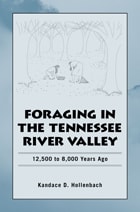
Foraging in the Tennessee River Valley
12,500 to 8,000 Years AgoKandace D. Hollenbach
University of Alabama Press, 2009
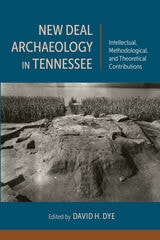
New Deal Archaeology in Tennessee
Intellectual, Methodological, and Theoretical ContributionsEdited by David H. Dye
University of Alabama Press, 2016
Exploring how New Deal innovation transformed archaeology in the American South.
New Deal Archaeology in Tennessee tells the engrossing story of Southeastern archaeology in the 1930s. The Tennessee Valley Authority Act of May 1933 initiated an ambitious program of flood control and power generation by way of a chain of hydroelectric dams on the Tennessee River. The construction of these dams flooded hundreds of thousands of square miles of river bottoms, campsites, villages, and towns that had been homes to Native Americans for centuries. This triggered an urgent need to undertake extensive archaeological fieldwork throughout the region. Those studies continue to influence contemporary archaeology.
The state of Tennessee and the Tennessee Valley were especially well suited research targets thanks to their mild climate and long field seasons. A third benefit in the 1930s was the abundance of labor supplied by Tennesseans unemployed during the Great Depression. Within months of the passage of the Tennessee Valley Authority Act, teams of archaeologists fanned out across the state and region under the farsighted direction of Smithsonian Institution curators Neil M. Judd, Frank H. H. Roberts, and Frank M. Setzler. The early months of 1934 would become the busiest period of archaeological fieldwork in US history.
The twelve insightful essays in New Deal Archaeology in Tennessee document and explore this unique peak in archaeological study. Chapters highlight then-new techniques such as mound “peeling” and stratigraphic excavation adapted from the University of Chicago; the four specific New Deal sites of Watts Bar Reservoir, Mound Bottom, Pack, and Chickamauga Basin; bioarchaeology in the New Deal; and the enduring impact of the New Deal on contemporary fieldwork.
The challenges of the 1930s in recruiting skilled labor, training unskilled ancillary labor, developing and improvising new field methods, and many aspects of archaeological policies, procedures, and best-practices laid much of the foundation of contemporary archaeological practice. New Deal Archaeology in Tennessee offers an invaluable record of that pivotal time for professional, student, and amateur archaeologists.
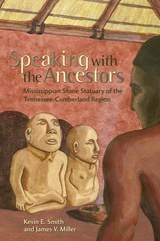
Speaking with the Ancestors
Mississippian Stone Statuary of the Tennessee-Cumberland RegionKevin E. Smith and James V. Miller
University of Alabama Press, 2008
When European explorers began their initial forays into southeastern North America in the 16th and 17th centuries they encountered what they called temples and shrines of native peoples, often decorated with idols in human form made of wood, pottery, or stone. The idols were fascinating to write about, but having no value to explorers searching for gold or land, there are no records of these idols being transported to the Old World, and mention of them seems to cease about the 1700s. However, with the settling of the fledgling United States in the 1800s, farming colonists began to unearth stone images in human form from land formerly inhabited by the native peoples. With little access to the records of the 16th and 17th centuries, debate and speculation abounded by the public and scholars alike concerning their origin and meaning.
During the last twenty years the authors have researched over 88 possible examples of southeastern Mississippian stone statuary, dating as far back as 1,000 years ago, and discovered along the river valleys of the interior Southeast. Independently and in conjunction, they have measured, analyzed, photographed, and traced the known history of the 42 that appear in this volume. Compiling the data from both early documents and public and private collections, the authors remind us that the statuary should not be viewed in isolation, but rather as regional expressions of a much broader body of art, ritual, and belief.
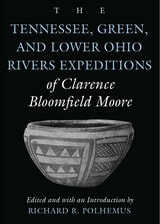
The Tennessee, Green, and Lower Ohio Rivers Expeditions of Clarence Bloomfield Moore
Clarence Bloomfield Moore, edited and introduced by Richard R. Polhemus
University of Alabama Press, 2002
This richly illustrated book is the eighth of nine Classics in Southeastern Archaeology volumes based on Moore's investigations along the waterways of eastern North America.
This oversized reprint volume presents original materials from Moore's northernmost expeditions conducted in the early 1900s as he surveyed areas of potential archaeological interest in the southeastern United States. Some of the sites he found were later targeted for major excavations during the days of the WPA/CCC. Many National Register Historic Sites are today located along the rivers he explored in this work. In many cases, however, Moore's report documents sites since destroyed by river action or by lake impoundments behind hydroelectric dams or by looters.
As with all of Moore's other investigations, his thorough documentation and collaboration with other scholars advanced understanding of aboriginal peoples and fueled debate among the experts. For instance, more than 296 burials were recovered from Indian Knoll on the Green River in Kentucky. Some graves included ceremonially "killed" artifacts, dogs buried with both adults and children, and exotic materials leading to speculations concerning origins, usage, and trade networks. Stone box graves were widespread and somewhat exclusive to this area, giving rise to early assumptions regarding kinship between scattered modern Indian tribes.
Richard Polhemus has compiled a comprehensive inventory of Moore's work in Tennessee, Alabama, Mississippi, and Kentucky and written a concise introduction to place the work in context. In so doing, he has made available to contemporary scholars of history, archaeology, and anthropology a trove of resource material on one of the most archaeologically rich and artifact-diverse regions in the nation.