Results by title

15 books match the query 'Textile industry'

cover of Dyeing with the Earth: Textiles, Tradition, and Sustainability in Contemporary Japan

Dyeing with the Earth

Textiles, Tradition, and Sustainability in Contemporary Japan

Charlotte Linton

Duke University Press, 2025

In Dyeing with the Earth, Charlotte Linton explores the intersection of small-scale traditional craft production with contemporary sustainability practices. Focusing on natural textile dyeing on the southern Japanese island of Amami Ōshima, Linton details the complex relationship between preservation practices, resource extraction, and land access in the production of Oshima tsumugi kimono cloth, which uses the indigenous technique of dorozome (or mud-dyeing). As global interest in sustainable fashion grows, textile manufacturers on Amami have expanded from kimono production to dyeing garments and textiles for high-profile designers. While traditional craft may appear at odds with the large-scale global textile industry, Linton reveals how Amamian and global producers face similar social, economic, and environmental pressures. Ethical production in fashion, Linton contends, should focus on understanding local everyday practices that sustain direct relationships between people, place, and environment rather than rely on short-term solutions via new processes or materials. Weaving together ethnography, photography, and illustration, Linton underscores the continued relevance of traditional craft and material cultures amid ongoing climate change and biodiversity loss.
[more]
cover of Fabricating Transnational Capitalism: A Collaborative Ethnography of Italian-Chinese Global Fashion

Fabricating Transnational Capitalism

A Collaborative Ethnography of Italian-Chinese Global Fashion

Lisa Rofel and Sylvia J. Yanagisako

Duke University Press, 2018
In this innovative collaborative ethnography of Italian-Chinese ventures in the fashion industry, Lisa Rofel and Sylvia J. Yanagisako offer a new methodology for studying transnational capitalism. Drawing on their respective linguistic and regional areas of expertise, Rofel and Yanagisako show how different historical legacies of capital, labor, nation, and kinship are crucial in the formation of global capitalism. Focusing on how Italian fashion is manufactured, distributed, and marketed by Italian-Chinese ventures and how their relationships have been complicated by China's emergence as a market for luxury goods, the authors illuminate the often-overlooked processes that produce transnational capitalism—including privatization, negotiation of labor value, rearrangement of accumulation, reconfiguration of kinship, and outsourcing of inequality. In so doing, Fabricating Transnational Capitalism reveals the crucial role of the state and the shifting power relations between nations in shaping the ideas and practices of the Italian and Chinese partners.
[more]
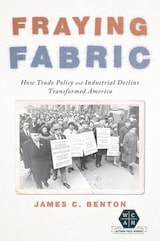
cover of Fraying Fabric: How Trade Policy and Industrial Decline Transformed America

Fraying Fabric

How Trade Policy and Industrial Decline Transformed America

James C. Benton

University of Illinois Press, 2022
The decline of the U.S. textile and apparel industries between the 1940s and 1970s helped lay the groundwork for the twenty-first century's potent economic populism in America. James C. Benton looks at how shortsighted trade and economic policy by labor, business, and government undermined an employment sector that once employed millions and supported countless communities. Starting in the 1930s, Benton examines how the New Deal combined promoting trade with weakening worker rights. He then moves to the ineffective attempts to aid textile and apparel workers even as imports surged, the 1974 pivot by policymakers and big business to institute lowered trade barriers, and the deindustrialization and economic devastation that followed. Throughout, Benton provides the often-overlooked views of workers, executives, and federal officials who instituted the United States’ policy framework in the 1930s and guided it through the ensuing decades. Compelling and comprehensive, Fraying Fabric explains what happened to textile and apparel manufacturing and how it played a role in today's politics of anger.
[more]
cover of Free Trade & Uneven Development: North American Apparel Industry After Nafta

Free Trade & Uneven Development

North American Apparel Industry After Nafta

edited by Gary Gereffi, David Spener and Jennifer Bair

Temple University Press, 2002
This volume addresses many of the complex issues raised by North American integration through the lens of one of the largest and most global industries in the region: textiles and apparel. In part, this is a story of winners and losers in the globalization process, especially if one focuses on jobs lost and jobs gained in different countries and communities within North America, defined here as: Canada, the United States, Mexico, Central America, and the Caribbean. However, it would be a mistake to view the industry solely in these zerosum terms. The North American apparel industry is an excellent illustration of larger trends in the global economy, in which regional divisions of labor appear to be one of the most stable and effective responses to globalization.The contributors to this volume are an international and interdisciplinary group of scholars who have all done detailed fieldwork at the firm and factory levels in one or more countries of North America. Taken together the essays offer theoretical and methodological innovations built around the intersection of the global commodity chains and industrial districts literatures, as well as innovative approaches to studying the impact of cross-national, interfirm networks in terms of production and trade issues, and local development outcomes for workers and communities.
[more]
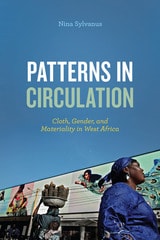
cover of Patterns in Circulation: Cloth, Gender, and Materiality in West Africa

Patterns in Circulation

Cloth, Gender, and Materiality in West Africa

Nina Sylvanus

University of Chicago Press, 2016

In this book, Nina Sylvanus tells a captivating story of global trade and cross-cultural aesthetics in West Africa, showing how a group of Togolese women—through the making and circulation of wax cloth—became influential agents of taste and history. Traveling deep into the shifting terrain of textile manufacture, design, and trade, she follows wax cloth around the world and through time to unveil its critical role in colonial and postcolonial patterns of exchange and value production.
           
Sylvanus brings wax cloth’s unique and complex history to light: born as a nineteenth-century Dutch colonial effort to copy Javanese batik cloth for Southeast Asian markets, it was reborn as a status marker that has dominated the visual economy of West African markets. Although most wax cloth is produced in China today, it continues to be central to the expression of West African women’s identity and power. As Sylvanus shows, wax cloth expresses more than this global motion of goods, capital, aesthetics, and labor—it is a form of archive where intimate and national memories are stored, always ready to be reanimated by human touch. By uncovering this crucial aspect of West African material culture, she enriches our understanding of global trade, the mutual negotiations that drive it, and the how these create different forms of agency and subjectivity.
 
[more]
cover of Radicals of the Worst Sort: Laboring Women in Lawrence, Massachusetts, 1860-1912

Radicals of the Worst Sort

Laboring Women in Lawrence, Massachusetts, 1860-1912

Ardis Cameron

University of Illinois Press, 1993

Ardis Cameron focuses on the textile workers' strikes of 1882 and 1912 in this examination of class and gender formation as drawn from the experience and language of the working-class neighborhoods of Lawrence, Massachusetts. Using the neighborhood perspective to explore the role of women in worker militancy, Cameron reveals the importance of female networks and organizational life in working-class culture and politics. Unionized women were labeled "radicals of the worst sort" because, in fighting for equality, they also rebelled against traditional economic and sexual hierarchies. Oral histories and detailed maps illuminate the setting and the dramatic story behind the famous Bread and Roses strike of 1912.
[more]
cover of Shoddy: From Devil’s Dust to the Renaissance of Rags

Shoddy

From Devil’s Dust to the Renaissance of Rags

Hanna Rose Shell

University of Chicago Press, 2020

The history of modern-day old clothes recycling begins with a thing called shoddy. Starting in the early 1800s, shoddy was the name given to a new material made from reclaimed wool, and to one of the earliest forms of industrial recycling. Old rags and leftover fabric clippings were ground to bits by a machine known as “the devil” and then re-used. Usually undisclosed, shoddy–also known as reworked wool–became suit jackets, army blankets, mattress stuffing, and much more. Shoddy is the afterlife of rags. And Shoddy, the book, reveals hidden worlds of textile intrigue.
 
In Shoddy: From Devil’s Dust to the Renaissance of Rags, Hanna Rose Shell takes readers on a journey to discover shoddy, from Haiti to the “shoddy towns” of West Yorkshire in England, to the United States, back in time to the British cholera epidemics and the American Civil War, and into agricultural fields, textile labs, and rag-shredding factories. Shell’s narrative is both literary and historical, drawing on an extraordinary range of sources, from court cases to military uniforms, mattress labels to medical textbooks, political cartoons to high art. Shoddy moves between genres, bringing richly drawn characters and unexpected objects to life. Along the way, shoddy becomes equally an evocative object and a portal into another world.
 
Almost since the time it first appeared, shoddy was both ubiquitous and controversial. In part because it was often so hard to detect, it was inherently suspicious. Public health experts worried about sanitation and disease—how could old clothes be disinfected? As well, the idea of wearing someone else’s old clothes so close to your own skin was discomforting in and of itself. Could you sleep peacefully knowing that your mattress was very likely to be stuffed with dead soldiers’ overcoats? The use of the term “virgin” wool, the idea of virginity in relation to clothes, in fact emerged as an effort by the wool industry to counter shoddy’s appeal: to make shoddy seem shoddy. Over time, shoddy would capture a host of personal, ethical, commercial, and societal failings. And yet, there was always, within shoddy, the alluring concept of regeneration, of what we today think of as conscious clothing, eco-fashion, sustainable textiles.
 
Shell exposes an interwoven tale of industrial espionage, political infighting, scientific inquiry, ethnic prejudices, and war profiteering. Discarded clothes may make many journeys over the course of several lifetimes. Not only in your garments, but under your rug, in your mattress pads, piano blankets, in the peculiar confetti-like stuffing in your mailing envelopes, even in the insulation in your walls. Though it began with wool, over the past century the shredding “devil” has turned to synthetics from nylon stockings to Kevlar. Shoddy is likely connected to something you are wearing right now. After reading, you will never use the word shoddy or think about your clothes, the environment, sustainability, or the intermingled world around you the same way again.
 
[more]
cover of Strike!

Strike!

Mary Heaton Vorse

University of Illinois Press, 1991

The most famous of the bloody southern textile strikes that took place in the late 1920s occurred at the Loray Mill in Gastonia, North Carolina, where workers endured fifty-five-hour work weeks, the stretchout, and pay so low that everyone in their families over sixteen normally was expected to enter the mill. Strike! is a vivid portrait of the mill workers' living and working conditions, the discomfort of the few southern liberals, the labor spies, the wavering morale of the strikers, the shootings, deaths, and trials, and the vigilante mobs.
 
The story is told by Mary Heaton Vorse, the leading labor reporter of the period, who had covered major strikes since 1912. This novel was the first of six inspired by the Gastonia strike. Critics hailed it as the best.
 
[more]
cover of Textile Ascendancies: Aesthetics, Production, and Trade in Northern Nigeria

Textile Ascendancies

Aesthetics, Production, and Trade in Northern Nigeria

Elisha P. Renne and Salihu Maiwada, Editors

University of Michigan Press, 2020

Until this century, Northern Nigeria was a major center of textile production and trade. Textile Ascendancies: Aesthetics, Production, and Trade in Northern Nigeria examines this dramatic change in textile aesthetics, technologies, and social values in order to explain the extraordinary shift in textile demand, production, and trade.

Textile Ascendancies provides information for the study of the demise of textile manufacturing outside Nigeria. The book also suggests the conundrum considered by George Orwell concerning the benefits and disadvantages of “mechanical progress,” and digital progress, for human existence. While textile mill workers in northern Nigeria were proud to participate in the mechanization of weaving, the “tendency for the mechanization of the world” represented by more efficient looms and printing equipment in China has contributed to the closing of Nigerian mills and unemployment.

Textile Ascendancies will appeal toanthropologists for its analyses of social identity as well as how the ethnic identity of consumers influences continued handwoven textile production. The consideration of aesthetics and fashionable dress will appeal to specialists in textiles and clothing. It will be useful to economic historians for the comparative analysis of textile manufacturing decline in the 21st century. It will also be of interest to those thinking about global futures, about digitalization, and how new ways of making cloth and clothing may provide both employment and environmentally sound production practices.

[more]
cover of The Archive of Loss: Lively Ruination in Mill Land Mumbai

The Archive of Loss

Lively Ruination in Mill Land Mumbai

Maura Finkelstein

Duke University Press, 2019
Mumbai's textile industry is commonly but incorrectly understood to be an extinct relic of the past. In The Archive of Loss Maura Finkelstein examines what it means for textile mill workers—who are assumed not to exist—to live and work during a period of deindustrialization. Finkelstein shows how mills are ethnographic archives of the city where documents, artifacts, and stories exist in the buildings and in the bodies of workers. Workers' pain, illnesses, injuries, and exhaustion narrate industrial decline; the ways in which they live in tenements exist outside and resist the values expounded by modernity; and the rumors and untruths they share about textile worker strikes and a mill fire help them make sense of the industry's survival. In outlining this archive's contents, Finkelstein shows how mills, which she conceptualizes as lively ruins, become a lens through which to challenge, reimagine, and alter ways of thinking about the past, present, and future in Mumbai and beyond.
[more]
cover of The Fabric of Resistance: Textile Workshops and the Rise of Rebellious Landscapes in Colonial Peru

The Fabric of Resistance

Textile Workshops and the Rise of Rebellious Landscapes in Colonial Peru

Di Hu

University of Alabama Press, 2022

Textiles as sites of power, production, and rebellion in the early modern Andes.

The Fabric of Resistance: Textile Workshops and the Rise of Rebellious Landscapes in Colonial Peru documents the impact of Spanish colonial institutions of labor on identity and social cohesion in Peru. Through archaeological and historical lines of evidence, Di Hu examines the long-term social conditions that enabled the large-scale rebellions in the late Spanish colonial period in Peru. Hu argues that ordinary people from different backgrounds pushed back against the top-down identity categories imposed by the Spanish colonial government and in the process created a cosmopolitan social landscape that later facilitated broader rebellion.

Hu’s case study is Pomacocha, the site of an important Spanish colonial hacienda (agricultural estate) and obraje (textile workshop). At its height, the latter had more than one hundred working families and sold textiles all over the Andes. Through analysis of this site, Hu explores three main long-term causes of rebellions against Spanish oppression. First, the Spanish colonial economy provided motivation and the social spaces for intercaste (indigenous, African, and mestizo) mixing at textile workshops. Second, new hybrid cultural practices and political solidarity arose there that facilitated the creation of new rebellious identities. Third, the maturation in the eighteenth century of popular folklore that reflected the harsh nature of Spanish labor institutions helped workers from diverse backgrounds gain a systemic understanding of exploitation.

This study provides a fresh archaeological and historical perspectives on the largest and most cosmopolitan indigenous-led rebellions of the Americas. Hu interweaves analyses of society at multiple scales including fine-grained perspectives of social networks, demography, and intimate details of material life in the textile workshop. She examines a wide range of data sources including artifacts, food remains, architectural plans, account books, censuses, court documents, contracts, maps, and land title disputes.
 

[more]
cover of The General Textile Strike of 1934: From Maine to Alabama

The General Textile Strike of 1934

From Maine to Alabama

John A. Salmond

University of Missouri Press, 2002

In January 1933, the United Textile Workers of America was in danger of collapse. Its membership was no larger than 15,000; its attempts to organize southern workers had failed disastrously; and it was constantly under attack from rival organizations. Yet, barely eighteen months later, with 300,000 dues-paying members, with newly established or revived branches covering southern cotton textile workers, as well as northern woolen and worsted workers, silk and jacquard weavers, dyers and finishers, even rayon workers, and with locals in 208 cities, towns, and mill villages, the UTW was about to embark on what one historian has termed “the greatest single industrial conflict in the history of American labor.” The General Textile Strike of 1934 is the story of that conflict.
The few historians who have concerned themselves at all with the 1934 textile strike have all concentrated on its southern aspect, presenting it as a southern event, a cotton textile event. No one argues that the South and cotton were not crucial to the strike’s story. It was cotton mill workers’ anger over the broken promises of the National Industrial Recovery Act that had forced a reluctant UTW leadership into supporting a strike vote. No industry leader was more devious in his dealings with the UTW leaders than George Sloan, the chair of the Cotton Code Authority and head of the Cotton Textile Institute. Nevertheless, the 1934 strike was a nationwide one, involving hundreds of thousands of silk, woolen, and rayon workers, all represented by the UTW and mostly living in states outside the South. Moreover, Peter Van Horn and Arthur Besse, head of the Silk and Woolen Code Authorities, respectively, lost little to Sloan in their intransigence toward labor’s demands. And, though the great transfer of the cotton industry from New England to the South was almost complete, there were still little pockets left in Massachusetts, Rhode Island, and Maine.
In The General Textile Strike of 1934, John Salmond tells everyone’s story. Looking at the strike from a national and an industrywide perspective, Salmond explains why workers were willing to risk protesting and describes the differences and similarities between southern and northern workers. Setting the strike within a New Deal context and focusing on its impact on the future of labor relations in the industry and on the lives of those who participated in it, The General Textile Strike of 1934 fills an important gap in American labor history.
[more]
cover of To Make My Bread

To Make My Bread

Grace Lumpkin

University of Illinois Press, 1959

      A story of the growth of the
        new South, To Make My Bread revolves around a family of Appalachian
        mountaineers—small farmers, hunters, and moonshiners—driven
        by economic conditions to the milltown and transformed into millhands,
        strikers, and rebels against the established order. Recognized as one
        of the major works on the Gastonia textile strike, Grace Lumpkin's novel
        is also important for anyone interested in cultural or feminist history
        as it deals with early generations of women radicals committed to addressing
        the difficult connections of class and race. Suzanne Sowinska's introduction
        looks at Lumpkin's volatile career and this book's critical reception.
      Originally published in 1932
      "[The book's] meaning
        rises out of people in dramatic conflict with other people and with the
        conditions of their life. . . . [Lumpkin] treats her theme with a craftsman's
        and a psychologist's respect. The novel springs naturally from its author's
        immersion in and personal knowledge of her absorbing subject material."
        -- The New York Times
      "Unpretentious . . .
        written in a simple and matter-of-fact prose, and yet reading it has been
        a more real, more satisfying experience than that which almost any other
        recent work of fiction has given me. I cannot imagine how anyone could
        read it and not be moved by it." -- The Nation
      "A beautiful and sincere
        novel, outstanding." -- The New Republic
      The late
 
[more]
cover of Voice Of Southern Labor: Radio, Music, And Textile Strikes, 1929-1934

Voice Of Southern Labor

Radio, Music, And Textile Strikes, 1929-1934

Vincent J. Roscigno

University of Minnesota Press, 2004

Vividly shows how music united striking workers

The 1934 strike of southern textile workers, involving nearly 400,000 mill hands, remains perhaps the largest collective mobilization of workers in U.S. history. How these workers came together in the face of the powerful and coercive opposition of management and the state is the remarkable story at the center of this book.

The Voice of Southern Labor chronicles the lives and experiences of southern textile workers and provides a unique perspective on the social, cultural, and historical forces that came into play when the group struck, first in 1929, and then on a massive scale in 1934. The workers’s grievances, solidarity, and native radicalism of the time were often reflected in the music they listened to and sang, and Vincent J. Roscigno and William F. Danaher offer an in-depth context for understanding this intersection of labor, politics, and culture. The authors show how the message of the southern mill hands spread throughout the region with the advent of radio and the rise of ex–mill worker musicians, and how their sense of opportunity was further bolstered by Franklin D. Roosevelt’s radio speeches and policies.
[more]
cover of Zapotec Women: Gender, Class, and Ethnicity in Globalized Oaxaca

Zapotec Women

Gender, Class, and Ethnicity in Globalized Oaxaca

Lynn Stephen

Duke University Press, 2005

In this extensively revised and updated second edition of her classic ethnography, Lynn Stephen explores the intersection of gender, class, and indigenous ethnicity in southern Mexico. She provides a detailed study of how the lives of women weavers and merchants in the Zapotec-speaking town of Teotitlán del Valle, Oaxaca, have changed in response to the international demand for Oaxacan textiles. Based on Stephen’s research in Teotitlán during the mid-1980s, in 1990, and between 2001 and 2004, this volume provides a unique view of a Zapotec community balancing a rapidly advancing future in export production with an entrenched past anchored in indigenous culture.

Stephen presents new information about the weaving cooperatives women have formed over the last two decades in an attempt to gain political and cultural rights within their community and standing as independent artisans within the global market. She also addresses the place of Zapotec weaving within Mexican folk art and the significance of increased migration out of Teotitlán. The women weavers and merchants collaborated with Stephen on the research for this book, and their perspectives are key to her analysis of how gender relations have changed within rituals, weaving production and marketing, local politics, and family life. Drawing on the experiences of women in Teotitlán, Stephen considers the prospects for the political, economic, and cultural participation of other indigenous women in Mexico under the policies of economic neoliberalism which have prevailed since the 1990s.

[more]