Results by title
21 books match the query 'Therapeutic use'
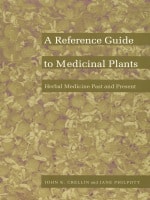
A Reference Guide to Medicinal Plants
Herbal Medicine Past and PresentJohn K. Crellin and Jane Philpott
Duke University Press, 1997
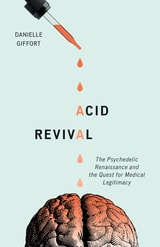
Acid Revival
The Psychedelic Renaissance and the Quest for Medical LegitimacyDanielle Giffort
University of Minnesota Press, 2020
A vivid analysis of the history and revival of clinical psychedelic science
Psychedelic drugs are making a comeback. In the mid-twentieth century, scientists actively studied the potential of drugs like LSD and psilocybin for treating mental health problems. After a decades-long hiatus, researchers are once again testing how effective these drugs are in relieving symptoms for a wide variety of psychiatric conditions, from depression and obsessive–compulsive disorder to posttraumatic stress disorder and substance addiction. In Acid Revival, Danielle Giffort examines how this new generation of researchers and their allies are working to rehabilitate psychedelic drugs and to usher in a new era of psychedelic medicine.
As this team of researchers and mental health professionals revive the field of psychedelic science, they are haunted by the past and by one person in particular: psychedelic evangelist Timothy Leary. Drawing on extensive archival research and interviews with people working on scientific psychedelia, Giffort shows how today’s researchers tell stories about Leary as an “impure” scientist and perform his antithesis to address a series of lingering dilemmas that threaten to rupture their budding legitimacy. Acid Revival presents new information about the so-called psychedelic renaissance and highlights the cultural work involved with the reassembly of dormant areas of medical science.
This colorful and accessible history of the rise, fall, and reemergence of psychedelic medicine is infused with intriguing narratives and personalities—a story for popular science aficionados as well as for scholars of the history of science and medicine.
Acts of Resistance
Antibiotic Use and Prescribing Culture in the United StatesKatharina Rynkiewich
Vanderbilt University Press, 2026
In Acts of Resistance, Katharina Rynkiewich explores the fight to save the utility of antibiotic medicines amid global antimicrobial resistance. This engaging ethnography follows bacteria, patients, and practitioners as they weave in and out of North American medical institutions. Through an examination of the social dynamics and ethical challenges of everyday antibiotic use, the author expands on the limitations of good intentions in current antibiotic stewardship policy. Her ethnographic account shows the lived experience of multiple central figures as she shifts setting and tone, ultimately deepening our understanding of the global antimicrobial resistance crisis as emergency.
Due to the global scale of impact related to antimicrobial resistance, holding industries and institutions accountable is difficult but essential. With new and reemerging multidrug-resistant organisms making their homes within institutions and in the community, tracing the origins of an infection can be an insurmountable challenge. Rynkiewich demonstrates how “microbial highways” coexist along human highways, providing an apt example of how multidrug-resistant organisms spread across hospitals, communities, and entire regions.
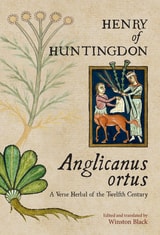
Anglicanus ortus
A Verse Herbal of the Twelfth CenturyHenry of Huntingdon
Bodleian Library Publishing, 2012
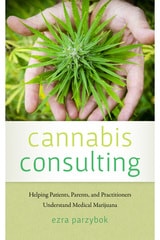
Cannabis Consulting
Helping Patients, Parents, and Practitioners Understand Medical MarijuanaEzra Parzybok
University Press of New England, 2018
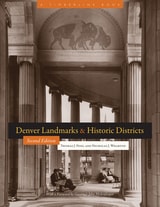
Denver Landmarks and Historic Districts
Thomas J. Noel
University Press of Colorado, 2016
Denver Landmarks and Historic Districts, Second Edition is the newest, most thorough guide to Denver’s 51 historic districts and more than 331 individually landmarked properties. This lavishly illustrated volume celebrates Denver’s oldest banks, churches, clubs, hotels, libraries, schools, restaurants, mansions, and show homes.
Denver is unusually fortunate to retain much of its significant architectural heritage. The Denver Landmark Preservation Commission (1967), Historic Denver, Inc. (1970), Colorado Preservation, Inc. (1984), and History Colorado (1879) have all worked to identify and preserve Denver buildings notable for architectural, geographical, or historical significance. Since the 1970s, Denver has designated more landmarks than any other US city of comparable size. Many of these landmarks, both well-known and obscure, are open to the public. These landmarks and districts have helped make Denver one of the healthiest and most attractive core cities in the United States, transforming what was once Skid Row into the Lower Downtown Historic District of million-dollar lofts and $7 craft beers.
Entries include the Daniels & Fisher Tower, the Brown Palace Hotel, Red Rocks Outdoor Amphitheatre, Elitch Theatre, Fire Station No. 7, the Richthofen Castle, the Washington Park Boathouse and Pavilion, and the Capitol Hill, Five Points, and Highlands historic districts. Denver Landmarks and Historic Districts highlights the many officially designated buildings and neighborhoods of note. This crisply written guide serves as a great starting point for rubbernecking around Denver, whether by motor vehicle, by bicycle, or afoot.
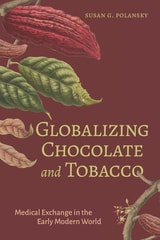
Globalizing Chocolate and Tobacco
Medical Exchange in the Early Modern WorldSusan G. Polansky
Bucknell University Press, 2026
This groundbreaking volume explores two early and opposing Spanish medical perspectives on chocolate and other New World substances. In the early 1600s, doctors Bartolomé Marradón and Antonio Colmenero de Ledesma returned from travels to the Americas with starkly different views: Marradón cautioned against tobacco and offered only limited approval of chocolate, while Colmenero vigorously defended chocolate’s health benefits. Their writings, translated and circulated across Europe, helped transform chocolate from a medicinal drink into a global commodity. Featuring the first bilingual edition of Marradón’s Dialogue (1618)—in full Spanish and English—and a new bilingual presentation of Colmenero’s influential Curious Treatise (1631), this book provides rare insight into early modern medical thought, cultural exchange, and the globalization of taste. Essential for readers of food history, early modern medicine, and transatlantic interchange, it uniquely reveals how debates over health, culture, and commerce brewed in a cup of chocolate.
Published by Bucknell University Press. Distributed worldwide by Rutgers University Press.
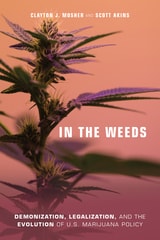
In the Weeds
Demonization, Legalization, and the Evolution of U.S. Marijuana PolicyClayton J. Mosher and Scott Aikins
Temple University Press, 2019
More and more states are legalizing marijuana in some form. Moreover, a majority of the U.S. population is in favor of the drug for recreational use. In the Weeds looks at how our society has become more permissive in the past 150 years—even though marijuana is still considered a Schedule I drug by the American government.
Sociologists Clayton Mosher and Scott Akins take a deep dive into marijuana policy reform, looking at the incremental developments and the historical, legal, social, and political implications of these changes. They investigate the effects, medicinal applications, and possible harms of marijuana. In the Weeds also considers arguments that youth will be heavy users of legalized cannabis, and shows how “weed” is demonized by exaggerations of the drug’s risks and claims of its lack of medicinal value. Mosher and Akins end their timely and insightful book by tracing the distinct paths to the legalization of recreational marijuana in the United States and other countries as well as discussing what the future of marijuana law holds.
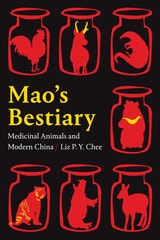
Mao's Bestiary
Medicinal Animals and Modern ChinaLiz P. Y. Chee
Duke University Press, 2021
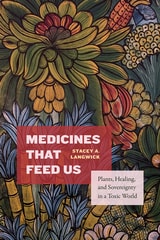
Medicines That Feed Us
Plants, Healing, and Sovereignty in a Toxic WorldStacey A. Langwick
Duke University Press, 2026
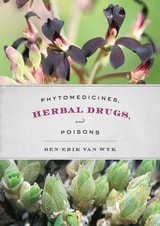
Phytomedicines, Herbal Drugs, and Poisons
Edited by Ben-Erik van Wyk and Michael Wink
University of Chicago Press, 2015
In Phytomedicines, Herbal Drugs, and Poisons, Ben-Erik van Wyk offers a richly illustrated, scientific guide to medicinal and poisonous plants, including those used for their mind-altering effects. Van Wyk covers approximately 350 species—from Aloe vera and Ephedra sinica to Cannabis sativa and Coffea arabica—detailing their botanical, geographical, pharmacological, and toxicological data as well as the chemical structures of the active compounds in each. Readers learn, for example, that Acacia senegal, or gum acacia, is used primarily in Sudan and Ethiopia as a topical ointment to protect the skin and mucosa from bacterial and fungal infections, and that Aconitum napellus, more commonly known as aconite, is used in cough syrups but can be psychedelic when smoked or absorbed through the skin.
With 350 full-color photographs featuring the plants and some of their derivative products, Phytomedicines, Herbal Drugs, and Poisons will be an invaluable reference not only for those in the health care field but also for those growing their own medicinal herb gardens, as well as anyone who needs a quick answer to whether a plant is a panacea or a poison.
Sites of the Unconscious
Hypnosis and the Emergence of the Psychoanalytic SettingAndreas Mayer
University of Chicago Press, 2013
Sites of the Unconscious analyzes the major controversies between competing French schools of hypnotism that emerged at this time, stressing their different views on the production of viable evidence and their different ways of deploying hypnosis. Mayer then reconstructs in detail the reception of French hypnotism in German-speaking countries, arguing that the distinctive features of Freud’s psychoanalytic setting of the couch emerged out of the clinical laboratories and private consulting rooms of the practitioners of hypnosis.

Special Needs, Special Horses
A Guide to the Benefits of Therapeutic RidingNaomi Scott
University of North Texas Press, 2005
The African Roots of Marijuana
Chris S. Duvall
Duke University Press, 2019

The Arts of Indigenous Health and Well-Being
Nancy Van Styvendale
University of Manitoba Press, 2021
The Mind's Eye
Image and Memory in Writing about TraumaMarian Mesrobian MacCurdy
University of Massachusetts Press, 2007
MacCurdy begins by discussing what trauma is, how traumatic memories are stored and accessed, and how writing affects them. She then focuses on the processes involved in translating traumatic images into narrative form, showing how the same patterns and problems emerge whether the writers are students or professionals. Using examples drawn from the classroom, MacCurdy investigates the beneficial effects of the study of trauma on communities as well as individuals, witnesses as well as writers, and explores the implications of these relationships for the world at large, particularly as they pertain to issues of justice, retribution, and forgiveness.
Throughout the volume the author draws on her own experience as teacher, writer, survivor, and descendant of survivors to explain how one can engage student work on difficult subjects without appropriating the texts or getting lost in the emotions generated by them. She further shows how appropriate safeguards can be put in place to protect both teacher and student writer. The end result of such a pedagogy, MacCurdy demonstrates, is not simply better writers but more integrated people, capable of converting their own losses and griefs into compassion for others.
The Other Dark Matter
The Science and Business of Turning Waste into Wealth and HealthLina Zeldovich
University of Chicago Press, 2021
The average person produces about four hundred pounds of excrement a year. More than seven billion people live on this planet. Holy crap!
Because of the diseases it spreads, we have learned to distance ourselves from our waste, but the long line of engineering marvels we’ve created to do so—from Roman sewage systems and medieval latrines to the immense, computerized treatment plants we use today—has also done considerable damage to the earth’s ecology. Now scientists tell us: we’ve been wasting our waste. When recycled correctly, this resource, cheap and widely available, can be converted into a sustainable energy source, act as an organic fertilizer, provide effective medicinal therapy for antibiotic-resistant bacterial infection, and much more.
In clear and engaging prose that draws on her extensive research and interviews, Lina Zeldovich documents the massive redistribution of nutrients and sanitation inequities across the globe. She profiles the pioneers of poop upcycling, from startups in African villages to innovators in American cities that convert sewage into fertilizer, biogas, crude oil, and even life-saving medicine. She breaks taboos surrounding sewage disposal and shows how hygienic waste repurposing can help battle climate change, reduce acid rain, and eliminate toxic algal blooms. Ultimately, she implores us to use our innate organic power for the greater good. Don’t just sit there and let it go to waste.
Trying to Give Ease
Tommie Bass and the Story of Herbal MedicineJohn K. Crellin and Jane Philpott
Duke University Press, 1997
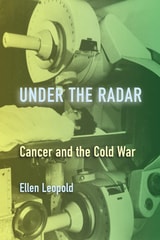
Under the Radar
Cancer and the Cold WarLeopold, Ellen
Rutgers University Press, 2008
In Under the Radar, Ellen Leopold shows how nearly every aspect of our understanding and discussion of cancer bears the imprint of its Cold War entanglement. The current biases toward individual rather than corporate responsibility for rising incidence rates, research that promotes treatment rather than prevention, and therapies that can be patented and marketed all reflect a largely hidden history shaped by the Cold War. Even the language we use to describe the disease, such as the guiding metaphor for treatment, "fight fire with fire," can be traced back to the middle of the twentieth century.
Writing in a lucid style, Leopold documents the military, governmental, industrial, and medical views of radiation and atomic energy to examine the postwar response to cancer through the prism of the Cold War. She explores the role of radiation in cancer therapies today, using case studies and mammogram screening, in particular, to highlight the surprising parallels. Taking into account a wide array of disciplines, this book challenges our understanding of cancer and how we approach its treatment.
- Examines the postwar response to cancer through the prism of the Cold War
- Goes beyond medical science to look at the influence of Cold War policies on the way we think about cancer today
- Links the experience of postwar cancer patients with the broader evolution of what have become cancer industries
- Traces the history of human-made radiation as a state-sponsored environmental toxin
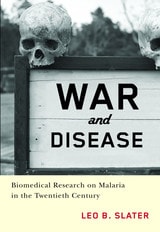
War and Disease
Biomedical Research on Malaria in the Twentieth CenturyLeo B. Slater
Rutgers University Press, 2009
A massive undertaking, the antimalarial program was to biomedical research what the Manhattan Project was to the physical sciences.
A volume in the Critical Issues in Health and Medicine series, edited by Rima D. Apple and Janet Golden.
Wisecracks
Humor and Morality in Everyday LifeDavid Shoemaker
University of Chicago Press, 2024
A good sense of humor is key to the good life, but a joke taken too far can get anyone into trouble. Where to draw the line is not as simple as it may seem. After all, even the most innocent quips between friends rely on deception, sarcasm, and stereotypes and often run the risk of disrespect, meanness, and harm. How do we face this dilemma without taking ourselves too seriously?
In Wisecracks, philosopher David Shoemaker examines this interplay between humor and morality and ultimately argues that even morally suspect humor is an essential part of ethical life. Shoemaker shows how improvised “wisecracks” between family and friends—unlike scripted stand-up, sketches, or serials—help us develop a critical human skill: the ability to carry on and find the funny in tragedy. In developing a new ethics of humor in defense of questionable gibes, Wisecracks offers a powerful case for humor as a healing presence in human life.