Results by title
6 books match the query 'Think'
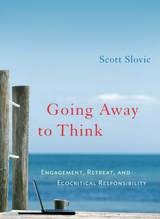
Going Away to Think
Engagement, Retreat, and Ecocritical ResponsibilityScott Slovic
University of Nevada Press, 2008
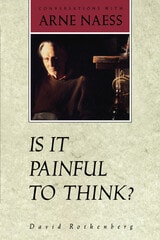
Is It Painful To Think
Conversations with Arne NaessDavid Rothenberg
University of Minnesota Press, 1992

Think of Me and I'll Know
StoriesAnthony Varallo
Northwestern University Press, 2013
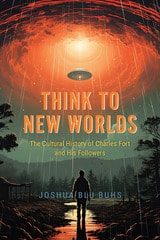
Think to New Worlds
The Cultural History of Charles Fort and His FollowersJoshua Blu Buhs
University of Chicago Press, 2024
Flying saucers. Bigfoot. Frogs raining from the sky. Such phenomena fascinated Charles Fort, the maverick writer who scanned newspapers, journals, and magazines for reports of bizarre occurrences: dogs that talked, vampires, strange visions in the sky, and paranormal activity. His books of anomalies advanced a philosophy that saw science as a small part of a larger system in which truth and falsehood continually transformed into one another. His work found a ragged following of skeptics who questioned not only science but the press, medicine, and politics. Though their worldviews varied, they shared compelling questions about genius, reality, and authority. At the center of this community was adman, writer, and enfant terrible Tiffany Thayer, who founded the Fortean Society and ran it for almost three decades, collecting and reporting on every manner of oddity and conspiracy.
In Think to New Worlds, Joshua Blu Buhs argues that the Fortean effect on modern culture is deeper than you think. Fort’s descendants provided tools to expand the imagination, explore the social order, and demonstrate how power is exercised. Science fiction writers put these ideas to work as they sought to uncover the hidden structures undergirding reality. Avant-garde modernists—including the authors William Gaddis, Henry Miller, and Ezra Pound, as well as Surrealist visual artists—were inspired by Fort’s writing about metaphysical and historical forces. And in the years following World War II, flying saucer enthusiasts convinced of alien life raised questions about who controlled the universe.
Buhs’s meticulous and entertaining book takes a respectful look at a cast of oddballs and eccentrics, plucking them from history’s margins and spotlighting their mark on American modernism. Think to New Worlds is a timely consideration of a group united not only by conspiracies and mistrust of science but by their place in an ever-expanding universe rich with unexplained occurrences and visionary possibilities.

To Think of a Match
PoemsHalee Kirkwood
Northwestern University Press, 2027
A gripping oscillation between the manufactured and the natural, between capitalism and truth
To Think of a Match is a collection of daydreams from behind the eyes of retail clerks, corporate mascots, ghosts of 49ers, and sundry others. Situated in Minnesota’s Twin Cities, home of the Mall of America and the glistening Bde Maka Ska, these poems explore the intimate collisions of class and labor, spiraling out from the recent history of the Gold Rush and into the near future of asteroid mineral mining and beyond. Halee Kirkwood searches for possibilities of a postcapitalist future in our most squirmy, slimy, and wriggly forms of earthly life. What can invertebrates teach us about the ways humanity organizes labor, creativity, and community? What does it mean to have a body caught between economies and ecologies? Contending with subjects ranging from Sappho to Petco and envisioning a new pastoral that is honest about the human and nonhuman domains we are building today, To Think of a Match yearns for a poetics that thrives between shifts.
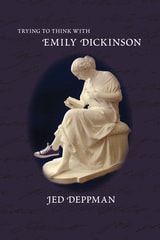
Trying to Think with Emily Dickinson
Jed Deppman
University of Massachusetts Press, 2008
This book presents Emily Dickinson as one of America's great thinkers and argues that she has even more to say to the twenty-first century than she did to the nineteenth. Jed Deppman weaves together many strands in Dickinson's intellectual culture—philosophy, lexicography, religion, experimental science, the female Bildungsroman—and shows how she developed a lyricized, conversational hermeneutics uniquely suited to rethinking the authoritative discourses of her time.
Through Deppman's original analysis, readers come to see how Dickinson's mind and poetry were informed by two strong but opposing philosophical vocabularies: on the one hand, the Lockean materialism and Scottish Common Sense that dominated her schoolbooks in logic and mental philosophy—Reid, Hedge, Watts, Stewart, Brown, and Upham—and on the other, the neo-Kantian modes of apprehending the supersensible that circulated throughout German idealism and Transcendentalism.
Blending close readings with philosophical and historical approaches, Deppman affirms Dickinson's place in the history of ideas and brings her to the center of postmodern conversations initiated by Jean-François Lyotard, Jean-Luc Nancy, Jacques Derrida, Richard Rorty, and Gianni Vattimo. Trying her out in various postmodern roles—the Nietzschean accomplished nihilist, the Nancian finite thinker, the Vattimian weak thinker, and the Rortian liberal ironist—Deppman adds to the traditional expressive functions of her poetry a valuable, timely, and interpretable layer of philosophical inquiry. Dickinson, it turns out, is an ideal companion for anybody trying to think in the contemporary conditions that Vattimo characterizes as the “weakened experience of truth.”