Results by title
5 books match the query 'Three Essays'
Famous but Misunderstood
Three Essays on Maurice Duverger’s Political ScienceMiroslav Novák
Karolinum Press, 2026
A major reassessment of the work of the canonical political theorist Maurice Duverger.
Widely cited but increasingly seldom read, Maurice Duverger (1917–2014) exemplifies the fate of many canonical thinkers in political science. Famous but Misunderstood revisits his legacy through a comprehensive analysis of three interconnected pillars of his work: the formulation of Duverger’s laws concerning the relationship between electoral systems and party systems; his typology of pluralist party systems; and his empirical theories of democracy. Duverger’s ideas are examined in close comparison with the later and highly influential contributions of Giovanni Sartori (1924–2017) and Arend Lijphart (*1936), highlighting both continuities and divergences.
Authored by political scientist Miroslav Novák, recipient of the 2024 Czech Political Science Association Award for his contribution to the development of Czech political science, the book persuasively argues that contemporary scholarship has significantly misunderstood Duverger’s work. In doing so, it calls for a reassessment not only of Duverger’s theories but also of prevailing narratives about the evolution of political science in the second half of the twentieth century.
No Speed Limit
Three Essays on AccelerationismSteven Shaviro
University of Minnesota Press, 2015
Accelerationism is the bastard offspring of a furtive liaison between Marxism and science fiction. Its basic premise is that the only way out is the way through: to get beyond capitalism, we need to push its technologies to the point where they explode. This may be dubious as a political strategy, but it works as a powerful artistic program.
Other authors have debated the pros and cons of accelerationist politics; No Speed Limit makes the case for an accelerationist aesthetics. Our present moment is illuminated, both for good and for ill, in the cracked mirror of science-fictional futurity.
Forerunners: Ideas First is a thought-in-process series of breakthrough digital publications. Written between fresh ideas and finished books, Forerunners draws on scholarly work initiated in notable blogs, social media, conference plenaries, journal articles, and the synergy of academic exchange. This is gray literature publishing: where intense thinking, change, and speculation take place in scholarship.
Ontology of Production
Three EssaysNishida KitarM
Duke University Press, 2012
Agreeing with Marx that ontology is production and production is ontology, Nishida in these three essays—"Expressive Activity" (1925), "The Standpoint of Active Intuition" (1935), and "Human Being" (1938)—addresses sense and reason, language and thought, intuition and appropriation, ultimately arguing that in this concept of production, ideality and materiality are neither mutually exclusive nor oppositional but, rather, coimmanent. Nishida's forceful articulation of the radical nature of Marx's theory of production is, Haver contends, particularly timely in today's speculation-driven global economy. Nishida's reading of Marx, which points to the inseparability of immaterial intellectual labor and material manual labor, provokes a reconsideration of Marxism's utility for making sense of—and resisting—the logic of contemporary capitalism.
Shifting Obsessions
Three Essays on the Politics of AnticorruptionAryeh Neier
Central European University Press, 2004
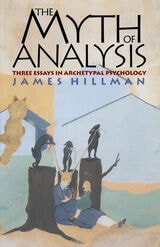
The Myth of Analysis
Three Essays in Archetypal PsychologyJames Hillman
Northwestern University Press, 1998
Originally published by Northwestern University Press in 1972, this work had a profound impact on a nation emerging self-aware from the 1960s, as well as on the era's burgeoning feminist movement. It remains a profound critique of therapy and the psychological viewpoint, and it is one of Hillman's most important and enduring works.