Results by title
11 books match the query 'Tibet Autonomous Region'
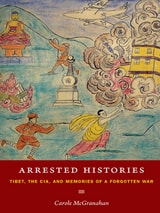
Arrested Histories
Tibet, the CIA, and Memories of a Forgotten WarCarole McGranahan
Duke University Press, 2010
Drawing on rich ethnographic and historical research, McGranahan tells the story of the Tibetan resistance and the social processes through which this history is made and unmade, and lived and forgotten in the present. Fulfillment of veterans’ desire for recognition hinges on the Dalai Lama and “historical arrest,” a practice in which the telling of certain pasts is suspended until an undetermined time in the future. In this analysis, struggles over history emerge as a profound pain of belonging. Tibetan cultural politics, regional identities, and religious commitments cannot be disentangled from imperial histories, contemporary geopolitics, and romanticized representations of Tibet. Moving deftly from armed struggle to nonviolent hunger strikes, and from diplomatic offices to refugee camps, Arrested Histories provides powerful insights into the stakes of political engagement and the cultural contradictions of everyday life.
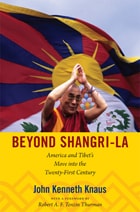
Beyond Shangri-La
America and Tibet's Move into the Twenty-First CenturyJohn Kenneth Knaus
Duke University Press, 2012
Since the late 1950s, the rugged resolve of the Dalai Lama and his people and the growing respect for their efforts to free their homeland from Chinese occupation have made Tibet's political and cultural status a pressing issue in international affairs. So has the realization by nations, including the United States, that their geopolitical interests would best be served by the defeat of the Chinese and the achievement of Tibetan self-determination. Beyond Shangri-La provides unique insight into the efforts of the U.S. government and committed U.S. citizens to support a free Tibet.
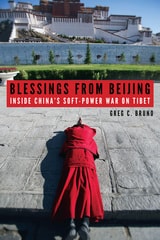
Blessings from Beijing
Inside China's Soft-Power War on TibetGreg C. Bruno
University Press of New England, 2018
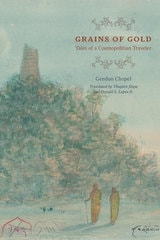
Grains of Gold
Tales of a Cosmopolitan TravelerGendun Chopel
University of Chicago Press, 2013
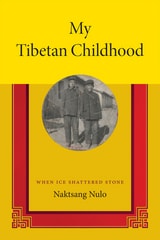
My Tibetan Childhood
When Ice Shattered StoneNatksang Nulo
Duke University Press, 2014
The real significance of this episodic narrative is the way it shows, through the eyes of a child, the suppressed histories of China's invasion of Tibet. The author's matter-of-fact accounts cast the atrocities that he relays in stark relief. Remarkably, Naktsang lived to tell his tale. His book was published in 2007 in China, where it was a bestseller before the Chinese government banned it in 2010. It is the most reprinted modern Tibetan literary work. This translation makes a fascinating if painful period of modern Tibetan history accessible in English.
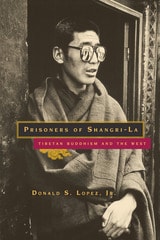
Prisoners of Shangri-La
Tibetan Buddhism and the WestDonald S. Lopez Jr.
University of Chicago Press, 1998
"Lopez lifts the veil on America's romantic vision of Tibet to reveal a country and a spiritual history more complex and less ideal than popular perceptions allow. . . . Lively and engaging, Lopez's book raises important questions about how Eastern religions are often co-opted, assimilated and misunderstood by Western culture."—Publishers Weekly
"Proceeding with care and precision, Lopez reveals the extent to which scholars have behaved like intellectual colonialists. . . . Someone had to burst the bubble of pop Tibetology, and few could have done it as resoundingly as Lopez."—Booklist
"Fascinating. . . [A] provocative exploration. Lopez conveys the full dizziness of the Western encounter with Tibet and Tibetan Buddhism."—Fred Pheil, Tricycle: The Buddhist Review
"A timely and courageous exploration. . . . [Lopez's] book will sharpen the terms of the debate over what the Tibetans and their observers can or should be doing about the place and the idea of Tibet. And that alone is what will give us all back our Shambhala."—Jonathan Spence, Lingua Franca Book Review
"Lopez's most important theme is that we should be wary of the idea . . . that Tibet has what the West lacks, that if we were only to look there we would find the answers to our problems. Lopez's book shows that, on the contrary, when the West has looked at Tibet, all that it has seen is a distorted reflection of itself."—Ben Jackson, Times Higher Education Supplement

Prisoners of Shangri-La
Tibetan Buddhism and the WestDonald S. Lopez, Jr.
University of Chicago Press, 2018
Upon its original publication, Prisoners of Shangri-La sent shockwaves through the field of Tibetan studies—hailed as a timely, provocative, and courageous critique. Twenty years hence, the situation in Tibet has only grown more troubled and complex—with the unrest of 2008, the demolition of the dwellings of thousands of monks and nuns at Larung Gar in 2016, and the scores of self-immolations committed by Tibetans to protest the Dalai Lama’s exile.
In his new preface to this anniversary edition, Lopez returns to the metaphors of prison and paradise to illuminate the state of Tibetan Buddhism—both in exile and in Tibet—as monks and nuns still seek to find a way home. Prisoners of Shangri-La remains a timely and vital inquiry into Western fantasies of Tibet.
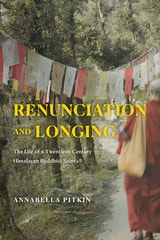
Renunciation and Longing
The Life of a Twentieth-Century Himalayan Buddhist SaintAnnabella Pitkin
University of Chicago Press, 2022
In the early twentieth century, Khunu Lama journeyed across Tibet and India, meeting Buddhist masters while sometimes living, so his students say, on cold porridge and water. Yet this elusive wandering renunciant became a revered teacher of the Fourteenth Dalai Lama. At Khunu Lama’s death in 1977, he was mourned by Himalayan nuns, Tibetan lamas, and American meditators alike. The many surviving stories about him reveal significant dimensions of Tibetan Buddhism, shedding new light on questions of religious affect and memory that reimagines cultural continuity beyond the binary of traditional and modern.
In Renunciation and Longing, Annabella Pitkin explores devotion, renunciation, and the teacher-student lineage relationship as resources for understanding Tibetan Buddhist approaches to modernity. By examining narrative accounts of the life of a remarkable twentieth-century Himalayan Buddhist and focusing on his remembered identity as a renunciant bodhisattva, Pitkin illuminates Tibetan and Himalayan practices of memory, affective connection, and mourning. Refuting long-standing caricatures of Tibetan Buddhist communities as unable to be modern because of their religious commitments, Pitkin shows instead how twentieth- and twenty-first-century Tibetan and Himalayan Buddhist narrators have used themes of renunciation, devotion, and lineage as touchstones for negotiating loss and vitalizing continuity.
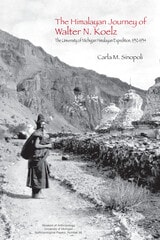
The Himalayan Journey of Walter N. Koelz
The University of Michigan Himalayan ExpeditionCarla M. Sinopoli
University of Michigan Press, 2013
In the fall of 1932, University of Michigan naturalist Walter N. Koelz traveled to northwest India to lead a scientific collecting expedition in the rugged Himalayan regions of Western Tibet. Some eighteen months later he returned to the United States with a remarkable collection of biological specimens and an array of objects—Buddhist paintings, ritual objects, textiles, and household goods—acquired from monasteries, households, and merchants. This book presents the diary entries Koelz wrote at the end of each day throughout his expedition, recounting in detail each day’s travels, bookended by a chapter contextualizing his acquisition of sacred Buddhist objects and an appendix that presents previously unpublished thangka paintings that he collected.
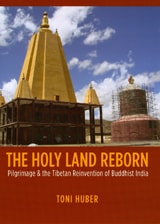
The Holy Land Reborn
Pilgrimage and the Tibetan Reinvention of Buddhist IndiaToni Huber
University of Chicago Press, 2008
Focusing on the Tibetan creation and recreation of India as a destination, a landscape, and a kind of other, in both real and idealized terms, Huber explores how Tibetans have used the idea of India as a religious territory and a sacred geography in the development of their own religion and society. In a timely closing chapter, Huber also takes up the meaning of India for the Tibetans who live in exile in their Buddhist holy land.
A major contribution to the study of Buddhism, The Holy Land Reborn describes changes in Tibetan constructs of India over the centuries, ultimately challenging largely static views of the sacred geography of Buddhism in India.
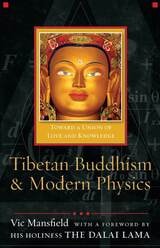
Tibetan Buddhism and Modern Physics
Toward a Union of Love and KnowledgeVic Mansfield
Templeton Press, 2008
Tibetan Buddhism and Modern Physics: Toward a Union of Love and Knowledge addresses the complex issues of dialogue and collaboration between Buddhism and science, revealing connections and differences between the two. While assuming no technical background in Buddhism or physics, this book strongly responds to the Dalai Lama’s “heartfelt plea” for genuine collaboration between science and Buddhism. The Dalai Lama has written a foreword to the book and the Office of His Holiness will translate it into both Chinese and Tibetan.