Results by title
2 books match the query 'Tillet, Salamishah'
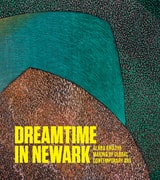
Dreamtime in Newark
Aljira and the Making of Global Contemporary ArtAlliyah Allen
Rutgers University Press, 2026
Dreamtime in Newark surveys the transition of Aljira from an artist-led studio space to a major arts institution in Newark, New Jersey, that abruptly closed in 2018 due to gentrification and financial pressure. Exploring the origins and milestones of the gallery, the book examines how Aljira became a space for the marginalized artist and curator and aligned with the trend of artists-led “alternative-art-spaces”—contributing to the rise of diverse art markets and breakthroughs in representation throughout the museum collections, exhibitions, and the broader art world. This volume offers a historical analysis of the relationship between Aljira and the Newark Museum of Art, given the many collaborations on exhibitions, residencies, and shared curatorial strategies. Along with providing a wider historicity, the book amplifies the museum’s role in preserving Aljira’s legacy—especially as the city’s arts ecosystem evolves. The book underscores the museum’s role in preserving Aljira’s history and legacy. Bringing together contributions from the extended community of artists, curators, critics, and art historians, the project works against the erasure of a vital part of contemporary art and cultural history. Before conversations of decolonizing the art world were commonplace, Aljira forged a free and open vision for the art world that cross-pollinated with the Newark Museum of Art’s egalitarian and populist roots and global collections.
The book, which accompanies an exhibition, October 15, 2026–June 20, 2027, also considers the impact of Aljira, founded in the aftermath of the 1967 Newark Rebellion, on the city of Newark and how its thirty-five-year tenure driven by social engagement and community practice helped to crystalize Newark’s visual arts scene.
Artists in the exhibition: Manuel Acevedo, Derrick Adams, David Ambrose, El Anatsui, Luis Cruz Azaceta, Firelei Báez, Amiri Baraka, Hugo X. Bastidas, Dawoud Bey, Camille Billops, Frank Bowling, Michael Paul Britto, Andy Brown, Nanette Carter, Willie Cole, Cicely Cottingham, Victor Davson, David Driskell, Dahlia Elsayed, Adama Delphine Fawundu, Chitra Ganesh, Jerry Gant, Jeffrey Gibson, Grace Graupe-Pillard, Carl E. Hazlewood, Duron Jackson, Ben Jones, Jayson Keeling, Donald Locke, Hew Locke, Franco Mondini-Ruiz, Olu Oguibe, Joe Overstreet, Nell Painter, Jaune Quick-to-See Smith, Judy Blum Reddy, Freddy Rodriguez, Kevin Sampson, Dread Scott, Fausto Sevila, Nyugen Smith, Helen Stummer, Mickalene Thomas, Noelle Lorraine Williams, Philemona Williamson
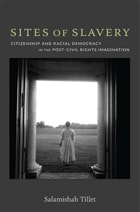
Sites of Slavery
Citizenship and Racial Democracy in the Post–Civil Rights ImaginationSalamishah Tillet
Duke University Press, 2012