Results by title
3 books match the query 'Tilley, Helen'
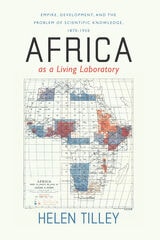
Africa as a Living Laboratory
Empire, Development, and the Problem of Scientific Knowledge, 1870-1950Helen Tilley
University of Chicago Press, 2011
Tropical Africa was one of the last regions of the world to experience formal European colonialism, a process that coincided with the advent of a range of new scientific specialties and research methods. Africa as a Living Laboratory is a far-reaching study of the thorny relationship between imperialism and the role of scientific expertise—environmental, medical, racial, and anthropological—in the colonization of British Africa.
A key source for Helen Tilley’s analysis is the African Research Survey, a project undertaken in the 1930s to explore how modern science was being applied to African problems. This project both embraced and recommended an interdisciplinary approach to research on Africa that, Tilley argues, underscored the heterogeneity of African environments and the interrelations among the problems being studied. While the aim of British colonialists was unquestionably to transform and modernize Africa, their efforts, Tilley contends, were often unexpectedly subverted by scientific concerns with the local and vernacular. Meticulously researched and gracefully argued, Africa as a Living Laboratory transforms our understanding of imperial history, colonial development, and the role science played in both.
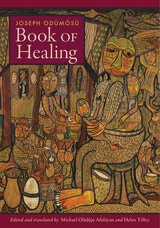
Book of Healing
Joseph Odùmósù
University of Wisconsin Press, 2026
While the existence of Odùmósù’s massive work is well-known in southwestern Nigeria, it has not previously been available in English. Michael Ọládẹ̀jọ Afọláyan and Helen Tilley have translated the volume in its entirety, and here use it as an entrée into greater understandings of Yorùbá medicine, spirituality, and print culture during a time of rapid change under British colonialism and the spread of Christianity.
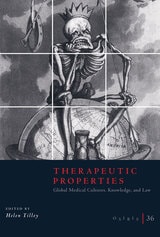
Osiris, Volume 36
Therapeutic Properties: Global Medical Cultures, Knowledge, and LawEdited by Helen Tilley
University of Chicago Press Journals, 2021
The contributions draw upon source material from the Americas, Africa, Western Europe, the Caribbean, and Asia to trace the influence of penal and civil codes, courts and constitutions, and patents and intellectual properties on not only health practices but also the very foundations of state-sanctioned medicine. The authors explore, too, how institutions of global governance, including those underpinning empires and trade, have historically created feedback loops that enabled laws and regulatory regimes to spread, amplifying their effects and standardizing approaches to diseases, drugs, professions, personhood, and well-being along the way. Highlighting the payoff of interdisciplinary and transnational analyses, this volume adroitly teases apart how different actors fought to write the rules of global health, rendering certain approaches to life and death irrelevant and invisible, others pathological and punishable by law, and others still, normal and natural.