Results by title
2 books match the query 'Tobago'
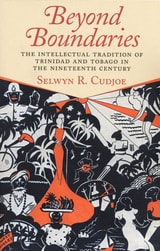
Beyond Boundaries
The Intellectual tradition of Trinidad and Tobago in the Nineteenth CenturySelwyn R. Cudjoe
University of Massachusetts Press, 2003
When V. S. Naipaul received the Nobel Prize for Literature in 2001, the award marked the culmination of a literary tradition that was almost two hundred years in the making. The island nation of Trinidad and Tobago has produced such important writers and thinkers as C. L. R. James, J. J. Thomas, Eric Williams, Oliver Cromwell Cox, Sylvester Williams, George Padmore, Earl Lovelace, Arnold Rampersad, and Merle Hodge. Yet this literary legacy is not well known, particularly with respect to works dating from the nineteenth century.
Beyond Boundaries traces the development of the country's literary and intellectual history from the “Narrative of Louisa Calderon” (1803) to Stephen Cobham's Rupert Gray: A Tale of Black and White (1907). Selwyn R. Cudjoe examines a wide range of narratives by and about the people of Trinidad and Tobago, from treatises in the natural sciences, to journals and memoirs, histories, slave narratives, travelers' accounts, poems, stories, novels, theatrical works, and writings in the popular press. Along the way, he discusses such seminal works as Jean Baptiste Philippe's Free Mulatto (1824) and Maxwell Philip's Emmanuel Appadocca (1854), the first indigenous novel. He explores books that shed light on ideological processes, such as J. J. Thomas's The Theory and Practice of Creole Grammar (1869) and Froudacity (1899). He examines how notions of savagery and civilization were deployed in the writings of the dominant class to stymie the growing self-awareness of the colonized. And he traces the rise of racial pride and nationalist sentiments among Indo- and Afro-Trinidadians.
Cudjoe demonstrates how Enlightenment concepts, English literature, African philosophy, Hindu theology, Islamic passion plays, and the culture of carnival all contributed to this body of ideas to create a vibrant literature, which in turn helped to shape a national identity.
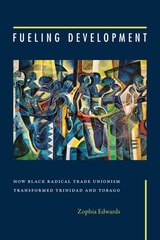
Fueling Development
How Black Radical Trade Unionism Transformed Trinidad and TobagoZophia Edwards
Duke University Press, 2025