Results by title
14 books match the query 'Toleration'
A Democratic Enlightenment
The Reconciliation Image, Aesthetic Education, Possible PoliticsMorton Schoolman
Duke University Press, 2020
Engaging Cultural Differences
The Multicultural Challenge in Liberal DemocraciesRichard A., Shweder
Russell Sage Foundation, 2002
Liberal Democracy and the Limits of Tolerance
Essays in Honor and Memory of Yitzhak RabinRaphael Cohen-Almagor, Editor
University of Michigan Press, 2000
Pluralism
William E. Connolly
Duke University Press, 2005
Connolly looks at pluralism not only in light of faith but also in relation to evil, ethics, relativism, globalization, and sovereignty. In the process, he engages many writers and theorists—among them, Spinoza, William James, Henri Bergson, Marcel Proust, Gilles Deleuze, Giorgio Agamben, Talal Asad, Michael Hardt, and Antonio Negri. Pluralism is the first book in which Connolly explains the relationship between pluralism and the experience of time, and he offers readings of several films that address how time is understood, including Time Code, Far from Heaven, Waking Life, and The Maltese Falcon. In this necessary book Connolly brings a compelling, accessible philosophical critique together with his personal commitment to an inclusive political agenda to suggest how we might—and why we must—cultivate pluralism within both society and ourselves.
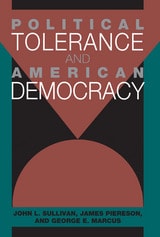
Political Tolerance and American Democracy
John L. Sullivan, James Piereson, and George E. Marcus
University of Chicago Press, 1982
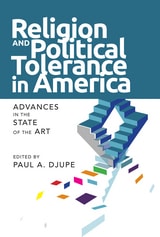
Religion and Political Tolerance in America
Advances in the State of the ArtPaul Djupe
Temple University Press, 2015
The essays in Religion and Political Tolerance in America seek to understand how these elements interrelate. The editor and contributors to this important volume present new and innovative research that wrestles with the fundamental question of the place of religion in democratic society. They address topics ranging from religious contributions to social identity to the political tolerance that religious elites (clergy) hold and advocate to others, and how religion shapes responses to intolerance.
The conclusion, by Ted Jelen, emphasizes that religion’s take on political tolerance is nuanced and that they are not incompatible; religion can sometimes enhance the tolerance of ordinary citizens.
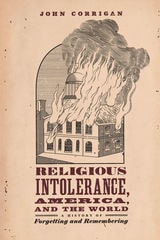
Religious Intolerance, America, and the World
A History of Forgetting and RememberingJohn Corrigan
University of Chicago Press, 2020
Religious Intolerance, America, and the World spans from Christian colonists’ intolerance of Native Americans and the role of religion in the new republic’s foreign-policy crises to Cold War witch hunts and the persecution complexes that entangle Christians and Muslims today. Corrigan reveals how US churches and institutions have continuously campaigned against intolerance overseas even as they’ve abetted or performed it at home. This selective condemnation of intolerance, he shows, created a legacy of foreign policy interventions promoting religious freedom and human rights that was not reflected within America’s own borders. This timely, captivating book forces America to confront its claims of exceptionalism based on religious liberty—and perhaps begin to break the grotesque cycle of projection and oppression.
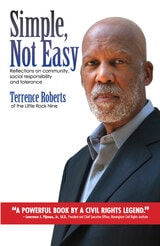
Simple Not Easy
Reflections on community social responsibility and toleranceTerrence Roberts
Parkhurst Brothers, Inc., 2010
HE MADE HISTORY. HE TELLS THE TRUTHS HE KNOWS.
LEAD TITLE/Our National Conversation Series
----Margot Stern Strom, Executive Director, Facing History and Ourselves, Inc.
"Terrence Roberts challenges all of us to make the world more inclusive by adjusting our 'mental maps.' He reminds us that we will not achieve that long-sought beloved community until we recognize the value of each individual-until we affirm each other. Simple, NotEasy is one trailblazer's mingling of history and contemporary mattersto engage a new conversations on community, social responsibility and tolerance. A powerful book by a civil rights legend."
--- Lawrence J. Pijeaux, Jr., Ed.D.,
Space and Pluralism
Can Contemporary Cities Be Places of Tolerance?Stefano Moroni
Central European University Press, 2016
The Courage to Connect
Sexuality, Citizenship, and Community in ProvincetownSandra L. Faiman-Silva
University of Illinois Press, 2003
Based on over six years of fieldwork, Sandra L. Faiman-Silva's The Courage to Connect traces the transformation of the Cape Cod community of Provincetown from its nineteenth-century origins as a fishing town where Portuguese immigrants settled to its present status as a welcoming, sexually diverse tourist enclave. Faiman-Silva examines the community’s history and economy as well as how gay and straight cultures intersect in areas such as public education, local government, and law enforcement. Using queer and critical culture theory to deconstruct day-to-day local encounters, Faiman-Silva describes the causes of social conflicts and how these conflicts can be resolved. Capturing the pathos and joy of a community that has struggled to accommodate radical social changes, The Courage to Connect yields understanding of the ways in which communities can construct themselves to overcome differences.
The Politics of Toleration in Modern Life
Susan Mendus, ed.
Duke University Press, 1999
How can toleration be fostered in a contentious and tightly populated world? What situations and fears have historically fed attitudes of intolerance? When and how should states intervene? The authors of these essays seek answers to such questions and examine topics such as why certain national groups are especially vulnerable to intolerance and narcissistic fantasies and how the colonial view of intolerant exploitation as an acceptable norm of behavior has been replaced by a drive toward international solidarity. The essays address religious tolerance, the role of toleration in legal contexts, the philosophical justification of tolerance, and the concept of solidarity. Ethnic identity, nationalism, the “goods of conflict,” and the treatment of refugees seeking asylum are discussed as well. While one contributor argues that a moment of genuine tolerance is achieved only when there is a cost involved in the act of tolerating another person’s way of living, another stresses that rational, communal dialogue can only take place if the state is excluded from the discussion, if conflict is recognized as valuable, and if local communities come to consensus about what behavior and discourse is intolerable.
Offering an accessible and engaging commentary on the concept of tolerance, The Politics of Toleration in Modern Life will interest a wide range of readers of philosophy, political science, religion, sociology, and history.
Contributors. George Carey, Christopher Hill, Michael Ignatieff, Helena Kennedy, Alasdair MacIntyre, Susan Mendus, Julia Neuberger, Bernard Williams
The Tactics of Toleration
A Refugee Community in the Age of Religious WarsJesse Spohnholz
University of Delaware Press, 2011
The Tactics of Toleration examines the preconditions and limits of toleration during an age in which Europe was sharply divided along religious lines. During the Age of Religious Wars, refugee communities in borderland towns like the Rhineland city of Wesel were remarkably religiously diverse and culturally heterogeneous places. Examining religious life from the perspective of Calvinists, Lutherans, Mennonites, and Catholics, this book examines how residents dealt with pluralism during an age of deep religious conflict and intolerance. Based on sources that range from theological treatises to financial records and from marriage registries to testimonies before secular and ecclesiastical courts, this project offers new insights into the strategies that ordinary people developed for managing religious pluralism during the Age of Religious Wars.
Historians have tended to emphasize the ways in which people of different faiths created and reinforced religious differences in the generations after the Reformation’s break-up of Christianity, usually in terms of long-term historical narratives associated with modernization, including state building, confessionalization, and the subsequent rise of religious toleration after a century of religious wars. In contrast, Jesse Spohnholz demonstrates that although this was a time when Christians were engaged in a series of brutal religious wars against one another, many were also learning more immediate and short-term strategies to live alongside one another. This book considers these “tactics for toleration” from the vantage point of religious immigrants and their hosts, who learned to coexist despite differences in language, culture, and religion. It demands that scholars reconsider toleration, not only as an intellectual construct that emerged out of the Enlightenment, but also as a dynamic set of short-term and often informal negotiations between ordinary people, regulating the limits of acceptable and unacceptable behavior.
Published by University of Delaware Press. Distributed worldwide by Rutgers University Press.
Thomism and Tolerance
John F. X. Knasas
University of Scranton Press, 2010
In this incisive study, John F. X. Knasas grounds the ideal of tolerance in Aquinas’s natural law ethics and connects the virtue of civic tolerance to the concept of being. If God is the source of being, argues Knasas, then we are the articulation of being, and it is in this capacity that we recognize our bond with other people and thus acknowledge our duty to be tolerant of one another. An important contribution to practical metaphysics and the philosophical foundations of political theory, Thomism and Tolerance will appeal to philosophy scholars and students at the undergraduate and graduate level.

Toleration
Nicholas G. Fotion
University of Alabama Press, 1992
A compelling exploration of the idea that enables diverse people to live together with respect, dignity, and understanding.
Most regard toleration as an unattractive fallback position of compromise and so tend to overlook it in favor of such active concepts as freedom, equality, and justice. Fotion and Elfstrom argue that toleration offers us the useful possibility of responding to a difficult situation with a degree of flexibility not possible with the dichotomous concepts of good-bad, right-wrong, ethical-unethical, Right-Left.
Tolerating saturates ordinary human life and infuses public discussions of religion, morality, and politics. It forms a major strand in the history of Western European thought. Yet the word “toleration” and similar terms are rarely used. Unnoticed and unremarked, they are like the air that surrounds us, vitally important yet invisible.The authors seek to address this oversight in several ways. They begin with a thorough conceptual analysis of toleration and its kindred concepts. They are convinced that an appreciation of the importance of the family of toleration concepts must be founded on an understanding of the various ways in which they function in our language and our lives. In addition, they examine the historical development of the concept of toleration and canvass the major arguments people have employed either to urge toleration or to disparage it. They examine the role of toleration in liberal political philosophy and respond to the major critics of liberal toleration.
The authors also discuss a number of factors that cause toleration to be overlooked in political debate and personal reflection and offer evidence to support the view that this omission is unfortunate. In particular, they argue that toleration has the crucial role of helping people live with one another with respect and dignity in the fractious and contentious world we inhabit. With the rise of racism and other forms of religious, political, and social intolerance, people on all sides of the present debates concerning multi-culturalism and diversity will benefit from this timely and lucidly argued philosophical discussion of the concepts of toleration and its possible application in a less-than-perfect world.