Results by title
17 books match the query 'Toxicology'
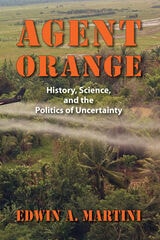
Agent Orange
History, Science, and the Politics of UncertaintyEdwin A. Martini
University of Massachusetts Press, 2012
Taking on what one former U.S. ambassador called “the last ghost of the Vietnam War,” this book examines the far-reaching impact of Agent Orange, the most infamous of the dioxin-contaminated herbicides used by American forces in Southeast Asia. Edwin A. Martini's aim is not simply to reconstruct the history of the “chemical war” but to investigate the ongoing controversy over the short- and long-term effects of weaponized defoliants on the environment of Vietnam, on the civilian population, and on the troops who fought on both sides.
Beginning in the early 1960s, when Agent Orange was first deployed in Vietnam, Martini follows the story across geographical and disciplinary boundaries, looking for answers to a host of still unresolved questions. What did chemical manufacturers and American policymakers know about the effects of dioxin on human beings, and when did they know it? How much do scientists and doctors know even today? Should the use of Agent Orange be considered a form of chemical warfare? What can, and should, be done for U.S. veterans, Vietnamese victims, and others around the world who believe they have medical problems caused by Agent Orange?
Martini draws on military records, government reports, scientific research, visits to contaminated sites, and interviews to disentangle conflicting claims and evaluate often ambiguous evidence. He shows that the impact of Agent Orange has been global in its reach affecting individuals and communities in New Zealand, Australia, Korea, and Canada as well as Vietnam and the United States. Yet for all the answers it provides, this book also reveals how much uncertainty—scientific, medical, legal, and political—continues to surround the legacy of Agent Orange.
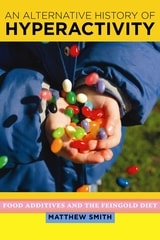
An Alternative History of Hyperactivity
Food Additives and the Feingold DietSmith, Matthew
Rutgers University Press, 2011
Matthew Smith asserts that those scientific conclusions were, in fact, flawed. An Alternative History of Hyperactivity explores the origins of the Feingold diet, revealing why it became so popular, and the ways in which physicians, parents, and the public made decisions about whether it was a valid treatment for hyperactivity. Arguing that the fate of Feingold's therapy depended more on cultural, economic, and political factors than on the scientific protocols designed to test it, Smith suggests the lessons learned can help resolve medical controversies more effectively.
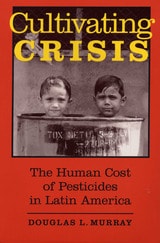
Cultivating Crisis
The Human Cost of Pesticides in Latin AmericaBy Douglas L. Murray
University of Texas Press, 1994
Since World War II, the Green Revolution has boosted agricultural production in Latin America and other parts of the Third World, with money, technical assistance, and other forms of aid from United States development agencies. But the Green Revolution came at a high price—massive pesticide dependence that has caused serious socioeconomic and public health problems and widespread environmental damage.
In this study, Douglas Murray draws on ten years of field research to tell the stories of international development strategies, pesticide problems, and agrarian change in Latin America. Interwoven with his considerations of economic and geopolitical dimensions are the human consequences for individual farmers and rural communities.
This highly interdisciplinary study, integrating the perspectives of sociology, ecology, economics, political science, and public health, adds an important voice to the debate on opportunities for and obstacles to more lasting and sustainable development in the Third World. It will be of interest to a wide audience in the social and environmental sciences.

Edges of Exposure
Toxicology and the Problem of Capacity in Postcolonial SenegalNoémi Tousignant
Duke University Press, 2018
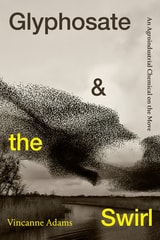
Glyphosate and the Swirl
An Agroindustrial Chemical on the MoveVincanne Adams
Duke University Press, 2022

Homesick
Nicholas Shapiro
Duke University Press, 2025
Infertile Environments
Epigenetic Toxicology and the Reproductive Health of Chinese MenJanelle Lamoreaux
Duke University Press, 2023
Making the Unseen Visible
Science and the Contested Histories of Radiation ExposureJacob Darwin Hamblin
Oregon State University Press, 2023
From 2017 to 2020, Jacob Hamblin and Linda Richards ran the Oregon State University Downwinders Project, sponsored by the National Science Foundation, to support research and scholarship on the Hanford downwinders cases. Additionally, each summer the project team sponsored a workshop that brought a variety of stakeholders together to explore the science, history, and lived experiences of nuclear exposure. These workshops took a broad view of nuclear exposure, beyond Hanford, beyond the United States, and beyond academia. Community members and activists presented their testimonies and creative work alongside scholars studying exposure worldwide.
Making the Unseen Visible collects the best work arising from the project and its workshops. Scholarly research chapters and reflective essays cover topics and experiences ranging from colonial nuclear testing in North Africa, to Hiroshima survivor stories, to uranium mining in the Navajo Nation, to battles over public memory around Hanford. Scholarship on nuclear topics has largely happened on a case study basis, focusing on individual disasters or locations. Making the Unseen Visible brings a variety of current community and scholarly work together to create a clearer, larger web uniting nuclear humanities research across time and geography.
Old Paint
A Medical History of Childhood Lead-Paint Poisoning in the United States to 1980English, Peter C.
Rutgers University Press, 2001
In the early twentieth century lead had many domestic uses: in solder for cans, as a gasoline additive to prevent “knocking” in engines, in water pipes, and, most prominently, in interior paint prized for its durability and ability to hold color. Far from being the toxic hazard we recognize today, lead was a valuable commodity. However, by the end of the century, lead had largely disappeared from our environment as physicians discovered the threat it posed to children’s health and mental development.
Old Paint documents the history of lead-paint poisoning in the United States and the evolving responses of public health officials and the lead-paint industry to this hazard up to 1980, by which time lead had been banned from gasoline and paint. Peter C. English traces lead poisoning from a rare, but acute problem confined to a small group of children to the discovery by the end of the 1940s of the dangers of the crumbling lead-painted interiors of inner-city dwellings. He draws on a wide range of primary materials not only to illuminate our understanding of how this health hazard changed over time, but also to explore how diseases are constructed and evolve.
PCBs
Human and Environmental Disposition and ToxicologyEdited by Larry G. Hansen and Larry W. Robertson
University of Illinois Press, 2007
Though polychlorinated biphenyls (PCBs) have been banned in the United States for more than thirty years, the toxic effects of their presence in local environments continue to be a significant public health concern. PCBs: Human and Environmental Disposition and Toxicology brings together more than fifty established specialists on PCB toxicity to discuss recent trends and specialized investigations of PCB influences on the environment and on humans. Renowned scientists including Paul S. Cooke, Takeshi Nakano, Tomas Trnovec, Deborah C. Rice, Linda S. Birnbaum, and Charles S. Wong present cutting-edge research on Hudson River PCBs, human contamination, homologue profiles, high PCB exposure in Slovakia, and PCB effects on the thyroid hormone, nutrition, and estrogen levels in humans and animals. Focusing on the detection, movement, metabolism, toxicity, remediation, and risk assessment of PCB contamination, this multi-disciplinary study is a valuable resource for regulatory agencies and scientists working with PCBs.
Silicone Survivors
Women's Experiences with Breast ImplantsSusan Zimmermann
Temple University Press, 1998
Some opted for breast implants after mastectomies, others for cosmetic reasons. Some felt empowered by the surgery: "Being a woman, I just like breasts and felt like I got ripped off. ... I did it for myself." Others were pressured by their husbands: "He used to make fun of parts of my body. .... And, he made me believe that if I was ever to leave him, no one would have anything to do with me because I was this deformed type of person."
After surgery, some women were ecstatic, while others had a sense of inner conflict about what they had done to themselves: were they "faking it"? And a few were angry: "I was really angry inside that I had had to put plastic bags filled with chemicals in my body in order for me to feel like I could do the Hoochie Koo on Saturday nights. ... I didn't wear tight clothes; I didn't want my children to find out."
Now, having faced years of medical and personal uncertainty, many have coped by reassessing their lives and their relationships, by sharing information and support with other women with implants, outreach that became a means for self-empowerment.
The Poisoning of Michigan
Joyce Egginton
Michigan State University Press, 1980
The highly toxic PBB poisoning of Michigan remains the most widespread chemical contamination known in U.S. history. The Poisoning of Michigan is an investigative journalist's account of the contamination of Michigan's dairy cattle with the highly toxic chemical PBB (polybrominated biphenyl) in 1973. A near relation of PCB, this now-banned substance, designed as a fire retardant, was mistaken for a nutritional supplement at a chemical plant. It ended up in cattle feed that was distributed to farms throughout the state. By the time the error was discovered, virtually all nine million residents of Michigan had been ingesting contaminated milk and meat for almost a year.
A new introduction by the author and an afterword by three distinguished environmental scientists explain how the legacy of Michigan's poisoning lives on—and how equally toxic substitutes for PBB still invade our homes and lives. This new edition of Egginton's environmental classic—first published in 1980 and long out of print—tells how the tragedy affected both the farm community and the wider populace, and how federal and state authorities failed to respond. "We were mired in a swamp of ignorance," one state official admitted.

The Treatment
The Story of Those Who Died in the Cincinnati Radiation TestsMartha Stephens
Duke University Press, 2002
Martha Stephens’s report on these deaths led to the halting of the tests, but local papers did not print her charges, and for many years people in Cincinnati had no way of knowing that lethal experiments had taken place there. In 1994 other military tests were brought to light, and a yellowed copy of Stephens’s original report was delivered to a television newsroom. In Ohio, major publicity ensued—at long last—and reached around the world. Stephens uncovered the names of the victims, and a legal action was filed against thirteen researchers and their institutions. A federal judge compared the deeds of the doctors to the medical crimes of the Nazis during World War II and refused to dismiss the researchers from the suit. After many bitter disputes in court, they agreed to settle the case with the families of those they had afflicted. In 1999 a memorial plaque was raised in a yard of the hospital.
Who were these doctors and why had they done as they did? Who were the people whose lives they took? Who was the reporter who could not forget the story, the young attorney who first developed the case, the judge who issued the historic ruling against the doctors? This is Stephens’s moving account of all that transpired in these lives and her own during this epic battle between medicine and human rights.
Toxic Exposures
Mustard Gas and the Health Consequences of World War II in the United StatesSmith, Susan L.
Rutgers University Press, 2019
Toxic Timescapes
Examining Toxicity across Time and SpaceSimone M. Müller
Ohio University Press, 2022
An interdisciplinary environmental humanities volume that explores human-environment relationships on our permanently polluted planet.
While toxicity and pollution are ever present in modern daily life, politicians, juridical systems, media outlets, scholars, and the public alike show great difficulty in detecting, defining, monitoring, or generally coming to terms with them. This volume’s contributors argue that the source of this difficulty lies in the struggle to make sense of the intersecting temporal and spatial scales working on the human and more-than-human body, while continuing to acknowledge race, class, and gender in terms of global environmental justice and social inequality.
The term toxic timescapes refers to this intricate intersectionality of time, space, and bodies in relation to toxic exposure. As a tool of analysis, it unpacks linear understandings of time and explores how harmful substances permeate temporal and physical space as both event and process. It equips scholars with new ways of creating data and conceptualizing the past, present, and future presence and possible effects of harmful substances and provides a theoretical framework for new environmental narratives. To think in terms of toxic timescapes is to radically shift our understanding of toxicants in the complex web of life.
Toxicity, pollution, and modes of exposure are never static; therefore, dose, timing, velocity, mixture, frequency, and chronology matter as much as the geographic location and societal position of those exposed. Together, these factors create a specific toxic timescape that lies at the heart of each contributor’s narrative. Contributors from the disciplines of history, human geography, science and technology studies, philosophy, and political ecology come together to demonstrate the complex reality of a toxic existence. Their case studies span the globe as they observe the intersection of multiple times and spaces at such diverse locations as former battlefields in Vietnam, aging nuclear-weapon storage facilities in Greenland, waste deposits in southern Italy, chemical facilities along the Gulf of Mexico, and coral-breeding laboratories across the world.
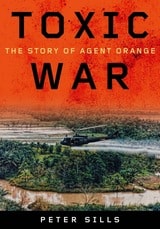
Toxic War
The Story of Agent OrangePeter Sills
Vanderbilt University Press, 2014
Originally introduced by Dow and other chemical companies as a herbicide in the United States and adopted by the military as a method of deforesting the war zone of Vietnam, in order to deny the enemy cover, Agent Orange also found its way into the systems of numerous active-duty soldiers. Sills argues that manufacturers understood the dangers of this compound and did nothing to protect American soldiers.
Toxic War takes the reader behind the scenes into the halls of political power and industry, where the debates about the use of Agent Orange and its potential side effects raged. In the end, the only way these veterans could seek justice was in the court of law and public opinion. Unprecedented in its access to legal, medical, and government documentation, as well as to the personal testimonies of veterans, Toxic War endeavors to explore all sides of this epic battle.
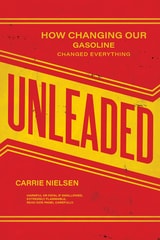
Unleaded
How Changing Our Gasoline Changed EverythingCarrie Nielsen
Rutgers University Press, 2021
Unleaded tells the story of how crusading scientists and activists convinced the U.S. government to ban lead additives in gasoline. It also reveals how, for nearly fifty years, scientific experts paid by the oil and mining industries abused their authority to convince the public that leaded gasoline was perfectly harmless.
Combining environmental history, sociology, and neuroscience, Carrie Nielsen explores how lead exposure affects the developing brains of children and is linked to social problems including academic failure, teen pregnancies, and violent crime. She also shows how, even after the nationwide outrage over Flint’s polluted water, many poor and minority communities and communities of color across the United States still have dangerously high lead levels. Unleaded vividly depicts the importance of sound science and strong environmental regulations to protect our nation’s most vulnerable populations.