Results by title

9 books match the query 'Transplantation of organs, tissues, etc'
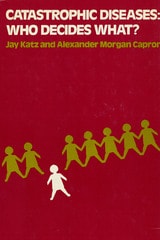
cover of Catastrophic Diseases: Who Decides What?

Catastrophic Diseases

Who Decides What?

Jay Katz

Russell Sage Foundation, 1975

People do not choose to suffer from catastrophic illnesses, but considerable human choice is involved in the ways in which the participants in the process treat and conduct research on these diseases. Catastrophic Diseases draws a powerful and humane portrait of the patients who suffer from these illnesses as well as of the physician-investigators who treat them, and describes the major pressures, conflicts, and decisions which confront all of them. By integrating a discussion of "facts" and "values," the authors highlight the forces which affect new developments in medicine—such as kidney and heart transplants—and the controversial issues they generate. Katz and Capron explore these issues through the use of dual conceptual perspectives. Their study first examines and evaluates the authority which should be vested in each of the chief participants in the catastrophic disease process—the physician-investigator, the patient-subject and his relatives, the professionals, and the state. Challenging questions are raised concerning medical education, informed consent, and professional responsibility. The authors next explore how the roles and capacities of the participants vary not only according to the basic issues they face but also according to the point in decision-making at which these issues arise. The process of investigating and treating catastrophic diseases, the authors believe, can thus usefully be divided into three decision-making stages—the formulation of policy, the administration of research and therapy, and the review of the decisions and their consequences. In conclusion, Katz and Capron demonstrate the need for a variety of individuals and groups with diverse values to be involved in decision-making in a manner which will not unnecessarily impede the scientific investigation of these diseases.
[more]
cover of Domesticating Organ Transplant: Familial Sacrifice and National Aspiration in Mexico

Domesticating Organ Transplant

Familial Sacrifice and National Aspiration in Mexico

Megan Crowley-Matoka

Duke University Press, 2016

Organ transplant in Mexico is overwhelmingly a family matter, utterly dependent on kidneys from living relatives—not from stranger donors typical elsewhere. Yet Mexican transplant is also a public affair that is proudly performed primarily in state-run hospitals. In Domesticating Organ Transplant, Megan Crowley-Matoka examines the intimate dynamics and complex politics of kidney transplant, drawing on extensive fieldwork with patients, families, medical professionals, and government and religious leaders in Guadalajara. Weaving together haunting stories and sometimes surprising statistics culled from hundreds of transplant cases, she offers nuanced insight into the way iconic notions about mothers, miracles, and mestizos shape how some lives are saved and others are risked through transplantation. Crowley-Matoka argues that as familial donors render transplant culturally familiar, this fraught form of medicine is deeply enabled in Mexico by its domestication as both private matter of home and proud product of the nation. Analyzing the everyday effects of transplant’s own iconic power as an intervention that exemplifies medicine’s death-defying promise and commodifying perils, Crowley-Matoka illuminates how embodied experience, clinical practice, and national identity produce one another.
[more]
cover of Face/On: Face Transplants and the Ethics of the Other

Face/On

Face Transplants and the Ethics of the Other

Sharrona Pearl

University of Chicago Press, 2017

Are our identities attached to our faces? If so, what happens when the face connected to the self is gone forever—or replaced? In Face/On, Sharrona Pearl investigates the stakes for changing the face–and the changing stakes for the face—in both contemporary society and the sciences.
 
The first comprehensive cultural study of face transplant surgery, Face/On reveals our true relationships to faces and facelessness, explains the significance we place on facial manipulation, and decodes how we understand loss, reconstruction, and transplantation of the face. To achieve this, Pearl draws on a vast array of sources: bioethical and medical reports, newspaper and television coverage, performances by pop culture icons, hospital records, personal interviews, films, and military files. She argues that we are on the cusp of a new ethics, in an opportune moment for reframing essentialist ideas about appearance in favor of a more expansive form of interpersonal interaction. Accessibly written and respectfully illustrated, Face/On offers a new perspective on face transplant surgery as a way to consider the self and its representation as constantly present and evolving. Highly interdisciplinary, this study will appeal to anyone wishing to know more about critical interventions into recent medicine, makeover culture, and the beauty industry.

 
[more]
cover of Last Best Gifts: Altruism and the Market for Human Blood and Organs

Last Best Gifts

Altruism and the Market for Human Blood and Organs

Kieran Healy

University of Chicago Press, 2006

More than any other altruistic gesture, blood and organ donation exemplifies the true spirit of self-sacrifice. Donors literally give of themselves for no reward so that the life of an individual—often anonymous—may be spared. But as the demand for blood and organs has grown, the value of a system that depends solely on gifts has been called into question, and the possibility has surfaced that donors might be supplemented or replaced by paid suppliers.
 
Last Best Gifts offers a fresh perspective on this ethical dilemma by examining the social organization of blood and organ donation in Europe and the United States. Gifts of blood and organs are not given everywhere in the same way or to the same extent—contrasts that allow Kieran Healy to uncover the pivotal role that institutions play in fashioning the contexts for donations. Procurement organizations, he shows, sustain altruism by providing opportunities to give and by producing public accounts of what giving means. In the end, Healy suggests, successful systems rest on the fairness of the exchange, rather than the purity of a donor’s altruism or the size of a financial incentive.


[more]
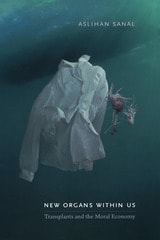
cover of New Organs Within Us: Transplants and the Moral Economy

New Organs Within Us

Transplants and the Moral Economy

Asl1han Sanal

Duke University Press, 2011

New Organs Within Us is a richly detailed and conceptually innovative ethnographic analysis of organ transplantation in Turkey. Drawing on the moving stories of kidney-transplant patients and physicians in Istanbul, Aslihan Sanal examines how imported biotechnologies are made meaningful and acceptable not only to patients and doctors, but also to the patients’ families and Turkish society more broadly. She argues that the psychological theory of object relations and the Turkish concept of benimseme—the process of accepting something foreign by making it one’s own—help to explain both the rituals that physicians perform to make organ transplantation viable in Turkey and the psychic transformations experienced by patients who suffer renal failure and undergo dialysis and organ transplantation. Soon after beginning dialysis, patients are told that transplantable kidneys are in short supply; they should look for an organ donor. Poorer patients add their names to the state-run organ share lists. Wealthier patients pay for organs and surgeries, often in foreign countries such as India, Russia, or Iraq. Sanal links Turkey’s expanding trade in illegal organs to patients’ desires to be free from dialysis machines, physicians’ qualms about declaring brain-death, and media-hyped rumors of a criminal organ mafia, as well as to the country’s political instability, the privatization of its hospitals, and its position as a hub in the global market for organs.
[more]
cover of Organ Transplantation Policy

Organ Transplantation Policy

James F. Blumstein and Frank A. Sloan, eds.

Duke University Press, 1989

Organ transplantation as a high-cost surgical and medical procedure poses an extraordinarily rich and complex set of social, ethical, and policy issues.
A June 1988 symposium at Vanderbilt University gathered leaders in a wide variety of fields to synthesize the current state of knowledge concerning organ transplantation policy and to access policy options. Collected here are the revised papers presented at that symposium; also included is one influential earlier paper on the same topic. Together, they constitute a major contribution to the debate on organ transplantation policy and its moral, legal, financial, and political implications.
[more]
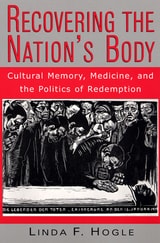
cover of Recovering the Nation's Body: Cultural Memory, Medicine, and the Politics of Redemption

Recovering the Nation's Body

Cultural Memory, Medicine, and the Politics of Redemption

Linda F Hogle

Rutgers University Press, 1999

The body is both a site for medical practice and a source of therapeutic and scientific tools. As such, there are a variety of meanings ascribed to the body which both affect and are affected by cultural, economic, political and legal complexities. In order to access and use body parts, Linda F. Hogle states, transformative scientific and  cultural processes are brought into play. Nowhere is this more evident than present-day Germany, where the spectre of Nazi medical experimentation still plays a large role  in national policies governing the use of body parts and the way these policies are put into practice.  In their efforts to be perceived as not repeating atrocities of the past, German medical practitioners and policy-makers reformulate ideas of bodily violation.  To further confuse the issue, the reunification of East and West Germany has engendered new questions about the relationship between individuals’ bodies, science, and the state.

Hogle shows how “universal” medicine is reinterpreted through the lens of national and transnational politics and history, using comparative examples from her research in the United. States.  Recovering the Nation’s Body is the first book to analyze the actual practices involved in procuring human tissue, and the first to examine how the German past and the unique present-day situation within the European Union are key in understanding the form that medical practices take within various contexts.

[more]
cover of The Ethics of Organ Transplantation

The Ethics of Organ Transplantation

Steven J. Jensen

Catholic University of America Press, 2011
These questions and others are thoughtfully probed in this collection of essays, which features articles from theologians, philosophers, physicians, biomedical ethicists, and an attorney.
[more]
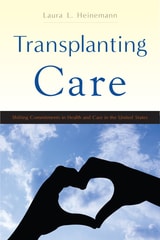
cover of Transplanting Care: Shifting Commitments in Health and Care in the United States

Transplanting Care

Shifting Commitments in Health and Care in the United States

Heinemann, Laura L.

Rutgers University Press, 2016

The sudden call, the race to the hospital, the high-stakes operation—the drama of transplant surgery is well known. But what happens before and after the surgery? In Transplanting Care, Laura L. Heinemann examines the daily lives of midwestern organ transplant patients and those who care for them, from pretransplant preparations through to the long posttransplant recovery.
 
Heinemann points out that as efforts to control healthcare costs gain urgency—and as new surgical techniques, drug therapies, and home medical equipment advance—most of the transplant process now takes place at home, among kin. Indeed, the transplant system effectively depends on unpaid care labor, typically provided by spouses, parents, siblings, and others. Drawing on scores of interviews with patients, relatives, and healthcare professionals, Heinemann follows a variety of patients and loved ones as they undertake this uncertain and strenuous “transplant journey.” She also shows how these home-based caregiving efforts take place within the larger economic and political context of a paucity of resources for patients and caregivers, who ultimately must surmount numerous obstacles. The author concludes that the many snags encountered by transplant patients and loved ones make a clear case for more comprehensive health and social policy that treats care as a necessarily shared public responsibility.  
 
An illuminating look at the long transplant journey, Transplanting Care also offers broader insight into how we handle infirmity in America—and how we might do a better job of doing so. 
 
[more]