Results by title
3 books match the query 'Transylvania (Romania)'
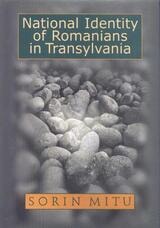
National Identity of Romanians in Transylvania
Sorin Mitu
Central European University Press, 2001
This meticulously researched and elegantly written book is the most authoritative study of the emergence of modern Romanian identity in Transylvania during the eighteenth and nineteenth centuries. Based upon a plethora of contemporary published sources, Mitu approaches national identity from a variety of perspectives - from within the Romanian community itself and their reaction to the image others had of them.
The author sheds new light on the problems of self-evaluation using a method he describes as "functional analysis" to examine a complex set of ideologies and propaganda. This approach helps the reader to understand the intricate web of contemporary Romanian nationalism.
National Identity of Romanians in Transylvania appeals to scholars of modern Romanian history, those focusing on the Habsburg Monarchy and the study of modern nationalism. The book is an important contribution to the expanding debate on nationalism and national identity from an East European perspective.

Patrick Leigh Fermor
Noble Encounters between Budapest and TransylvaniaMichael O'Sullivan
Central European University Press, 2018
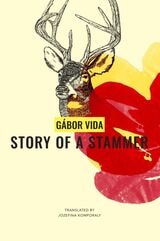
Story of a Stammer
Gábor Vida
Seagull Books, 2022
In the novel Story of a Stammer, Gábor Vida asks a fundamental question: Where does stammering come from? In the process of answering this question, he discovers that an entire historical period and an entire world have been stammering, too. Through Vida’s eyes, we see that stammering comprises all the lies accumulated over time and over generations because nobody had ever articulated what they felt or thought, nor done what they really wanted. Nobody, Vida shows, had ever told the truth.
Describing life in the 1970s and ’80s under Romanian Communist dictator Nicolae Ceauçescu’s authoritarian regime, Vida writes with disarming honesty, breaking taboos and chronicling the ways in which tyranny and exploitation seep into family relationships. The novel charts the first two decades of a young Hungarian man’s life in Romania, telling a story of coming to terms with a stammer, loneliness, and an unstimulating environment where religion, alcoholism, and suicide are the most common escape strategies. A Bildungsroman, a novel about Transylvania, a chronicle of minority life, a sociological analysis of cultural identity, and ultimately a deeply personal account of a historical era, Story of a Stammer is a major contribution to contemporary Hungarian literature—an unfailingly serious yet humorously delightful witness to a turbulent period in recent history.