Results by title
17 books match the query 'Travelers'
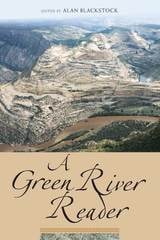
A Green River Reader
Alan Blackstock
University of Utah Press, 2005
"There is something ominous about a swift river, and something thrilling about a river of any kind."—from Beyond the Hundredth Meridian by Wallace Stegner
Beginning above Flaming Gorge Dam in southwestern Wyoming, the Green River traverses the complete variety of terrain on the Colorado Plateau before joining the Colorado River above Cataract Canyon in southeastern Utah. Like its more famous cousin, the Colorado, the Green has captivated, capsized, and cajoled all types of characters with challenges and beauty to match its geologic variety.
In A Green River Reader editor Alan Blackstock brings this mysterious, magnificent, thrilling river to the reader with an interpretive guide that will inform both river novices and river veterans. Assembled here is every significant written testament to this "awesome ditch," from Domínguez-Escalante to Kit Carson and John C. Frémont; to contemporary American naturalists and writers including Wallace Stegner, Bernard DeVoto, David Brower, Ann Zwinger, Ellen Melloy, and Edward Abbey. Those with a story to tell—those who trapped the Green’s beavers, endured its wild rapids, were humbled by its imposing canyon walls, fought for its beautiful landscapes, or whose "pulse was hurried" by the "lofty chasms, walled in by precipices of red rock"—are collected here.
If you’re headed down the Green, make sure that your dry bag or ammo can has room for just one more thing, your copy of A Green River Reader.
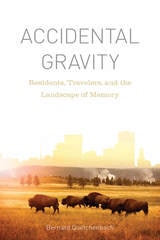
Accidental Gravity
Residents, Travelers, and the Landscape of MemoryBernard Quetchenbach
Oregon State University Press, 2017
Accidental Gravity negotiates the difficult edge between a naive belief in an enduring, unassailable natural world and the equally naive belief that human life takes place in some unnatural, more mediated context. The title refers to the accidental but nonetheless meaningful nexus where the personal meets and combines with the universal—those serendipitous moments when the individual life connects to the larger rhythms of time and planet.
America
Exploration and TravelSteven E. Kagel
University of Wisconsin Press, 1979
Travel gets us from one place to another—often with wonderful attendant enjoyment–but exploration makes us understand our travel, the places we travel to—and ourselves. The essays in this collection constitute a major step toward this understanding. They open up new areas for concern and draw many valuable insights and conclusions.

Birkon Artzi
Blessings and Meditations for Travelers to IsraelRabbi Serge Lippe
Central Conference of American Rabbis, 2012
With dozens of individual prayers, meditations, and readings, this pocket-sized birkon is your guide to uncovering the miracles and the magic of Israel. Entries include prayers before leaving, upon arrival, and for specific cities, bodies of water, unique moments, and well-traveled sites within the State of Israel.
This collection is an indispensable resource for anyone seeking to pause and acknowledge place and moment, to create connection, and to fashion memory.
Europe
or Up and Down with Schreiber and BaggishRichard Stern
Northwestern University Press, 2007
Originally published in 1961, this shrewd, smartly written novel follows two American men traveling in Europe. Though both have struck out for the same continent, each man’s methods of and motives for travel lead him to have a very different experience than the other. Underlying it all is the premise that Europe--the contrast, the otherness of it--can be a refiner’s fire, deeply affecting a person’s character. Europe represents a crucial step in Stern’s development as a writer and stands as a witty, sharp point of entry into his writings and the writings of novelists who rose to prominence in the 1960s.
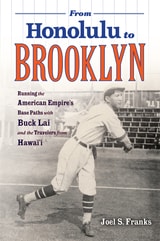
From Honolulu to Brooklyn
Running the American Empire’s Base Paths with Buck Lai and the Travelers from Hawai’iJoel S. Franks
Rutgers University Press, 2022
Guest Appearances and Other Travels in Time and Space
Peter I. Rose
Ohio University Press, 2003
Guest Appearances and Other Travels in Time and Space introduces us to many of those whom Rose has met along the way, a cast of characters as colorful as it is diverse. It includes his music-loving mother; his tour guides in China, Germany, and Israel; Indochinese refugees he followed to the United States; the notorious murderer, Nathan Leopold; the simple tailor, Mr. David; and three writers for whom Rose has a special affinity: Philip Roth, John Updike, and Paul Theroux.
Peter Rose gives us an entirely pleasurable and insightful look into the life of an American scholar actively involved in contemporary issues as he takes readers along on his field trips and guest appearances.
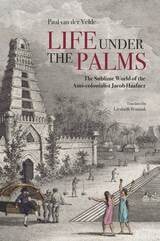
Life Under the Palms
The Sublime World of the Anti-colonialist Jacob HaafnerPaul van der Velde
National University of Singapore Press, 2019
With the help of generous excerpts from Haafner's own writings, including material newly translated into English, Paul van der Velde tells an affecting story of a young man who made a world for himself along the Coromandel Coast, in Ceylon and Calcutta, but who returned to Europe to live the last years of his life in Amsterdam, suffering an acute nostalgia for Asia. This will be compelling reading for anyone interested in European response to the cultures of Asia.
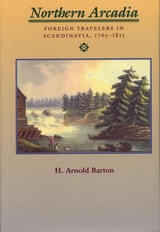
Northern Arcadia
Foreign Travelers in Scandinavia, 1765 - 1815H. Arnold Barton
Southern Illinois University Press, 1998
Northern Arcadia is a comparative study of the accounts of foreign visitors to the Nordic lands during the late eighteenth and early nineteenth centuries.
Before the late eighteenth century, few foreigners ventured as far as Scandinavia. The region seemed a cold hyperborean wilderness and a voyage there a daring adventure. From the mid-1760s on, however, foreigners arrived in the Nordic lands in increasing numbers, leaving numerous accounts that became increasingly popular, satisfying a growing curiosity about regions beyond the traditional grand tour.
The pre-Romantic mood of the period—with its predilection for untamed nature and for peoples uncorrupted by overrefined civilization—further stimulated fascination with the North. European titerati discovered the Nordic sagas, finding them exhilarating, passionate, imaginative, and original. The French Revolution and the ensuing European wars effectively closed off much of the Continent to foreign travel, turning attention to the still neutral northern kingdoms.
Travel literature about Scandinavia thus illuminates the shift in the European intellectual climate from the enlightened rationalism and utilitarianism of the earlier travelers in this period to the pre-Romantic sensibility of those who followed them. In a Europe torn by war and revolution, sensitive souls could find their new Arcadia in the North—at least until the Scandinavian kingdoms themselves became engulfed by the Napoleonic wars after 1805.
The first scholar to examine as a whole the travel literature dealing with Denmark, Schleswig-Holstein, Norway, Sweden, Finland, Iceland, and the Færø Islands, H. Arnold Barton discusses accounts left by both the celebrated and the obscure. Well-known travelers include Vittorio Alfieri, Francisco de Miranda, Mary Wollstonecraft, Thomas Malthus, and Aaron Burr. Literary travelers of the day included Nathanael Wraxall, William Coxe, Charles Gottlob Küttner, Edward Daniel Clarke, and John Carr.
Northern Arcadia brings out contrasts: among the various Nordic lands and regions; among the reactions of travelers of differing nationality; between the earlier as opposed to the later travelers of the time; between native Scandinavian and foreign perceptions of the North; between conditions in Scandinavia and those in other parts of the Western world; between then and now. It incorporates continuity and change, reality and mentality.
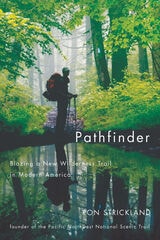
Pathfinder
Blazing a New Wilderness Trail in Modern AmericaRon Strickland
Oregon State University Press, 2011
Ron Strickland has spent a good deal of time walking. He hiked the 1200 miles of the Pacific Northwest Trail in 1983. In 2004, he completed the Pacific Crest Trail, with a 1500-mile hike from the Mojave Desert to the Columbia River. In 2009, he hiked the length of the New England Trail.
He has also held a longtime dream of showcasing the best hiking of the Rockies, Purcells, Okanogan, Cascades, Olympics, and Wilderness Coast. He spent years raising funds, recruiting volunteers, cutting brush, digging dirt, and lobbying landowners, officials, and politicians—and in 2009, the Pacific Northwest Trail, which runs from the Continental Divide to the Pacific Ocean, traversing three National Parks and seven National Forests, was finally declared a National Scenic Trail.
In this adventurous and moving memoir, Strickland—known in the backcountry as “Pathfinder”—shares his insider view of the joys and adventures of long-distance hiking. He intersperses colorful portraits of memorable trail characters and lush descriptions of hikes he knows firsthand. He also describes the experience of conceiving and establishing the Pacific Northwest Trail, detailing the setbacks and triumphs along the way.
Pathfinder offers the rich insights and experiences of a longtime hiker, inspiring readers to the wonder of hiking and the outdoors.

Road-Book America
Contemporary Culture and the New PicaresqueRowland A. Sherrill
University of Illinois Press, 2000
Road-Book America discloses how the old picaresque tradition, embodied in such novels as Henry Fielding's Tom Jones and Daniel Defoe's Moll Flanders, opens to include a number of new American texts, both fiction and nonfiction, that decisively share the characterizing form. Sherrill's discussion encompasses hundreds of American narratives published in the past four decades, including such examples of the genre as William Least Heat-Moon's Blue Highways, John Steinbeck's Travels with Charley, James Leo Herlihy's Midnight Cowboy, Bill Moyers's Listening to America, and E. L. Doctorow's Billy Bathgate.
Sketching the socially marginal, ingenuous, traveling characters common to both old and new versions, Sherrill shows how the "new American picaresque" transforms the satirical aims of the original into an effort to map and catalog the immensity and variety of America.
Open, resilient, perennially hopeful, and endowed with a protean adaptability, the protagonist of the new American picaresque follows a therapeutic path for the alienated modern self. Mining the relevance of the reformulated picaresque for American life, Road-Book America shows how this old form, adaptable as the picaro himself, lays the groundwork for spiritual renewal and a restoration of cultural confidence in some old ways of being American.
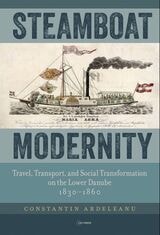
Steamboat Modernity
Travel, Transport, and Social Transformation on the Lower Danube, 1830–1860Constantin Ardeleanu
Central European University Press, 2024
Through a skillful combination of economic and cultural history, this book describes the impact on Moldavia and Wallachia of steam navigation on the Danube. The Danube route integrated the two principalities into a dense network of European roads and waterways. From the 1830s to the 1860s, steamboat transport transformed time and space for the areas that benefited from regular services. River traffic accelerated urban development along the Lower Danube and contributed directly to institutional modernization in one of Europe’s peripheries.
Beyond technological advances and the transportation of goods on a trans-imperial waterway, steamboat travel revolutionized human interactions, too. The book offers a fascinating insight into the social and cultural milieu of the nineteenth century, drawing on first-hand accounts of Danube cruising. Describing the story of travelers who interacted, met, and visited the places they stopped, Constantin Ardeleanu creates a transnational history of travel up and down the Danube from Vienna to Constantinople. The pleasures and sometimes the travails of the travelers unfold against a backdrop of technical and economic transformation in the crucial period of modernization.
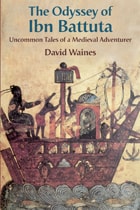
The Odyssey of Ibn Battuta
Uncommon Tales of a Medieval AdventurerDavid Waines
University of Chicago Press, 2010
Ibn Battuta was, without doubt, one of the world’s truly great travelers. Born in fourteenth-century Morocco, and a contemporary of Marco Polo, Ibn Battuta left an account in his own words of his remarkable journeys, punctuated by adventure and peril, throughout the Islamic world and beyond. Whether sojourning in Delhi and the Maldives, wandering through the mazy streets of Cairo and Damascus, or contesting with pirates and shipwreck, the indefatigable Ibn Battuta brought to vivid life a medieval world brimming with marvel and mystery. Carefully observing the great diversity of civilizations that he encountered, Ibn Battuta exhibited an omnivorous interest in such matters as food and drink; religious differences among Christians, Hindus, and Shia Muslims; and ideas about purity and impurity, disease, women, and sex.
David Waines offers here a graceful analysis of Ibn Battuta’s travelogue. This is a gripping treatment of the life and times of one of history’s most daring, and at the same time most human, adventurers.
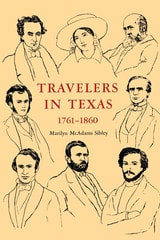
Travelers In Texas, 1761-1860
By Marilyn McAdams Sibley
University of Texas Press, 1967
History passed in review along the highways of Texas in the century 1761–1860. This was the century of exploration and settlement for the big new land, and many thousands of people traveled its trails: traders, revolutionaries, missionaries, warriors, government agents, adventurers, refugees, gold seekers, prospective settlers, land speculators, army wives, and filibusters. Their reasons for coming were many and varied, and the travelers viewed the land and its people with a wide variety of reactions. Political and industrial revolution, famine, and depression drove settlers from many of the countries of Europe and many of the states of the United States. Some were displeased with what they found in Texas, but for many it was a haven, a land of renewed hope. So large was the migration of people to Texas that the land that was virtually unoccupied in 1761 numbered its population at 600,000 a century later.
Several hundred of these travelers left published accounts of their impressions and adventures. Collectively the accounts tell a panoramic story of the land as its boundaries were drawn and its institutions formed. Spain gave way to Mexico, Mexico to the Republic of Texas, the Republic to statehood in the United States, and statehood in the Union was giving way to statehood in the Confederate states by 1860. The travelers’ accounts reflect these changes; but, more important, they tell the story of the receding frontier.
In Travelers in Texas, 1761–1860, the author examines the Texas seen by the traveler-writer. Opening with a chapter about travel conditions in general (roads or trails, accommodations, food), she also presents at some length the travelers’ impressions of the country and its people. She then proceeds to examine particular aspects of Texas life: the Indians, slavery, immigration, law enforcement, and the individualistic character of the people, all as seen through the eyes of the travelers. The discussion concludes with a “Critical Essay on Sources,” containing bibliographic discussions of over two hundred of the more important travel accounts.
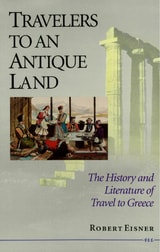
Travelers to an Antique Land
The History and Literature of Travel to GreeceRobert Eisner
University of Michigan Press, 1993

Travelers, Immigrants, Inmates
Essays in EstrangementFrances Bartkowski
University of Minnesota Press, 1995
Travelers, Immigrants, Inmates was first published in 1995. Minnesota Archive Editions uses digital technology to make long-unavailable books once again accessible, and are published unaltered from the original University of Minnesota Press editions.
Identities are always mistaken; yet they are as necessary as air to sustain life in and among communities. Frances Bartkowski uses travel writings, U.S. immigrant autobiographies, and concentration camp memoirs to illustrate how tales of dislocation present readers with a picture of the complex issues surrounding mistaken identities. In turn, we learn much about the intimate relation between language and power.
Combining psychoanalytic and political modes of analysis, Bartkowski explores the intertwining of place and the construction of identities. The numerous writings she considers include André Gide's Voyage to the Congo, Eva Hoffman's Lost in Translation, Sandra Cisneros's House on Mango Street, Zora Neale Hurston's Dust Tracks on a Road and Tell My Horse, and Primo Levi's Survival in Auschwitz.
Elegantly written and incisive, Travelers, Immigrants, Inmates stands at the crossroads of contemporary discussions about ethnicity, race, gender, nationalism, and the politics and poetics of identity. It has much to offer readers interested in questions of identity and cultural differences.
Frances Bartkowski is associate professor of English and director of women's studies at Rutgers University in Newark. She is the author of Feminist Utopias (1989).
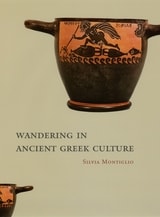
Wandering in Ancient Greek Culture
Silvia Montiglio
University of Chicago Press, 2005
Attitudes toward wandering have evolved in accordance with cultural perspectives, causing some characterizations to persist while others have faded. For instance, the status of wanderers in Greek societies varied from outcasts and madmen to sages, who were recognized as mystical, even divine. Examining the act of wandering through many lenses, Wandering in Ancient Greek Culture shows how the transformation of the wanderer coincided with new perceptions of the world and of travel and invites us to consider its definition and import today.