Results by title
7 books match the query 'Tricksters'

A Prelude to Biblical Folklore
UNDERDOGS AND TRICKSTERSSusan Niditch
University of Illinois Press, 1987
Using a unique combination of biblical scholarship and folklore methodology, Susan Niditch tracks stories of biblical characters who become heroes against the odds, either through trickery or through native wisdom, physical prowess, and the help of human or divine agents. In this volume, originally published as Underdogs and Tricksters, Niditch examines three cross-sections of the Old Testament in detail: stories in Genesis in which patriarchs pretend that their wives are really their sisters; the contrasting stories of two younger sons, the trickster Jacob and the earnest underdog Joseph; and the story of Esther as a paradigm of feminine wisdom pitted against unjust authority.
Linking these Old Testament heroes to the legendary tricksters and underdogs of other cultures, Niditch shows how the Israelites' worldview and self-image are reflected in the way biblical authors tell their stories. Through a thoughtful analysis of style, content, narrative choices, and attitudes to issues of gender and political authority in biblical narrative, A Prelude to Biblical Folklore draws persuasive conclusions about the identity, location, and provenance of the stories' authors and their audiences.
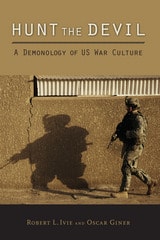
Hunt the Devil
A Demonology of US War CultureRobert L. Ivie and Oscar Giner
University of Alabama Press, 2015
Meticulously researched, documented, and argued, Hunt the Devil opens with contemporary images of the US’s global war on terror in the aftermath of 9/11. In five chapters devoted to the demonization of evildoers, witches, Indians, dictators, and Reds by American writers, in presidential rhetoric, and in popular culture, Ivie and Giner show how the use of demonization in the war on terror is only the most recent manifestation of a process that has recurred throughout American history.
In a sixth chapter, the authors introduce the archetype of the Trickster. Though not opposed to the Devil per se, the Trickster’s democratic impulses have often provided a corrective antidote to the corrosive and distorting effects of demonization. Invoking the framework of Carl Jung’s shadow aspect, Hunt the Devil offers the Trickster as a figure who can break the cycle of demonization and war.
The role of the mythic Devil in the American psyche has profound implications, not just for American diplomacy and the use of American arms in the world, but for the possibility of domestic peace within an increasingly diverse society. Hunt the Devil provides much of interest to readers and scholars in the fields of war, rhetorical studies, American Studies, US political culture, Jungian psychology, and mythography.
In Favor of Deceit
A Study of Tricksters in an Amazonian SocietyEllen B. Basso
University of Arizona Press, 1988
Ellen Basso's new study of these stories considers their relationship to other kinds of Kalapalo activities involving deception and features a unique collection of South American Indian narratives translated directly from performances by master storytellers in their original Carib language. Combining an ethnopoetic, performance-focused approach to storytelling with an action-oriented psychology, Basso arrives at an ethnographic understanding of Kalapalo trickster myths and Kalapalo ideas about deception.
The commentary on the translations considers matters of theme, discourse, narrative progression, and performance context. The dialogical, interactive nature of Kalapalo storytelling, the development of characters through their conversations with one another, and the many ways storytelling and ordinary life enrich one another are examined to reveal the complex psychology of trickster myths and the special tricksterish quality of day-to-day Kalapalo behavior.
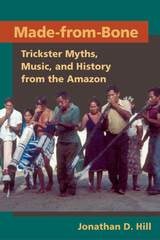
Made from Bone
Trickster Myths, Music, and History from the AmazonJonathan D. Hill
University of Illinois Press, 2008
Made-from-Bone is the first work to provide a complete set of English translations of narratives about the mythic past and its transformations from the indigenous Arawak-speaking people of South America. Among the Arawak-speaking Wakuénai of southernmost Venezuela, storytellers refer to these narratives as "words from the primordial times," and they are set in an unfinished space-time before there were any clear distinctions between humans and animals, men and women, day and night, old and young, and powerful and powerless. The central character throughout these primordial times and the ensuing developments that open up the world of distinct peoples, species, and places is a trickster-creator, Made-from-Bone, who survives a prolonged series of life-threatening attacks and ultimately defeats all his adversaries.
Carefully recorded and transcribed by Jonathan D. Hill, these narratives offer scholars of South America and other areas the only ethnographically generated cosmogony of contemporary or ancient native peoples of South America. Hill includes translations of key mythic narratives along with interpretive and ethnographic discussion that expands on the myths surrounding this fascinating and enigmatic character with broad appeal throughout various folkloric traditions.
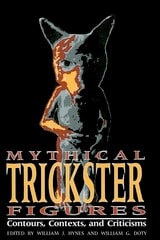
Mythical Trickster Figures
Contours, Contexts, and CriticismsEdited by William J. Hynes and William G. Doty
University of Alabama Press, 1997
The first substantial collection of essays about the trickster since 1955
Mythical Trickster Figures, is the first substantial collection of essays about the trickster to appear since Radin’s 1955 The Trickster. Contributions by leading scholars treat a wide range of manifestations of this mischievous character, ranging from the Coyote of the American Southwest to such African figures as Eshu-Elegba and Ananse, the Japanese Susa-no-o, the Greek Hermes, Christian adaptations of Saint Peter, and examples found in contemporary American fiction and drama.
The many humorous trickster stories included are fascinating in themselves, but Hynes and Doty also highlight the wide range of features of the trickster—the figure whose comic appearance often signifies that the most serious cultural values are being both challenged and enforced.
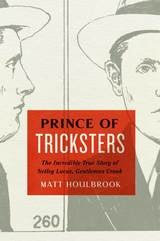
Prince of Tricksters
The Incredible True Story of Netley Lucas, Gentleman CrookMatt Houlbrook
University of Chicago Press, 2016
The lives of Netley Lucas are as flamboyant as they are unlikely. In Prince of Tricksters, Matt Houlbrook picks up the threads of Lucas’s colorful lies and lives. Interweaving crime writing and court records, letters and life-writing, Houlbrook tells Lucas’s fascinating story and, in the process, provides a panoramic view of the 1920s and ’30s. In the restless times after the Great War, the gentlemanly trickster was an exemplary figure, whose tall tales and bogus biographies exposed the everyday difficulties of knowing who and what to trust. Tracing how Lucas both evoked and unsettled the world through which he moved, Houlbrook shows how he prompted a pervasive crisis of confidence that encompassed British society, culture, and politics.
Taking readers on a romp through Britain, North America, and eventually into Africa, Houlbrook confronts readers with the limits of our knowledge of the past and challenges us to think anew about what history is and how it might be made differently.
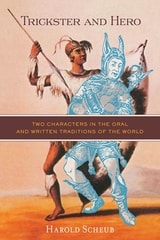
Trickster and Hero
Two Characters in the Oral and Written Traditions of the WorldHarold Scheub
University of Wisconsin Press, 2012
Scheub delves into the importance of trickster mythologies and the shifting relationships between tricksters and heroes. He examines protagonists that figure centrally in a wide range of oral narrative traditions, showing that the true hero is always to some extent a trickster as well. The trickster and hero, Scheub contends, are at the core of storytelling, and all the possibilities of life are there: we are taken apart and rebuilt, dismembered and reborn, defeated and renewed.