Results by title
2 books match the query 'Twenty - Five Years'
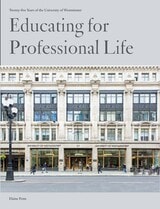
Educating for Professional Life
Twenty-five Years of the University of WestminsterElaine Penn
University of Westminster Press, 2017
The story of the University of Westminster is the fifth volume in a series of titles exploring the University's long and diverse history. This book celebrates the twenty-fifth anniversary of the institution gaining university status, the right to award its own degrees and to participate in publicly funded research. Drawing on extensive research conducted in the University of Westminster Archive this volume investigates the evolution from Polytechnic to University within the broader context of the transformation of UK higher education in the late twentieth and early twenty-first centuries.
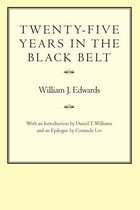
Twenty-Five Years in the Black Belt
William J. Edwards
University of Alabama Press, 1993
A pioneering educator's firsthand account of building opportunity and hope in Alabama's Black Belt.
Twenty-Five Years in the Black Belt is one of the most important firsthand accounts of African American educational leadership and community development in the post-Reconstruction South. Originally published in 1918, this memoir by educator and institution-builder William J. Edwards documents his extraordinary efforts to create educational opportunities for Black citizens in Alabama's Black Belt during a period marked by segregation, economic hardship, and limited access to public resources.
Born in Snow Hill, Alabama, in 1869, Edwards rose from humble beginnings to attend the Tuskegee Institute under the leadership of Booker T. Washington. Inspired by Tuskegee's philosophy of education, self-reliance, and community advancement, he returned to rural Alabama determined to establish an institution that could provide both academic and practical instruction to African American students. His efforts led to the founding of the Snow Hill Institute in 1893, a school that became a vital center of learning and leadership for generations of Black Alabamians.
The memoir also offers valuable insight into the educational philosophies that shaped African American advancement in the late nineteenth and early twentieth centuries. Edwards reflects on the influence of Booker T. Washington, the role of industrial and vocational education, fundraising efforts in the North, the Jeanes Fund, public-school reform, and the broader movement for racial uplift through education. His account illuminates the networks of educators, supporters, and community leaders who worked to expand opportunities for African Americans throughout the South.
At once inspirational and historically significant, Twenty-Five Years in the Black Belt remains an essential source for understanding African American education, Southern race relations, and the determination of Black communities to create institutions that fostered dignity, opportunity, and progress. It stands as both a personal testament and a crucial historical document chronicling a transformative era in American history.