Results by title
14 books match the query 'USA'

Anti-Arab Racism in the USA
Where It Comes From and What It Means For Politics TodaySteven Salaita
Pluto Press, 2006
Miriam Cooke, Professor, Duke University
"An impassioned and deeply compelling look at the origins, evolution, manifestations and implications of anti-Arab racism today. ... A tour-de-force."
Lisa Suhair Majaj, co-editor, Etel Adnan: Critical Reflections on the Arab-American Writer and Artist and Intersections: Gender, Nation, and Community in Arab Women¹s Novels
"Salaita dives head-first into the heart of racism in America and uses his personal experiences to help readers understand the mechanics of racism as it applies to Arabs, Muslims and people who look Middle Eastern in the post-Sept. 11 world."
Ray Hanania, journalist and filmmaker, author of I¹m Glad I Look Like a Terrorist: Growing up Arab in America and Arabs of Chicagoland
"A highly recommended read, not only for students of Middle East history, but for the average American who wants to know how we have become so intimately and yet so bitterly entwined with the people of the Middle East. ... Salaita has thoughtfully articulated a very regretful era of unabashed racism in American history."
Ramzy Baroud, editor, Palestine Chronicle and author of Searching Jenin
Today is a difficult time to be both Arab and American. Since 9/11 there has been a lot of criticism of America¹s involvement in the middle east. Yet there has been little analysis of how America treats citizens of Arab or middle eastern origin within its own borders.
Steven Salaita explores the reality of Anti-Arab racism in America. He blends personal narrative, theory and polemics to show how this deep-rooted racism affects everything from legislation to cultural life, shining a light on the consequences of Anti-Arab racism both at home and abroad.
Uniquely, the book shows how ingrained racist attitudes can be found within the progressive movements on the political left, as well as the right. Salaita argues that, under the guise of patriotism, Anti-Arab racism fuels support for policies such as the Patriot Act.
Salaita breaks down the façade of Anti-Arab racism with an insightful analysis, arguing for the urgency of a commitment to openness and inclusion in today¹s political climate.
Steven Salaita is Assistant Professor of English at the University of Wisconsin -Whitewater. He writes frequently about Arab America and the Arab World.

Carbon County, USA
Miners for Democracy in Utah and the WestChristian Wright
University of Utah Press, 2019
Drawing on a variety of primary sources, Wright provides evidence for organized labor’s continuing significance and value while effectively illuminating its mounting frustrations during a relatively recent chapter in the history of Utah and the United States.

Conflicts of Care
Hospital Ethics Committees in the USA and GermanyHelen Kohlen
Campus Verlag, 2009
Since the 1980s, increasing numbers of hospitals in the United States have formed internal ethics committees to help doctors and other health care professionals deal with complicated ethical questions, especially those regarding the end of a life. But it is only in recent years that German hospitals have followed suit. In Conflicts of Care, Helen Kohlen offers the first comprehensive look at the origin and function of these committees in German hospitals. Using a mix of archival research, participant observation, and interviews, Kohlen explores the debates that surrounded their formation and the functions they have taken on since their creation.
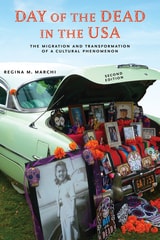
Day of the Dead in the USA, Second Edition
The Migration and Transformation of a Cultural PhenomenonRegina M Marchi
Rutgers University Press, 2022
Focusing on the power of public ritual to serve as a communication medium, this revised and updated edition combines a mix of ethnography, historical research, oral history, and critical cultural analysis to explore the manifold and unexpected transformations that occur when the tradition is embraced by the mainstream. A testament to the complex role of media and commercial forces in constructions of ethnic identity, Day of the Dead in the USA provides insight into the power of art and ritual to create community, transmit oppositional messages, and advance educational, political, and economic goals.
Today Chicano-style Day of the Dead events take place in all fifty states. This revised edition provides new information about:
- The increase in events across the US, incorporating media coverage and financial aspects,
- Recent political movements expressed in contemporary Day of the Dead celebrations, including #BlackLivesMatter and #MeToo
- Greater media coverage and online presence of the celebration in blogs, websites, and streaming video
- Día de los Muertos themes and iconography in video games and films
- The proliferation of commercialized merchandise such as home goods, apparel, face paints and jewelry at mainstream big box and web retailers, as well as the widespread proliferation of calavera-themed decorations and costumes for Halloween
- 24 new full color illustrations
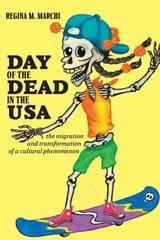
Day of the Dead in the USA
The Migration and Transformation of a Cultural PhenomenonMarchi, Regina M
Rutgers University Press, 2009
Focusing on the power of ritual to serve as a communication medium, Regina M. Marchi combines a mix of ethnography, historical research, oral history, and critical cultural analysis to explore the manifold and unexpected transformations that occur when the tradition is embraced by the mainstream. A testament to the complex nature of ethnic identity, Day of the Dead in the USA provides insight into the power of ritual to create community, transmit oppositional messages, and advance educational, political, and economic goals.
Dust Bowl, USA
Depression America and the Ecological Imagination, 1929–1941Brad D. Lookingbill
Ohio University Press, 2001
Whether romantic or tragic, accounts of the dramatic events surrounding the North American Dust Bowl of the “dirty thirties” unearthed anxieties buried deep in America’s ecological imagination. Moreover, the images of a landscape of fear remain embedded in the national consciousness today. In vivid form, the aesthetic of suffering captured in Dorothea Lange’s photographs and Woody Guthrie’s folk songs created the myths and memories of the Depression generation.
Dust Bowl, USA is a critical examination of the stories that grew out of the Dust Bowl experience. Across the nation, newspapers, magazines, books, films, and songs produced imagery of blight for local and mass audiences. As new technology, irrigation innovations, and conservation programs were introduced on a wide scale during the 1930s, the saga of the frontier continued to unfold through accounts of dust, drought, and desertification.
In piercing the myths brought forth in legends, lore, allegories, and anecdotes, Brad Lookingbill provides a revelatory insight into the history of the cultural narratives that have come to define an era.

Germania, USA
Social Change in New Ulm, MinnesotaNoel Iverson
University of Minnesota Press, 1967
Germania, USA was first published in 1967. Minnesota Archive Editions uses digital technology to make long-unavailable books once again accessible, and are published unaltered from the original University of Minnesota Press editions.
An unusual community in southern Minnesota, New Ulm, a town of about 12,000 inhabitants, is the subject of this sociological study. New Ulm was founded in 1856 by a group of German immigrants who came to the United States as refugees from the revolution of 1848 in Germany. They were members of the Turnverein, a society of liberal thinkers who were a political minority in Germany. In founding New Ulm they established a "utopian" ethnic community, became the town's status elite, and for a long time monopolized its economic, political, and cultural life.
Professor Iverson analyzes four aspects of sociological change in the community—class, status, power, and assimilation. Each aspect is viewed according to the differences found between two generations of the upper status group, the Turners, and two corresponding generations of non-Turners.
In addition to its substantive contribution to our knowledge of ethnic settlements, the study demonstrates a gain in methodological precision over many earlier studies of ethnic communities. Its chief methodological innovation is in the use of scales to verify and measure the changing structure of class, status, and power, and to gauge the extent of assimilation.
The book is of interest not only to sociologists, especially those concerned with the study of community change, but also to political scientists interested in the study of community power structures. Also, the methodology will be instructive to those interested in the design of community studies.
Lost in the USA
American Identity from the Promise Keepers to the Million Mom MarchDeborah Gray White
University of Illinois Press, 2017
Metroburbia, USA
Knox, Paul L
Rutgers University Press, 2008
Upper-middle-class Americans are moving into larger homes in greater numbers, which leads Knox to explore the relationship between built form and material culture in contemporary society. He covers changes in home design, real estate, the work of developers, and the changing wishes of consumers. Knox shows that contemporary suburban landscapes are a product of consumer demand, combined with the logic of real estate development, mediated by design and policy professionals and institutions of governance. Suburban landscapes not only echo the fortunes of successive generations of inhabitants, Knox argues, they also reflect the country's changing core values.
Knox addresses key areas of concern and importance to today's urban planners and suburban residents including McMansions, traffic disasters, house design, homeowner's associations, exclusionary politics, and big box stores. Through the inclusion of examples and photos, Metroburbia, USA creates an accessible portrait of today's suburbs supported by data, anecdotes, and social theory. It is a broad interpretation of the American metropolitan form that looks carefully at the different influences that contribute to where and how we live today.
Murder Town, USA
Homicide, Structural Violence, and Activism in WilmingtonYasser Arafat Payne
Rutgers University Press, 2023
Far too many poor Black communities struggle with gun violence and homicide. The result has been the unnatural contortion of Black families and the inter-generational perpetuation of social chaos and untimely death. Young people are repeatedly ripped away from life by violence, while many men are locked away in prisons. In neighborhoods like those of Wilmington, Delaware, residents routinely face the pressures of violence, death, and incarceration. Murder Town, USA is thus a timely ethnography with an innovative structure: the authors helped organize fifteen residents formerly involved with the streets and/or the criminal justice system to document the relationship between structural opportunity and experiences with violence in Wilmington's Eastside and Southbridge neighborhoods.
Earlier scholars offered rich cultural analysis of violence in low-income Black communities, and yet this literature has mostly conceptualized violence through frameworks of personal responsibility or individual accountability. And even if acknowledging the pressure of structural inequality, most earlier researchers describe violence as the ultimate result of some moral failing, a propensity for crime, and the notion of helplessness. Instead, in Murder Town USA, Payne, Hitchens, and Chamber, along with their collaborative team of street ethnographers, instead offer a radical re-conceptualization of violence in low-income Black communities by describing the penchant for violence and involvement in crime overall to be a logical, "resilient" response to the perverse context of structural inequality.
Pizza City, USA
101 Reasons Why Chicago Is America's Greatest Pizza TownSteve Dolinsky, Foreword by Grant Achatz
Northwestern University Press, 2018
There are few things that Chicagoans feel more passionately about than pizza. Most have strong opinions about whether thin crust or deep-dish takes the crown, which ingredients are essential, and who makes the best pie in town.
And in Chicago, there are as many destinations for pizza as there are individual preferences. Each of the city's seventy-seven neighborhoods is home to numerous go-to spots, featuring many styles and specialties. With so many pizzerias, it would seem impossible to determine the best of the best.
Enter renowned Chicago-based food journalist Steve Dolinsky! In Pizza City, USA: 101 Reasons Why Chicago Is America's Greatest Pizza Town, Dolinsky embarks on a pizza quest, methodically testing more than a hundred different pizzas in Chicagoland. Zestfully written and thoroughly researched, Pizza City, USA is a hunger–inducing testament to Dolinsky's passion for great, unpretentious food.
This user-friendly guide is smartly organized by location, and by the varieties served by the city's proud pizzaioli–including thin, artisan, Neapolitan, deep-dish and pan, stuffed, Sicilian, Roman, and Detroit-style, as well as by-the-slice. Pizza City also includes Dolinsky's "Top 5 Pizzas" in several categories, a glossary of Chicago pizza terms, and maps and photos to steer devoted foodies and newcomers alike.
Slave of Allah
Zacarias Moussaoui Vs the USAKatherine C. Donahue
Pluto Press, 2007
The book begins with his arrest and moves to the courtroom, telling the tale of Moussaoui's struggle with his defense lawyers and raising questions about his ability to be "represented" given his national and personal identity. Donahue explores his background in France as the son of Moroccan immigrants and follows him to London, Afghanistan, and Malaysia as he joins the growing fraternity of an Islam without borders. He acquires an extra-national identity in which his loyalty is no longer constituted by his national identity, but by his allegiance to fundamental Islam.

The Future of Germanistik in the USA
Changing Our ProspectsJohn A. McCarthy
Vanderbilt University Press, 1996
Woodrow Wilson
USABrian Morton
Haus Publishing, 2008