Results by title
7 books match the query 'USSR'
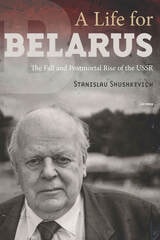
A Life for Belarus
The Fall and Postmortal Rise of the USSRStanislau Shushkevich
Central European University Press, 2025
This memoir of the first president of an independent Belarus (1991-1994) tells about the revival of independent Belarus, the difficulties in establishing a democracy and a market economy, a hardened Soviet mentality, and the political immaturity of the intelligentsia and obduracy of the old nomenklatura.
Stanislau Shushkevich, born in 1934, narrates his path from a son of an “enemy of the people” to a doctorate in physics, and then to be the first head of independent Belarus. A series of entertaining essays discuss some major events as well as some minor ones that are barely known. The book describes Shushkevich’s role in hosting the Belavezha Accords, which brought about the end of the Soviet Union, and explores the motivation behind the decision for the de jure dissolution of the empire at a time when the major world leaders were categorically against the division of the USSR into independent states. The author draws particular attention to the role of the Baltic States in the late perestroika period. He also addresses the political passivity of the Soviet intelligentsia and the reasons for the revival of the Soviet Union in Russia and Belarus.
Shushkevich, who lives in Minsk, also provides valuable insights into contemporary Belarus, including an assessment of Lukashenka’s controversial role in recent events.
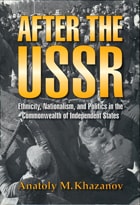
After the USSR
Ethnicity, Nationalism, and Politics in the Commonwealth of Independent StatesAnatoly M. Khazanov
University of Wisconsin Press, 1996
A world-renowned anthropologist, Anatoly M. Khazanov offers a witty, insightful, and cautionary analysis of ethnic nationalism and its pivotal role in the collapse of the Soviet empire.
“Khazanov’s encyclopedic knowledge of the history and culture of post-Soviet societies, combined with field research there since the 1960s, informs the case studies with a singular authoritative voice. This volume is destined to be an absolutely necessary reference for the understanding of ethnic relations and the politics of minorities in the ex-USSR into the next century.”—Leonard Plotnicov, editor of Ethnology
First Paperback Edition
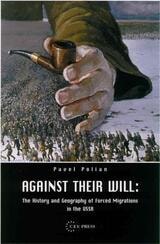
Against Their Will
The History and Geography of Forced Migrations in the USSRPavel Polian
Central European University Press, 2003
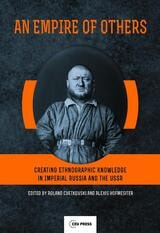
An Empire of Others
Creating Ethnographic Knowledge in Imperial Russia and the USSRAlexis Hofmeister
Central European University Press, 2014
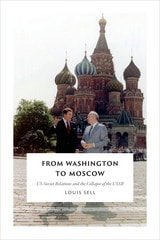
From Washington to Moscow
US-Soviet Relations and the Collapse of the USSRLouis Sell
Duke University Press, 2016

The Hot 'Cold War'
The USSR in Southern AfricaVladimir Shubin
Pluto Press, 2008
This book analyses the causes of armed conflicts in Southern Africa during the Cold War. It examines the influence of the various external forces in the region during this period and their relationship to local movements and governments.
The book focuses on states experiencing violent internal conflict and foreign intervention, that is Angola, Mozambique, Namibia , South Africa and Zimbabwe.
The author provides an unique history of the key part that the Soviet Union played in these developments. Spanning 30 years, the book explores how each country struggled for genuine independence against colonialism and apartheid and their place in the wider conflicts encompassed by the Cold War.
The USSR and Iraq
The Soviet Quest for InfluenceOles M. Smolansky, with Bettie M. Smolansky
Duke University Press, 1991
Drawing on ten years of research in Western, Arab, and Soviet sources, Smolansky analyzes the complex issues at the center of Soviet-Iraqi relations from 1968 through 1988, including the nationalization of the oil industry, the Kurdish question, the Iraqi Communist Party, the affairs of the Persian/Arabian Gulf, and, ultimately, the war between Iraq and Iran.
Smolansky concludes that Iraq has never been under the dominant influence of Moscow, nor has it even been a loyal Soviet ally. In fact, Iraq has managed to reap major benefits from the relationship without losing its autonomy or sacrificing its major interests. The author discusses the Soviet Union and Iraq within the larger framework of the nature of influence relationships between great and small powers.