Results by title
2 books match the query 'United States Indian School (Carlisle, Pa.)'
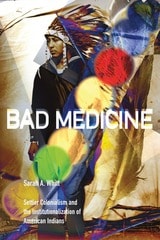
Bad Medicine
Settler Colonialism and the Institutionalization of American IndiansSarah A. Whitt
Duke University Press, 2025
In Bad Medicine, Sarah A. Whitt exposes how Native American boarding schools and other settler institutions like asylums, factories, and hospitals during the late nineteenth and early twentieth centuries worked together as a part of an interconnected system of settler domination. In so doing, Whitt centers the experiences of Indigenous youth and adults alike at the Carlisle Indian School, Canton Asylum for Insane Indians, Ford Motor Company Factory, House of the Good Shepherd, and other Progressive Era facilities. She demonstrates that in the administration of these institutions, which involved moving Indigenous people from one location to another, everyday white Americans became deputized as agents of the settler order. Bringing together Native American history, settler colonial studies, and the history of medicine, Whitt breaks new ground by showing how the confinement of Indigenous people across interlocking institutional sites helped concretize networks of white racial power—a regime that Native nations and communities continue to negotiate and actively resist today.
[more]
Writing Their Bodies
Restoring Rhetorical Relations at the Carlisle Indian SchoolSarah Klotz
Utah State University Press, 2020
Between 1879 and 1918, the Carlisle Indian Industrial School housed over 10,000 students and served as a prototype for boarding schools on and off reservations across the continent. Writing Their Bodies analyzes pedagogical philosophies and curricular materials through the perspective of written and visual student texts created during the school’s first three-year term. Using archival and decolonizing methodologies, Sarah Klotz historicizes remedial literacy education and proposes new ways of reading Indigenous rhetorics to expand what we know about the Native American textual tradition.
This approach tracks the relationship between curriculum and resistance and enumerates an anti-assimilationist methodology for teachers and scholars of writing in contemporary classrooms. From the Carlisle archive emerges the concept of a rhetoric of relations, a set of Native American communicative practices that circulates in processes of intercultural interpretation and world-making. Klotz explores how embodied and material practices allowed Indigenous rhetors to maintain their cultural identities in the off-reservation boarding school system and critiques the settler fantasy of benevolence that propels assimilationist models of English education.
Writing Their Bodies moves beyond language and literacy education where educators standardize and limit their students’ means of communication and describes the extraordinary expressive repositories that Indigenous rhetors draw upon to survive, persist, and build futures in colonial institutions of education.
[more]