Results by title
16 books match the query 'Up'
Each One Teach One
Up and Out of Poverty, Memoirs of a Street ActivistRon Casanova and Stephen Blackburn
Northwestern University Press, 2010
Underlying Each One Teach One, with its vivid cast of characters and intimate descriptions of Harlem and other urban areas, is the profound sense that no matter what your circumstance, you can use your past experience to help others. Ultimately, Casanova's story is a message of hope for the future and for the possibility of self-sufficiency and self-empowerment for each individual.
Each One Teach One
Up and Out of Poverty; Memoirs of a Street ActivistRon Casanova as told to Stephen Blackburn
Northwestern University Press, 1996
Each One Teach One recounts Ron Casanova’s struggle out of poverty, homelessness, and drug addiction to find dignity and purpose in life. Through his own awakening, this Black Puerto Rican activist ultimately finds his salvation in helping other people. Placed in an orphanage on Staten Island at the age of three, Casanova faced overwhelming odds. His story illuminates significant twentieth-century protests, including the 1988 riot at Tompkins Square Park in Manhattan, the “Housing Now” march of the homeless on Washington, DC, in 1989, and community takeovers of housing in Kansas City, New York, and Philadelphia.
Underlying Each One Teach One, with its vivid cast of characters and intimate descriptions of Harlem, the Lower East Side, and Tent City, is the profound sense that, no matter what your circumstance, you can use your experience to help others. Ultimately, Casanova’s story demonstrates the possibility of self-sufficiency and self-empowerment. Amid today’s economic crisis and rising homelessness, Casanova’s story brings a message of hope.

Europe
or Up and Down with Schreiber and BaggishRichard Stern
Northwestern University Press, 2007
Originally published in 1961, this shrewd, smartly written novel follows two American men traveling in Europe. Though both have struck out for the same continent, each man’s methods of and motives for travel lead him to have a very different experience than the other. Underlying it all is the premise that Europe--the contrast, the otherness of it--can be a refiner’s fire, deeply affecting a person’s character. Europe represents a crucial step in Stern’s development as a writer and stands as a witty, sharp point of entry into his writings and the writings of novelists who rose to prominence in the 1960s.
Move On Up
Chicago Soul Music and Black Cultural PowerAaron Cohen
University of Chicago Press, 2019
A Booklist Top 10 Arts Book of 2019
A No Depression Top Music Book of 2019
Curtis Mayfield. The Chi-Lites. Chaka Khan. Chicago’s place in the history of soul music is rock solid. But for Chicagoans, soul music in its heyday from the 1960s to the 1980s was more than just a series of hits: it was a marker and a source of black empowerment. In Move On Up, Aaron Cohen tells the remarkable story of the explosion of soul music in Chicago. Together, soul music and black-owned businesses thrived. Record producers and song-writers broadcast optimism for black America’s future through their sophisticated, jazz-inspired productions for the Dells and many others. Curtis Mayfield boldly sang of uplift with unmistakable grooves like “We’re a Winner” and “I Plan to Stay a Believer.” Musicians like Phil Cohran and the Pharaohs used their music to voice Afrocentric philosophies that challenged racism and segregation, while Maurice White of Earth, Wind, and Fire and Chaka Khan created music that inspired black consciousness. Soul music also accompanied the rise of African American advertisers and the campaign of Chicago’s first black mayor, Harold Washington, in 1983. This empowerment was set in stark relief by the social unrest roiling in Chicago and across the nation: as Chicago’s homegrown record labels produced rising stars singing songs of progress and freedom, Chicago’s black middle class faced limited economic opportunities and deep-seated segregation, all against a backdrop of nationwide deindustrialization.
Drawing on more than one hundred interviews and a music critic’s passion for the unmistakable Chicago soul sound, Cohen shows us how soul music became the voice of inspiration and change for a city in turmoil.
Showing Off, Showing Up
Studies of Hype, Heightened Performance, and Cultural PowerLaurie Frederik, Kim Marra, and Catherine Schuler, Editors
University of Michigan Press, 2017

UP
A Scientist's Guide to the Magic Above UsLucy Rogers
Michigan State University Press, 2027
Engineer and bubble scientist Lucy Rogers invites us to explore the wonders of the air, sky, and space; understand the science; and appreciate the insights this offers about life on Earth. The sky is a world of endless wonder. From the intricate dance of clouds and the vibrant hues of the aurora borealis to the marvel of effortless soaring birds and the silent majesty of the stars, it is a living storybook. Join Rogers on a marvelous adventure through a kite market in India, creep through the Borneo jungle to witness millions of bats pour out of a cave at dusk, venture to Tornado Alley to chase the raw power of storms, and journey to Mexico to stand in awe of a total solar eclipse. Up is for anyone who has ever looked up at the sky in awe and needs to know the science behind its never-ending phenomena.

Up
Ronald Sukenick
University of Alabama Press, 2000

Up a Country Lane Cookbook
Evelyn Birkby
University of Iowa Press, 1993
What can Evelyn Birkby possibly do to follow up the success of Neighboring on the Air: Cooking with the KMA Radio Homemakers? She can do what she has done in writing Up a Country Lane Cookbook. For forty-three years she has written a column entitled "Up a Country Lane" for the Shenandoah Evening Sentinel. Now she has chosen the best recipes from her column and interspersed them with a wealth of stories of rural life in the 1940s and 1950s, supplemented by a generous offering of vintage photographs. She has created a book that encompasses lost time.
With chapters on "The Garden," "Grocery Stores and Lockers," "Planting," and "Saturday Night in Town," to name a few, Up a Country Lane Cookbook recalls the noble simplicity of a life that has all but vanished. This is not to say that farm life in the forties and fifties was idyllic. As Birkby writes, "Underneath the pastoral exterior were threats of storms, droughts, ruined crops, low prices, sickness, and accidents."
Following the Second World War, many soldiers returned to mid-America and a life of farming. From her vantage point as a farm wife living in Mill Creek Valley in southwestern Iowa, Birkby observed the changes that accompanied improved roads, telephone service, and the easy availability of electricity. Her observations have been carefully recorded in her newspaper column, read by thousands of rural Iowans.
Up a Country Lane Cookbook is, then, much more than a cookbook. It is an evocation of a time in all its wonder and complexity which should be read by everyone from Evelyn Birkby's nearest neighbor in Mill Creek Valley to the city slicker seeking an education. Cook a meal of Plum-Glazed Baked Chicken, Elegant Peas, Creamed Cabbage, and Seven-Grain Bread, then finish it off with Frosted Ginger Creams with Fluffy Frosting. While the chicken is baking, read Evelyn's stories and think about the world the way it was.
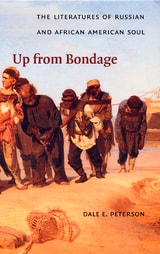
Up from Bondage
The Literatures of Russian and African American SoulDale E. Peterson
Duke University Press, 2000
Illuminating a remarkably widespread cross-pollination between the two cultural and intellectual traditions, Dale E. Peterson frames much of his argument around W. E. B. DuBois’s concept of “double-consciousness,” wherein members of an oppressed section of society view themselves simultaneously through their own self-awareness and through the internalized standards of the dominant culture. He shows how the writings of Dostoevsky, Hurston, Chesnutt, Turgenev, Ellison, Wright, Gorky, and Naylor—texts that enacted and described this sense of double awareness—were used both to perform and to contest the established genres of Western literacy. Woven through Peterson’s textual analyses is his consideration of cultural hybridism and its effects: The writers he examines find multiple ways to testify to and challenge the symptoms of postcolonial trauma. After discussing the strong and significant affinity expressed by contemporary African American cultural theorists for the dialogic thought of Russian linguist Mikhail Bakhtin, Peterson argues that a fuller appreciation of the historic connection between the two cultures will enrich the complicated meanings of being black or Russian in a world that has traditionally avoided acknowledging pluralistic standards of civilization and cultural excellence.
This investigation of comparable moments in the development of Russian and African American ethnic self-consciousness will be valuable to students and scholars of comparative literature, philosophy, cultural theory, ethnicity, linguistics, and postcolonialism, in addition to Slavic and African American studies.
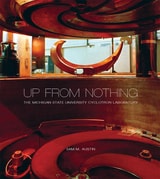
Up from Nothing
The Michigan State University Cyclotron LaboratorySam M. Austin
Michigan State University Press, 2016
The cyclotron laboratory at MSU has been known for years as the best university nuclear physics laboratory in the United States, and perhaps in the world. But very few, even in its hometown of East Lansing, know how it achieved that status or why it prospered when laboratories at many other famous universities faded.
In this book Austin, a nuclear physicist who has been at the laboratory since the beginning of its ascent, gives us a remarkable story. It begins with an exceptional individual, Henry Blosser, who founded the laboratory, built a cyclotron accelerator of uniquely high precision, and recruited a team of nuclear physicists that used it to establish the laboratory’s reputation. Its credibility led to a sequence of accelerators, each operating in a different sub?eld while continuing a tradition of forefront science, and to a laboratory culture that fostered the courage and foresight to compete for the FRIB in the face of daunting odds.
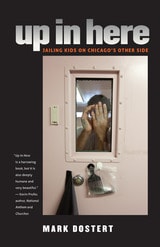
Up in Here
Jailing Kids on Chicago's Other SideMark Dostert
University of Iowa Press, 2014
The juveniles’ attitudes toward Dostert change, however, once he begins working as a “Children’s Attendant” at the Audy Home, clocking in for eight hours every day to enforce rules and maintain order on the cellblocks. His colorblind, altruistic volunteer world fractures into a full-time, emotionally charged reality of white and black and brown. When the boys change, he must change too. Despite wanting to help them feel human in such a dehumanizing environment, Dostert realizes he needs to make sure his kindness is not perceived as weakness. Dostert learns to march the juveniles through the facility to school, recreation activities, and chapel. He must strip-search them, interrupt their brawls, root through their cells for drugs and handcrafted weapons, and monitor group showers to thwart sexual extortion and the inscription of gang symbols in soap on walls and mirrors. Week after week and month after month, the job exposes hidden views not only of the juveniles and the “system” incarcerating them, but of Children’s Attendant Dostert himself.
From one man’s struggle to reconcile his humanitarian intentions with his actual job responsibilities in what, to him, is a strange new world, emerges a sincere effort to confront the realities of America’s persisting racial tensions and institutionalized poverty. Dostert’s story is an honest and unflinching journey from thinking he has many of the answers for how to change this world to discovering how little he really knows about the world he is trying to change.
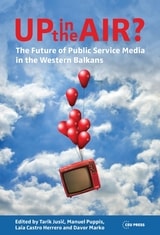
Up in the Air?
The Future of Public Service Media in the Western BalkansTarik Jusic
Central European University Press, 2021
The agenda for transition after the demise of communism in the Western Balkans made the conversion of state radio and television into public service broadcasters a priority, converting mouthpieces of the regime into public forums in which various interests and standpoints could be shared and deliberated. There is general agreement that this endeavor has not been a success. Formally, the countries adopted the legal and institutional requirements of public service media according to European standards. The ruling political elites, however, retained their control over the public media by various means.
Can this trend be reversed? Instead of being marginalized or totally manipulated, can public service media become vehicles of genuine democratization?
A comparison of public service media in seven countries (Albania, Bosnia & Herzegovina, Croatia, Kosovo, Montenegro, North Macedonia, and Serbia) addresses these important questions.
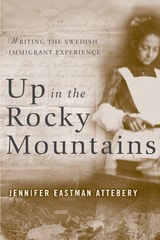
Up in the Rocky Mountains
Writing the Swedish Immigrant ExperienceJennifer Eastman Attebery
University of Minnesota Press, 2007
Before the turn of the twentieth century, many Swedish men emigrated to the American Rockies as itinerant laborers, drawn by the region’s developing industries. Single Swedish women ventured west, too, and whole families migrated, settling into farm communities. By 1920, one-fifth of all Swedish immigrants were living in the West.
In Up in the Rocky Mountains, Jennifer Eastman Attebery offers a new perspective on Swedish immigrants’ experiences in Idaho, Montana, Utah, Wyoming, Colorado, and New Mexico from 1880 to 1917 by interpreting their letters home. Considering more than three hundred letters, Attebery analyzes their storytelling, repetitive language, traditional phrasing, and metaphoric images. Recognizing the letters’ power as a folk form, Attebery sees in them the writers’ relationships back in Sweden as well as their encounters with religious and labor movements, regionalism, and nationalism in their new country.
By defining personal letters as a vernacular genre, Attebery provides a model for discerning immigrants’ shared culture in correspondence collections. By studying their words, she brings to life small Swedish communities throughout the Rocky Mountain region.
Jennifer Eastman Attebery is professor of English and director of American studies at Idaho State University.
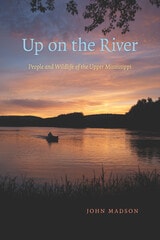
Up on the River
People and Wildlife of the Upper MississippiMadson, John
University of Iowa Press, 1985
@font-face { font-family: "Times";}@font-face { font-family: "Verdana";}@font-face { font-family: "Palatino";}p.MsoNormal, li.MsoNormal, div.MsoNormal { margin: 0in 0in 0.0001pt; font-size: 12pt; font-family: "Times New Roman"; }div.Section1 { page: Section1; }
Up on the River is John Madson’s loving and often hilarious tribute to the people, animal life, and places of the Upper Mississippi. Madson’s Upper Mississippi is the part “between the saints,” from St. Louis to St. Paul, where for thirty years he explored the bright waters of the upper reaches of the mighty river itself as well as the tangled multitude of sloughs, cuts, and side channels that wander through its wooded islands and floodplain forests.
“Some of my best time on the River has been in the company of game wardens, biologists, commercial fishermen, clammers, trappers, hunters, and a smelly, mud-smeared coterie of river rats in general, and my views of the River are far more likely to reflect theirs than those of the transportation industry,” Madson writes of his thirty-year acquaintance with the Mississippi. Traveling mainly by canoe and johnboat, he tells of encounters between archetypal commercial fishermen and archetypal game wardens over hot fish chowder, fishing for crappies in the tops of submerged trees and for walleyes amid gale force winds, nesting and migrating herons and ducks and eagles, the histories of river logging and pearling and button making, and towboats and barges and the lives of the “ramstugenous” people who move freight on the river.
Learning about the Upper Mississippi via the wry tutelage of John Madson, who discovered that “whenever I am out on a river some of its freeness rubs off on me,” readers of this classic book will also come under the spell of this freeness.
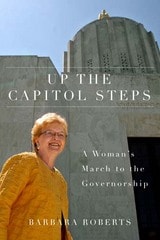
Up the Capitol Steps
A Woman's March to the GovernorshipBarbara Roberts
Oregon State University Press, 2011

What Is a Person?
Rethinking Humanity, Social Life, and the Moral Good from the Person UpChristian Smith
University of Chicago Press, 2010
What is a person? This fundamental question is a perennial concern of philosophers and theologians. But, Christian Smith here argues, it also lies at the center of the social scientist’s quest to interpret and explain social life. In this ambitious book, Smith presents a new model for social theory that does justice to the best of our humanistic visions of people, life, and society.
Finding much current thinking on personhood to be confusing or misleading, Smith finds inspiration in critical realism and personalism. Drawing on these ideas, he constructs a theory of personhood that forges a middle path between the extremes of positivist science and relativism. Smith then builds on the work of Pierre Bourdieu, Anthony Giddens, and William Sewell to demonstrate the importance of personhood to our understanding of social structures. From there he broadens his scope to consider how we can know what is good in personal and social life and what sociology can tell us about human rights and dignity.
Innovative, critical, and constructive, What Is a Person? offers an inspiring vision of a social science committed to pursuing causal explanations, interpretive understanding, and general knowledge in the service of truth and the moral good.