Results by title
9 books match the query 'Updated'
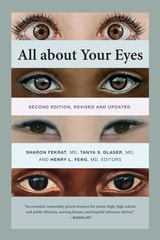
All about Your Eyes, Second Edition, revised and updated
Sharon Fekrat, Tanya S. Glaser, and Henry L. Feng, editors
Duke University Press, 2021
* explain eye anatomy and how healthy eyes work
* describe various eye diseases, including pink eye, cataract, glaucoma, age-related macular degeneration, and diabetic retinopathy
* provide up-to-date information on surgery
For each eye problem, the authors describe in simple, straightforward language:
* what it is
* the symptoms
* what, if anything, you can do to prevent it
* when to call the doctor
* diagnostic tests and treatment
* the likelihood of recovery
All about Your Eyes includes a glossary of technical terms and, following each entry, links to websites where further information may be found.
Contributors. Natalie A. Afshari, MD, Rosanna P. Bahadur, MD, Paramjit K. Bhullar, MD, Faith A. Birnbaum, MD, Cassandra C. Brooks, MD, Pratap Challa, MD, Melissa Mei-Hsia Chan, MBBS, Ravi Chandrashekhar, MD, MSEE, Nathan Cheung, OD, FAAO Claudia S. Cohen, MD, Vincent A. Deramo, MD, Cathy DiBernardo, RN, Laura B. Enyedi, MD, Sharon Fekrat, MD, Henry L. Feng, MD, Brenton D. Finklea, MD, Anna Ginter, MD, Tanya S. Glaser, MD, Michelle Sy Go, MD, MS, Mark Goerlitz-Jessen, MD, Herb Greenman, MD, Abhilash Guduru, MD, Preeya Gupta, MD, Renee Halberg, MSW, LCSW, S. Tammy Hsu, MD, Alessandro Iannaccone, MD, MS, FARVO, Charlene L. James, OD, Kim Jiramongkolchai, MD, Michael P. Kelly, FOPS, Muge R. Kesen, MD, Kirin Khan, MD, Wajiha Jurdi Kheir, MD, Jane S. Kim, MD, Jennifer Lira, MD, Katy C. Liu, MD, PhD, Ramiro S. Maldonado, MD, Ankur Mehra, MD, Priyatham S. Mettu, MD, Prithvi Mruthyunjaya, MD, MHS, Nisha Mukherjee, MD, Kenneth Neufeld, MD, Kristen Peterson, MD, James H. Powers, MD, S. Grace Prakalapakorn, MD, MPH, Michael Quist, MD, Leon Rafailov, MD, Roshni Ranjit-Reeves, MD, Nikolas Raufi, MD, William Raynor, BS, Cason Robbins, BS, Ananth Sastry, MD, Dianna L. Seldomridge, MD, MBA, Terry Semchyshyn, MD, Ann Shue, MD, Julia Song, MD, Brian Stagg, MD, Christopher Sun, MBBS, Anthony Therattil, BS, Daniel S.W. Ting, MBBS, Fay Jobe Tripp, MS, OTR/L, CLVT, CDRS, Obinna Umunakwe, MD, PhD, Lejla Vajzovic, MD, Susan M. Wakil, MD, C. Ellis Wisely, MD, MBA, Julie A. Woodward, MD
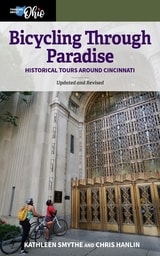
Bicycling Through Paradise
Historical Tours Around Cincinnati, Updated and RevisedKathleen Smythe and Chris Hanlin
Ohio University Press, 2025
A revised edition of the award-winning book of historically themed cycling tours in and around Cincinnati, Ohio
Bicycling Through Paradise: Historical Rides Around Cincinnati includes nineteen historically themed cyclist tours for all abilities centered around Cincinnati, Ohio. Written by two longtime cyclists—one a professor of history and one an architect—this book dives into the details of local landscape and history encountered along the route. Rides combine familiar destinations like Lunken Airport, Eden Park, and Loveland Castle with lesser-known sites like Underground Railroad stations, ruined stone canal locks, and a nineteenth-century socialist commune, all located in and around the greater Cincinnati area. Stops along the way include public parks, covered bridges, and one-room schoolhouses.
The book includes a QR code to link readers to a companion Community Page where cyclists will find downloadable turn-by-turn directions and wayfinding photos, plus a place for cyclists to share their feedback, making this book an interactive experience.
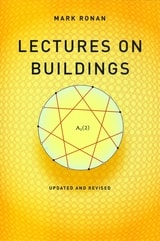
Lectures on Buildings
Updated and RevisedMark Ronan
University of Chicago Press, 2009
In mathematics, “buildings” are geometric structures that represent groups of Lie type over an arbitrary field. This concept is critical to physicists and mathematicians working in discrete mathematics, simple groups, and algebraic group theory, to name just a few areas.
Almost twenty years after its original publication, Mark Ronan’s Lectures on Buildings remains one of the best introductory texts on the subject. A thorough, concise introduction to mathematical buildings, it contains problem sets and an excellent bibliography that will prove invaluable to students new to the field. Lectures on Buildings will find a grateful audience among those doing research or teaching courses on Lie-type groups, on finite groups, or on discrete groups.
“Ronan’s account of the classification of affine buildings [is] both interesting and stimulating, and his book is highly recommended to those who already have some knowledge and enthusiasm for the theory of buildings.”—Bulletin of the London Mathematical Society
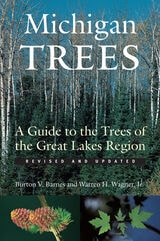
Michigan Trees, Revised and Updated
A Guide to the Trees of the Great Lakes RegionBurton V. Barnes and Warren H. Wagner, Jr.
University of Michigan Press, 2004
Now in its tenth decade of publication, Michigan Trees has been, since it was first introduced in 1913, the must-have reference book for anyone who wants to know about the trees of this unique North American region.
In this new and updated edition, several new species have been added to the lineup, as well as sections on tree ecology and fall color. Written and illustrated in a style that appeals at once to academic botanists and armchair arborphiles alike, Michigan Trees gives readers everything they need to know for identifying trees in the Great Lakes state. Included with each description are fascinating notes and asides (for example, this tidbit on the jack pine: "Parklike or savanna stands in north-central Michigan are prime habitat for the rare Kirtland's warbler that breeds nowhere else in the world."). Also includes a tree key and identification section illustrated with elegantly simple line drawings that reveal the tiny, signature details that make each tree unique.
Burton V. Barnes is Professor of Forestry at the University of Michigan. Formerly a research forester, he is best known for his research and publications in forest ecology and forest genetics.
Warren H. Wagner, Jr. was a world authority on ferns. He had been Professor Emeritus of Botany and Natural Resources at the University of Michigan before his death at the age of 80 in 2000.

Risk and Insurance Management Manual for Libraries, Updated
Sally Alexander
American Library Association, 2021
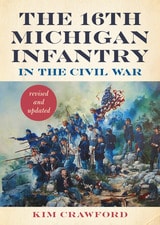
The 16th Michigan Infantry in the Civil War, Revised and Updated
Kim Crawford
Michigan State University Press, 2019
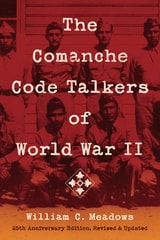
The Comanche Code Talkers of World War II
25th Anniversary Edition, Revised and UpdatedWilliam C. Meadows
University of Texas Press, 2027
An updated edition of a popular study of the Comanche Code Talkers of WWII.
Among the Allied troops who came ashore in Normandy on D-Day were thirteen Comanches in the 4th Infantry Division’s 4th Signal Company. Under German fire they laid communications lines and sent messages in a form never before heard in Europe: coded Comanche. For the rest of World War II, the Comanche Code Talkers played a vital role transmitting orders in a code the Germans never broke. Drawing on interviews with surviving members of the unit, their training officer, and fellow soldiers, as well as archival records, William C. Meadows traces the Comanche Code Talkers from recruitment and training through wartime service and into their postwar lives. He also places their story within the broader history of Native American code talking in the world wars, comparing the Comanche program with the better-known Navajo Code Talkers and examining the military’s use of Native languages for secure communication.
This twenty-fifth anniversary edition adds a new chapter and photographs documenting long-overdue recognition for the Comanche Code Talkers, in the form of congressional medals, museum exhibits, films, and memorials, along with updates in several areas that clarify the development of code talking, add key details of the unit’s history, and highlight the enduring legacy of these soldiers and their linguistic contribution to Allied victory.
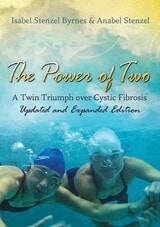
The Power of Two
A Twin Triumph over Cystic Fibrosis, Updated and Expanded EditionIsabel Stenzel Byrnes and Anabel Stenzel
University of Missouri Press, 2014
For most people, a diagnosis of cystic fibrosis means the certainty of a life ended too soon. But for Isabel Stenzel Byrnes and Anabel Stenzel, twin girls with the disease, what began as a family’s stubborn determination grew into a miracle.

The Sheep Book
A Handbook for the Modern Shepherd, Revised and UpdatedRon Parker
Ohio University Press, 2001