Results by title

9 books match the query 'Urban health'
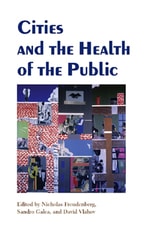
cover of Cities and the Health of the Public

Cities and the Health of the Public

Nicholas Freudenberg

Vanderbilt University Press, 2006

The essays commissioned for this book analyze the impact of city living on health, focusing primarily on conditions in the United States. With 16 chapters by 24 internationally recognized experts, the book introduces an ecological approach to the study of the health of urban populations.

This book assesses the primary determinants of well-being in cities, including the social and physical environments, diet, and health care and social services. The book includes chapters on the history of public health in cities, the impact of urban sprawl and urban renewal on health, and the challenges facing cities in the developing world. It also examines conditions such as infectious diseases, violence and disasters, and mental illness.
[more]
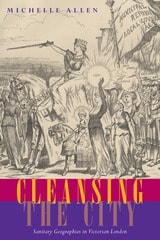
cover of Cleansing the City: Sanitary Geographies in Victorian London

Cleansing the City

Sanitary Geographies in Victorian London

Michelle Allen

Ohio University Press, 2008

Cleansing the City: Sanitary Geographies in Victorian London explores not only the challenges faced by reformers as they strove to clean up an increasingly filthy city but the resistance to their efforts. Beginning in the 1830s, reform-minded citizens, under the banner of sanitary improvement, plunged into London’s dark and dirty spaces and returned with the material they needed to promote public health legislation and magnificent projects of sanitary engineering. Sanitary reform, however, was not always met with unqualified enthusiasm. While some improvements, such as slum clearances, the development of sewerage, and the embankment of the Thames, may have made London a cleaner place to live, these projects also destroyed and reshaped the built environment, and in doing so, altered the meanings and experiences of the city.

From the novels of Charles Dickens and George Gissing to anonymous magazine articles and pamphlets, resistance to reform found expression in the nostalgic appreciation of a threatened urban landscape and anxiety about domestic autonomy in an era of networked sanitary services. Cleansing the City emphasizes the disruptions and disorientation occasioned by purification—a process we are generally inclined to see as positive. By recovering these sometimes oppositional, sometimes ambivalent responses, Michelle Allen elevates a significant undercurrent of Victorian thought into the mainstream and thus provides insight into the contested nature of sanitary modernization.
[more]
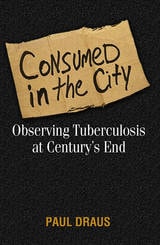
cover of Consumed In The City: Observing Tuberculosis At Century'S End

Consumed In The City

Observing Tuberculosis At Century'S End

Paul Draus

Temple University Press, 2004

As a public health field worker assigned to control tuberculosis in New York and Chicago in the 1990s, Paul Draus encountered the horrible effects of tuberculosis resurgence in urban areas, and the intersections of disease, blight, and poverty. Consumed in the City grows out of his experiences and offers a persuasive case for thinking about—and treating—tuberculosis as an inseparable component of the scourges of poverty, homelessness, AIDS, and drug abuse. It is impossible, Draus argues, to treat and eliminate tuberculosis without also treating the social ills that underlie the new epidemic. Paul Draus begins by describing his own on-the-job training as a field worker, then places the resurgence of tuberculosis into historical and sociological perspective. He vividly describes his experiences in hospital rooms, clinics, jails, housing projects, urban streets, and other social settings where tuberculosis is often encountered and treated. Using case studies, he demonstrates how social problems affect the success or failure of actual treatment. Finally, Draus suggests how a reformed public health agenda could help institute the changes required to defeat a deadly new epidemic. At once a personal account and a concrete plan for rethinking the role of public health, Consumed in the City marks a significant intervention in the way we think about the entangled crises of urban dislocation, poverty, and disease.
[more]
cover of Filth: Dirt, Digust, and Modern Life

Filth

Dirt, Digust, and Modern Life

William A. Cohen

University of Minnesota Press, 2004
From floating barges of urban refuse to dung-encrusted works of art, from toxic landfills to dirty movies, filth has become a major presence and a point of volatile contention in modern life. This book explores the question of what filth has to do with culture: what critical role the lost, the rejected, the abject, and the dirty play in social management and identity formation. It suggests the ongoing power of culturally mandated categories of exclusion and repression.Focusing on filth in literary and cultural materials from London, Paris, and their colonial outposts in the nineteenth and early twentieth centuries, the essays in Filth, all but one previously unpublished, range over topics as diverse as the building of sewers in nineteenth-century European metropolises, the link between interior design and bourgeois sanitary phobias, fictional representations of laboring women and foreigners as polluting, and relations among disease, disorder, and sexual-racial disharmony. Filth provides the first sustained consideration, both theoretical and historical, of a subject whose power to horrify, fascinate, and repel is as old as civilization itself.Contributors: David S. Barnes, U of Pennsylvania; Neil Blackadder, Knox College; Joseph Bristow, U of California, Los Angeles; Joseph W. Childers, U of California, Riverside; Eileen Cleere, Southwestern U; Natalka Freeland, U of California, Irvine; Pamela K. Gilbert, U of Florida; Christopher Hamlin, U of Notre Dame; William Kupinse, U of Puget Sound; Benjamin Lazier, U of Chicago; David L. Pike, American U; David Trotter, U of Cambridge.William A. Cohen is associate professor of English at the University of Maryland and the author of Sex Scandal: The Private Parts of Victorian Fiction.Ryan Johnson is completing his Ph.D. in the Department of English at Stanford University, where he has served as general editor of the Stanford Humanities Review.
[more]
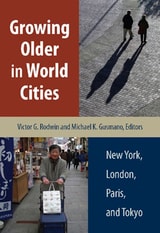
cover of Growing Older in World Cities: New York, London, Paris, and Tokyo

Growing Older in World Cities

New York, London, Paris, and Tokyo

Victor G. Rodwin

Vanderbilt University Press, 2006

Population aging often provokes fears of impending social security deficits, uncontrollable medical expenditures, and transformations in living arrangements, but public policy could also stimulate social innovations. These issues are typically studied at the national level; yet they must be resolved where most people live--in diverse neighborhoods in cities.


New York, London, Paris, and Tokyo are the four largest cities among the wealthiest, most developed nations of the world. The essays commissioned for this volume compare what it is like to grow older in these cities with respect to health care, quality of life, housing, and long-term care. The contributors look beyond aggregate national data to highlight the importance of how local authorities implement policies.
[more]
cover of Histories of Dirt: Media and Urban Life in Colonial and Postcolonial Lagos

Histories of Dirt

Media and Urban Life in Colonial and Postcolonial Lagos

Stephanie Newell

Duke University Press, 2020
In Histories of Dirt Stephanie Newell traces the ways in which urban spaces and urban dwellers come to be regarded as dirty, as exemplified in colonial and postcolonial Lagos. Newell conceives dirt as an interpretive category that facilitates moral, sanitary, economic, and aesthetic evaluations of other cultures under the rubric of uncleanliness. She examines a number of texts ranging from newspaper articles by elite Lagosians to colonial travel writing, public health films, and urban planning to show how understandings of dirt came to structure colonial governance. Seeing Lagosians as sources of contagion and dirt, British colonizers used racist ideologies and discourses of dirt to justify racial segregation and public health policies. Newell also explores possibilities for non-Eurocentric methods for identifying African urbanites’ own values and opinions by foregrounding the voices of contemporary Lagosians through interviews and focus groups in which their responses to public health issues reflect local aesthetic tastes and values. In excavating the shifting role of dirt in structuring social and political life in Lagos, Newell provides new understandings of colonial and postcolonial urban history in West Africa.
[more]
cover of The Healthiest City: Milwaukee and the Politics of Health Reform

The Healthiest City

Milwaukee and the Politics of Health Reform

Judith W. Leavitt

University of Wisconsin Press, 1996

Between 1850 and 1900, Milwaukee’s rapid population growth also gave rise to high death rates, infectious diseases, crowded housing, filthy streets, inadequate water supplies, and incredible stench. The Healthiest City shows how a coalition of reform groups brought about community education and municipal action to achieve for Milwaukee the title of “the healthiest city” by the 1930s. This highly praised book reminds us that cutting funds and regulations for preserving public health results in inconvenience, illness, and even death.
    “A major work. . . . Leavitt focuses on three illustrative issues—smallpox, garbage, and milk, representing the larger areas of infectious disease, sanitation, and food control.”—Norman Gevitz, Journal of the American Medical Association
    “Leavitt’s research provides additional evidence . . . that improvements in sanitation, living conditions, and diet contributed more to the overall decline in mortality rates than advances in medical practice. . . . A solid contribution to the history of urban reform politics and public health.”—Jo Ann Carrigan, Journal of American History
[more]
cover of Urban Lowlands: A History of Neighborhoods, Poverty, and Planning

Urban Lowlands

A History of Neighborhoods, Poverty, and Planning

Steven T. Moga

University of Chicago Press, 2020

Interrogates the connections between a city’s physical landscape and the poverty and social problems that are often concentrated at its literal lowest points.

In Urban Lowlands, Steven T. Moga looks closely at the Harlem Flats in New York City, Black Bottom in Nashville, Swede Hollow in Saint Paul, and the Flats in Los Angeles, to interrogate the connections between a city’s actual landscape and the poverty and social problems that are often concentrated at its literal lowest points. Taking an interdisciplinary perspective on the history of US urban development from the nineteenth to the mid-twentieth century, Moga reveals patterns of inequitable land use, economic dispossession, and social discrimination against immigrants and minorities. In attending to the landscapes of neighborhoods typically considered slums, Moga shows how physical and policy-driven containment has shaped the lives of the urban poor, while wealth and access to resources have been historically concentrated in elevated areas—truly “the heights.” Moga’s innovative framework expands our understanding of how planning and economic segregation alike have molded the American city.
 
[more]
cover of Urban Saniscapes: Slums, Housing and Everyday Sanitation in  Accra and Nairobi, 1908–1963

Urban Saniscapes

Slums, Housing and Everyday Sanitation in Accra and Nairobi, 1908–1963

Waseem-Ahmed Bin-Kasim

Michigan State University Press, 2025

In this comparative study, Bin-Kasim examines environmental sanitation in the historical development of Accra and Nairobi, the capitals of the Gold Coast (Ghana) and Kenya. This book traces the approaches to sanitation during colonial rule and urban growth throughout the first half of the twentieth century and beyond. From the consolidation of the colonial regimes to the Great Depression, urbanization waves, and postwar development, sanitation was both a cause and a consequence of the built environment. Bin-Kasim characterizes this complex relationship between sanitation and urban growth over time as the 'saniscape.' The saniscape is the confluence of public health, planning interventions, and various urban constituencies, and includes an array of influences like colonial expertise and African industry, which shaped the two cities regardless of their power dynamics and land tenure. Attention to the saniscape validates how Africans called out colonial discrimination and inefficiencies to intervene and shape cities. This volume highlights the shared histories of Accra and Nairobi and upends conventional narratives that attach too much difference to non-settler and settler colonialism.
[more]