Results by title
8 books match the query 'Urbanism'
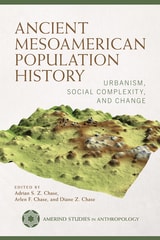
Ancient Mesoamerican Population History
Urbanism, Social Complexity, and ChangeAdrian S. Z. Chase, Arlen F. Chase, and Diane Z. Chase
University of Arizona Press, 2024
Establishing ancient population numbers and determining how they were distributed across a landscape over time constitute two of the most pressing problems in archaeology. Accurate population data is crucial for modeling, interpreting, and understanding the past. Now, advances in both archaeology and technology have changed the way that such approximations can be achieved.
Including research from both highland central Mexico and the tropical lowlands of the Maya and Olmec areas, this book reexamines the demography in ancient Mesoamerica. Contributors present methods for determining population estimates, field methods for settlement pattern studies to obtain demographic data, and new technologies such as LiDAR (light detecting and ranging) that have expanded views of the ground in forested areas. Contributions to this book provide a view of ancient landscape use and modification that was not possible in the twentieth century. This important new work provides new understandings of Mesoamerican urbanism, development, and changes over time.
Contributors
Traci Ardren
M. Charlotte Arnauld
Bárbara Arroyo
Luke Auld-Thomas
Marcello A. Canuto
Adrian S. Z. Chase
Arlen F. Chase
Diane Z. Chase
Elyse D. Z. Chase
Javier Estrada
Gary M. Feinman
L. J. Gorenflo
Julien Hiquet
Scott R. Hutson
Gerardo Jiménez Delgado
Eva Lemonnier
Rodrigo Liendo Stuardo
José Lobo
Javier López Mejía
Michael L. Loughlin
Deborah L. Nichols
Christopher A. Pool
Ian G. Robertson
Jeremy A. Sabloff
Travis W. Stanton
Concrete Colonialism
Architecture, Urbanism, and the US Imperial Project in the PhilippinesDiana Jean S. Martinez
Duke University Press, 2025
Global Cities
Cinema, Architecture, and Urbanism in a Digital AgePetro, Patrice
Rutgers University Press, 2003
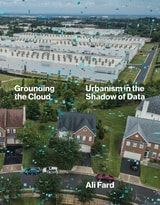
Grounding the Cloud
Urbanism in the Shadow of DataAli Fard
University of Minnesota Press, 2026
A detailed foray into the material and spatial realities of cloud computing
Since the 1990s, technologists have promoted a vision of the “cloud” as a shapeless and intangible entity. Grounding the Cloud peers through this hazy façade to reveal the earthly material foundations of global computing and data extraction. Tracing the historical and technological development of the cloud computing paradigm, Ali Fard exposes an ever-evolving project in which ideologies, economic models, and marketing images collude to shape our shared urban environments.
Demonstrating how technology’s spatial footprint now stretches to nearly every corner of the globe, Grounding the Cloud analyzes the often-hidden infrastructures that facilitate platform capitalism—from the mines extracting rare earth minerals in remote regions to the vast global network of fiber-optic cables at the bottom of the oceans to the nondescript data centers that sit on the peripheries of major urban areas. Meanwhile, with compelling examples of smart-city initiatives and corporate campuses, Fard shows how the future of urbanism is deeply intertwined with the growing economies of data extraction.
Breaking down the myth of a clean and efficient tech urbanism, this book makes visible the complex material geographies and geopolitics that undergird today’s most powerful and omnipresent corporations. A timely critique of the growing agency of tech platforms in determining the future of urban space, Grounding the Cloud offers an essential framework for understanding the shifting relationship between technology and urbanization.
Retail e-book files for this title are screen-reader friendly with images accompanied by short alt text and/or extended descriptions.

The City as Campus
Urbanism and Higher Education in ChicagoSharon Haar
University of Minnesota Press, 2010
The City as Campus shows the strain of this integration, detailing historical accounts of battles over space as campus designers faced the challenge of weaving the social, spatial, and architectural conditions of the urban milieu into new forms to meet the changing needs of academia. Through a close analysis of the history of higher education in Chicago, The City as Campus explores how the university's missions of service, teaching, and research have metamorphosed over time, particularly in response to the unique opportunities-and restraints-the city provides. Illustrating how Chicago serves as a site of pedagogical transformation and a location for the larger purpose of the academic community, The City as Campus presents a social and design history of the urban campus as an architectural idea and form.
Urbanism and Empire in Roman Sicily
By Laura Pfuntner
University of Texas Press, 2019
Sicily has been the fulcrum of the Mediterranean throughout history. The island’s central geographical position and its status as ancient Rome’s first overseas province make it key to understanding the development of the Roman Empire. Yet Sicily’s crucial role in the empire has been largely overlooked by scholars of classical antiquity, apart from a small number of specialists in its archaeology and material culture.
Urbanism and Empire in Roman Sicily offers the first comprehensive English-language overview of the history and archaeology of Roman Sicily since R. J. A. Wilson’s Sicily under the Roman Empire (1990). Laura Pfuntner traces the development of cities and settlement networks in Sicily in order to understand the island’s political, economic, social, and cultural role in Rome’s evolving Mediterranean hegemony. She identifies and examines three main processes traceable in the archaeological record of settlement in Roman Sicily: urban disintegration, urban adaptation, and the development of alternatives to urban settlement. By expanding the scope of research on Roman Sicily beyond the bounds of the island itself, through comparative analysis of the settlement landscapes of Greece and southern Italy, and by utilizing exciting evidence from recent excavations and surveys, Pfuntner establishes a new empirical foundation for research on Roman Sicily and demonstrates the necessity of including Sicily in broader historical and archaeological studies of the Roman Empire.
Urbanism in the Preindustrial World
Cross-Cultural ApproachesEdited by Glenn R. Storey
University of Alabama Press, 2006
This work employs a subset of preindustrial cities on many continents to answer questions archaeologists grapple with concerning the populating and growth of cities before industrialization. It further explores how scholars differently conceive and execute their research on the population of cities. The subject cities are in Greece, Mesoamerica, the Andes, Italy, Egypt, Africa, United States, Denmark, and China. This broad sample provides a useful framework for answers to such questions as “Why did people agglomerate into cities?” and “What population size and what age of endurance constitute a city?”
The study covers more than population magnitude and population makeup, the two major frameworks of urban demography. The contributors combine their archaeological and historical expertise to reveal commonalities, as well as theoretical extrapolations and methodological approaches, at work here and outside the sample.
Urbanism in the Preindustrial World is a unique study revealing the variety of factors involved in the coalescing and dispersal of populations in preindustrial times.
Álamos, Sonora
Architecture and Urbanism in the Dry TropicsJohn Messina
University of Arizona Press, 2008
Until now, there has never been a book about the architecture and urban form of Álamos. In this much-needed work, John Messina, who teaches architecture and is a practicing architect, provides a well-informed history and interpretive description of the town. He also examines building materials and construction techniques, as well as issues of building preservation and restoration. At the same time, the author considers what other cities might learn from Álamos. Particularly for cities in the American Southwest that are struggling to reduce sprawl and increase density without compromising their quality of life, Álamos offers a range of possible solutions.
Thoroughly illustrated and designed for lay readers and professionals alike, this engaging book captures the essence and the uniqueness of Álamos while asking what lessons can be drawn by architects and planners who are attempting to reshape our own cities and towns into more livable, viable, and people-friendly environments.