Results by title
32 books match the query 'Us'
A Decent Life
Morality for the Rest of UsTodd May
University of Chicago Press, 2019
In a world full of suffering and deprivation, it’s easy to despair—and it’s also easy to judge ourselves for not doing more. Even if we gave away everything we own and devoted ourselves to good works, it wouldn’t solve all the world’s problems. It would make them better, though. So is that what we have to do? Is anything less a moral failure? Can we lead a fundamentally decent life without taking such drastic steps?
Todd May has answers. He’s not the sort of philosopher who tells us we have to be model citizens who display perfect ethics in every decision we make. He’s realistic: he understands that living up to ideals is a constant struggle. In A Decent Life, May leads readers through the traditional philosophical bases of a number of arguments about what ethics asks of us, then he develops a more reasonable and achievable way of thinking about them, one that shows us how we can use philosophical insights to participate in the complicated world around us. He explores how we should approach the many relationships in our lives—with friends, family, animals, people in need—through the use of a more forgiving, if no less fundamentally serious, moral compass. With humor, insight, and a lively and accessible style, May opens a discussion about how we can, realistically, lead the good life that we aspire to.
A philosophy of goodness that leaves it all but unattainable is ultimately self-defeating. Instead, Todd May stands at the forefront of a new wave of philosophy that sensibly reframes our morals and redefines what it means to live a decent life.
Ain't But a Few of Us
Black Music Writers Tell Their StoryWillard Jenkins, editor
Duke University Press, 2022
Contributors
Eric Arnold, Bridget Arnwine, Angelika Beener, Playthell Benjamin, Herb Boyd, Bill Brower, Jo Ann Cheatham, Karen Chilton, Janine Coveney, Marc Crawford, Stanley Crouch, Anthony Dean-Harris, Jordannah Elizabeth, Lofton Emenari III, Bill Francis, Barbara Gardner, Farah Jasmine Griffin, Jim Harrison, Eugene Holley Jr., Haybert Houston, Robin James, Willard Jenkins, Martin Johnson, LeRoi Jones, Robin D. G. Kelley, Tammy Kernodle, Steve Monroe, Rahsaan Clark Morris, John Murph, Herbie Nichols, Don Palmer, Bill Quinn, Guthrie P. Ramsey Jr., Ron Scott, Gene Seymour, Archie Shepp, Wayne Shorter, A. B. Spellman, Rex Stewart, Greg Tate, Billy Taylor, Greg Thomas, Robin Washington, Ron Welburn, Hollie West, K. Leander Williams, Ron Wynn
All of Us or None
Migrant Organizing in an Era of Deportation and DispossessionMonisha Das Gupta
Duke University Press, 2024
Animal Crossing
New Horizons: Can a Game Take Care of Us?Noah Wardrip-Fruin
University of Chicago Press, 2025
A moving, personal exploration of what we looked for, and found, in the gaming sensation Animal Crossing during and after the pandemi
Animal Crossing: New Horizons was released on March 20, 2020—just as a pandemic kept many from family, work, restaurants, and the rest of their regularly scheduled lives. At its height, the game averaged one million copies sold per day, as players sought comfort, escape, and a virtual means of connection. In this book, game scholar Noah Wardrip-Fruin, isolated with his family by both lockdown and disability, explores the power of this game and the mixed emotions of a player and a parent trying to make it from one day to the next—while his kids’ obsession with Animal Crossing creates conflicts between them and pushback against family rules.
Wardrip-Fruin helps both Animal Crossing fans and newcomers understand the unexpected beneath the game’s surface: like the story of the first Animal Crossing, codesigned by an absent father seeking connection; like the hallmarks of video game manipulation, from “streak” bonuses to game-determined playtimes; like the appeal of endless shopping, in a kind of “safe” capitalism; and, of course, like the character quirks of a raccoon dog, Tom Nook, who provides a world of both safety and strange paternalism.
For many, this blockbuster game offered a comforting world compared to a reality of danger. In this first entry in the Replay series, Wardrip-Fruin offers an absorbing investigation of a game’s role in contemporary social life and a book that belongs on the shelf of anyone who loves or is puzzled by this Nintendo sensation.
As Sacred to Us
Simon Pokagon’s Birch Bark Stories in Their ContextsBlaire Morseau
Michigan State University Press, 2023

Bike Lanes Are the End of Us
Alexander S. Dawson
Vanderbilt University Press, 2027
Bike lanes are aspirational projects. They speak to a series of dreams about what North American cities could be, especially in and around an environmentalist and Europhilic vision (the latter having a very long history in the Americas). And yet, cycling infrastructure is built on or alongside the roads and modes of transport that came before it and maps onto preexisting forms of racial and spatial inequality. In many North American communities where social ties have long been fraying, efforts to build bike lanes have replicated the social crises that we see in other spaces.
Amsterdam’s oft-cited bike lanes are integrated within a system of regional trains, buses, and subways, allowing riders to park their bikes and engage in multimodal commuting, and are in turn the product of a social safety net that is among the most robust on the planet. However, in American settings, these projects have been slow to launch and their results have been uneven, in part due to spatial inequality in our cities, and in part because suburbanites and people with means have grown more attached to their private cars, rather than less so, in recent decades.
Recent controversial bike lane initiatives in Mexico City and Vancouver show how such projects not only create uproar among monied urbanites but may actually displace entire modes of transportation used primarily by marginalized residents (especially in the case of Mexico City), when the wish to imitate European models defeats efforts to see a North American city for what it is. In comparing Mexico City and Vancouver, Bike Lanes Are the End of Us traces how bike lane politics collide with distinct racial, spatial, and infrastructural realities to produce “green” reforms that can reinforce existing inequalities just as readily as they promise greater mobility.

Bond
The Nature of UsJill Sission Quinn
University of Iowa Press, 2027
Come Sign With Us
Sign Language Activities for ChildrenJan Hafer
Gallaudet University Press, 1990
Drug Cartels Do Not Exist
Narcotrafficking in US and Mexican CultureOswaldo Zavala
Vanderbilt University Press, 2022
Yet the realities of violence in Mexico and along the border are obscured by the books, films, and TV series we consume. In truth, works like Sicario, The Queen of the South, and Narcos hide Mexico's political realities. Alongside these examples, Zavala discusses Charles Bowden, 2666 by Roberto Bolaño, and other important Latin American writers as examples of those who do capture the realities of the drug war.
Translated into English by William Savinar, Drug Cartels Do Not Exist will be useful for journalists, political scientists, philosophers, and writers of any kind who wish to break down the constructed barriers—physical and mental—created by those in power around the reality of the Mexican drug trade.
Folklore
In All of Us, In All We DoKenneth L. Untiedt
University of North Texas Press, 2006
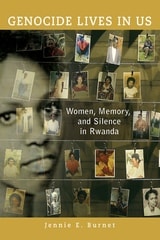
Genocide Lives in Us
Women, Memory, and Silence in RwandaJennie E. Burnet
University of Wisconsin Press, 2012
In the aftermath of the 1994 genocide, Rwandan women faced the impossible—resurrecting their lives amidst unthinkable devastation. Haunted by memories of lost loved ones and of their own experiences of violence, women rebuilt their lives from “less than nothing.” Neither passive victims nor innate peacemakers, they traversed dangerous emotional and political terrain to emerge as leaders in Rwanda today. This clear and engaging ethnography of survival tackles three interrelated phenomena—memory, silence, and justice—and probes the contradictory roles women played in postgenocide reconciliation.
Based on more than a decade of intensive fieldwork, Genocide Lives in Us provides a unique grassroots perspective on a postconflict society. Anthropologist Jennie E. Burnet relates with sensitivity the heart-wrenching survival stories of ordinary Rwandan women and uncovers political and historical themes in their personal narratives. She shows that women’s leading role in Rwanda’s renaissance resulted from several factors: the dire postgenocide situation that forced women into new roles; advocacy by the Rwandan women’s movement; and the inclusion of women in the postgenocide government.
Honorable Mention, Aidoo-Snyder Book Prize, Women’s Caucus of the African Studies Association
How Long Have You Been With Us?
Essays on PoetryKhaled Mattawa
University of Michigan Press, 2016
A volume in the Poets on Poetry series, which collects critical works by contemporary poets, gathering together the articles, interviews, and book reviews by which they have articulated the poetics of a new generation.
“Like the myriad companions and comrades that he summons from their exile, Khaled Mattawa is himself a ‘poet-stranger.’ In the essays, ‘written in a poet’s prose,’ collected in How Long Have You Been With Us, Mattawa evokes a powerful amalgam of the personal intimacy of the solitary and the political challenge of solidarity.”
—Barbara Harlow, University of Texas at Austin
“If you’ve read about exile, you’ve read about Brodsky and Milosz—just as, if you’ve read about translation, you’ve read about Walter Benjamin and George Steiner. While Khaled Mattawa has mastered these masters, his essays about world literature serve as a tour of the rest of the world. He introduces you to the writers you haven’t heard of but should from contemporary Libya and colonial South Asia to Latin America and China. When Mattawa invokes Saadi Youssef or Rabinidrath Tagore, Mohja Kahf or Toru Dutt, the effect is to deprovincialize American literature.”
—Ken Chen, The Asian American Writers’ Workshop
Khaled Mattawa, an American poet of Libyan origin, explores various dynamic developments shaping American poetry as it is being practiced today. Arising from an incredibly diverse range personal backgrounds, lyric traditions, and even languages, American poetry is transforming into a truly international form. Mattawa, who also translates Arabic poetry into American English and American poetry into Arabic, explores the poetics and politics of cross-cultural exchange and literary translation that fostered such transformation. The essays in this collection also shed light on Mattawa’s development as a poet and provide numerous portraits of the poets who helped shaped his poetry.
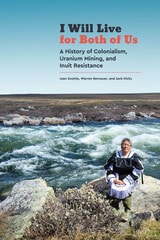
I Will Live for Both of Us
A History of Colonialism, Uranium Mining, and Inuit ResistanceJoan Scottie
University of Manitoba Press, 2022
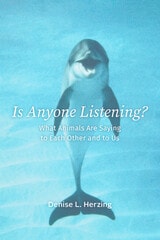
Is Anyone Listening?
What Animals Are Saying to Each Other and to UsDenise L. Herzing
University of Chicago Press, 2024
If you could pose one question to a dolphin, what would it be? And what might a dolphin ask you? For forty years, researcher and author Denise L. Herzing has investigated these and related questions of marine mammal communication. With the assistance of a friendly community of Atlantic spotted dolphins in the Bahamas, Herzing studies two-way communication between different dolphin species and between humans and dolphins using a variety of cutting-edge experiments. But the dolphins are not the only ones talking, and in this wide-ranging and accessible book, Herzing explores the astonishing realities of interspecies communication, a skill that humans currently lack.
Is Anyone Listening? connects research on dolphin communication to findings from Jane Goodall on chimpanzees, Dian Fossey on mountain gorillas, Cynthia Moss on African elephants, and others driving today’s exploration of possible animal languages. Although humans have long attempted to crack animal communication codes, only now do we have the advanced machine-learning tools to help. As Herzing reveals, researchers are finding fascinating hints of language in nonhuman species, including linguistic structures, vowel equivalents, and complex repeated sequences. By looking at the many ways animals use and manipulate signals, we see that we’ve only just begun to appreciate the diversity of animal intelligence and the complicated and subtle aspects of animal communication.
Considering dolphins and other nonhuman animals as colleagues instead of research subjects, Herzing asks us to meet animals as both speakers and listeners, as mutually curious beings, and to listen to what they are saying.
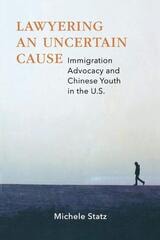
Lawyering an Uncertain Cause
Immigration Advocacy and Chinese Youth in the USMichele Statz
Vanderbilt University Press, 2018
In and beyond the legal realm, the figure of the "vulnerable Chinese child" powerfully legitimates legal claims and attorneys' efforts. At the same time, the transnational ambitions and obligations of Chinese youth implicitly unsettle this figure. The maneuvers of these youth not only belie attorneys' reliance on racialized discourses of childhood and the Chinese family, but they also reveal more broad uncertainties around legal frameworks, institutional practices, health and labor rights—and cause lawyering itself.
Based on three years of fieldwork across the United States, Lawyering an Uncertain Cause is a novel study of the complex and often contradictory rights, responsibilities, and expectations that motivate global youth and the American attorneys who work on their behalf.
Looking North
Writings from Spanish America on the US, 1800 to the PresentEdited by John J. Hassett and Braulio Muñoz
University of Arizona Press, 2012
Given recent changes in politics and demographics, Latin America and the United States are becoming increasingly important to one another. Recognition of the two regions' differences and similarities may facilitate a more fruitful relationship, with increased respect and understanding.
It is with this in mind that editors John J. Hassett and Braulio Muñoz present a collection of writings that provides a look into the ways in which Spanish America has viewed its northern neighbor over the past two centuries. Gathered here are pieces by well-known figures from the worlds of Spanish American politics, history, philosophy, creative writing, and culture—names like Mario Vargas Llosa, Gabriel Garcia Marquez and Pablo Neruda.
Divided into three sections, Looking North begins by underscoring the cultural and political differences between the two Americas. It opens with a speech by Simón Bolívar to the Venezuelan Congress in 1819 and closes with an essay by Mario Vargas Llosa from 2006 on the controversial wall being constructed between the United States and Mexico. The second section explores the experiences of Spanish American travelers in the US, beginning with an account of former Argentine president Domingo Sarmiento's fascination with the United States during his travels in 1847 and ending with a 2008 essay by Vargas Llosa on the city of New York. The final section encompasses creative writing and commentaries by some of Spanish America's most gifted poets and novelists. It opens with Rubén Darío's "To Roosevelt" from 1905 and ends with Christine Granados's humorous and profound short story "Inner View," first published in 2006.
Touching on history, sociology, politics, and religion, the writings assembled here will be of interest to humanists, social scientists, and anyone intrigued by the ever-growing connection between the United Sates and Spanish America at all levels.
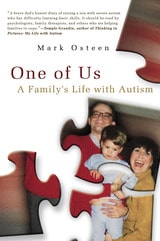
One of Us
A Family's Life with AutismMark Osteen
University of Missouri Press, 2010
In 1991, Mark Osteen and his wife, Leslie, were struggling to understand why their son, Cameron, was so different from other kids. At age one, Cam had little interest in toys and was surprisingly fixated on books. He didn’t make baby sounds; he ignored other children. As he grew older, he failed to grasp language, remaining unresponsive even when his parents called his name. When Cam started having screaming anxiety attacks, Mark and Leslie began to grasp that Cam was developmentally delayed. But when Leslie raised the possibility of an autism diagnosis, Mark balked. Autism is so rare, he thought. Might as well worry about being struck by lightning.
Since that time, awareness of autism has grown monumentally. Autism has received extensive coverage in the news media, and it has become a popular subject for film, television, and literature, but the disorder is frequently portrayed and perceived as a set of eccentricities that can be corrected with proper treatment. In reality, autism permanently wrecks many children’s chances for typical lives. Plenty of recent bestsellers have described the hardships of autism, but those memoirs usually focus on the recovery of people who overcome some or all of the challenges of the disorder. And while that plot is uplifting, it’s rare in real life, as few autistic children fully recover. The territory of severe autism—of the child who is debilitated by the condition, who will never be cured—has been largely neglected. One of Us: A Family’s Life with Autism tells that story.
In this book, Mark Osteen chronicles the experience of raising Cam, whose autism causes him aggression, insomnia, compulsions, and physical sickness. In a powerful, deeply personal narrative, Osteen recounts the struggles he and his wife endured in diagnosing, treating, and understanding Cam’s disability, following the family through the years of medical difficulties and emotional wrangling. One of Us thrusts the reader into the life of a child who exists in his own world and describes the immense hardships faced by those who love and care for him. Leslie and Mark's marriage is sorely tested by their son's condition, and the book follows their progress from denial to acceptance while they fight to save their own relationship.
By embracing the little victories of their life with Cam and by learning to love him as he is, Mark takes the reader down a road just as gratifying, and perhaps more moving, than one to recovery. One of Us is not a book about a child who overcomes autism. Instead, it’s the story of a different but equally rare sort of victory—the triumph of love over tremendous adversity.
One of Us
The Mastery of Joseph ConradGeoffrey Galt Harpham
University of Chicago Press, 1996
In this book, Geoffrey Galt Harpham delves not only into Conrad's literary work and reputation but also into the concept of mastery. Outlining a psychology of composition that embraces Conrad's personal as well as historical circumstances, Harpham sheds new light on traditional issues in Conrad criticism, such as his Polish background and his preoccupation with the sea, by linking them to less frequently discussed subjects, including his elusive sexuality and his idiosyncratic relation to the English language.
One of Us represents both a methodological innovation in the practice of literary criticism and an important contribution to our understanding of how masters—and canons based on them—are made.
Regional and Metropolitan Growth and Decline in the US
William H. Frey
Russell Sage Foundation, 1988
Rights Enabled
The Disability Revolution, from the US, to Germany and Japan, to the United NationsKatharina Heyer
University of Michigan Press, 2015
Some of Us
Chinese Women Growing Up in the Mao EraZhong, Xueping
Rutgers University Press, 2001
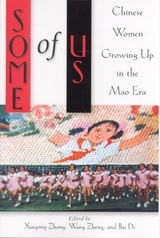
What does it mean to have grown up female in the Mao era? How can the remembered details of everyday life help shed light upon those turbulent times?
Some of Us is a collection of memoirs by nine Chinese women who grew up during the Mao era. All hail from urban backgrounds and all have obtained their Ph.D.s in the United States; thus, their memories are informed by intellectual training and insights that only distance can allow. Each of the chapters—arranged by the age of the author—is crafted by a writer who reflects back to that time in a more nuanced manner than has been possible for Western observers. The authors attend to gender in a way that male writers have barely noticed and reflect on their lives in the United States.
The issues explored here are as varied as these women’s lives: The burgeoning rebellion of a young girl in northeast China. A girl’s struggles to obtain for herself the education her parents inspired her to attain. An exploration of gender and identity as experienced by two sisters.
Some of Us offers insight into a place and time when life was much more complex than Westerners have allowed. These eloquent writings shatter our stereotypes of persecution, repression, victims, and victimizers. Together, these multi-faceted memoirs offer the reader new perspectives as they daringly explore difficult—and fascinating—issues.
The Atlantic Divide in Antitrust
An Examination of US and EU Competition PolicyDaniel J. Gifford and Robert T. Kudrle
University of Chicago Press, 2015
With The Atlantic Divide in Antitrust, Daniel J. Gifford and Robert T. Kudrle explore many of the main contested areas of contemporary antitrust, including mergers, price discrimination, predatory pricing, and intellectual property. After identifying how prevailing analyses differ across these areas, they then examine the policy ramifications. Several themes run throughout the book, including differences in the amount of discretion firms have in dealing with purchasers, the weight given to the welfare of various market participants, and whether competition tends to be viewed as an efficiency-generating process or as rivalry. The authors conclude with forecasts and suggestions for how greater compatibility might ultimately be attained.
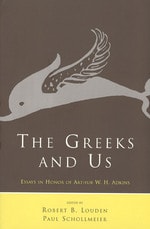
The Greeks and Us
Essays in Honor of Arthur W. H. AdkinsEdited by Robert B. Louden and Paul Schollmeier
University of Chicago Press, 1996
The timely subjects addressed by the contributors include the relation between literature and moral understanding, moral and nonmoral values, and the contemporary meaning of ancient Greek ethics. The volume also includes an essay from the late Adkins himself illustrating his methodology in an analysis of the "Speech of Lysias" in Plato's Phaedrus.
The Greeks and Us will interest all those concerned with how ancient moral values do or do not differ from our own.
Contributors include Arthur W. H. Adkins, Stephanie Nelson, Martha C. Nussbaum, Paul Schollmeier, James Boyd White, Bernard Williams, and Lee Yearley.
Commentaries by Wendy Doniger, Charles M. Gray, David Grene, Robert B. Louden, Richard Posner, and Candace Vogler.
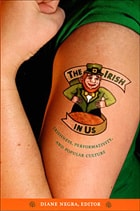
The Irish in Us
Irishness, Performativity, and Popular CultureDiane Negra, ed.
Duke University Press, 2006
Examining how Irishness is performed and commodified in the contemporary transnational environment, the contributors explore topics including Van Morrison’s music, Frank McCourt’s writing, the explosion of Irish-themed merchandising, the practices of heritage seekers, the movie The Crying Game, and the significance of red hair. Whether considering the implications of Garth Brooks’s claim of Irishness and his enormous popularity in Ireland, representations of Irish masculinity in the TV series Buffy the Vampire Slayer and Angel, or Americans’ recourse to a consoling Irishness amid the racial and nationalist tensions triggered by the events of September 11, the contributors delve into complex questions of ethnicity, consumerism, and globalization. Ultimately, they call for an increased awareness of the exclusionary effects of claims of Irishness and for the cultivation of flexible, inclusive ways of affiliating with Ireland and the Irish.
Contributors. Natasha Casey, Maeve Connolly, Catherine M. Eagan, Sean Griffin, Michael Malouf, Mary McGlynn, Gerardine Meaney, Diane Negra, Lauren Onkey, Maria Pramaggiore, Stephanie Rains, Amanda Third

The Monastic In Each of Us
Heart, Mind, Body, Soul and SpiritTim Vivian
Catholic University of America Press, 2026
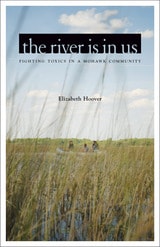
The River Is in Us
Fighting Toxics in a Mohawk CommunityElizabeth Hoover
University of Minnesota Press, 2017
Winner of the Labriola Center American Indian National Book Award 2017
Mohawk midwife Katsi Cook lives in Akwesasne, an indigenous community in upstate New York that is downwind and downstream from three Superfund sites. For years she witnessed elevated rates of miscarriages, birth defects, and cancer in her town, ultimately drawing connections between environmental contamination and these maladies. When she brought her findings to environmental health researchers, Cook sparked the United States’ first large-scale community-based participatory research project.
In The River Is in Us, author Elizabeth Hoover takes us deep into this remarkable community that has partnered with scientists and developed grassroots programs to fight the contamination of its lands and reclaim its health and culture. Through in-depth research into archives, newspapers, and public meetings, as well as numerous interviews with community members and scientists, Hoover shows the exact efforts taken by Akwesasne’s massive research project and the grassroots efforts to preserve the Native culture and lands. She also documents how contaminants have altered tribal life, including changes to the Mohawk fishing culture and the rise of diabetes in Akwesasne.
Featuring community members such as farmers, health-care providers, area leaders, and environmental specialists, while rigorously evaluating the efficacy of tribal efforts to preserve its culture and protect its health, The River Is in Us offers important lessons for improving environmental health research and health care, plus detailed insights into the struggles and methods of indigenous groups. This moving, uplifting book is an essential read for anyone interested in Native Americans, social justice, and the pollutants contaminating our food, water, and bodies.

Them and Us
Questions of Citizenship in a Globalizing WorldRob Kroes
University of Illinois Press, 2000
An accomplished set of meditations by one of Europe's leading Americanists, Them and Us is a rich comparative study of European and American cultural traditions and their influence on conceptions of community. In contrast with the ethnic and nationalist allegiances that historically have splintered Europe, Rob Kroes identifies a complex of cultural practices that have mitigated against ethnically rooted divisions in the United States. He argues that the American approach–-articulated by a national rhetoric emphasizing openness rather than closure, diversity rather than uniformity--has much to offer a Europe where the nationalist and ethnic conflicts that spawned two world wars continue to sow terror and destruction.
Kroes discusses European and American attitudes toward the welfare state, the human rights tradition in the United States, and the role of regionalism in shaping conceptions of national identity. He also considers new, transnational forms of cultural membership that are emerging to take the place of nation-based citizenship. He contends that the frame of reference Europeans now use to make sense of their collective situation draws on ingredients provided by the worldwide dissemination of American mass culture. He investigates the way this emerging world culture, under American auspices, affects the way people in their local and national settings structure their sense of the past and conceive of their citizenship.
Imagining a new set of cultural relationships that could serve as the basis for global citizenship, Them and Us is an insightful consideration of the types of solidarity that might weave humankind together into a meaningful community.
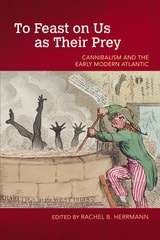
To Feast on Us as Their Prey
Cannibalism and the Early Modern AtlanticRachel B. Herrmann
University of Arkansas Press, 2019
Winner, 2020 Association for the Study of Food and Society Book Award, Edited Volume
Long before the founding of the Jamestown, Virginia, colony and its Starving Time of 1609–1610—one of the most famous cannibalism narratives in North American colonial history—cannibalism played an important role in shaping the human relationship to food, hunger, and moral outrage. Why did colonial invaders go out of their way to accuse women of cannibalism? What challenges did Spaniards face in trying to explain Eucharist rites to Native peoples? What roles did preconceived notions about non-Europeans play in inflating accounts of cannibalism in Christopher Columbus’s reports as they moved through Italian merchant circles?
Asking questions such as these and exploring what it meant to accuse someone of eating people as well as how cannibalism rumors facilitated slavery and the rise of empires, To Feast on Us as Their Prey posits that it is impossible to separate histories of cannibalism from the role food and hunger have played in the colonization efforts that shaped our modern world.
To Us, All Flowers Are Roses
POEMSLorna Goodison
University of Illinois Press, 1995
David Mason has characterized Lorna Goodison's work as a "revelation
to me, much of it beautiful for its simple negotiation of the line between
life and art."
One of the most distinguished
contemporary poets of the Caribbean, Goodison draws on both African and
European inheritances in her finely crafted poems, which often carry a
sense of language's healing power in the face of the pain of the past.
She deals thematically with the struggle of Caribbean women and writes
in a fashion that has developed from conversational to more ritualistic.
From reviews of Goodison's
earlier works:
"The evocative power
of Lorna Goodison's poetry derives its urgency and appeal from the heart-and-mind
concerns she has for language, history, racial identity, and gender."
Andrew Salkey -- World Literature Today
"A marvelous poet, one
to savor and to chant aloud."
-- Pat Monaghan, Booklist
Us and Them
The Science of IdentityDavid Berreby
University of Chicago Press, 2008
In this award-winning book, David Berreby describes how twenty-first-century science is addressing these age-old questions. Ably linking neuroscience, social psychology, anthropology, and other fields, Us and Them investigates humanity’s “tribal mind” and how this alters our thoughts, affects our health, and is manipulated for good and ill. From the medical effects of stress to the rhetoric of politics, our perceptions of group identity affect every part of our lives. Science, Berreby argues, shows how this part of human nature is both unexpectedly important and surprisingly misunderstood.
Humans need our tribal sense—it tells us who we are, how we should behave, and links us to others as well as the past and future. Some condemn this instinct, while others celebrate it. Berreby offers in Us and Them a third alternative: how we can accept and understand our inescapable tribal mind.
“[A] brave book. . . . Berreby’s quest is to understand what he sees as a fundamental human urge to classify and identify with ‘human kinds.’”—Henry Gee, Scientific American
We Take Our Cities with Us
A MemoirSorayya Khan
The Ohio State University Press, 2022
When the Good Life Goes Bad
The US and Its Seven Deadly SinsStacey M. Floyd-Thomas Foreword by Michael Eric Dyson
University of Illinois Press, 2026
Stacey M. Floyd-Thomas examines how the Seven Deadly Sins have shaped the moral strivings and sociopolitical condition of American society and culture in the twenty-first century. Drawing on a multidimensional approach, Floyd-Thomas uses race, gender, class, and other lenses to break down the moral crises that define the American Dream. Her critique exposes the harm done by individual and collective practices of sexual objectification, capitalist materialism, wealth inequality, and technological hubris before pivoting to the rise of right-wing populism, white Christian nationalism, and the politics of cruelty. But Floyd-Thomas also proposes an ethic that emphasizes truth-telling, community engagement, and values rooted in humility, justice, and mercy—a new path for the US to overcome systemic oppression and create a more just society.
Evocative and ambitious, When the Good Life Goes Bad takes readers on a wide-ranging journey through US life and culture to explain what corrupted the American dream.