Results by title
5 books match the query 'Using'

Cocaine Changes
The Experience of Using and QuittingDan Waldorf
Temple University Press, 1992
[more]
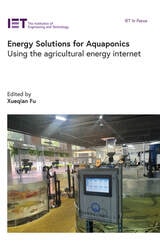
Energy Solutions for Aquaponics
Using the agricultural energy internetXueqian Fu
The Institution of Engineering and Technology, 2026
In line with the increasing electrification of agricultural production, aquaculture systems are becoming an important type of agricultural energy load. This book discusses key energy issues in aquaculture systems, and explains how agricultural energy internet technologies can support the development of modern aquaculture.
[more]
Teaching Information Literacy by Discipline
Using and Creating Adaptations of the FrameworkScott P. Libson
Assoc of College & Research Libraries, 2025
The Framework for Information Literacy for Higher Education has broad applicability that can be customized for different areas of study. Librarians have created companion documents and subject-specific information literacy applications that show the ways the Framework applies to their various fields.
In nine thorough sections, Teaching Information Literacy by Discipline shows the great diversity in how librarians understand, adapt, and apply the Framework. It explores how frames are applied when drafting learning outcomes, building research guides, crafting assignments, designing curricula for a particular discipline, and more.
In nine thorough sections, Teaching Information Literacy by Discipline shows the great diversity in how librarians understand, adapt, and apply the Framework. It explores how frames are applied when drafting learning outcomes, building research guides, crafting assignments, designing curricula for a particular discipline, and more.
- Arts
- Writing
- Humanities
- Interdisciplinary Studies
- Social Sciences
- Business
- Education and Behavioral Studies
- Health
- Sciences
[more]
Using a Genre-Based and Multimodal Approach to Teach Oral Academic Communication
Megan M. Siczek
University of Michigan Press, 2026
Effective oral academic communication is central to multilingual students’ engagement as learners and their success in academic and professional domains. This Brief Instructional Guide provides readers with an established set of principles and a pedagogical toolkit for teaching oral academic communication to multilingual international students with a specific focus on genre-based instruction and multimodality. It covers standard oral genres such as presentations and class discussions, as well as a wide variety of communicative genres that enable students to gain rhetorical awareness and communicative competence.
This book introduces a model course design and its guiding principles, then explicitly describes a variety of oral communication assignments that promote engaged learning, including steps in the instructional sequence, tips for teaching, and sample guidance to be shared with students. It emphasizes the importance of leveraging students’ cultural and linguistic strengths and global experiences to promote their agency as learners. The principles and practices described in this book are grounded in an English for Academic Purposes (EAP) context but are easily adaptable to other instructional settings and teaching modalities. Implementing a genre-based and multimodal approach helps build students’ rhetorical awareness, increases their communicative capacity, and enables them to participate actively in their academic discourse communities.
This book introduces a model course design and its guiding principles, then explicitly describes a variety of oral communication assignments that promote engaged learning, including steps in the instructional sequence, tips for teaching, and sample guidance to be shared with students. It emphasizes the importance of leveraging students’ cultural and linguistic strengths and global experiences to promote their agency as learners. The principles and practices described in this book are grounded in an English for Academic Purposes (EAP) context but are easily adaptable to other instructional settings and teaching modalities. Implementing a genre-based and multimodal approach helps build students’ rhetorical awareness, increases their communicative capacity, and enables them to participate actively in their academic discourse communities.
[more]
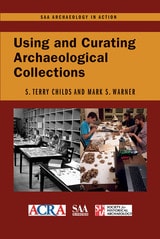
Using and Curating Archaeological Collections
S. Terry Childs
University Press of Colorado, 2019
All archaeologists have responsibilities to support the collections they produce, yet budgeting for and managing collections over the length of a project and beyond is not part of most archaeologists’ training. While this book in the SAA Press Archaeology in Action Series highlights major challenges that archaeologists and curators face with regard to collections, it also stresses the values, uses, and benefits of collections. It also demonstrates the continued significance of archaeological collections to the profession, tribes, and the public and provides critical resources for archaeologists to carry out their responsibilities. Many lament that the archaeological record is finite and disappearing. In this context, collections are even more important to preserve for future use, and this book will help all stakeholders do so.
[more]