Results by title
8 books match the query 'Ute Indians'
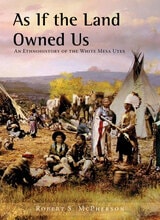
As If the Land Owned Us
An Ethnohistory of the White Mesa UtesRobert S. McPherson
University of Utah Press, 2011
The Ute people of White Mesa have a long, colorful, but neglected history in the Four Corners region. Although they ranged into the Great Basin, Southwest, and parts of the Rocky Mountains as hunters, gatherers, and warriors, southeastern Utah was home. There they adapted culturally and physically to the austere environment while participating in many of the well-known events of their times.
In As If the Land Owned Us, Robert McPherson has gathered the wisdom of White Mesa elders as they imparted knowledge about their land—place names, uses, teachings, and historic events tied to specific sites—providing a fresh insight into the lives of these little-known people. While there have been few published studies about the Southern Utes, this ethnohistory is the first to mix cultural and historic events. The book illustrates the life and times of the White Mesa Utes as they faced multiple changes to their lifeways. It is time for their history to be told in their terms.
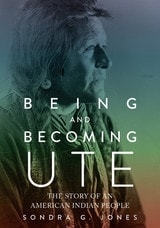
Being and Becoming Ute
The Story of an American Indian PeopleSondra G. Jones
University of Utah Press, 2019
Neither a portrait of a people frozen in a past time and place nor a tragedy in which vanishing Indians sank into oppressed oblivion, the history of the Ute people is dynamic and evolving. While it includes misfortune, injustice, and struggle, it reveals the adaptability and resilience of an American Indian people.
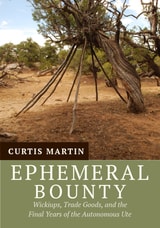
Ephemeral Bounty
Wickiups, Trade Goods, and the Final Years of the Autonomous UteCurtis Martin
University of Utah Press, 2016
The Colorado Wickiup Project is documenting ephemeral wooden features such as wickiups, tree-platforms, and brush horse corrals that remain scattered throughout the mesas, canyons, and mountains of the state. They date from when European newcomers first arrived with a bounty of new things—horses, metal knives and axes, guns, and brightly colored glass beads—which were readily adopted by the Utes.
The Project is unique in using the techniques of metal detection, historic trade ware analysis, and tree-ring dating of metal ax–cut wickiup poles to distinguish the Ute sites from historic Euro–American ones. Through this analysis, researchers have demonstrated that not all Utes left Colorado for the reservations in Utah during the “final removal” in 1881, as has been generally believed. A significant number remained on their homelands well into the early decades of the twentieth century, building brush shelters and living much as they had for generations, but with new tools and weapons.
Appendix B Form: Aboriginal Wooden Feature Component Form
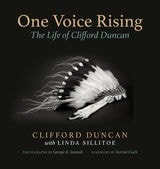
One Voice Rising
The Life of Clifford DuncanClifford Duncan with Linda Sillitoe, Photographs by George R. Janecek
University of Utah Press, 2019
“Everything was Indian then, when I was a boy. They had to explain to us about the white man's side. Now everything is in the white man's world and we teach Indian ways.”
—Clifford Duncan (from the book)
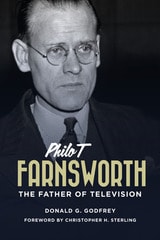
Philo T Farnsworth
Donald Godfrey
University of Utah Press, 2001
Philo T. Farnsworth (1906–1971) has been called the "forgotten father of television." He grew up in Utah and southern Idaho, and was described as a genius by those who knew and worked with him. With only a high school education, Farnsworth drew his first television schematic for his high school teacher in Rigby, Idaho. Subsequent claims and litigation notwithstanding, he was the first to transmit a television image.
Farnsworth filed ten patents between 1927 and 1929 for camera tubes (transmitting), circuitry, and the cathode ray tube (viewing). After his early years as an inventor in San Francisco, he worked as an engineer, doing battle with RCA in the 1930s over patent rights, formed the Farnsworth Television Company in the 1940s, and worked for IT&T after their purchase of the Farnsworth enterprises. Every television set sold utilized at least six of his basic patents.
Because of endless legal wrangling with RCA over patent rights, he received very little financial reward for his television patents. Donald Godfrey examines the genius and the failures in the life of Philo Farnsworth as he struggled to be both inventor and entrepreneur.
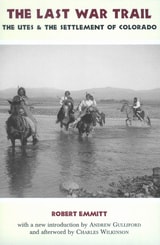
The Last War Trail
The Utes and the Settlement of ColoradoRobert Emmitt
University Press of Colorado, 2000
Written with the care and precision of a finely crafted novel, The Last War Trail was nominated for the Pulitzer Prize when it was first published in 1954. Long out of print and now brought back with new rare photographs and illustrations, The Last War Trail will be eagerly read by anyone trying to understand conflicts of the nineteenth century between Native American and encroaching settlers.
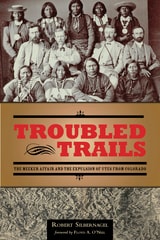
Troubled Trails
The Meeker Affair and the Expulsion of Utes from ColoradoRobert Silbernagel
University of Utah Press, 2011
When U.S. Cavalry troops rode onto the Ute Indian Reservation in northwestern Colorado on September 29, 1879, they triggered a chain of events that cost the Utes their homeland: a deadly battle at Milk Creek, the killing of all men at the Indian agency headed by Nathan Meeker, and the taking of three women and two children who were held hostage for 23 days. The Utes didn’t seek a fight with the whites, most of whom they viewed as friends. However, powerful whites in Colorado wanted the Utes expelled. The Meeker affair was an opportunity to achieve that.
In Troubled Trails, Robert Silbernagel casts new light on the story of the Meeker Affair. Using details from historical interview transcripts and newspaper articles, he reveals the personalities of the major characters—both Indian and non-Indian. He tells the story from many perspectives, including that of Indian Agent Nathan Meeker; the U.S. military; Nicaagat, a leader of the White River Utes; and Josephine Meeker, Nathan Meeker’s daughter, who was held hostage by the Utes. Silbernagel took great pains to tell a complete story, even following on horseback the trail taken by the Utes. As a result, his book paints a multifaceted picture of what took place and, most importantly, his portrayal brings the Ute side of the story into focus.
Ute Indians of Utah, Colorado, and New Mexico
Virginia McConnell Simmons
University Press of Colorado, 2000