Results by title

8 books match the query 'Utilization'
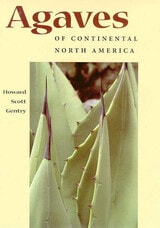
cover of Agaves of Continental North America

Agaves of Continental North America

Howard Scott Gentry

University of Arizona Press, 1982
This is an indispensable guide to agaves. The uses of agaves are as many as the arts of man have found it convenient to devise. At least two races of man have invaded Agaveland during the last ten to fifteen thousand years, where, with the help of agaves, they contrived several successive civilizations. The region of greatest use development is Mesoamerica. Here the great genetic diversity in a genus rich in use potential came into the hands of several peoples who developed the main agricultural center of the Americas. Perhaps, as the Aztec legends suggest, it was the animals that first showed man the edibility of agave. Evolution in use ranges all the way from the coincidental and spurious, through tool and food-drink subsistence with mystical overlay, to the practical specialties of modem industry and art. The historic period of agave will be outlined here as briefly as that complicated development will allow.
[more]
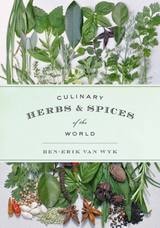
cover of Culinary Herbs and Spices of the World

Culinary Herbs and Spices of the World

Ben-Erik van Wyk

University of Chicago Press, 2014

For centuries herbs and spices have been an integral part of many of the world’s great cuisines. But spices have a history of doing much more than adding life to bland foods. They have been the inspiration for, among other things, trade, exploration, and poetry. Priests employed them in worship, incantations, and rituals, and shamans used them as charms to ward off evil spirits. Nations fought over access to and monopoly of certain spices, like cinnamon and nutmeg, when they were rare commodities. Not only were many men’s fortunes made in the pursuit of spices, spices at many periods throughout history literally served as currency.
           
In Culinary Herbs and Spices of the World, Ben-Erik van Wyk offers the first fully illustrated, scientific guide to nearly all commercial herbs and spices in existence. Van Wyk covers more than 150 species—from black pepper and blackcurrant to white mustard and white ginger—detailing the propagation, cultivation, and culinary uses of each. Introductory chapters capture the essence of culinary traditions, traditional herb and spice mixtures, preservation, presentation, and the chemistry of flavors, and individual entries include the chemical compounds and structures responsible for each spice or herb’s characteristic flavor. Many of the herbs and spices van Wyk covers are familiar fixtures in our own spice racks, but a few—especially those from Africa and China—will be introduced for the first time to American audiences. Van Wyk also offers a global view of the most famous use or signature dish for each herb or spice, satisfying the gourmand’s curiosity for more information about new dishes from little-known culinary traditions.  
           
People all over the world are becoming more sophisticated and demanding about what they eat and how it is prepared. Culinary Herbs and Spices of the World will appeal to those inquisitive foodies in addition to gardeners and botanists.
[more]
cover of Doctors and Their Workshops: Economic Models of Physician Behavior

Doctors and Their Workshops

Economic Models of Physician Behavior

Mark V. Pauly

University of Chicago Press, 1980

Doctors are obviously influential in determining the costs of their services. But even more important, many believe, is the influence physicians have over the use and cost of nonphysician health-care resources and services. Doctors and Their Workshops is the first comprehensive attempt to use economic analysis to understand some of the physician effects on nonphysician aspects of health care.

[more]
cover of Family Secrets: Risking Reproduction in Central Mozambique

Family Secrets

Risking Reproduction in Central Mozambique

Rachel R. Chapman

Vanderbilt University Press, 2010

Behind a thatched hut, a birthing woman bleeds to death only minutes from "life-saving" maternity care. Author Rachel Chapman begins Family Secrets with the deceptively simple question, "Why don't women in Mozambique use existing prenatal and maternity services?" then widens her analysis to include a whole universe of cultural, political, and economic forces. Fusing cultural anthropology with political economy, Chapman vividly demonstrates how neoliberalism and the increasing importance of the market have led to changing sexual and reproductive strategies for women.

Pregnant herself during her research, Chapman interviewed 83 women during pregnancy and postpartum. She discovered that the social relations surrounding traditional Shona practices, Christian faith healing, and Western biomedical treatments are as important to women's choices as the efficacy of the therapies.
[more]
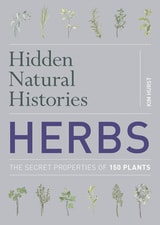
cover of Hidden Natural Histories: Herbs

Hidden Natural Histories

Herbs

Kim Hurst

University of Chicago Press, 2015
Behind the pungent aroma of garlic and the cool, palate-cleansing taste of mint in our toothpaste are untold stories of human interactions with the natural world. Celebrating the human heritage of these and other natural phenomena, the new Hidden Natural Histories series offers fascinating insight into the cultivation and use of the bits of nature we take for granted in our daily lives. In Herbs, Kim Hurst concocts a delightful tale of the leafs, seeds, and flowers that for millennia have grown in our gardens, provided savor to our stews, and been used to treat our ailments. Many of herbs’ uses will surprise: rosemary, renowned for its piney flavor, has also been used to protect homes from thieves, aid memory, preserve youth, cure depression, and attract helpful garden elves. Packed with informative and beautiful illustrations—both new and from historical archives—Herbs will charm and enlighten anyone interested in our relationship with the natural world and will be a special delight for every chef, gourmand, gardener . . . or purveyor of garden elves.
[more]
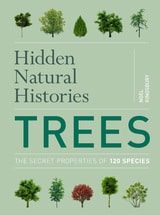
cover of Hidden Natural Histories: Trees

Hidden Natural Histories

Trees

Noel Kingsbury

University of Chicago Press, 2015
Behind the cedar scent of fresh pencil shavings and the slightly bitter tang of orange in our marmalade are untold stories of human interactions with the natural world. Celebrating the human heritage of these and other natural phenomena, the new Hidden Natural Histories series offers fascinating insight into the cultivation and use of the bits of nature we take for granted in our daily lives. In Trees, noted garden writer Noel Kingsbury turns his pen—or pencil—to the leafy life-forms that have warmed our hearths, framed our boats for ocean voyaging, and provided us shade on summer afternoons. From the fortitude of the ancient ginkgo tree to artistic depictions of quince fruit in the ruins of Pompeii, Kingsbury explores the culinary, medicinal, cultural, and practical uses of a forest of tree species. Packed with informative and beautiful illustrations—both new and from historical archives—Trees will charm and enlighten anyone interested in our relationship with the natural world and will be a special delight for every gardener, chef, and climber of trees.
[more]
cover of Maguey Journey: Discovering Textiles in Guatemala

Maguey Journey

Discovering Textiles in Guatemala

Kathryn Rousso

University of Arizona Press, 2010

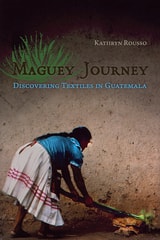
The name "maguey" refers to various forms of the agave and furcraea genus, also sometimes called the century plant. The fibers extracted from the leaves of these plants are spun into fine cordage and worked with a variety of tools and techniques to create textiles, from net bags and hammocks to equestrian gear.

In this fascinating book, Kathryn Rousso, an accomplished textile artist, takes a detailed look at the state of maguey culture, use, and trade in Guatemala. She has spent years traveling in Guatemala, highlighting maguey workers’ interactions in many locations and blending historical and current facts to describe their environments. Along the way, Rousso has learned the process of turning a raw leaf into beautiful and useful textile products and how globalization and modernization are transforming the maguey trade in Guatemala.

Featuring a section of full-color illustrations that follow the process from plant to weaving to product, Maguey Journey presents the story of this fiber over recent decades through the travels of an impassioned artist. Useful to cultural anthropologists, ethnobotanists, fiber artists, and interested travelers alike, this book offers a snapshot of how the industry stands now and seeks to honor those who keep the art alive in Guatemala.
[more]
cover of The Great Cacti: Ethnobotany and Biogeography

The Great Cacti

Ethnobotany and Biogeography

David Yetman

University of Arizona Press, 2007

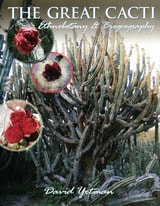
Towering over deserts, arid scrublands, and dry tropical forests, giant cacti grow throughout the Americas, from the United States to Argentina—often in rough terrain and on barren, parched soils, places inhospitable to people. But as David Yetman shows, many of these tall plants have contributed significantly to human survival.

Yetman has been fascinated by columnar cacti for most of his life and now brings years of study and reflection to a wide-ranging and handsomely illustrated book. Drawing on his close association with the Guarijíos, Mayos, and Seris of Mexico—peoples for whom such cacti have been indispensable to survival—he offers surprising evidence of the importance of these plants in human cultures. The Great Cacti reviews the more than one hundred species of columnar cacti, with detailed discussions of some 75 that have been the most beneficial to humans or are most spectacular. Focusing particularly on northwestern Mexico and the southwestern United States, Yetman examines the role of each species in human society, describing how cacti have provided food, shelter, medicine, even religiously significant hallucinogens.

Taking readers to the exotic sites where these cacti are found—from sea-level deserts to frigid Andean heights—Yetman shows that the great cacti have facilitated the development of native culture in hostile environments, yielding their products with no tending necessary. Enhanced by over 300 superb color photos, The Great Cacti is both a personal and scientific overview of sahuesos, soberbios, and other towering flora that flourish where few other plants grow—and that foster human life in otherwise impossible places.
[more]