Results by title
42 books match the query 'Values'

Against Fairness
Stephen T. Asma
University of Chicago Press, 2012
Watch an animated book trailer here: http://www.youtube.com/watch?v=GjPhTQ9zi5Q

American Values, Religious Voices
100 Days. 100 LettersAndrea L. Weiss and Lisa M. Weinberger
University of Minnesota Press, 2018
American Values, Religious Voices: 100 Days, 100 Letters is a collection of letters written by some of America’s most accomplished and thoughtful scholars of religion during the first 100 days of the Trump presidency. While the letters are addressed to the president, vice president, and members of the 115th Congress and Trump administration, they speak to a broad audience of Americans looking for wisdom and encouragement at this tumultuous time in our nation’s history.
This unique volume assembles the 100 letters, plus four new supplemental essays and many of the graphic illustrations that enhanced the campaign.
Published near the midway point of the Trump presidency, this book showcases a wide range of ancient sacred texts that pertain to our most pressing contemporary issues. At a time of great division in our country, this post-election project models how people of different backgrounds can listen to and learn from one another. The letters offer insight and inspiration, reminding us of the enduring values that make our nation great.
Beyond the Schoolhouse Gate
Free Speech and the Inculcation of ValuesRobert Wheeler Lane
Temple University Press, 1995

Boggs
A Comedy of ValuesLawrence Weschler
University of Chicago Press, 1999
"Lawrence Weschler, who evidently admires [Boggs]-something not difficult to do-has written what may be the most extraordinary biography imaginable: "weird," to use a favourite Boggs word. It does something towards changing our entire outlook on money and its uses. And the reader is left with an uneasy feeling that anything in this world can be created by drawing it." —Ruth Rendell, Daily Telegraph
"As ideal a subject matter as money is for Boggs' genius, Boggs is as ideal a topic for Weschler's considerable talents. . . . A writer any less lucid than Weschler would smudge the lines, making of Boggs a counterculture caricature or a high-art huckster. And a writer any less confident would knock the balance, making academic mud pies of Boggs' enlightened chaos." —Jonathon Keats, San Francisco Chronicle Book Review
"[A] witty and engaging chronicle. . . . Weschler's fascinating account of the artist as agent provocateur demonstrates both the significance of Boggs's art and his determination to continue his unusual critique of the idea of money." —Henry Wessells, Washington Post Book World
"[A] witty, excellently written account of a bizarre and fascinating snippet of modern life." —Paul Ormerod, Times Higher Education Supplement
"The book, like the artist, challenges people to pause and consider the extent to which the economic bedrock of everyday life is in part a confusing welter of artistic abstractions. It's a work that is at once informative, entertaining, and provocative-a reading experience, one might say, of rather good value." —Toby Lester, Atlantic Monthly
"[A] fascinating tale, especially in these days of fluctuating currency rates, the euro, and inexplicable Net-stock valuations." —Paul Lukas, Fortune
Lawrence Weschler, a recipient of the prestigious Lannan Literary Award for 1998, is the author of numerous books, including Calamities of Exile: Three Nonfiction Novellas, and Mr. Wilson's Cabinet of Wonder, which was a finalist for both the Pulitzer Prize and the National Book Critics Circle Award.
Class and Conformity
A Study in ValuesMelvin Kohn
University of Chicago Press, 1989
Common Values
Sissela Bok
University of Missouri Press, 2002
Cultural Persistence
Continuity in Meaning and Moral Responsibility Among the Bearlake AthapaskansScott Rushforth
University of Arizona Press, 1991

Culture and Well-Being
Anthropological Approaches to Freedom and Political EthicsAlberto Corsin Jimenez
Pluto Press, 2008
This book takes a critical look at the notion of well-being by examining what well-being means, or could mean, to people living in a number of different regions including Sudan, Nepal, Papua New Guinea, India, Sierra Leone, and the UK.
The contributors take issue with some of the assumptions behind Western concepts of well-being. They explore what characterizes a "good life" and how this idea has been affected by globalization and neoliberalism.
The book makes a major contribution to social theory by presenting new analytical models that make sense of the changing shapes of people's life and ethical values.
Culture
A Problem That Cannot Be SolvedCharles W. Nuckolls
University of Wisconsin Press, 1998
French historian Alexis de Tocqueville observed that the conflict between the ideals of individualism and community defines American culture. In this groundbreaking new work, anthropologist Charles Nuckolls discovers that every culture consists of such paradoxes, thus making culture a problem that cannot be solved. He does, however, find much creative tension in these unresolvable opposites.
Nuckolls presents three fascinating case studies that demonstrate how values often are expressed in the organization of social roles. First he treats the Micronesian Ifaluks’ opposition between cooperation and self-gratification by examining the nature versus nurture debate. Nuckolls then shifts to the values of community and individual adventure by looking at the conflicts in the identities of public figures in Oklahoma. Finally, he investigates the cultural significance in the diagnostic system and practices of psychiatry in the United States. Nuckolls asserts that psychiatry treats genders differently, assigning dependence to women and independence to men and, in some cases, diagnoses the extreme forms of these values as disorders.
Nuckolls elaborates on the theory of culture that he introduced in his previous book, The Cultural Dialectics of Knowledge and Desire, which proposed that the desire to resolve conflicts is central to cultural knowledge. In Culture: A Problem that Cannot Be Solved, Nuckolls restores the neglected social science concept of values, which addresses both knowledge and motivation. As a result, he brings together cognition and psychoanalysis, as well as sociology and psychology, in his study of cultural processes.
Dance of Values
Sergei Eisenstein’s Capital ProjectElena Vogman
Diaphanes, 2018

Educational Goods
Values, Evidence, and Decision-MakingHarry Brighouse, Helen F. Ladd, Susanna Loeb, and Adam Swift
University of Chicago Press, 2018
In Educational Goods, two philosophers and two social scientists address this very question. They begin by broadening the language for talking about educational policy: “educational goods” are the knowledge, skills, and attitudes that children develop for their own benefit and that of others; “childhood goods” are the valuable experiences and freedoms that make childhood a distinct phase of life. Balancing those, and understanding that not all of them can be measured through traditional methods, is a key first step. From there, they show how to think clearly about how those goods are distributed and propose a method for combining values and evidence to reach decisions. They conclude by showing the method in action, offering detailed accounts of how it might be applied in school finance, accountability, and choice. The result is a reimagining of our decision making about schools, one that will sharpen our thinking on familiar debates and push us toward better outcomes.
Food for Change
The Politics and Values of Social MovementsJeff Pratt and Pete Luetchford
Pluto Press, 2013
Concern about our food system is growing, from the costs of industrial farming to the dominant role of supermarkets and recurring scandals about the origins and content of what we eat.
Food for Change documents the way alternative food movements respond to these concerns by trying to create more closed economic circuits within which people know where, how, and by whom their food is produced.
Jeff Pratt, Peter Luetchford and other contributors explore the key political and economic questions of food through the everyday experience and vivid insights of farmers and consumers, using fieldwork from case studies in four European countries (France, Spain, Italy and England). Food for Change is an insightful consideration of connections between food and wider economic relations and draws on a rich vein of anthropological writing on the topic.

Formalism in Ethics and Non-Formal Ethics of Values
A New Attempt toward the Foundation of an Ethical PersonalismMax Scheler
Northwestern University Press, 1973

Gender Differences in Public Opinion
Values and Political ConsequencesMary-Kate Lizotte
Temple University Press, 2020
In this era in which more women are running for public office—and when there is increased activism among women—understanding gender differences on political issues has become critical. In her cogent study, Mary-Kate Lizotte argues that assessing the gender gap in public support for policies through a values lens provides insight into American politics today. There is ample evidence that men and women differ in their value endorsements—even when taking into account factors such as education, class, race, income, and party identification.
In Gender Differences in Public Opinion, Lizotte utilizes nationally representative data, mainly from the American National Election Study, to study these gender gaps, the explanatory power of values, and the political consequences of these differences. She examines the gender differences in several policy areas such as equal rights, gun control, the death penalty, and the environment, as well as social welfare issues. The result is an insightful and revealing study of how men and women vary in their policy positions and political attitudes.
Humanism Challenges Materialism in Economics and Economic History
Edited by Roderick Floud, Santhi Hejeebu, and David Mitch
University of Chicago Press, 2016
With Humanism Challenges Materialism in Economics and Economic History, Roderick Floud, Santhi Hejeebu, and David Mitch have brought together a distinguished group of scholars in economics, economic history, political science, philosophy, gender studies, and communications who synthesize and build on McCloskey’s work. The essays in this volume illustrate the ways in which the humanistic approach to economics that McCloskey pioneered can open up new vistas for the study of economic history and cultivate rich synergies with a wide range of disciplines. The contributors show how values and beliefs become embedded in the language of economics and shape economic outcomes. Chapters on methodology are accompanied by case studies discussing particular episodes in economic history.

Inventing the Modern American Family
Family Values and Social Change in 20th Century United StatesEditedy by Isabel Heinemann
Campus Verlag, 2012
Kinds of Value
An Experiment in Modal AnthropologyPaul Kockelman
Prickly Paradigm Press, 2020

Living Worth
Value and Values in Global Pharmaceutical MarketsStefan Ecks
Duke University Press, 2022
Manufacturing Morals
The Values of Silence in Business School EducationMichel Anteby
University of Chicago Press, 2013
In an era when many organizations are focused on principles of responsibility, Harvard Business School has long tried to promote better business standards. Anteby’s rich account reveals the surprising role of silence and ambiguity in HBS’s process of codifying morals and business values. As Anteby describes, at HBS specifics are often left unspoken; for example, teaching notes given to faculty provide much guidance on how to teach but are largely silent on what to teach. Manufacturing Morals demonstrates how faculty and students are exposed to a system that operates on open-ended directives that require significant decision-making on the part of those involved, with little overt guidance from the hierarchy. Anteby suggests that this model—which tolerates moral complexity—is perhaps one of the few that can adapt and endure over time.
Manufacturing Morals is a perceptive must-read for anyone looking for insight into the moral decision-making of today’s business leaders and those influenced by and working for them.

Media and Values
Intimate Transgressions in a Changing Moral and Cultural LandscapeDavid E. Morrison, Matthew Kieran, Michael Svennevig and Sarah Ventress
Intellect Books, 2007

Moral Issues
How Public Opinion on Abortion and Gay Rights Affects American Religion and PoliticsPaul Goren and Christopher Chapp
University of Chicago Press, 2024
A new perspective on how beliefs about abortion and gay rights reshaped American politics.
Many believe that religious and partisan identities undergird American public opinion. However, when it comes to abortion and gay rights, the reverse may be closer to the truth.
Drawing on wide-ranging evidence, Paul Goren and Christopher Chapp show that views on abortion and gay rights are just as durable and politically impactful—and often more so—than political and religious identities. Goren and Chapp locate the lasting strength of stances on abortion and gay rights in the automatic, visceral emotions that the media has primed since the late 1980s. Moral Issues examines how attitudes toward these moralized issues affect, and can sometimes even disrupt, religious and partisan identities. Indeed, over the last thirty years, these attitudes have accelerated the rise of the religious “nones,” who have no religious affiliation, and promoted moral sorting into the Democratic and Republican parties.

Mythology and Values
An Analysis of Navaho Chantway MythsBy Katherine Spencer
University of Texas Press, 1957
National Identity of Romanians in Transylvania
Sorin Mitu
Central European University Press, 2001
This meticulously researched and elegantly written book is the most authoritative study of the emergence of modern Romanian identity in Transylvania during the eighteenth and nineteenth centuries. Based upon a plethora of contemporary published sources, Mitu approaches national identity from a variety of perspectives - from within the Romanian community itself and their reaction to the image others had of them.
The author sheds new light on the problems of self-evaluation using a method he describes as "functional analysis" to examine a complex set of ideologies and propaganda. This approach helps the reader to understand the intricate web of contemporary Romanian nationalism.
National Identity of Romanians in Transylvania appeals to scholars of modern Romanian history, those focusing on the Habsburg Monarchy and the study of modern nationalism. The book is an important contribution to the expanding debate on nationalism and national identity from an East European perspective.

Nietzsche's Revaluation of Values
A STUDY IN STRATEGIESE. E. Sleinis
University of Illinois Press, 1994

Pictorial Victorians
The Inscription of Values in Word and ImageJulia Thomas
Ohio University Press, 2005
The Victorians were image obsessed. The middle decades of the nineteenth century saw an unprecedented growth in the picture industry. Technological advances enabled the Victorians to adorn with images the pages of their books and the walls of their homes. But this was not a wholly visual culture. Pictorial Victorians focuses on two of the most popular mid-nineteenth-century genres—illustration and narrative painting—that blurred the line between the visual and textual.
Illustration negotiated text and image on the printed page, while narrative painting juxtaposed the two media in its formulation of pictorial stories. Author Julia Thomas reassesses mid-nineteenth-century values in the light of this interplay. The dialogue between word and image generates meanings that are intimately related to the Victorians' image of themselves. Illustrations in Victorian publications and the narrative scenes that lined the walls of the Royal Academy reveal the Victorians' ideas about the world in which they lived and their notions of gender, class, and race.
Pictorial Victorians surveys a range of material, from representations of the crinoline, to the illustrations that accompanied Harriet Beecher Stowe’s novel Uncle Tom's Cabin and Tennyson's poetry, to paintings of adultery. It demonstrates that the space between text and image is one in which values are both constructed and questioned.
Political Peoplehood
The Roles of Values, Interests, and IdentitiesRogers M. Smith
University of Chicago Press, 2015
This book gathers Smith’s most important writings on peoplehood to build a coherent theoretical and historical account of what peoplehood has meant in American political life, informed by frequent comparisons to other political societies. From the revolutionary-era adoption of individual rights rhetoric to today’s battles over the place of immigrants in a rapidly diversifying American society, Smith shows how modern America’s growing embrace of overlapping identities is in tension with the providentialism and exceptionalism that continue to make up so much of what many believe it means to be an American.
A major work that brings a lifetime of thought to bear on questions that are as urgent now as they have ever been, Political Peoplehood will be essential reading for social scientists, political philosophers, policy analysts, and historians alike.

Poverty Of Amer Pol 2Nd Ed
H. Mark Roelofs
Temple University Press, 1998
Based on his novel understanding of the American political system, Roelofs presents a devastating and closely reasoned critique that traces our nation's political ills to fundamental flaws in the very design of its founding principles, the character of its major institutions, and the basic pattern of its processes. Dissecting our political and societal problems, he explains the limitations and basic contributions arising from the social democratic/liberal democratic dichotomy that result in our current political poverty.
While Roelofs's analysis remains the same as in the earlier edition, in this revised edition he has sharpened and extended the argument and expanded and updated his illustrative materials. Improved bibliographical citations and new diagrams make the book an even more useful teaching tool.

Pursuing Morality
Buddhism and Everyday Ethics in Southeastern MyanmarJustine Chambers
National University of Singapore Press, 2024
Pursuing Morality is an in-depth and fascinating study of ordinary life in Myanmar’s southeast through a unique ethnographic focus on Buddhist Plong (Pwo) Karen. Based on extensive in-depth fieldwork in the small city of Hpa-an, the capital of Karen State, Justine Chambers shines a new light on Plong Buddhists’ lives and the many ways they broker, traverse, enact, cultivate, defend, and pursue moral lives.
This is the first ethnographic study of Myanmar to add to a growing body of anthropological scholarship that is referred to as the “moral turn.” Each chapter examines the lives of Plong Buddhists from different vantage points, calling into question many assumptions about Southeast Asian values and the nature of Buddhist Theravada practice. Critiquing the notion that moral coherence is necessary for ethical selfhood, Chambers demonstrates how the pursuit of morality is varied, performative, and embedded in an affective notion of the self as a moral agent in a relationship with wider structural political forces. This vivid account of everyday life in Myanmar complements existing scholarship on the region and offers a deeper understanding of Buddhism, moral anthropology, and ethics in Southeast Asia.
Rational Lives
Norms and Values in Politics and SocietyDennis Chong
University of Chicago Press, 2000
Chong's book yields insights about the circumstances under which preferences, beliefs, values, norms and group identifications are formed. It offers a provocative explanation of how ingrained social norms and values can change over time despite the forces maintaining the status quo.
"Going beyond the tired polemics on both sides, [Chong] constructs a new interpretation of human behavior in which culture and individual rationality both matter. The synthesis is a more comprehensive and powerful explanatory framework than either side could have produced, and Chong's creativity should influence subsequent interpretations of our social life in fundamental ways."—Christopher H. Achen, University of Michigan

Scheler’s Critique of Kant’s Ethics
Philip Blosser
Ohio University Press, 1995
“My interest in [Max] Scheler’s critique of Kant runs back nearly a decade…. The more I read of Scheler, the more I began to see the value of a project dealing with his critique of Kant in Der Formalismus in der Ethik und die Materiale Wetethik, which would possess the virtue of focusing in a single project three important strands of philosophical interest: phenomenology, Kantianism, and ethics….
“The study is divided into six chapters and two appendices. Each of the chapters constituting the body of the work contains a brief analysis of the Kantian position or discussion of the basic questions at issue in it, an exposition of Scheler’s critique of the Kantian position and its presuppositions, and a detailed appraisal of Scheler’s critique.”—from the introduction by the author
Social Media in Trinidad
Values and VisibilityJolynna Sinanan
University College London, 2017
Systems, Institutions, and Values in East and West
Engaging with János Kornai's ScholarshipMiklós Rosta
Central European University Press, 2020
Leading social scientists, empirical analysts, and policy practitioners demonstrate the various ways in which the insights of János Kornai, a renowned early analyst and critic of the command economies of Eastern European communist states, are stirring academic and policy discussions about current challenges. While dissecting the economic theories and practices in the Soviet Bloc, Kornai devised and applied concepts such as soft-budget constraints, rush versus harmonic growth, surplus versus shortage economy, non-Walrasian equilibrium, bureaucratic coordination, and the invisible power of the communist party. These concepts are commonly applied to a variety of issues in the contexts of fundamental transformation. The cases discussed in this volume include the transitional paths of post-communist economies, the pitfalls of East European market-building, economic repercussions of the dissolution of Yugoslavia, and the process of integration in the Eurozone.
In conclusion János Kornai’s thoughts on a variety of research topics as well as the value of democracy are included as he delivered at the conference celebrating his 90th birthday in 2018.
The Fame of Gawa
A Symbolic Study of Value Transformation in a Massim SocietyNancy D. Munn
Duke University Press, 1992

The Genesis of Values
Hans Joas
University of Chicago Press, 2001

The Lublin Lectures and Works on Max Scheler
Karol Wojtyla
Catholic University of America Press, 2023

The Moral Philosophy of Dietrich von Hildebrand
Martin Cajthaml
Catholic University of America Press, 2020
The Talk and Texts of Teacher Development
Values, the Practicum, and Programmatic Change in Writing StudiesAdrienne Jankens
Utah State University Press, 2026
Through her multi-site analysis, Jankens examines the ways values are reflected in syllabi, committee meetings, and classroom practices. She demonstrates how values that are often unstated or assumed can be made explicit and linked to programmatic action, thus supporting development and aligning instructional goals with broader institutional objectives. Offering a nuanced framework on practicum courses, Jankens also highlights the importance of local contexts and distinguishes among tacit, implicit, explicit, emergent, and articulated values. This layered understanding helps reveal the often hidden mechanisms by which writing program values are enacted in day-to-day teaching practices.
Teacher development is a crucial site for enacting and understanding programmatic values, and making these values explicit can guide meaningful programmatic change. Providing an institutional ethnography of Jankens’s own writing program and situating those findings within broader conversations in writing studies, The Talk and Texts of Teacher Development adds to scholarship exploring the focus of the practicum course, the positionality and experience of graduate teaching assistants in writing programs, and the perennial work of the field to identify its core values and disciplinary identity.

The Tanner Lectures Vol 26
Peterson, Grethe B
University of Utah Press, 2006
Value Wars
The Global Market Versus the Life EconomyJohn McMurtry
Pluto Press, 2002

Values and Assumptions in American Labor Law
James B. Atleson
University of Massachusetts Press, 1983
Chosen as a Lawyer's Literary Club Selection, this book looks behind stated legal rules and doctrines in the field of labor law to clearly formulate the often hidden values and assumptions that motivate those who make labor law decisions. The author demonstrates that the “received wisdom” in labor law, which is that decisions are based on analyses of the rational implications of statutory policy, language, or legislative history, fails to account for the actual history of decision-making, particularly the interpretation of the Wagner Act of 1935 that established collective bargaining and the National Labor Relations Board. Through close interpretation, Atleson shows the legal decisions that have been reached are better explained by such factors as notional of inherent property rights, the need for capital mobility, and the interest in continued productivity.
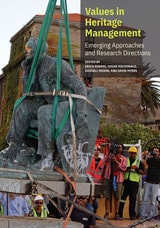
Values in Heritage Management
Emerging Approaches and Research DirectionsErica Avrami
J. Paul Getty Trust, The, 2019
Over the last fifty years, conservation professionals have confronted increasingly complex political, economic, and cultural dynamics. This volume, with contributions by leading international practitioners and scholars, reviews how values-based methods have come to influence conservation, takes stock of emerging approaches to values in heritage practice and policy, identifies common challenges and related spheres of knowledge, and proposes specific areas in which the development of new approaches and future research may help advance the field.
The free online edition of this open-access book is available at www.getty.edu/publications/heritagemanagement/ and includes zoomable illustrations. Also available are free PDF, EPUB, and Kindle/MOBI downloads of the book.

Values of Happiness
Toward an Anthropology of Purpose in LifeEdited by Iza Kavedžija and Harry Walker
HAU, 2016
The contributors explore how happiness intersects with dominant social values as well as an array of aims and aspirations that are potentially conflicting, demonstrating that not every kind of happiness is seen as a worthwhile aim or evaluated in positive moral terms. In tracing this link between different conceptions of happiness and their evaluations, the book engages some of the most fundamental questions concerning human happiness: What is it and how is it achieved? Is happiness everywhere a paramount value or aim in life? How does it relate to other ideas of the good? What role does happiness play in orienting peoples’ desires and life choices? Taking these questions seriously, the book draws together considerations of meaning, values, and affect, while recognizing the diversity of human ends.