Results by title
13 books match the query 'Victims'
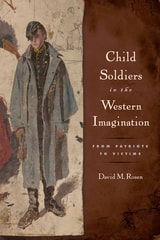
Child Soldiers in the Western Imagination
From Patriots to VictimsRosen, David M
Rutgers University Press, 2015
In this daring new study, anthropologist David M. Rosen investigates why our cultural perception of the child soldier has changed so radically over the past two centuries. Child Soldiers in the Western Imagination reveals how Western conceptions of childhood as a uniquely vulnerable and innocent state are a relatively recent invention. Furthermore, Rosen offers an illuminating history of how human rights organizations drew upon these sentiments to create the very term “child soldier,” which they presented as the embodiment of war’s human cost.
Filled with shocking historical accounts and facts—and revealing the reasons why one cannot spell “infantry” without “infant”—Child Soldiers in the Western Imagination seeks to shake us out of our pervasive historical amnesia. It challenges us to stop looking at child soldiers through a biased set of idealized assumptions about childhood, so that we can better address the realities of adolescents and pre-adolescents in combat. Presenting informative facts while examining fictional representations of the child soldier in popular culture, this book is both eye-opening and thought-provoking.
Extremities
Trauma, Testimony, and CommunityEdited by Nancy K. Miller and Jason Tougaw
University of Illinois Press, 2002
How do we come to terms with what can't be forgotten?
How do we bear witness to extreme experiences that challenge the limits of language? This remarkable volume explores the emotional, political, and aesthetic dimensions of testimonies to trauma as they translate private anguish into public space. Nancy K. Miller and Jason Tougaw have assembled a collection of essays that trace the legacy of the Holocaust and subsequent events that have shaped twentieth-century history and still haunt contemporary culture.
Extremities combines personal and scholarly approaches to a wide range of texts that bear witness to shocking and moving accounts of individual trauma: Toni Morrison's Beloved, Sylvia Plath's "Daddy" and "Lady Lazarus," Kathryn Harrison's The Kiss, Tatana Kellner's Holocaust art, Ruth Klüger's powerful memoir Still Alive, and Binjamin Wilkomirski's controversial narrative of concentration camp suffering Fragments. The book grapples with the cultural and social effects of historical crises, including the Montreal Massacre, the Warsaw Ghetto Uprising, and the medical catastrophes of HIV/AIDS and breast cancer.
Developing insights from autobiography, psychoanalysis, feminist theory and gender studies, the authors demonstrate that testimonies of troubling and taboo subjects do more than just add to the culture of confession–-they transform identities and help reimagine the boundaries of community. Extremities offers an original and timely interpretive guide to the growing field of trauma studies. The volume includes essays by Ross Chambers, Sandra M. Gilbert, Susan Gubar, Marianne Hirsch, Wayne Koestenbaum, Eve Kosofsky Sedgwick, and others.
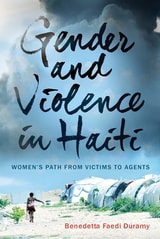
Gender and Violence in Haiti
Women’s Path from Victims to AgentsBenedetta Faedi Duramy
Rutgers University Press, 2014
Gender and Violence in Haiti is the product of more than a year of extensive firsthand observations and interviews with the women who have been caught up in the widespread violence plaguing Haiti. Drawing from the experiences of a diverse group of Haitian women, Faedi Duramy finds that both the victims and perpetrators of violence share a common sense of anger and desperation. Untangling the many factors that cause these women to commit violence, from self-defense to revenge, she identifies concrete measures that can lead them to feel vindicated and protected by their communities.
Faedi Duramy vividly conveys the horrifying conditions pervading Haiti, even before the 2010 earthquake. But Gender and Violence in Haiti also carries a message of hope—and shows what local authorities and international relief agencies can do to help the women of Haiti.
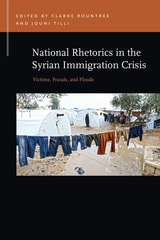
National Rhetorics in the Syrian Immigration Crisis
Victims, Frauds, and FloodsClarke Rountree
Michigan State University Press, 2019

Northern Ireland After the Good Friday Agreement
Victims, Grievance and BlameMarie Smyth and Mike Morrissey
Pluto Press, 2002
The result of extensive research among local communities, and drawing on survey and interview evidence, Northern Ireland After the Good Friday Agreement sets this issue within the context of past conflict and the continuing sectarian violence of the present. In particular it presents the views of ordinary people about their personal experiences of political violence and the impact it has had upon their lives.
Moreover, it shows how the Troubles have affected the young people of the region, and looks at the problems facing a society coming out of a protracted period of low-intensity conflict.

Paradise in Purgatory
The Eschatological Healing of Victims in the Catholic TraditionNathan W. O'Halloran
Catholic University of America Press, 2024

THIRD PARTIES
Victims and the Criminal Justice SystemLeslie Sebba
The Ohio State University Press, 1996

Victims and Warriors
Violence, History, and Memory in AmazoniaCasey High
University of Illinois Press, 2015
Victims and Warriors examines contemporary violence in the context of political and economic processes that transcend local events. Casey High explores how popular imagery of Amazonian violence has become part of Waorani social memory in oral histories, folklore performances, and indigenous political activism. As Amazonian forms of social memory merge with constructions of masculinity and other intercultural processes, the Waorani absorb missionaries, oil development, and logging depredations into their legacy of revenge killings and narratives of victimhood. High shows that these memories of past violence form sites of negotiation and cultural innovation, and thus violence comes to constitute a central part of Amazonian sociality, identity, and memory.

Victims as Offenders
The Paradox of Women's Violence in RelationshipsMiller, Susan L.
Rutgers University Press, 2005
Arrests of women for assault increased more than 40 percent over the past decade, while male arrests for this offense have fallen by about one percent. Some studies report that for the first time ever the rate of reported intimate partner abuse among men and women is nearly equal. Susan L. Miller’s timely book explores the important questions raised by these startling statistics.
Are women finally closing the gender gap on violence? Or does this phenomenon reflect a backlash shaped by men who batter? How do abusive men use the criminal justice system to increase control over their wives? Do police, courts, and treatment providers support aggressive arrest policies for women? Are these women “victims” or “offenders”?
In answering these questions, Miller draws on extensive data from a study of police behavior in the field, interviews with criminal justice professionals and social service providers, and participant observation of female offender programs. She offers a critical analysis of the theoretical assumptions framing the study of violence and provides insight into the often contradictory implications of the mandatory and pro-arrest policies enacted in the 1980s and 1990s. Miller argues that these enforcement strategies, designed to protect women, have often victimized women in different ways. Without sensationalizing, Miller unveils a reality that looks very different from what current statistics on domestic violence imply.
Victims of Justice Revisited
Completely Updated and RevisedThomas Frisbie and Randy Garrett
Northwestern University Press, 2005
The kidnapping of Jeanine Nicarico from her quiet suburban home and her brutal slaying sparked a public demand for justice. But the longer authorities strove to execute Cruz and the two other men, the more evidence emerged that the defendants were innocent-and that the death penalty process in America itself was deeply flawed.
Here is the start of a chain reaction that led to a moratorium on the death penalty in Illinois and the clearing out of Death Row, as Illinois Governor George Ryan-worried about unfairness in death penalty convictions-granted clemency to all those awaiting execution. This is a detailed study of a nationally known case that should be cited whenever serious scholars examine how capital cases are prosecuted in America. Here is the most thorough investigation yet published into the background of the man who-after Cruz already was on Death Row-claimed to be the real killer.

Victims of the Chilean Miracle
Workers and Neoliberalism in the Pinochet Era, 1973–2002Peter Winn, ed.
Duke University Press, 2004
Implemented in the 1970s at the point of the bayonet and in the shadow of the torture chamber, the neoliberal policies of Augusto Pinochet’s dictatorship reversed many of the gains in wages, benefits, and working conditions that Chile’s workers had won during decades of struggle and triggered a severe economic crisis. Later refined and softened, Pinochet’s neoliberal model began, finally, to promote economic growth in the mid-1980s, and it was maintained by the center-left governments that followed the restoration of democracy in 1990. Yet, despite significant increases in worker productivity, real wages stagnated, the expected restoration of labor rights faltered, and gaps in income distribution continued to widen. To shed light on this history and these ongoing problems, the contributors look at industries long part of the Chilean economy—including textiles and copper—and industries that have expanded more recently—including fishing, forestry, and agriculture. They not only show how neoliberalism has affected Chile’s labor force in general but also how it has damaged the environment and imposed special burdens on women. Painting a sobering picture of the two Chiles—one increasingly rich, the other still mired in poverty—these essays suggest that the Chilean miracle may not be as miraculous as it seems.
Contributors.
Paul Drake
Volker Frank
Thomas Klubock
Rachel Schurman
Joel Stillerman
Heidi Tinsman
Peter Winn

Victims or Villains
Jewish Images in Classic English Detective FictionMalcolm J. Turnbull
University of Wisconsin Press, 1998

Visions and Victims
Art Melodrama in the Films of Carl Th. DreyerAmanda Doxtater
University of Wisconsin Press, 2024
Amanda Doxtater offers a necessary corrective to this narrative of his bifurcated career. Close readings of Dreyer’s Nordisk films alongside his mature work reveal a stylistic throughline Doxtater terms “art melodrama,” a form combining the ambiguity, stylization, and consciousness of art cinema with the heightened emotional expressivity and dramatic embodiments characteristic of melodrama. She argues that Dreyer’s major artistic concerns known from his later work—pathos, authenticity, the embodiment of psychological duress, and so on—find their first expression in his Nordisk melodramas, complicating our understanding not only of his later films but also of his early works, and even our understanding of the melodramatic mode in general. Indeed, extending well beyond the career of a singular director, this book challenges assumptions about the relationship between “low-brow” melodrama and “high-brow” art cinema.