Results by title
11 books match the query 'Victims of state-sponsored terrorism'
Book of the Disappeared
The Quest for Transnational JusticeJennifer Heath and Ashraf Zahedi, Editors
University of Michigan Press, 2023
Book of the Disappeared confronts worldwide human rights violations of enforced disappearance and genocide and explores the global quest for justice with forceful, outstanding contributions by respected scholars, expert practitioners, and provocative contemporary artists. This profoundly humane book spotlights our historic inhumanity while offering insights for survival and transformation.

Digging for Hope
A Feminist Ethnography in the Land of Mass GravesR. Aída Hernández Castillo
University of Arizona Press, 2026
Through physical and spiritual practices such as exhumation, mourning, and poetic remembrance, these women reclaim dignity for the dead and challenge a society that has normalized disappearance. At the heart of this book is a profound exploration of what Hernández Castillo calls a “pedagogy of love”—a political and ethical framework rooted in care, solidarity, and the refusal to forget. These women are not only searching for bodies; they are building emotional communities, crafting new languages of justice, and offering a reimagining of what it means to resist violence. Their practices, often overlooked by traditional scholarship, restore humanity and dignify the disappeared.
Digging for Hope is essential reading for anyone seeking to understand the gendered dimensions of violence and the grassroots movements that rise in response. With clarity and compassion, Hernández Castillo brings readers into the intimate spaces of grief and resistance, offering a model for feminist ethnography that is both rigorous and deeply humane.
Disabling Relations
Wounded Bodyminds and Transnational PraxisSona Kazemi
Temple University Press, 2026
Kazemi focuses on the disabled dissidents who were incarcerated and tortured by the Islamic regime in the aftermath of the 1979 revolution in Iran, the disabled veterans and civilians wounded during and after the Iran–Iraq War, the disabled survivors of state-sanctioned punitive limb amputation, and the disabled women survivors of acid attacks as a form of gender-based violence. Disabling Relations explains how disabled bodyminds are produced and sustained through the violence of patriarchal, capitalist-imperialist, nationalist, and theocratic social relations. Kazemi uses the theoretical concept of “wounding” as a historical process of becoming and remaining disabled mediated by unequal power relations and “disability consciousness” to show how these survivors come to terms with their disability.
Thinking about critical disability theory in a new way, Kazemi investigates how disability is produced transnationally and the impact that this new theorization can make globally.
In the series Dis/color
Dissensual Subjects
Memory, Human Rights, and Postdictatorship in Argentina, Brazil, and UruguayAndrew C. Rajca
Northwestern University Press, 2018
Through an engaging exploration of the concept of “never again” (nunca más/nunca mais) and close analysis of photography exhibits, audiovisual installations, and other art forms in spaces of cultural memory, the book explores how aesthetic interventions can suggest alternative ways of framing human rights subjectivity beyond the rhetoric of liberal humanitarianism. The book visits sites of memory, two of which functioned as detention and torture centers during dictatorships, to highlight the tensions between the testimonial tenor of permanent exhibits and the aesthetic interventions of temporary installations there. Rajca thus introduces perspectives that both undo common understandings of authoritarian violence and its effects as well as reconfigure who or what are made visible as subjects of memory and human rights in postdictatorship countries.
Dissensual Subjects offers much to those concerned with numerous interlocking fields: memory, human rights, political subjectivity, aesthetics, cultural studies, visual culture, Southern Cone studies, postdictatorship studies, and sites of memory.

Love In A Time Of Hate
Hollander, Nancy Caro
Rutgers University Press, 1997
Memories of Buenos Aires
Signs of State Terrorism in ArgentinaMax Page
University of Massachusetts Press, 2013
In the 1970s, Argentina was the leader in the “Dirty War,” a violent campaign by authoritarian South American regimes to repress left-wing groups and any others who were deemed subversive. Over the course of a decade, Argentina's military rulers tortured and murdered upwards of 30,000 citizens. Even today, after thirty years of democratic rule, the horror of that time continues to roil Argentine society.
Argentina has also been in the vanguard in determining how to preserve sites of torture, how to remember the “disappeared,” and how to reflect on the causes of the Dirty War. Across the capital city of Buenos Aires are hundreds of grassroots memorials to the victims, documenting the scope of the state's reign of terror. Although many books have been written about this era in Argentina's history, the original Spanish-language edition of Memories of Buenos Aires was the first to identify and interpret all of these sites. It was published by the human rights organization Memoria Abierta, which used interviews with survivors to help unearth that painful history.
This translation brings this important work to an English-speaking audience, offering a comprehensive guidebook to clandestine sites of horror as well as innovative sites of memory. The book divides the 48 districts of the city into 9 sectors, and then proceeds neighborhood-by-neighborhood to offer descriptions of 202 known “sites of state terrorism” and 38 additional places where people were illegally detained, tortured, and killed by the government.
State Repression and the Labors of Memory
Elizabeth Jelin
University of Minnesota Press, 2003
A timely exploration of the nature of memory and its political uses
Hearing the news from South America at the turn of the millennium can be like traveling in time: here are the trials of Pinochet, the searches for “the disappeared” in Argentina, the investigation of the death of former president Goulart in Brazil, the Peace Commission in Uruguay, the Archive of Terror in Paraguay, a Truth Commission in Peru. As societies struggle to come to terms with the past and with the vexing questions posed by ineradicable memories, this wise book offers guidance.
Combining a concrete sense of present urgency and a theoretical understanding of social, political, and historical realities, State Repression and the Labors of Memory fashions tools for thinking about and analyzing the presences, silences, and meanings of the past. With unflappable good judgment and fairness, Elizabeth Jelin clarifies the often muddled debates about the nature of memory, the politics of struggles over memories of historical injustice, the relation of historiography to memory, the issue of truth in testimony and traumatic remembrance, the role of women in Latin American attempts to cope with the legacies of military dictatorships, and problems of second-generation memory and its transmission and appropriation. Jelin’s work engages European and North American theory in its exploration of the various ways in which conflicts over memory shape individual and collective identities, as well as social and political cleavages. In doing so, her book exposes the enduring consequences of repression for social processes in Latin America, and at the same time enriches our general understanding of the fundamentally conflicted and contingent nature of memory.
Testimony after Catastrophe
Narrating the Traumas of Political ViolenceStevan Weine
Northwestern University Press, 2006
A deeply involving, compassionate, occasionally confrontational blend of practical hands-on experience and dialogic theory, emerging from the author's decade-long work in Europe and Chicago with survivors of the Balkan wars, this book is committed to the proposition that efforts to use testimony to address the consequences of political violence can be strengthened--though by no means guaranteed--if they are based on a fuller acknowledgment of the personal and ethical elements embodied in the narrative essence of testimony. These elements are what Testimony after Catastrophe seeks to reveal.
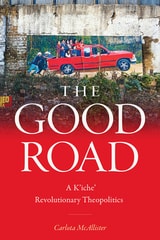
The Good Road
A K’iche’ Revolutionary TheopoliticsCarlota McAllister
Duke University Press, 2026
Trauma, Taboo, and Truth-Telling
Listening to Silences in Postdictatorship ArgentinaNancy J. Gates-Madsen
University of Wisconsin Press, 2018
Nancy J. Gates-Madsen reads between the lines of Argentine cultural texts (fiction, drama, testimonial narrative, telenovela, documentary film) to explore the fundamental role of silence—the unsaid—in the expression of trauma. Her careful examination of the interplay between textual and contextual silences illuminates public debate about the meaning of memory in Argentina—which stories are being told and, more important, which are being silenced. The imposition of silence is not limited to the military domain or its apologists, she shows; the human rights community also perpetuates and creates taboos.
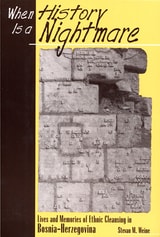
When History Is A Nightmare
Lives and Memories of Ethnic Cleansing in Bosnia-HerzegovinaStevan M. Weine, M.D.
Rutgers University Press, 1999
Weine investigates the survivors’ attempts to reconcile the contrasting, collective memories of having lived in a smoothly functioning, multiethnic society with the later memories of the ethnic atrocities. He discusses the little-known group concept of merhamet. Denoting compassion, forgiveness, and charity, merhamet was a critical cultural value for the Bosnian Muslims.
Weine also explores how ethnic cleansing was justified from the vantage point of psychiatrists who played prominent roles in instigating the horrors. He also provides personal portraits of leaders such as Jovan Raskovic and Radovan Karadzic. He concludes by describing the recovery efforts of survivors—how they work to confront the destructive nature of their memories while trying to bring about healing, both individually and collectively.