Results by title
3 books match the query 'Viestenz, William'
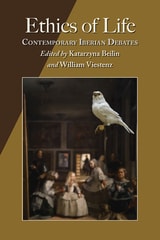
Ethics of Life
Contemporary Iberian DebatesKatarzyna Beilin
Vanderbilt University Press, 2016
The contributors ask the following questions:
• What are the different rhetorical strategies employed by writers, artists, filmmakers, and activists to react to the degradation of life and climate change?
• How are urban movements using environmental issues to resist corporate privatization of the commons?
• What is the shape of Spanish debates on reproductive rights and biotechnology?
• What is the symbolic significance of the bullfighting debate and other human/animal issues in today's political turmoil in Spain?
Hispanic Issues Series
Nicholas Spadaccini, Editor-in-Chief
Hispanic Issues Online
hispanicissues.umn.edu/online_main.html
[more]
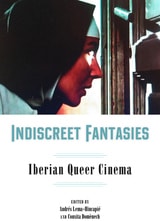
Indiscreet Fantasies
Iberian Queer CinemaAndrés Lema-Hincapié
Bucknell University Press, 2021
Pedro Almodóvar may have helped put queer Iberian cinema on the map, but there are multitudes of LGBTQ filmmakers from Catalonia, Portugal, Castile, Galicia, and the Basque Country who have made the Peninsula one of the world’s most vital sources for queer film. Together, they have produced a cinema whose expressions of queer desire have challenged the region’s conservative religious and family values, while intervening in vital debates about politics, history, and nation. Indiscreet Fantasies is a unique collection that offers in-depth analyses of fifteen different films produced in the region over the past fifty years, each by a different director, from Narciso Ibáñez Serrador’s La residencia (The House That Screamed, 1969) to João Pedro Rodrigues’s O ornitólogo (The Ornithologist, 2016). Contributors examine how queer Iberian cinema has responded to historical trauma—from the AIDS crisis to the repressive and homophobic Franco regime—and explore how these films demonstrate a fluid understanding of sexuality, gender, and national identity. The result will give readers a new appreciation for the cultural diversity of Iberia and the richness of its thought-provoking queer cinema.
Published by Bucknell University Press. Distributed worldwide by Rutgers University Press.
Published by Bucknell University Press. Distributed worldwide by Rutgers University Press.
[more]
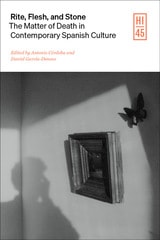
Rite, Flesh, and Stone
The Matter of Death in Contemporary Spanish CultureAntonio Córdoba
Vanderbilt University Press, 2021
Forensic science provides information and data behind the circumstances of a particular death, but it is culture that provides death with meaning. With this in mind, Rite, Flesh, and Stone proposes cultural matters of death as its structuring principle, operating as frames of the expression of mortality within a distinct set of coordinates. The chapters offer original approaches to how human remains are handled in the embodied rituals and social performances of contemporary funeral rites of all kinds; furthermore, they explore how dying flesh and corpses are processed by means of biopolitical technologies and the ethics of (self-)care, and how the vibrant and breathing materiality of the living is transformed into stone and analogous kinds of tangible, empirical presence that engender new cartographies of memory. Each coming from a specific disciplinary perspective, authors in this volume problematize conventional ideas about the place of death in contemporary Western societies and cultures using Spain as a case study.
Materials analyzed here—ranging from cinematic and literary fictions, to historical archives and anthropological and ethnographic sources—make explicit a dynamic scenario where actors embody a variety of positions toward death and dying, the political production of mortality, and the commemoration of the dead. Ultimately, the goal of this volume is to chart the complex network in which the disenchantment of death and its reenchantment coexist, and biopolitical control over secularized bodies overlaps with new avatars of the religious and non-theistic desires for memorialization and transcendence.
Materials analyzed here—ranging from cinematic and literary fictions, to historical archives and anthropological and ethnographic sources—make explicit a dynamic scenario where actors embody a variety of positions toward death and dying, the political production of mortality, and the commemoration of the dead. Ultimately, the goal of this volume is to chart the complex network in which the disenchantment of death and its reenchantment coexist, and biopolitical control over secularized bodies overlaps with new avatars of the religious and non-theistic desires for memorialization and transcendence.
[more]