Results by title
80 books match the query 'Vietnam War' and 6 start with a
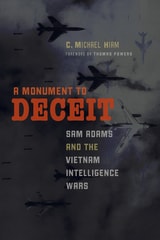
A Monument to Deceit
Sam Adams and the Vietnam Intelligence WarsC. Michael Hiam
University Press of New England, 2014
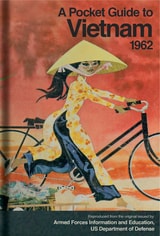
A Pocket Guide to Vietnam, 1962
Edited by The Bodleian Library
Bodleian Library Publishing, 2012
For most Americans in the 1960s, Vietnam was a faraway land of which they had little or no knowledge. Yet soon, hundreds of thousands of young American men and women would find themselves on the other side of the globe, fighting—and, in many cases, living—with the Vietnamese people. To lessen the culture shock, the Department of Defense prepared A Pocket Guide to Vietnam, 1962, a remarkably compact and surprisingly timeless crash course in Vietnamese culture for visitors to this foreign land.
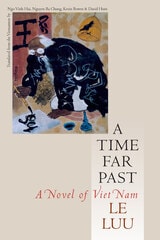
A Time Far Past
A Novel of Viet NamLe Luu
University of Massachusetts Press, 1997
In its intricate sketching of complicated alliances, personal debts, and human interactions, A Time Far Past explores the complex layering of family and village history and Party and feudal authority. It also paints a vivid picture of the vast dislocations in Vietnamese culture caused by the political and military turmoil of the Indochina wars.
A Time Far Past was enormously popular in Vietnam, where it was first published in 1986, selling more than 120,000 copies and winning that country's national prize for fiction.
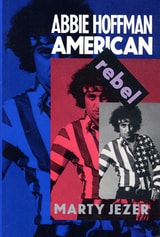
Abbie Hoffman
American RebelJezer, Marty
Rutgers University Press, 1993
"... Abbie, more than any other radical, showed potheads how to demonstrate and radicals how to dance." -- Chicago Tribune
"... deeply sympathetic and scrupulously detached-a triumph of judicious empathy." -- MARTIN DUBERMAN, Distinguished Professor of History, Lehman/The Graduate School, C.U.N.Y.
"... details Hoffman's humor, manic energy, depressive spells, political skills, and above all, his Incurable and still contagious optimism." -- Entertainment Weekly
"Here's the Abbie I knew and loved! Marty Jezer has captured him in all his complexity, dedication, humor, and heart." -- ANITA HOFFMAN
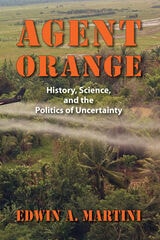
Agent Orange
History, Science, and the Politics of UncertaintyEdwin A. Martini
University of Massachusetts Press, 2012
Taking on what one former U.S. ambassador called “the last ghost of the Vietnam War,” this book examines the far-reaching impact of Agent Orange, the most infamous of the dioxin-contaminated herbicides used by American forces in Southeast Asia. Edwin A. Martini's aim is not simply to reconstruct the history of the “chemical war” but to investigate the ongoing controversy over the short- and long-term effects of weaponized defoliants on the environment of Vietnam, on the civilian population, and on the troops who fought on both sides.
Beginning in the early 1960s, when Agent Orange was first deployed in Vietnam, Martini follows the story across geographical and disciplinary boundaries, looking for answers to a host of still unresolved questions. What did chemical manufacturers and American policymakers know about the effects of dioxin on human beings, and when did they know it? How much do scientists and doctors know even today? Should the use of Agent Orange be considered a form of chemical warfare? What can, and should, be done for U.S. veterans, Vietnamese victims, and others around the world who believe they have medical problems caused by Agent Orange?
Martini draws on military records, government reports, scientific research, visits to contaminated sites, and interviews to disentangle conflicting claims and evaluate often ambiguous evidence. He shows that the impact of Agent Orange has been global in its reach affecting individuals and communities in New Zealand, Australia, Korea, and Canada as well as Vietnam and the United States. Yet for all the answers it provides, this book also reveals how much uncertainty—scientific, medical, legal, and political—continues to surround the legacy of Agent Orange.
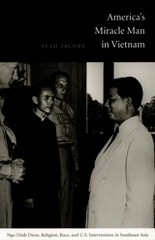
America's Miracle Man in Vietnam
Ngo Dinh Diem, Religion, Race, and U.S. Intervention in Southeast AsiaSeth Jacobs
Duke University Press, 2004
A diplomatic and cultural history, America’s Miracle Man in Vietnam draws on government archives, presidential libraries, private papers, novels, newspapers, magazines, movies, and television and radio broadcasts. Jacobs shows in detail how, in the 1950s, U.S. policymakers conceived of Cold War anticommunism as a crusade in which Americans needed to combine with fellow Judeo-Christians against an adversary dangerous as much for its atheism as for its military might. He describes how racist assumptions that Asians were culturally unready for democratic self-government predisposed Americans to excuse Diem’s dictatorship as necessary in “the Orient.” By focusing attention on the role of American religious and racial ideologies, Jacobs makes a crucial contribution to our understanding of the disastrous commitment of the United States to “sink or swim with Ngo Dinh Diem.”