Results by title
12 books match the query 'Visual'

Beyond the Visual
Multisensory Modes of Beholding ArtEdited by Ken Wilder and Aaron McPeake
University College London, 2025
In what ways can visual art be enjoyed beyond sight? Bringing together leading international scholars and artists in the emerging field of “blindness arts”—including blind and partially blind artists, curators, advocates for inclusive practices and models of audio description, cognitive psychologists, and theorists of installation, performance, and sound art—Beyond the Visual seeks to broaden the discussion of multisensory ways of beholding contemporary art, with a particular emphasis on modes that transcend a dependency upon sight. Through diverse examples of multisensory engagement, it contributes to ongoing conversations around accessibility and blindness in art while also challenging and expanding our understanding of how art is experienced.
Constructed Latinx(s) Identities
Racialized Bodies in Visual and Textual CultureEdited by José I. Lara
Amherst College Press, 2025
Engaging Ambience
Visual and Multisensory Methodologies and Rhetorical TheoryBrian McNely
Utah State University Press, 2024
By articulating theoretically sound methodologies and methods for the empirical study of rhetoric conceived as originary, immanent, and enveloping, Brian McNely contributes a methodological perspective that furthers new materialist theories of rhetoric. McNely demonstrates how scholars’ emergent theories of rhetoric call for new methodologies that can extend their reach, and in the process, he proposes a new conception of visual rhetoric. Engaging Ambience delineates methodologies and methods that help researchers in rhetoric and writing studies discover the ambient environments that condition and support everyday communication in all its forms.
Engaging Ambiencedetails and demonstrates visual and multisensory methodologies and methods for exploring the wondrous complexity of everyday communication. It will appeal to scholars and students of rhetorical theory, visual and multisensory rhetorics, and composition and writing studies.
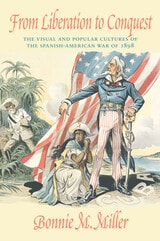
From Liberation to Conquest
The Visual and Popular Cultures of the Spanish-American War of 1898Bonnie M. Miller
University of Massachusetts Press, 2011
Although media campaigns initially advocated for the United States to step in to rescue Cuba from the horrors of colonial oppression, the war ended just months later with the U.S. acquisition of Spain's remaining empire, including Cuba, Puerto Rico, Guam, and the Philippines. President William McKinley heeded the call for war, with the American people behind him, and then proceeded to use the conflict to further his foreign policy agenda of expanding U.S. interests in the Caribbean and Far East.
Miller examines the shifting media portrayals of U.S. actions for the duration of the conflict, from liberation to conquest. She shows how the media capitalized on the public's thirst for drama, action, and spectacle and adapted to emerging imperial possibilities. Growing resistance to American imperialism by the war's end unraveled the consensus in support of U.S policy abroad and produced a rich debate that found expression in American visual and popular culture.
Global Storytelling, vol. 5, no. 2
Visual Storytelling and Entrepreneurship: The Representations of Daily LifeSpecial Issue Editors: Erick Behar-Villegas and Víctor Manuel Jiménez-Rodríguez
Michigan Publishing Services, 2026
Global Storytelling: Journal of Digital and Moving Images, housed at the Academy of Film and published by Michigan Publishing, is an open access, peer-reviewed international and interdisciplinary journal for intellectual debates concerning the politics, economics, culture, media, and technology of the moving image.
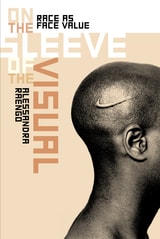
On the Sleeve of the Visual
Race as Face ValueAlessandra Raengo
Dartmouth College Press, 2013
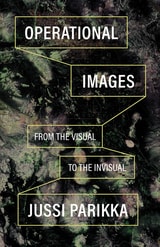
Operational Images
From the Visual to the InvisualJussi Parikka
University of Minnesota Press, 2023
An in-depth look into the transformation of visual culture and digital aesthetics
First introduced by the German filmmaker Harun Farocki, the term operational images defines the expanding field of machine vision. In this study, media theorist Jussi Parikka develops Farocki’s initial concept by considering the extent to which operational images have pervaded today’s visual culture, outlining how data technologies continue to develop and disrupt our understanding of images beyond representation.
Charting the ways that operational images have been employed throughout a variety of fields and historical epochs, Parikka details their many roles as technologies of analysis, capture, measurement, diagramming, laboring, (machine) learning, identification, tracking, and destruction. He demonstrates how, though inextricable from issues of power and control, operational images extend their reach far beyond militaristic and colonial violence and into the realms of artificial intelligence, data, and numerous aspects of art, media, and everyday visual culture.
Serving as an extensive guide to a key concept in contemporary art, design, and media theory, Operational Images explores the implications of machine vision and the limits of human agency. Through a wealth of case studies highlighting the areas where imagery and data intersect, this book gives us unprecedented insight into the ever-evolving world of posthuman visuality.
Cover alt text: Satellite photo on which white title words appear in yellow boxes. Yellow lines connect the boxes.
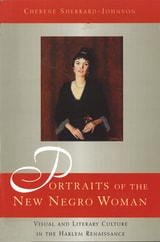
Portraits of the New Negro Woman
Visual and Literary Culture in the Harlem RenaissanceCherene M. Sherrard-Johnson
Rutgers University Press, 2007
Of all the images to arise from the Harlem Renaissance, the most thought-provoking were those of the mulatta. For some writers, artists, and filmmakers, these images provided an alternative to the stereotypes of black womanhood and a challenge to the color line. For others, they represented key aspects of modernity and race coding central to the New Negro Movement. Due to the mulatta’s frequent ability to pass for white, she represented a variety of contradictory meanings that often transcended racial, class, and gender boundaries.
In this engaging narrative, Cherene Sherrard-Johnson uses the writings of Nella Larsen and Jessie Fauset as well as the work of artists like Archibald Motley and William H. Johnson to illuminate the centrality of the mulatta by examining a variety of competing arguments about race in the Harlem Renaissance and beyond.
The Art of Solidarity
Visual and Performative Politics in Cold War Latin AmericaEdited by Jessica Stites Mor and Maria del Carmen Suescun Pozas
University of Texas Press, 2018
The Cold War claimed many lives and inflicted tremendous psychological pain throughout the Americas. The extreme polarization that resulted from pitting capitalism against communism held most of the creative and productive energy of the twentieth century captive. Many artists responded to Cold War struggles by engaging in activist art practice, using creative expression to mobilize social change. The Art of Solidarity examines how these creative practices in the arts and culture contributed to transnational solidarity campaigns that connected people across the Americas from the early twentieth century through the Cold War and its immediate aftermath.
This collection of original essays is divided into four chronological sections: cultural and artistic production in the pre–Cold War era that set the stage for transnational solidarity organizing; early artistic responses to the rise of Cold War polarization and state repression; the centrality of cultural and artistic production in social movements of solidarity; and solidarity activism beyond movements. Essay topics range widely across regions and social groups, from the work of lesbian activists in Mexico City in the late 1970s and 1980s, to the exchanges and transmissions of folk-music practices from Cuba to the United States, to the uses of Chilean arpilleras to oppose and protest the military dictatorship. While previous studies have focused on politically engaged artists or examined how artist communities have created solidarity movements, this book is one of the first to merge both perspectives.
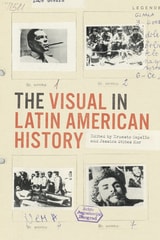
The Visual in Latin American History
Edited by Ernesto Capello and Jessica Stites Mor
University of Texas Press, 2026
A collection of essays examining the role of visual materials in shaping Latin American lives, historical thought, and worldmaking.
Historians have long valued visual media as a source of documentation and illustration. More recently, scholars have also been turning to visual media for another purpose: to directly observe historical processes. Paintings, maps, visual narratives, graffiti, photography—these objects do not simply transmit information about events; they are events. They imbue the historical change we seek to understand.
The Visual in Latin American History is a collection of essays that applies cutting-edge visual-studies methodology to the history of Central and South America and the Caribbean. Contributors focus on the visual production of postcolonial national imaginaries across Latin America—mythologies that purposely omitted Indigenous groups, African diasporic communities, and new migrants from Europe and Asia. The essays range across a vast territory, including erasure in archeology and Afro-Colombian portraiture; image making in domestic spaces and social movements; the visual vocabularies of urban planning and agrarian reform; military “performance” and anti-imperial Cold War exchanges; and humanitarian documentary along the US border.Collectively, the authors show how visual methods can radically transform our understanding of power and culture in Latin America and beyond.
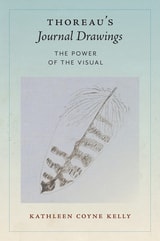
Thoreau's Journal Drawings
The Power of the VisualKathleen Coyne Kelly
University of Massachusetts Press, 2026
Examining journal drawings as an integral—and often delightful—feature of Thoreau’s work
In 1850, Henry David Thoreau began to draw in his Journal—a hedgehog’s quill, a locust’s wing, a goldenrod leaf. The sketches reflect his efforts to train his eye to observe more carefully, to look closely enough that he could see what was in front of him—with intention and attention. As Thoreau worked to combine the vivid language of a writer with the precision of a scientist, his drawings became more vital to the process. For him, writing and drawing were not separate activities; they were part of the same active, hands-on process of learning about the natural world.
Thoreau’s Journal Drawings offers a sustained examination of an understudied aspect of the Journal, emphasizing visual as well as textual analysis. It places Thoreau’s illustrated entries in the broader context of nineteenth-century scientific illustration, nature writing, and visual culture, while also offering close readings of key passages in which text and image work in tandem. The book opens up new possibilities for interpretation—both within the Journal and in the larger project of Thoreau’s thinking.
Ultimately, Thoreau’s illustrated Journal offers a case study in the complexities of representing the natural world through both language and image. His practice raises enduring questions about how we document, interpret, and mediate the more-than-human world across different forms of expression. To read the later volumes of Henry David Thoreau’s Journal without attending to his drawings is to overlook a vital dimension of his practice as both writer and observer.
Unframing the Visual
Visual Literacy Pedagogy in Academic Libraries and Information SpacesMaggie Murphy
Assoc of College & Research Libraries, 2023
In four parts, Unframing the Visual: Visual Literacy Pedagogy in Academic Libraries and Information Spaces explores:
- Participating in a Changing Visual Information Landscape
- Perceiving Visuals as Communicating Information
- Practicing Visual Discernment and Criticality
- Pursuing Social Justice through Visual Practice
Twenty-four full color chapters present a range of theoretical and practical approaches to visual literacy pedagogy that illustrate, connect with, extend, and criticize concepts from the Framework for Visual Literacy in Higher Education: Companion Document to the Framework for Information Literacy for Higher Education. Topics include using TikTok to begin a conversation on academic honesty and marginalization; supporting disciplines to move to multimodal public communication assignments; critical data visualization; and exclusionary practices in visual media.
In exploring the discussions and engaging with the activities in Unframing the Visual, you will find new inspiration for how to unframe, adapt, and apply visual literacy pedagogy and praxis in your work.