Results by title
5 books match the query 'Visualizing'
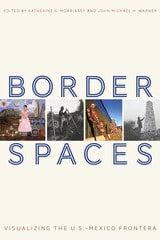
Border Spaces
Visualizing the U.S.-Mexico FronteraEdited by Katherine G. Morrissey and John-Michael H. Warner
University of Arizona Press, 2018
In Border Spaces, Katherine G. Morrissey, John-Michael H. Warner, and other essayists build on the insights of border dwellers, or fronterizos, and draw on two interrelated fields—border art history and border studies. The editors engage in a conversation on the physical landscape of the border and its representations through time, art, and architecture.
The volume is divided into two linked sections—one on border histories of built environments and the second on border art histories. Each section begins with a “conversation” essay—co-authored by two leading interdisciplinary scholars in the relevant fields—that weaves together the book’s thematic questions with the ideas and essays to follow.
Border Spaces is prompted by art and grounded in an academy ready to consider the connections between art, land, and people in a binational region.
Contributors
Maribel Alvarez
Geraldo Luján Cadava
Amelia Malagamba-Ansótegui
Mary E. Mendoza
Sarah J. Moore
Katherine G. Morrissey
Margaret Regan
Rebecca M. Schreiber
Ila N. Sheren
Samuel Truett
John-Michael H. Warner
Spectral Aesthetics
Visualizing the Crisis of Migrant DisappearanceChina Medel
University of Texas Press, 2026
Analyzing how artists reimagine migrant disappearance and visibility at the US–Mexico border.
In the mid-1990s, the US government implemented Prevention through Deterrence, a major buildup of troops, walls, and surveillance around El Paso and San Diego. Cut off from these crucial urban crossings, migrants flowed into the dangerous surrounding deserts, where some ten thousand have since died. This is all according to plan: Pentagon documents describe the strategy of funneling migrants toward “mortal danger.”
In this bracing critique, China Medel explores the aesthetics enabling and resisting the crisis of migrant death. The nation-state’s performance of sovereignty along the border, predicated on mass casualties, is tolerated and even celebrated, thanks to the images in our heads of racialized and therefore criminal bodies, made invisible as they disintegrate in the baking sand. Spectral Aesthetics shows how state officials and mainstream media, relying on postracial ideologies and white-supremacist agendas, collectively foster this picture of a brown body so abject that it is disposable. In close readings of artworks contesting this murderous visual regime, Medel discovers an alternative kind of sight, one emphasizing the ghostly traces of the dead. These are images not of the individual “alien” but of life itself, indisposable.
Visualizing the Carceral State
Art, Power, and AbolitionKeri Watson
University of Arkansas Press, 2027
Visualizing the Carceral State: Art, Power, and Abolition explores how visual culture has shaped, justified, and contested systems of incarceration. Bringing together leading scholars in art history and related fields, this interdisciplinary volume examines the images, objects, and spaces that have made the carceral state visible—in everything from prison architecture and colonial exhibitions to photography, print culture, and contemporary art. Across thirteen essays, contributors investigate how visual forms have helped construct public understandings of punishment, race, empire, and state authority. Thoughtfully edited by Keri Watson, Visualizing the Carceral State highlights cultural producers who have challenged these systems, offering alternative ways of seeing incarceration and imagining its abolition. Moving from the nineteenth century to the present and across multiple geopolitical contexts, this volume traces the visual languages through which carceral power operates and the creative practices that resist it. By situating art and visual culture at the center of debates about mass incarceration, Visualizing the Carceral State opens new avenues for thinking about the relationship between aesthetics, politics, and justice.
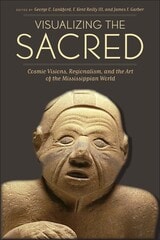
Visualizing the Sacred
Cosmic Visions, Regionalism, and the Art of the Mississippian WorldEdited by George E. Lankford, F. Kent Reilly III, and James F. Garber
University of Texas Press, 2011
The prehistoric native peoples of the Mississippi River Valley and other areas of the Eastern Woodlands of the United States shared a complex set of symbols and motifs that constituted one of the greatest artistic traditions of the pre-Columbian Americas. Traditionally known as the Southeastern Ceremonial Complex, these artifacts of copper, shell, stone, clay, and wood were the subject of the groundbreaking 2007 book Ancient Objects and Sacred Realms: Interpretations of Mississippian Iconography, which presented a major reconstruction of the rituals, cosmology, ideology, and political structures of the Mississippian peoples.
Visualizing the Sacred advances the study of Mississippian iconography by delving into the regional variations within what is now known as the Mississippian Iconographic Interaction Sphere (MIIS). Bringing archaeological, ethnographic, ethnohistoric, and iconographic perspectives to the analysis of Mississippian art, contributors from several disciplines discuss variations in symbols and motifs among major sites and regions across a wide span of time and also consider what visual symbols reveal about elite status in diverse political environments. These findings represent the first formal identification of style regions within the Mississippian Iconographic Interaction Sphere and call for a new understanding of the MIIS as a network of localized, yet interrelated religious systems that experienced both continuity and change over time.
Visualizing the Text
From Manuscript Culture to the Age of CaricatureLauren Beck
University of Delaware Press, 2017