Results by title
8 books match the query 'Voyages around the world'
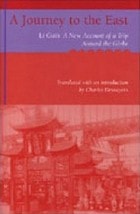
A Journey to the East
Li Gui's A New Account of a Trip Around the GlobeCharles Desnoyers
University of Michigan Press, 2004
A representative to the U.S. Centennial in Philadelphia, Li Gui went on to style himself as the first Chinese official to circle the globe, and his travel diary offers a revealing window into the Chinese view of the West in the late nineteenth century. As the first full-length English translation of this landmark excursion, A Journey to the East provides a welcome addition to primary source material on this time period.
Li Gui's experiences traveling through the United States offer a unique perspective on the newest technological and urban developments of the day in Philadelphia, New York, Washington, D.C., and other major U.S. cities. In his day, these observations on Japan, the United States, Great Britain, France, and their colonial possessions helped the Chinese government construct a more accurate picture of imperial power and statecraft abroad. Later, the diary became required reading for reformers and revolutionaries from Li Hongzhang to Mao Zedong.
Li's journal also provides rich material for exploring a number of theoretical issues stemming from the Sino-foreign encounter. He devotes considerable space to debunking the views of his colleagues regarding the importance of technology, finance, and communication. Most striking of all are his thoughts on gender and education, which place him within the ranks of "progressive" thinkers in any nineteenth-century society.
Undoubtedly important to China specialists, A Journey to the East will also appeal to anyone with an interest in American history, Asian studies, world history and Asian-American studies.
Charles Desnoyers is Associate Professor and Chair in the Department of History and Director of Asian Studies at La Salle University.
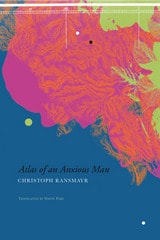
Atlas of an Anxious Man
Christoph Ransmayr
Seagull Books, 2015
Translated by Simon Pare, this unique account follows Ransmayr across the globe: from the shadow of Java’s volcanoes to the rapids of the Mekong and Danube Rivers, from the drift ice of the Arctic Circle to Himalayan passes, and on to the disenchanted islands of the South Pacific. Ransmayr begins again and again with, “I saw. . .” recounting to the reader the stories of continents, eras, and landscapes of the soul. Like maps, the episodes come together to become a book of the world—one that charts the life and death, happiness and fate of people bound up in images of breathtaking beauty.
“One of the German language’s most gifted young novelists.”—Library Journal, on The Terrors of Ice and Darkness
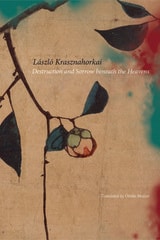
Destruction and Sorrow beneath the Heavens
ReportageLászló Krasznahorkai
Seagull Books, 2016
Known for his brilliantly dark fictional visions, László Krasznahorkai is one of the most respected European writers of his generation and the winner of the 2015 Man Booker International Prize. Here, he brings us on a journey through China at the dawn of the new millennium. On the precipice of its emergence as a global power, China is experiencing cataclysms of modernity as its harsh Maoist strictures meet the chaotic flux of globalism. What remains of the Middle Kingdom’s ancient cultural riches? And can a Westerner truly understand China’s past and present—or the murky waters where the two meet?
Destruction and Sorrow beneath the Heavens is both a travel memoir and the chronicle of a distinct intellectual shift as one of the most captivating contemporary writers and thinkers begins to engage with the cultures of Asia and the legacies of its interactions with Europe in a newly globalized society. Rendered in English by award-winning translator Ottilie Mulzet, Destruction and Sorrow beneath the Heavens is an important work, marking the emergence of Krasznahorkai as a truly global novelist.
Praise for Krasznahorkai
“The contemporary Hungarian master of the apocalypse.”—Susan Sontag
“Krasznahorkai delights in unorthodox description; no object is too insignificant for his worrying gaze. . . . He offers us stories that are relentlessly generative and defiantly irresolvable. They are haunting, pleasantly weird, and ultimately, bigger than the worlds they inhabit.”—New York Times
“Krasznahorkai is an expert with the complexity of human obsessions. Each of his books feel like an event, a revelation.”—Daily Beast
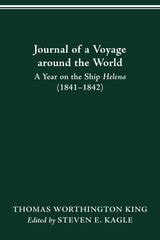
JOURNAL OF A VOYAGE AROUND THE WORLD
A YEAR ON THE SHIP HELENA (1841-1842)THOMAS WORTHINGTON KING
The Ohio State University Press, 2002
In 1841 Thomas Worthington King accepted a position as supercargo on the Helena, a ship some have called “the first American clipper,” as it was about to make its maiden voyage to China. Journal of a Voyage around the World recounts the travel of Thomas Worthington King on the Helena from 1841 to 1842.
In full and well-written entries, King recounts the routines and surprises of life at sea, where storms and calms could be equally threatening, and the next day might bring a stop at St. Helena to see Napoleon’s tomb or an encounter with pirates. King provides details often missing from histories that give a real sense of the period. In his description of Chile and Peru we learn about activities as diverse as cockfighting and courtship. We learn about produce and prisons, mints and monasteries, fruits and fashions. In his account of China, King vividly describes rivers so full of boats that one could “see no water—nothing but the large mat sales” and calm groves of “green lychee, or broad leaved & rustling plantain.”
Perhaps the most important subject of the diary is the diarist himself, whose talent and confidence develop on the pages of his record. Thomas Worthington King was born and raised in Chillicothe, Ohio, and was the grandson of two Ohio Senators: Rufus King and Thomas Worthington.
Letters from Clara
One Intrepid Woman's Travels on the Eve of War, 1936-1939Janet Newman
Wisconsin Historical Society Press, 2022
The Floating University
Experience, Empire, and the Politics of KnowledgeTamson Pietsch
University of Chicago Press, 2023
In 1926, New York University professor James E. Lough—an educational reformer with big dreams—embarked on a bold experiment he called the Floating University. Lough believed that taking five hundred American college students around the globe by ship would not only make them better citizens of the world but would demonstrate a model for responsible and productive education amid the unprecedented dangers, new technologies, and social upheavals of the post–World War I world. But the Floating University’s maiden voyage was also its last: when the ship and its passengers returned home, the project was branded a failure—the antics of students in hotel bars and port city back alleys that received worldwide press coverage were judged incompatible with educational attainment, and Lough was fired and even put under investigation by the State Department.
In her new book, Tamson Pietsch excavates a rich and meaningful picture of Lough’s grand ambition, its origins, and how it reveals an early-twentieth-century America increasingly defined both by its imperialism and the professionalization of its higher education system. As Pietsch argues, this voyage—powered by an internationalist worldview—traced the expanding tentacles of US power, even as it tried to model a new kind of experiential education. She shows that this apparent educational failure actually exposes a much larger contest over what kind of knowledge should underpin university authority, one in which direct personal experience came into conflict with academic expertise. After a journey that included stops at nearly fifty international ports and visits with figures ranging from Mussolini to Gandhi, what the students aboard the Floating University brought home was not so much knowledge of the greater world as a demonstration of their nation’s rapidly growing imperial power.
The Longest Voyage
Circumnavigators in the Age of DiscoveryRobert Silverberg
Ohio University Press, 1997
From the intense and brooding Magellan and the glamorous and dashing Sir Francis Drake; to Thomas Cavendish, who set off to plunder Spain’s American gold and the Dutch circumnavigators, whose numbers included pirates as well as explorers and merchants, Robert Silverberg captures the adventures and seafaring exploits of a bygone era.
Over the course of a century, European circumnavigators in small ships charted the coast of the New World and explored the Pacific Ocean. Characterized by fierce nationalism, competitiveness, and bloodshed, The Longest Voyage: Circumnavigators in the Age of Discovery captures the drama, danger, and personalities in the colorful story of the first voyages around the world. These accounts begin with Magellan’s unprecedented 1519–22 circumnavigation, providing an immediate, exciting, and intimate glimpse into that historic venture. The story includes frequent threats of mutiny; the nearly unendurable extremes of heat, cold, hunger, thirst, and fatigue; the fear, tedium, and moments of despair; the discoveries of exotic new peoples and strange new lands; and, finally, Magellan’s own dramatic death during a fanatical attempt to convert native Philippine islanders to Christianity.
Capturing the total context of political climate and historical change that made the Age of Discovery one of excitement and drama, Silverberg brings a motley crew of early ocean explorers vividly to life.

Wanderlust
The Amazing Ida Pfeiffer, the First Female TouristJohn van Wyhe
National University of Singapore Press, 2019
In 1797 in Vienna, Ida Pfeiffer was born into a world that should have been too small for her dreams. The daughter of an Austrian merchant, she made clear from an early age that she would not be bound by convention, dressing in boys’ clothing and playing sports. After her tutor introduced her to stories of faraway lands, she became determined to see the world first-hand. This determination led to a lifetime of travel—much of it alone—and made her one of the most famous women of the nineteenth century.
Pfeiffer faced many obstacles, not least expectations of her gender. She was a typical nineteenth century housewife with a husband and two sons. She was not wealthy nor well connected. Yet after the death of her husband, and once her sons were grown and settled, at the age of forty-one she set off on her first journey, not telling anyone the true extent of her travel plans. Between that trip and her death in 1858, she would barely pause for breath, circling the globe twice—the first woman to do so—and publishing numerous popular books about her travels. Usually traveling solo, Pfeiffer faced storms at sea, trackless deserts, plague, malaria, earthquakes, robbers, murderers, and other risks.
In Wanderlust, John Van Wyhe tells Pfeiffer’s story, with generous excerpts from her published accounts, tell of her involvement with spies, international intrigue, and more. The result is a compelling portrait of the remarkable life of a pioneer unjustly forgotten.