Results by title
16 books match the query 'Wales'
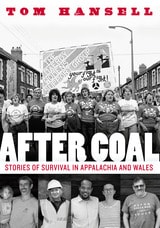
After Coal
Stories of Survival in Appalachia and WalesTom Hansell
West Virginia University Press, 2018
What happens when fossil fuels run out? How do communities and cultures survive?
Central Appalachia and south Wales were built to extract coal, and faced with coal’s decline, both regions have experienced economic depression, labor unrest, and out-migration. After Coal focuses on coalfield residents who chose not to leave, but instead remained in their communities and worked to build a diverse and sustainable economy. It tells the story of four decades of exchange between two mining communities on opposite sides of the Atlantic, and profiles individuals and organizations that are undertaking the critical work of regeneration.
The stories in this book are told through interviews and photographs collected during the making of After Coal, a documentary film produced by the Center for Appalachian Studies at Appalachian State University and directed by Tom Hansell. Considering resonances between Appalachia and Wales in the realms of labor, environment, and movements for social justice, the book approaches the transition from coal as an opportunity for marginalized people around the world to work toward safer and more egalitarian futures.
Britain's Imperial Histories
Jeremy black
St. Augustine's Press, 2025
Military historian Jeremy Black continues his review of the global context of martial conflict and spatial conquest into the modern era (16th–20th centuries), focusing on the British empire and its lasting effect on this landscape. Black offers a representation of the "imperial experience" that is eye-opening for a generation of readers who associate this with a strictly negative connotation. But the notion of an empire is not understood at all if this is true. Indeed, not only is there "no one type of empire, no prototype," the basis of empire is much more 'order' than it is 'invasion.' Furthermore, reflecting on the unavoidable cultural and sociological symbiosis and transfer, Black makes the case that in all instances of influence and encounter, sameness between peoples never results. But how does one distinguish influence from control? What are the long-term benefits among peoples? "To many today, empire might seem obvious: governors with ostrich-feathers in their colonial garb ruling non-White peoples; but this scarcely describes the situation across time and place."
Why did the European empires ultimately fall? When approaching this question, Britain's Imperial Histories proposes that the perspective of "making and remaking of the international system" be made distinct from the "rational pursuit of power and wealth and the use of technology." As seen in earlier work, Black's brilliance is centered in his capacity to incorporate the complexity of war and its battles in his assessments, while never neglecting the fact that wars themselves have specific and broad contexts that must be read thoroughly.
Another highlight of the present work includes more insight into the British-American relationship and American political identity. "If the British empire is blamed for many of the aspects of modernization and globalization, is also serves as a way of offering historical depth to a critique of American power." Yet he is also adept at drawing in Asia into the study and does so with uncommon acumen. This book provides an approach to history that has been neglected, especially in the New World, and connects the present to the past with a kind of hermeneutical responsibility that has been of late abandoned.
Coal in our Veins
A Personal JourneyErin Ann Thomas
Utah State University Press, 2012
In Coal in Our Veins, Erin Thomas employs historical research, autobiography, and journalism to intertwine the history of coal, her ancestors' lives mining coal, and the societal and environmental impacts of the United States' dependency on coal as an energy source. In the first part of her book, she visits Wales, native ground of British coal mining and of her emigrant ancestors. The Thomases' move to the coal region of Utah—where they witnessed the Winter Quarters and Castle Gate mine explosions, two of the worst mining disasters in American history—and the history of coal development in Utah form the second part.
Then Thomas investigates coal mining and communities in West Virginia, near her East Coast home, looking at the Sago Mine collapse and more widespread impacts of mining, including population displacement, mountain top removal, coal dust dispersal, and stream pollution, flooding, and decimation. The book's final part moves from Washington D.C.—and an examination of coal, CO2, and national energy policy—back to Utah, for a tour of a coal mine, and a consideration of the Crandall Canyon mine cave-in, back to Wales and the closing of the oldest operating deep mine in the world and then to a look at energy alternatives, especially wind power, in West Virginia and Pennsylvania.
Electronic Evidence and Electronic Signatures
Stephen Mason and Daniel Seng
University of London Press, 2021
In this updated edition of a well-established practitioner text, Stephen Mason and Daniel Seng have brought together a team of experts in the field to provide an exhaustive treatment of electronic evidence and electronic signatures. This fifth edition continues to follow the tradition in English evidence textbooks by basing the text on the law of England and Wales, with appropriate citations of relevant case law and legislation from other jurisdictions.

Fasti Ecclesiae Anglicanae 1541–1857
The Welsh Dioceses XIVCompiled by William H. Campbell
University of London Press, 2026
A detailed history of the Church of England’s Welsh dioceses, including the building of cathedrals and churches.
The volumes in this series trace the process of reorganization and reform that took place in the Church of England after the Norman conquest, with the building of new cathedrals, the establishment of new constitutions for their chapters, and the appointment of foreign clergy. In this period, when many documents are undated, the chronological framework is provided by the careers of bishops, dignitaries, canons, and cathedral priors.
This volume covers the years 1541 to 1857, with a focus on the Welsh dioceses. During this period, six new dioceses were created out of larger dioceses, with former abbey churches named as their cathedrals. These fourteen cathedrals were known as the New Foundation, as compared with the thirteen medieval secular cathedrals of the Old Foundation. Further substantial reorganization took place in the 1830s, and additional dioceses were created to meet the needs of the period. This volume offers a detailed and comprehensive account of the period, making it an essential research tool for historians.
Law and Justice in the 1950s
Case Studies From a Neglected DecadeEdited by Fiona Cownie and Rosemary Auchmuty
University of London Press, 2026
The 1950s were a decade of considerable legal development in England and Wales, despite often being regarded as very conservative in contrast to the more radical 1960s and 1970s. This collection illustrates the breadth of those developments, providing a sociolegal perspective on a range of topics across criminal, property, family, commercial, environmental, and public law, as well as legal education.
Drawing on case studies from the Great London Smog in 1952, the treatment of women in the Wolfenden Report, divorce law reform, the takeover battle for the Savoy Hotel in 1953, law on the radio, and more, this book throws new light on current debates about the relationship between law and issues of justice, inclusion, and equality in different spheres of activity.
Written for historians and legal specialists alike, Law and Justice in the 1950s explores the stories behind the laws in this neglected decade. In revealing the historical context, arguments, and controversies raised at the time and the different perspectives of the parties involved, it offers a greater understanding of why we have the law we have now and of these issues as they continue to be played out in the early twenty-first century.
Legal Records at Risk
A Strategy for Safeguarding our Legal HeritageClare Cowling
University of London Press, 2019

Locating the Audience
How People Found Value in National Theatre WalesKirsty Sedgman
Intellect Books, 2016
Making Sense of the Census Revisited
Census Records for England and Wales,1801-1901. A Handbook for Historical ResearchersEdward Higgs
University of London Press, 2005
Miraculous Simplicity
Essays on R.S. ThomasWilliam V. Davis
University of Arkansas Press, 1993
In the autobiographical essay, Thomas reveals his passion for his homeland and his ever-present hunger for spiritual and natural exploration:
those rocks, I certainly was reminded of the transience of human existence,
and my own in particular. As Pindar put it: “A dream about a
shadow is man.” I began to ponder more the being and nature of God
and his relation to the late twentieth-century situation, which science and
technology had created in the western world. Where did the ancient
world of rock and ocean fit into an environment in which nuclear physics
and the computer were playing an increasingly prominent part? . . .
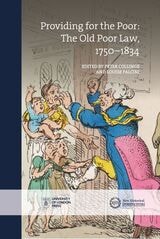
Providing for the Poor
The Old Poor Law, 1750-1834Edited by Peter Collinge and Louise Falcini
University of London Press, 2022
The Old Poor Law, which was established in 1601 in England and Wales and was in force until 1834, was administered by the local parish and dispensed goods and services to paupers, providing a uniquely comprehensive, premodern system of support for the poor. Providing for the Poor brings together academics and practitioners from across disciplines to reexamine the micropolitics of poverty in the long eighteenth century through the eyes of the poor, their providers, and enablers. Covering such topics as the providence of the parochial sixpence, which was given in order to get a beggar to move along to another parish, to coercive marriages, plebeian clothing, and the much broader implications of vagrancy toward the end of the long eighteenth century, this volume aims to bridge the gaps in our understanding of the experiences of people across the social spectrum whose lives were touched by the Old Poor Law. It brings together some of the wider arguments concerning the nature of welfare during economically difficult times and documents the rising bureaucracy inherent in the system to produce a radical new history of the Old Poor Law in astonishing detail.
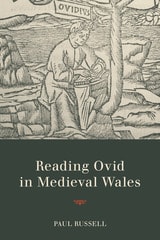
Reading Ovid in Medieval Wales
Paul Russell
The Ohio State University Press, 2017
Russell argues that this annotated version of the Ars amatoria arose out of the teaching traditions of the Carolingian world and that the annotation, as we have it, was the product of a cumulative process of glossing and commenting on the text. He then surveys other glossed Ovid manuscripts to demonstrate how that accumulation was built up. Russell also explores the fascinating issue of why Ovid’s love poetry should be used to teach Latin verse in monastic contexts. Finally, he discusses the connection between this manuscript and the numerous references to Ovid in later Welsh poetry, suggesting that the Ovidian references should perhaps be taken to refer to love poetry more generically.
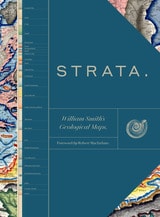
Strata
William Smith’s Geological MapsEdited by the Oxford University Museum of Natural History
University of Chicago Press, 2020
This sumptuous volume begins with an introduction by Douglas Palmer that places Smith’s work in the context of earlier, concurrent, and subsequent ideas regarding the structure and natural processes of the earth, geographical mapping, and biostratigraphical theories. The book is then organized into four parts, each beginning with four sheets from Smith’s hand-colored, 1815 strata map, accompanied by related geological cross-sections and county maps, and followed by fossil illustrations by Smith contemporary James Sowerby, all organized by strata. Essays between each section explore the aims of Smith’s work and its application in the fields of mining, agriculture, cartography and hydrology. Strata concludes with reflections on Smith’s later years as an itinerant geologist and surveyor, plagiarism by a rival, receipt of the first Wollaston Medal in recognition of his achievements, and the influence of his geological mapping and biostratigraphical theories on the sciences—all of which culminated in the establishment of the modern geological timescale.
Featuring a foreword by Robert Macfarlane, Strata is a glorious testament to the lasting geological and illustrative genius of William Smith, a collection as colossal and awe-inspiring as the layers of the Earth themselves.
The Clinical Legal Education Handbook
Edited by Linden Thomas and Nicholas Johnson
University of London Press, 2020
CLE has become an increasingly popular method of legal education in recent years. By the end of 2013 at least 70% of all law schools in the United Kingdom were delivering some type of CLE, and 25% of these offered credit-bearing CLE programs. It is almost certain that this number will increase in the years to come with the advent of the forthcoming Solicitors’ Qualifying Examination, which will allow time spent volunteering in a student law clinic to count as “qualifying work experience.” However, despite the popularity of CLE, there is currently very little information available about the best practices for setting up and delivering these programs.
The Handbook seeks to remedy this gap, offering an invaluable resource to staff involved in running law clinics, both as a practical guide to establishing and running their programs and as a teaching resource and recommended text on clinical programs. It will also act as a resource for clinical legal education researchers who wish to engage in regulatory, pedagogic, and legal service delivery research in this area.
The World of Kate Roberts
Selected Stories, 1925-1981Joseph Clancy
Temple University Press, 1991
Work and the Carceral State
Jon Burnett
Pluto Press, 2022
During 2019-20 in England and Wales, over 17 million hours of labor were carried out by more than 12,500 people incarcerated in prisons, while many people in immigration detention centers were also put to work. These people constitute a sub-waged, captive workforce who are frequently discarded by the state when done with.
Work and the Carceral State examines these forms of work as part of a broader exploration of the relationship between criminalization, criminal justice, immigration policy and labor, tracing their lineage through the histories of transportation and banishment, of houses of correction and prisons, to the contemporary production of work.
Criminalization has been used to enforce work and to discipline labor throughout the history of England and Wales. This book demands that we recognise the carceral state as operating at the frontier of labor control in the 21st century.