Results by title
2 books match the query 'Wandering'
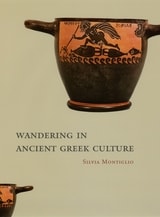
Wandering in Ancient Greek Culture
Silvia Montiglio
University of Chicago Press, 2005
From the Archaic period to the Greco-Roman age, the figure of the wanderer held great significance in ancient Greece. In the first comprehensive study devoted to this theme, Wandering in Ancient Greek Culture unearths the many meanings attached to this practice over the centuries. Employing a broad range of literary and philosophical texts, Silvia Montiglio demonstrates how wandering has been conceptualized from Homer's Odysseus—the hero "who wandered much"—in the eighth century BCE to pagan sages of the early Roman Empire such as Saint John the Baptist in the first century AD.
Attitudes toward wandering have evolved in accordance with cultural perspectives, causing some characterizations to persist while others have faded. For instance, the status of wanderers in Greek societies varied from outcasts and madmen to sages, who were recognized as mystical, even divine. Examining the act of wandering through many lenses, Wandering in Ancient Greek Culture shows how the transformation of the wanderer coincided with new perceptions of the world and of travel and invites us to consider its definition and import today.
Attitudes toward wandering have evolved in accordance with cultural perspectives, causing some characterizations to persist while others have faded. For instance, the status of wanderers in Greek societies varied from outcasts and madmen to sages, who were recognized as mystical, even divine. Examining the act of wandering through many lenses, Wandering in Ancient Greek Culture shows how the transformation of the wanderer coincided with new perceptions of the world and of travel and invites us to consider its definition and import today.
[more]
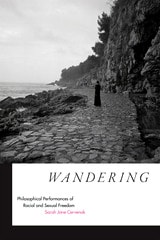
Wandering
Philosophical Performances of Racial and Sexual FreedomSarah Jane Cervenak
Duke University Press, 2014
Combining black feminist theory, philosophy, and performance studies, Sarah Jane Cervenak ruminates on the significance of physical and mental roaming for black freedom. She is particularly interested in the power of wandering or daydreaming for those whose mobility has been under severe constraint, from the slave era to the present. Since the Enlightenment, wandering has been considered dangerous and even criminal when associated with people of color. Cervenak engages artist-philosophers who focus on wayward movement and daydreaming, or mental travel, that transcend state-imposed limitations on physical, geographic movement. From Sojourner Truth's spiritual and physical roaming to the rambling protagonist of Gayl Jones's novel Mosquito, Cervenak highlights modes of wandering that subvert Enlightenment-based protocols of rationality, composure, and upstanding comportment. Turning to the artists Pope.L (William Pope.L), Adrian Piper, and Carrie Mae Weems, Cervenak argues that their work produces an otherworldly movement, an errant kinesis that exceeds locomotive constraints, resisting the straightening-out processes of post-Enlightenment, white-supremacist, capitalist, sexist, and heteronormative modernity. Their roaming animates another terrain, one where free, black movement is not necessarily connected to that which can be seen, touched, known, and materially valued.
[more]