Results by title
3 books match the query 'Wang, Jing'
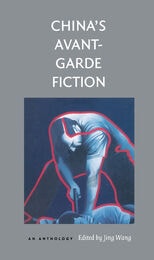
China's Avant-Garde Fiction
An AnthologyJing Wang, ed.
Duke University Press, 1998
Filled with mirages, hallucinations, myths, mental puzzles, and the fantastic, the contemporary experimental fiction of the Chinese avant-garde represents a genre of storytelling unlike any other. Whether engaging the worn spectacle of history, expressing seemingly unmotivated violence, or reinventing outlandish Tibetan myths, these stories are defined by their devotion to theatrics and their willful apathy toward everything held sacred by the generation that witnessed the Cultural Revolution.
Jing Wang has selected provocative examples of this new school of writing, which gained prominence in the late 1980s. Contradicting many long-cherished beliefs about Chinese writers—including the alleged tradition of writing as a political act against authoritarianism—these stories make a dramatic break from conventions of modern Chinese literature by demonstrating an irreverence toward history and culture and by celebrating the artificiality of storytelling. Enriched by the work of a distinguished group of translators, this collection presents an aesthetic experience that may have outraged many revolutionary-minded readers in China, but one that also occupies an important place in the canon of Chinese literature. China’s Avant-Garde Fiction brings together a group of exceptional writers (including Raise the Red Lantern author Su Tong) to the attention of an English-speaking audience.
This book will be enjoyed by those interested in Chinese literature, culture, and society—particularly readers of contemporary fiction.
Contributors. Bei Cun, Can Xue, Gei Fei, Ma Yuan, Su Tong, Sun Ganlu, Yu Hua
Translators. Eva Shan Chou, Michael S. Duke, Howard Goldblatt, Ronald R. Janssen, Andrew F. Jones, Denis C. Mair, Victor H. Mair, Caroline Mason, Beatrice Spade, Kristina M. Torgeson, Jian Zhang, Zhu Hong
[more]

Chinese Popular Culture and the State, Volume 9
Jing Wang, ed.
Duke University Press, 0
The State Question in Chinese Popular Culture presents a series of groundbreaking essays that challenge the paradigm dividing Chinese culture into "official" and "unofficial" categories. This binary, which mirrors the "high/low" dichotomy familiar to all practitioners of cultural studies, finds its roots in Cold-War Western romanticization of a Chinese popular culture that stood in defiant opposition to the Communist state. This special issue disputes such simplistic representations and offers new critical trajectories crucial to the study of contemporary Chinese popular culture.
Contributors. Tani E. Barlow, Dai Jinhua, Judith Farquhar, David S. G. Goodman, James L. Hevia, Li Hsiaoti, Ralph Litzinger, Eric Kit-Wa Ma, Jonathan Scott Noble, Jing Wang
[more]
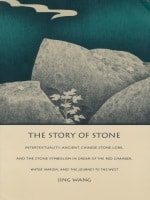
The Story of Stone
Intertextuality, Ancient Chinese Stone Lore, and the Stone Symbolism in <i>Dream of the Red Chamber</i>, <i>Water Margin</i>, and <i>The Journey to the West</i>Jing Wang
Duke University Press, 1992
In this pathbreaking study of three of the most familiar texts in the Chinese tradition—all concerning stones endowed with magical properties—Jing Wang develops a monumental reconstruction of ancient Chinese stone lore. Wang’s thorough and systematic comparison of these classic works illuminates the various tellings of the stone story and provides new insight into major topics in traditional Chinese literature.
Bringing together Chinese myth, religion, folklore, art, and literature, this book is the first in any language to amass the sources of stone myth and stone lore in Chinese culture. Uniting classical Chinese studies with contemporary Western theoretical concerns, Wang examines these stone narratives by analyzing intertextuality within Chinese traditions. She offers revelatory interpretations to long-standing critical issues, such as the paradoxical character of the monkey in The Journey to the West, the circularity of narrative logic in The Dream of the Red Chamber, and the structural necessity of the stone tablet in Water Margin.
By both challenging and incorporating traditional sinological scholarship, Wang’s The Story of Stone reveals the ideological ramifications of these three literary works on Chinese cultural history and makes the past relevant to contemporary intellectual discourse. Specialists in Chinese literature and culture, comparative literature, literary theory, and religious studies will find much of interest in this outstanding work, which is sure to become a standard reference on the subject.
[more]