Results by title
388 books match the query 'War' and 34 start with a
A Different Face of War
Memories of a Medical Service Corps Officer in VietnamJames G. Van Straten
University of North Texas Press, 2015
A Hercules in the Cradle
War, Money, and the American State, 1783–1867Max M. Edling
University of Chicago Press, 2014
Two and a half centuries after the American Revolution the United States stands as one of the greatest powers on earth and the undoubted leader of the western hemisphere. This stupendous evolution was far from a foregone conclusion at independence. The conquest of the North American continent required violence, suffering, and bloodshed. It also required the creation of a national government strong enough to go to war against, and acquire territory from, its North American rivals.
In A Hercules in the Cradle, Max M. Edling argues that the federal government’s abilities to tax and borrow money, developed in the early years of the republic, were critical to the young nation’s ability to wage war and expand its territory. He traces the growth of this capacity from the time of the founding to the aftermath of the Civil War, including the funding of the War of 1812 and the Mexican War. Edling maintains that the Founding Fathers clearly understood the connection between public finance and power: a well-managed public debt was a key part of every modern state. Creating a debt would always be a delicate and contentious matter in the American context, however, and statesmen of all persuasions tried to pay down the national debt in times of peace.
A Moral Military
Sidney Axinn
Temple University Press, 1990
A Moral Military
Sidney Axinn
Temple University Press, 2008
In this new edition of the classic book on the moral conduct of war, Sidney Axinn provides a full-length treatment of the military conventions from a philosophical point of view. Axinn considers these basic ethical questions within the context of the laws of warfare: Should a good soldier ever disobey a direct military order? Are there restrictions on how we fight a war? What is meant by “military honor,” and does it really affect the contemporary soldier? Is human dignity possible under battlefield conditions?
Axinn answers “yes” to these questions. His objective in A Moral Military is to establish a basic framework for moral military action and to assist in analyzing military professional ethics. He argues for the seriousness of the concept of military honor but limits honorable military activity by a strict interpretation of the notion of war crime.
With revisions and expansions throughout, including a new chapter on torture, A Moral Military is an essential guide on the nature of war during a time when the limits of acceptable behavior are being stretched in new directions.
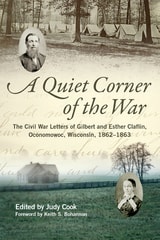
A Quiet Corner of the War
The Civil War Letters of Gilbert and Esther Claflin, Oconomowoc, Wisconsin, 1862–1863Gilbert Claflin and Esther Claflin; Edited by Judy Cook; Foreword by Keith S. Bohannon
University of Wisconsin Press, 2013
In 2002, Judy Cook discovered a packet of letters written by her great-great-grandparents, Gilbert and Esther Claflin, during the American Civil War. An unexpected bounty, these letters from 1862–63 offer visceral witness to the war, recounting the trials of a family separated. Gilbert, an articulate and cheerful forty-year-old farmer, was drafted into the Union Army and served in the Thirty-Fourth Wisconsin Infantry garrisoned in western Kentucky along the Mississippi. Esther had married Gilbert when she was fifteen; now a woman with two teenage sons, she ran the family farm near Oconomowoc, Wisconsin, in Gilbert’s absence.
In his letters, Gilbert writes about food, hygiene, rampant desertions by drafted men, rebel guerrilla raids, and pastimes in the daily life of a soldier. His comments on interactions with Confederate prisoners and ex-slaves before and after the Emancipation Proclamation reveal his personal views on monumental events. Esther shares in her letters the challenges and joys of maintaining the farm, accounts of their boys Elton and Price, concerns about finances and health, and news of their local community and extended family. Esther’s experiences provide insight into family, farm, and village life in the wartime North, an often overlooked aspect of Civil War history.
Judy Cook has made the letters accessible to a wider audience by providing historical context with notes and appendixes. The volume includes a foreword by Civil War historian Keith S. Bohannon.
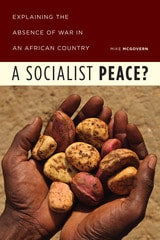
A Socialist Peace?
Explaining the Absence of War in an African CountryMike McGovern
University of Chicago Press, 2017
Guinea is rich in resources, but its people are some of the poorest in the world. Its political situation is polarized by fiercely competitive ethnic groups. Weapons flow freely through its lands and across its borders. And, finally, it is still recovering from the oppressive regime of Sékou Touré. McGovern argues that while Touré’s reign was hardly peaceful, it was successful—often through highly coercive and violent measures—at establishing a set of durable national dispositions, which have kept the nation at peace. Exploring the ambivalences of contemporary Guineans toward the afterlife of Touré’s reign as well as their abiding sense of socialist solidarity, McGovern sketches the paradoxes that undergird political stability.
A Study of War
Quincy Wright
University of Chicago Press, 1983
"The most comprehensive work ever published in any language on the history, the nature, the causes, and the cure of war. . . . A Study of War is a liberal education in the social disciplines."—Frederick L. Schuman
"A major contribution to the realistic study of international relations."—Garrett Mattingly, New York Times
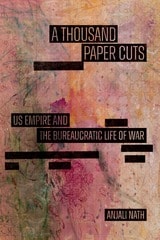
A Thousand Paper Cuts
US Empire and the Bureaucratic Life of WarAnjali Nath
Duke University Press, 2025
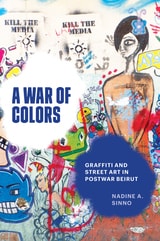
A War of Colors
Graffiti and Street Art in Postwar BeirutNadine A. Sinno
University of Texas Press, 2024
Demonstrates the role of Beirut’s postwar graffiti and street art in transforming the cityscape and animating resistance.
Over the last two decades in Beirut, graffiti makers have engaged in a fierce “war of colors,” seeking to disrupt and transform the city’s physical and social spaces. In A War of Colors, Nadine Sinno examines how graffiti and street art have been used in postwar Beirut to comment on the rapidly changing social dynamics of the country and region. Analyzing how graffiti makers can reclaim and transform cityscapes that were damaged or monopolized by militias during the war, Sinno explores graffiti’s other roles, including forging civic engagement, commemorating cultural icons, protesting political corruption and environmental violence, and animating resistance. In addition, she argues that graffiti making can offer voices to those who are often marginalized, especially women and LGBTQ people. Copiously illustrated with images of graffiti and street art, A War of Colors is a visually captivating and thought-provoking journey through Beirut, where local and global discourses intersect on both scarred and polished walls in the city.
A War of Words in the Discourse of Trade
The Rhetorical Constitution of MetaphorPhilip Eubanks
Southern Illinois University Press, 2000
This study by Phillip Eubanks challenges traditional accounts of metaphor and significantly expands theories of "conceptual" metaphor by examining Trade Is War metaphor as it occurs in concrete discourse.
Although scholarly interest in metaphor as an aesthetic, linguistic, and cognitive phenomenon has long endured, Eubanks is among the first to consider metaphor in its sociohistorical role. Questioning major accounts of metaphor from Aristotle to the present, Eubanks argues that metaphor is not just influenced by but actually is constituted by its concrete operation.
Far-reaching in its implications for our understanding of metaphor, Eubanks’s premise enables us to see metaphor as a sweeping rhetorical entity even as it accounts for the more localized operations of metaphor of interest to linguists, philosophers of language, and cognitive scientists. Providing a new model of metaphoric functioning, Eubanks reconsiders the most promising account of metaphor to date, the notion of "conceptual metaphor.”
Eubanks focuses on the conceptual metaphor Trade Is War—a metaphor found wherever people discuss business and commerce—to develop his rhetorical model of metaphor. He analyzes Trade Is War as it occurs in the print news media, on television discussion shows, in academic works, in popular nonfiction and novels, in historic economic commentary, and in focus group talk. While these examples do reveal a rich variety in the make-up of Trade Is War, much more than mere variety is at stake.
Trade Is War is implicated in an extended and rhetorically complex conversation with other metaphors and literal concepts: trade is peace, Trade Is a Game, Trade Is Friendship, Trade is a Journey, and Markets Are Containers. The recognition and analysis of this constituting conversation furthers a reevaluation theory. What also emerges, however, is a valuable portrait of the discourse of trade itself, a discourse that depends importantly upon a responsive interchange of metaphors.
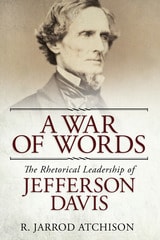
A War of Words
The Rhetorical Leadership of Jefferson DavisR. Jarrod Atchison
University of Alabama Press, 2017
Numerous biographies of Jefferson Davis have been penned; however, until now, there had been no substantive analysis of his public discourse as president of the Confederacy. R. Jarrod Atchison’s A War of Words uses concepts from rhetorical theory and public address to help answer a question that has intrigued scholars from a variety of disciplines since the collapse of the Confederacy: what role, if any, did Davis play in the collapse of Confederate nationalism?
Most discussions of Davis and nationalism focus on the military outcomes of his controversial wartime decisions. A War of Words focuses less on military outcomes and argues instead that, in the context of the Confederacy, Jefferson Davis’s rhetorical leadership should have been responsible for articulating a vision for the nation—including the core tenets of its identity, the values the nation should hold dear, the principles it should never compromise, and the goals it should set for its future. Undoubtedly, Davis possessed the skills necessary to make a persuasive public argument. It is precisely because Davis’s oratory skills were so powerful that there is room to judge how he used them. In short, being a great orator is not synonymous with successful rhetorical leadership.
Atchison posits that Davis’s initial successes constrained his rhetorical options later in the war. A War of Words concludes that, in the end, Davis’s rhetorical leadership was a failure because he was unable to articulate a coherent Confederate identity in light of the sacrifices endured by the populace in order to sustain the war effort.

A War on Terror
Afghanistan and AfterPaul Rogers
Pluto Press, 2004
Paul Rogers is one of the world's leading security experts. Since the 11 September attacks, he has been a regular guest on TV news channels throughout America and Britain, where he has offered expert advice on the real implications of 9/11 and Bush's 'war on terror'. His articles in newspapers around the world, and in the web journal Open Democracy, have become essential reading for many thousands of people, including government officials, senior military, heads of UN agencies, opinion formers, journalists and peace activists.
A War on Terror is Paul Roger's radical assessment of Bush's new policy, the way it has affected world security and the grave implications that it holds for future peace, not only in the Middle East but throughout the world. Moving from the war in Afghanistan and its aftermath to the Israeli/Palestinian conflict, the continuing development of al-Qaida and its associates through to the war on Iraq, Rogers presents a uniquely cogent analysis of these rapid and traumatic events.
In a world in which the US and other states of the Atlantic community are increasingly speaking a different language to that of the majority of the world, Paul Rogers offers a vital critical assessment of the language of dominance and control as 'the New American Century' unfolds.
For the US, in particular, the post-9/11 world is one in which it is essential to maintain firm control of international security, extending to pre-emptive military action. In this book, Rogers demonstrates how futile, mistaken and deeply counter-productive that belief is, and points the way to more effective routes to a more just and secure world.
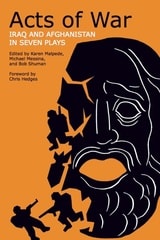
Acts of War
Iraq and Afghanistan in Seven PlaysKaren Malpede
Northwestern University Press, 2011
After the Fall
War and Occupation in Irène Némirovsky's Suite françaiseNathan Bracher
Catholic University of America Press, 2010
Agents of War
A History of Chemical and Biological Weapons, Second Expanded EditionEdward M. Spiers
Reaktion Books, 2021
Air Power in War
Arthur W. Tedder
University of Alabama Press, 2010
Arthur Tedder, who was knighted and raised to the peerage for his contributions to the Allied victory in World War II, served in the British air force in World War I and played an important role in professionalizing and organizing British air forces between the two world wars. During World War II, he held a succession of increasingly vital air force posts.
In addition to his achievements as Air Commander-in-Chief in the North African theater early in the war, Tedder’s most lasting contribution was as Deputy Supreme Commander under Dwight D. Eisenhower. He deserves much credit for keeping the Allied command functioning and harmonious. He was also the architect of the successful air strategy Eisenhower adopted for the Normandy invasion of 1944, which departed from both the British and American existing doctrine and models by concentrating on German rail systems rather than on either civilian or industrial targets.
Alice Lakwena and the Holy Spirits
War in Northern Uganda, 1985–97Heike Behrend
Ohio University Press, 1999
In August 1986, Alice Auma, a young Acholi woman in northern Uganda, proclaiming herself under the orders of a Christian spirit named Lakwena, raised an army called the “Holy Spirit Mobile Forces.” With it she waged a war against perceived evil, not only an external enemy represented by the National Resistance Army of the government, but internal enemies in the form of “impure” soldiers, witches, and sorcerers. She came very close to her goal of overthrowing the government but was defeated and fled to Kenya.
This book provides a unique view of Alice’s movement, based on interviews with its members and including their own writings, examining their perceptions of the threat of external and internal evil. It concludes with an account of the successor movements into which Alice’s forces fragmented and which still are active in the civil wars of the Sudan and Uganda.
Always at War
British Public Narratives of WarThomas Colley
University of Michigan Press, 2019
Compelling narratives are integral to successful foreign policy, military strategy, and international relations. Yet often narrative is conceived so broadly it can be hard to identify. The formation of strategic narratives is informed by the stories governments think their people tell, rather than those they actually tell. This book examines the stories told by a broad cross-section of British society about their country’s past, present, and future role in war, using in-depth interviews with 67 diverse citizens. It brings to the fore the voices of ordinary people in ways typically absent in public opinion research.
Always at War complements a significant body of quantitative research into British attitudes to war, and presents an alternative case in a field dominated by US public opinion research. Rather than perceiving distinct periods between war and peace, British citizens see their nation as so frequently involved in conflict that they consider the country to be continuously at war. At present, public opinion appears to be a stronger constraint on Western defense policy than ever.

American Women Report World War I
Chris Dubbs
University of North Texas Press, 2021
An Empire of Indifference
American War and the Financial Logic of Risk ManagementRandy Martin
Duke University Press, 2007
Drawing on theorists including Michel Foucault, Giorgio Agamben, Michael Hardt, Antonio Negri, and Achille Mbembe, Martin illuminates a frightening financial logic that must be understood in order to be countered. Martin maintains that finance divides the world between those able to avail themselves of wealth opportunities through risk taking (investors) and those who cannot do so, who are considered “at risk.” He contends that modern-day American imperialism differs from previous models of imperialism, in which the occupiers engaged with the occupied to “civilize” them, siphon off wealth, or both. American imperialism, by contrast, is an empire of indifference: a massive flight from engagement. The United States urges an embrace of risk and self-management on the occupied and then ignores or dispossesses those who cannot make the grade.
An Independent Empire
Diplomacy & War in the Making of the United StatesMichael S. Kochin and Michael Taylor
University of Michigan Press, 2020
Foreign policies and diplomatic missions, combined with military action, were the driving forces behind the growth of the early United States. In an era when the Old and New Worlds were subject to British, French, and Spanish imperial ambitions, the new republic had limited diplomatic presence and minimal public credit. It was vulnerable to hostile forces in every direction. The United States could not have survived, grown, or flourished without the adoption of prescient foreign policies, or without skillful diplomatic operations.
An Independent Empire shows how foreign policy and diplomacy constitute a truly national story, necessary for understanding the history of the United States. In this lively and well-written book, episodes in American history—such as the writing and ratification of the Constitution, Henry Clay’s advocacy of an American System, Pinckney’s Treaty with Spain, and the visionary but absurd Congress of Panama—are recast as elemental aspects of United States foreign and security policy.
An Independent Empire tells the stories of the people who defined the early history of America’s international relationships. Throughout the book are brief, entertaining vignettes of often-overlooked intellectuals, spies, diplomats, and statesmen whose actions and decisions shaped the first fifty years of the United States. More than a dozen bespoke maps illustrate that the growth of the early United States was as much a geographical as a political or military phenomenon.
Anthropologists in the Public Sphere
Speaking Out on War, Peace, and American PowerEdited by Roberto J. González
University of Texas Press, 2004
Anthropologists have a long tradition of prescient diagnoses of world events. Possessing a knowledge of culture, society, and history not always shared by the media's talking heads, anthropologists have played a crucial role in educating the general reader on the public debates from World War I to the second Gulf War.
This anthology collects over fifty commentaries by noted anthropologists such as Margaret Mead, Franz Boas, and Marshall Sahlins who seek to understand and explain the profound repercussions of U.S. involvement in the Middle East, Asia, Africa, and Latin America. Frequently drawing on their own fieldwork, the anthropologists go beyond the headlines to draw connections between indigenous cultures, corporate globalization, and contemporary political and economic crises. Venues range from the op-ed pages of internationally renowned newspapers such as the New York Times and the Washington Post to magazine articles and television interviews. Special sections entitled "Prelude to September 11" and "Anthropological Interpretations of September 11" include articles that provided many Americans with their first substantial introduction to the history of Islam, Central Asia, and the Middle East. Each article includes a brief introduction contextualizing the commentary.
Anthropology Goes to War
Professional Ethics and Counterinsurgency in ThailandEric Wakin
University of Wisconsin Press, 1998
Now back in print, Eric Wakin's Anthropology Goes to War is the first comprehensive study of what became known as the Thailand Controversy—and a timely reminder of a debate whose echoes may be heard in our own time.
Antigone's Ghosts
The Long Legacy of War and Genocide in Five CountriesWolfgram, Mark A
Bucknell University Press, 2019
Published by Bucknell University Press. Distributed worldwide by Rutgers University Press.
Archives of the Insensible
Of War, Photopolitics, and Dead MemoryAllen Feldman
University of Chicago Press, 2015
Excavating a scenography of trials—formal or covert, orchestrated or improvised, criminalizing or criminal—Feldman shows how the will to truth disappears into the very violence it interrogates. He maps the sensory inscriptions and erasures of war, highlighting war as a media that severs factuality from actuality to render violence just. He proposes that war promotes an anesthesiology that interdicts the witness of a sensory and affective commons that has the capacity to speak truth to war. Feldman uses layered deconstructive description to decelerate the ballistical tempo of war to salvage the embodied actualities and material histories that war reduces to the ashes of collateral damage, the automatism of drones, and the opacities of black sites. The result is a penetrating work that marries critical visual theory, political philosophy, anthropology, and media archeology into a trenchant dissection of emerging forms of sovereignty and state power that war now makes possible.
Arizona Goes to War
The Home Front and the Front Lines during World War IIBrad Melton
University of Arizona Press, 2003
Arizona Goes to War takes readers back to a time when military installations sprang up all over the state as thousands of airmen arrived to train in Arizona's clear desert skies, and when soldiers destined for North Africa came to get their first taste of desert sands. In its pages, readers will learn not only of the green recruits who passed through Arizona, but also of the state's Native Americans who registered for the draft in record numbers, of Japanese Americans unjustly incarcerated in desert detention centers, and of ordinary citizens who did their bit for the war effort. Included in the book are some of World War II's most incredible stories, such as the testing of tank engines in Arizona dust storms for the North Africa campaign, the interrogation of Japanese consular diplomats from Honolulu at the Triangle T Guest Ranch near Dragoon, and the escape of 25 German POWs from a detention camp outside of Phoenix—called the greatest escape by Axis prisoners from a U.S. compound during the war. A separate chapter pays tribute to Arizona's war heroes: not only Silvestre Herrera, but also fighter ace Grant Turley, Midway hero John C. Butler, and Pima Indian Ira Hayes, who helped raise the flag on Iwo Jima. A host of profiles and sidebars bring people and events of the wartime era to life, and a useful appendix provides a traveler's guide to Arizona's World War II sites.
World War II may have transformed Arizona more than it did any other state; not only did Arizona's industry blossom, its population did as well when servicemen who had been stationed there returned to put down stakes. Arizona Goes to War recaptures the glory and spirit of that era and reminds us that the people who lived through those years are well worth commemorating.
Armies of the Young
Child Soldiers in War and TerrorismRosen, David M
Rutgers University Press, 2005
Children have served as soldiers throughout history. They fought in the American Revolution, the Civil War, and in both world wars. They served as uniformed soldiers, camouflaged insurgents, and even suicide bombers. Indeed, the first U.S. soldier to be killed by hostile fire in the Afghanistan war was shot in ambush by a fourteen-year-old boy.
Does this mean that child soldiers are aggressors? Or are they victims? It is a difficult question with no obvious answer, yet in recent years the acceptable answer among humanitarian organizations and contemporary scholars has been resoundingly the latter. These children are most often seen as especially hideous examples of adult criminal exploitation.
In this provocative book, David M. Rosen argues that this response vastly oversimplifies the child soldier problem. Drawing on three dramatic examples-from Sierra Leone, Palestine, and Eastern Europe during the Holocaust-Rosen vividly illustrates this controversial view. In each case, he shows that children are not always passive victims, but often make the rational decision that not fighting is worse than fighting.
With a critical eye to international law, Armies of the Young urges readers to reconsider the situation of child combatants in light of circumstance and history before adopting uninformed child protectionist views. In the process, Rosen paints a memorable and unsettling picture of the role of children in international conflicts.
Art of War
Niccolò Machiavelli
University of Chicago Press, 2003
Machiavelli scholar Christopher Lynch offers a sensitive and entirely new translation of the Art of War, faithful to the original but rendered in modern, idiomatic English. Lynch's fluid translation helps readers appreciate anew Machiavelli's brilliant treatments of the relationships between war and politics, civilians and the military, and technology and tactics. Clearly laying out the fundamentals of military organization and strategy, Machiavelli marshals a veritable armory of precepts, prescriptions, and examples about such topics as how to motivate your soldiers and demoralize the enemy's, avoid ambushes, and gain the tactical and strategic advantage in countless circumstances.
To help readers better appreciate the Art of War, Lynch provides an insightful introduction that covers its historical and political context, sources, influence, and contemporary relevance. He also includes a substantial interpretive essay discussing the military, political, and philosophical aspects of the work, as well as maps, an index of names, and a glossary.
Ashes of the Mind
War and Memory in Northern Literature, 1865-1900Martin Griffin
University of Massachusetts Press, 2009
The memory of the American Civil War took many forms over the decades after the conflict ended: personal, social, religious, and political. It was also remembered and commemorated by poets and fiction writers who understood that the war had bequeathed both historical and symbolic meanings to American culture. Although the defeated Confederacy became best known for producing a literature of nostalgia and an ideological defensiveness intended to protect the South's own version of history, authors loyal to the Union also confronted the question of what the memory of the war signified, and how to shape the literary response to that individual and collective experience.
In Ashes of the Mind, Martin Griffin examines the work of five Northerners—three poets and two fiction writers—who over a period of four decades tried to understand and articulate the landscape of memory in postwar America, and in particular in that part of the nation that could, with most justification, claim the victory of its beliefs and values. The book begins with an examination of the rhetorical grandeur of James Russell Lowell's Harvard Commemoration Ode, ranges across Herman Melville's ironic war poetry, Henry James's novel of North-South reconciliation, The Bostonians, and Ambrose Bierce's short stories, and ends with the bitter meditation on race and nation presented by Paul Laurence Dunbar's elegy “Robert Gould Shaw.” Together these texts reveal how a group of representative Northern writers were haunted in different ways by the memory of the
conflict and its fraught legacy.
Griffin traces a concern with individual and community loss, ambivalence toward victory, and a changing politics of commemoration in the writings of Lowell, Melville, James, Bierce, and Dunbar. What links these very different authors is a Northern memory of the war that became more complex and more compromised as the century went on, often replacing a sense of justification and achievement with a perception of irony and failed promise.
Asian American Players
Masculinity, Literature, and the Anxieties of WarAudrey Wu Clark
The Ohio State University Press, 2023
The player is a womanizer, a trickster, a gambler—but can Asian American men fully participate in this kind of masculinity? In Asian American Players, Audrey Wu Clark showcases how the literary figure of the Asian American player unsettles the hegemony of white American masculinity through mimicry, even as that masculinity socially and politically alienates him. She examines gendered and racialized US militarism through works written during major postmodern American wars, investigating how books by John Okada, David Henry Hwang, Chang-rae Lee, Frances Khirallah Noble, and Viet Thanh Nguyen (re)fashion Asian American masculinity in ways that ultimately mimic masculinist American foreign policy and military strategies during corresponding wars. She unearths a dual picture of Asian American players: as traces of the anxiety of America’s quest for empowerment and continued military and industrial dominance in the international arena and as those tarred as inferior and disloyal outsiders within this mirrored global dominance. She thus finds new inroads into understanding US imperialism and militarism and identifies ways that key literary figures have written against insidious tropes.
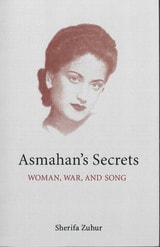
Asmahan's Secrets
Woman, War, and SongBy Sherifa Zuhur
University of Texas Press, 2001
The great Arab singer Asmahan was the toast of Cairo song and cinema in the late 1930s and early 1940s, as World War II approached. She remained a figure of glamour and intrigue throughout her life and lives on today in legend as one of the shaping forces in the development of Egyptian popular culture. In this biography, author Sherifa Zuhur does a thorough study of the music and film of Asmahan and her historical setting.
A Druze princess actually named Amal al-Atrash, Asmahan came from an important clan in the mountains of Syria but broke free from her traditional family background, left her husband, and became a public performer, a role frowned upon for women of the time.
This unique biography of the controversial Asmahan focuses on her public as well as her private life. She was a much sought-after guest in the homes of Egypt's rich and famous, but she was also rumored to be an agent for the Allied forces during World War II.
Through the story of Asmahan, the reader glimpses not only aspects of the cultural and political history of Egypt and Syria between the two world wars, but also the change in attitude in the Arab world toward women as public performers on stage. Life in wartime Cairo comes alive in this illustrated account of one of the great singers of the Arab world, a woman who played an important role in history.
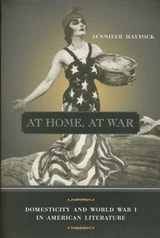
At Home, At War
Domesticity and World War I in American LiteratureJennifer Haytock
The Ohio State University Press, 2003
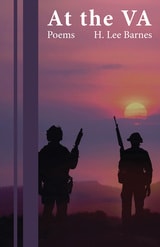
At the VA
Poemsbarnes
University of Nevada Press, 2027
At the VA offers an unflinching and deeply humane portrait of combat veterans—primarily from the Vietnam era—as they seek care within Veterans Affairs hospitals. These imagistic, lyrical pieces focus not on the battlefield but on its aftermath.
Author H. Lee Barnes, a veteran himself, addresses familiar wounds such as PTSD, moral injury, and survivor’s guilt while also bringing attention to underexamined experiences, including those of women veterans who have survived sexual assault. The collection honors sacrifice without sentimentality and resilience without oversimplifying the challenges veterans face.
At its center is a quiet irony: the VA can be frustrating and imperfect, yet to be there at all is to have survived. In that tension, Barnes finds a measured sense of hope that will resonate with readers who understand any type of trauma and recovery. Thoughtful and timely, At the VA asks what we owe our veterans long after their service ends.
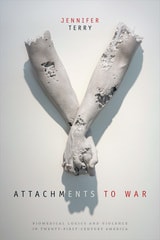
Attachments to War
Biomedical Logics and Violence in Twenty-First-Century AmericaJennifer Terry
Duke University Press, 2017