Results by title
4 books match the query 'Watch'
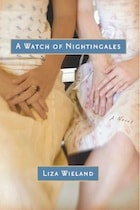
A Watch of Nightingales
Liza Wieland
University of Michigan Press, 2010
A modest, quiet woman, Mara Raynor never dreamed she'd one day find herself in charge of the small private school in Washington, D.C., where for many years she taught music and choir. But after the unexpected death of her husband, the school's headmaster, Mara finds herself thrust into the public eye, burdened not just with the responsibilities of acting headmaster---a role she never wanted---but also with a potentially explosive political and religious controversy that tests parents' and school administrators' spirit of tolerance.
When a Sikh student is caught wearing a ceremonial knife on school grounds, fear spreads among parents and the school board. Coming at the same moment as the disappearance of Mara's teenage daughter, the controversy quickly assumes a far more personal nature. Not just any student, the Sikh boy is both the son of a woman with whom Mara shares a complicated past and---as Mara soon discovers---her own daughter's boyfriend.
As it moves back and forth in time between the school in contemporary Washington and a girls' boarding school in the British countryside in 1977, A Watch of Nightingales weaves a rich and textured exploration of fear and remorse, the mysteries of love, and the complicated tensions that ring down the generations from parent to child.
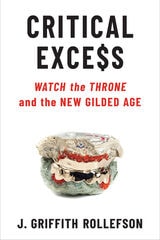
Critical Excess
Watch the Throne and the New Gilded AgeJ. Griffith Rollefson
University of Michigan Press, 2021
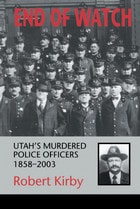
End Of Watch
Robert Kirby
University of Utah Press, 2004
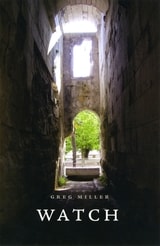
Watch
Greg Miller
University of Chicago Press, 2009
Strasbourg
The yellow and green rose, and the pink rock,
The chestnuts blooming, the cobblestone square,
Our Lady’s tower rising everywhere,
Dark timbered fronts; the mechanical clock
Whose rooster crows three times for Peter’s flock,
The Apostles, the old man’s and the child’s share
Of time—aspire I’d say to make me stare
And stop. I praise what I might otherwise mock,
The locked contingencies, the stock of losses,
Bright liquidity everywhere channeled,
A storied cityscape of destinies
Averted as when, turning, a young Turk tosses
His hands in the air and my chest’s pummeled,
“My brother, forgive me!” and my thoughts freeze.
In Watch, Greg Miller describes a fresh purposefulness in his life and achieves a new level of poetic thinking and composition in his writing. Artfully combining the religious and secular worldviews in his own sense of human culture, Miller complicates our understanding of all three. The poems in Watch sift layers of natural and human history across several continents, observing paintings, archeological digs, cityscapes, seascapes, landscapes—all in an attempt to envision a clear, grounded spiritual life. Employing an impressive array of traditional meters and various kinds of free verse, Miller’s poems celebrate communities both invented and real.
Praise for Iron Wheel
“Miller demonstrates that what Eliot said about reading a poem may be equally true of writing them: the best thing ‘is to be very, very intelligent’ and intelligence is not the same as erudition. Whether the world is made, found, or named, Miller offers an engaging portrait of things as they are.’’—David Orr, Poetry